
Notas
Statistical Data and Cells
Conteúdo das notas (1)
Página 1
Biology Standard Level: Statistical Data and Cells Topic 1: Statistical Data
An error bar is the range of data or the standard deviation on a graph.
A standard deviation is the expression of the spread of values around the mean - the spread of data between two or more values.
The use of standard deviation can be seen when comparing the credibility or fluctuation of statistics in order to tell apart anomalies. We can judge whether there is a normal distribution of data.
what are t-tables and t-values?
A correlation is when two events do not act independently of one another and may have an effect on one another.
A correlation does not necessarily mean one event causes the other. Therefore further experimentation is needed to prove an event is caused by another.
Useful websites:
http://www.ib.bioninja.com.au/ - http://www.saburchill.com/IBbiology/chapters01/001.html - http://members.shaw.ca/zsearle/bio20IB/bio20IB.htm
http://en.wikibooks.org/wiki/IB_Biology
Topic 2: Cells
1. All organisms/cells are composed of other living cells
2. Cells are the smallest unit of life
3. All cells are the result of pre-existing cells
Cell theory can be observed through microscopes as any living organism will be notably formed from multiple cellular organisms. Pasteur's experiment of a sterilised chicken broth's exposure to surrounding cells would imminently result in the re-establishment of life, where as seclusion would not.
Cells exist as unicellular or multicellular forms.
The functions of life include;
Metabolism: chemical reactions within
Growth: evident however may be limited
Reproduction: hereditary molecules that may be passed down
Response: to the environment so the organism may adapt and survive
Homeostasis: maintaining a constant internal environment
Nutrition: providing compounds with chemical bonds to be broken and give energy and nutrients necessary for life to continue.
1 mm = 1000 um
1um = 1000 nm
The field of vision is the diameter of the microscope.
To calculate the magnification of an image use the following formula:
Magnification = Image Size/Actual Size
https://www.youtube.com/watch?v=brb-Qy7KCYc
The decreasing size order is: Organelles, Bacteria, Viruses, Membranes, Molecules.
The volume of a cell allows for more fluidity and efficacy within a cell's functions ranging between several organelles as opposed to a larger surface area. Cells consist of small sizes to maximise the cell activity in balance with the heat and waste rate production. Cells with larger surface area will be capable of moving materials in and out of the cell more.
Cells may have foldings within the matrix (such as the mitochondria or the structure of a stomach's inner surface) to increase metabolism capabilities using volume.
The whole is better than the sum of its parts; a multicellular organism will be more efficient and flexible with its functions compared to a unicellular organism.
Atoms --> Molecules --> Cells --> Tissues --> Organ --> Organ System --> Organism
Cells of one individual organism consist of the same genomes. Identical cells will differentiate through the activation and deactivation of specifics genes, euchromatins and heterochromatins.
Stem cells retain their ability to divide (self-renewal) and differentiate (potency) into various cell types. The cells are found in embryonic regions as well as meristematic areas near roots and stem tips of plants.
Therapeutic uses of stem cells include the biochemical triggering of differentiation within stem cells for retaining specific characteristics of a cell type, the cells are implanted into an organism's own tissue and with monitoring and chemical suppression of the host's immune system the cells will become part of the body without becoming cancerous.
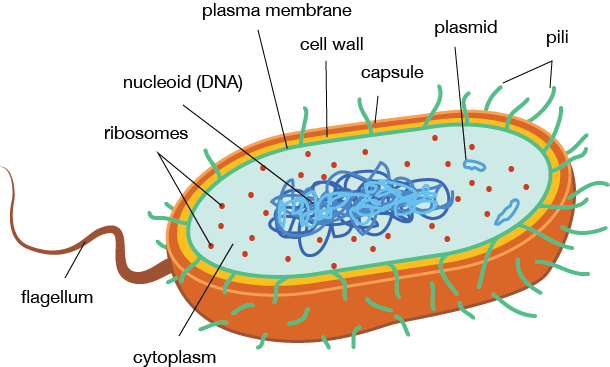
Prokaryotic cells typically consist of the following:
Note that the ribosome size in prokaryotes is 70S. All processes occur within the cytoplasm, due to the lack of compartmentalisation within prokaryotes.
Pili: used for anchorage and in stressful situations as sex organs
Flagella: for motility, can be plural or singular
Ribosomes: Protein synthesis
Nucleoid region: involved in cell control and reproduction, may contain DNA plasmids that help the cell adapt to unusual circumstances
Capsule: slime phospholipid layer used for not drying out and phagocytosis
Binary Fission is the prokaryotic cell division. The nucleoid region will attach to both ends of the cell once microtubule structures disassociate the replicated DNA from the original. The elongated cell then splits into two.
Eukaryotic animal cells typically consist of the following:
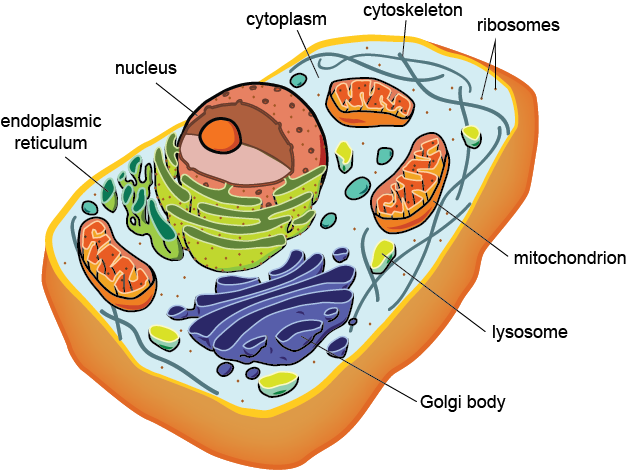
Note that the ribosomes of eukaryotic cells are 80S in size.
A key benefactor to the size and organelles of a eukaryotic cells is the possibility for compartmentalisation which aids in metabolising multiple reactions at the same time without interference from one another.
Nucleus: where cell division occurs mainly. Consists of the nucleolus which is occupied by genetic information through chromosomes. Each cell type has differentiated euchromatins.
Nuclear Membrane: Consists of pores for the mRNA to enter the cytoplasm after transcription. Made up of a phospholipid bilayer and transport proteins.
RER: Protein synthesis site, is rough due to the ribosomes attached to the structure. Allows for vesicles to form and transport proteins.
SER: does not have ribosomes and is further away from the nucleus, aids in transportation of intracellular materials, detoxification and hormon production.
Cytoplasm: fluid portoin of the intracellular structure where organelles reside.
Mitochondria: power houses that carry out respiration and the break down of glucose into ATP.
Golgi Apparatus: stores, modifies and packages proteins for phagocytosis.
Lysosomes: sacs bound by membrane structures that secrete waste and aid in plasma membrane repair. Arise from the golgi and contain as many as 40 enzymes that break down waste vesicles.
Centrioles: reside in the centrosome area of the cell, are microtubules that aid in mitosis and meiosis.
Ctyoskeleton: microfilaments/microtubules that hold up the cell structure.
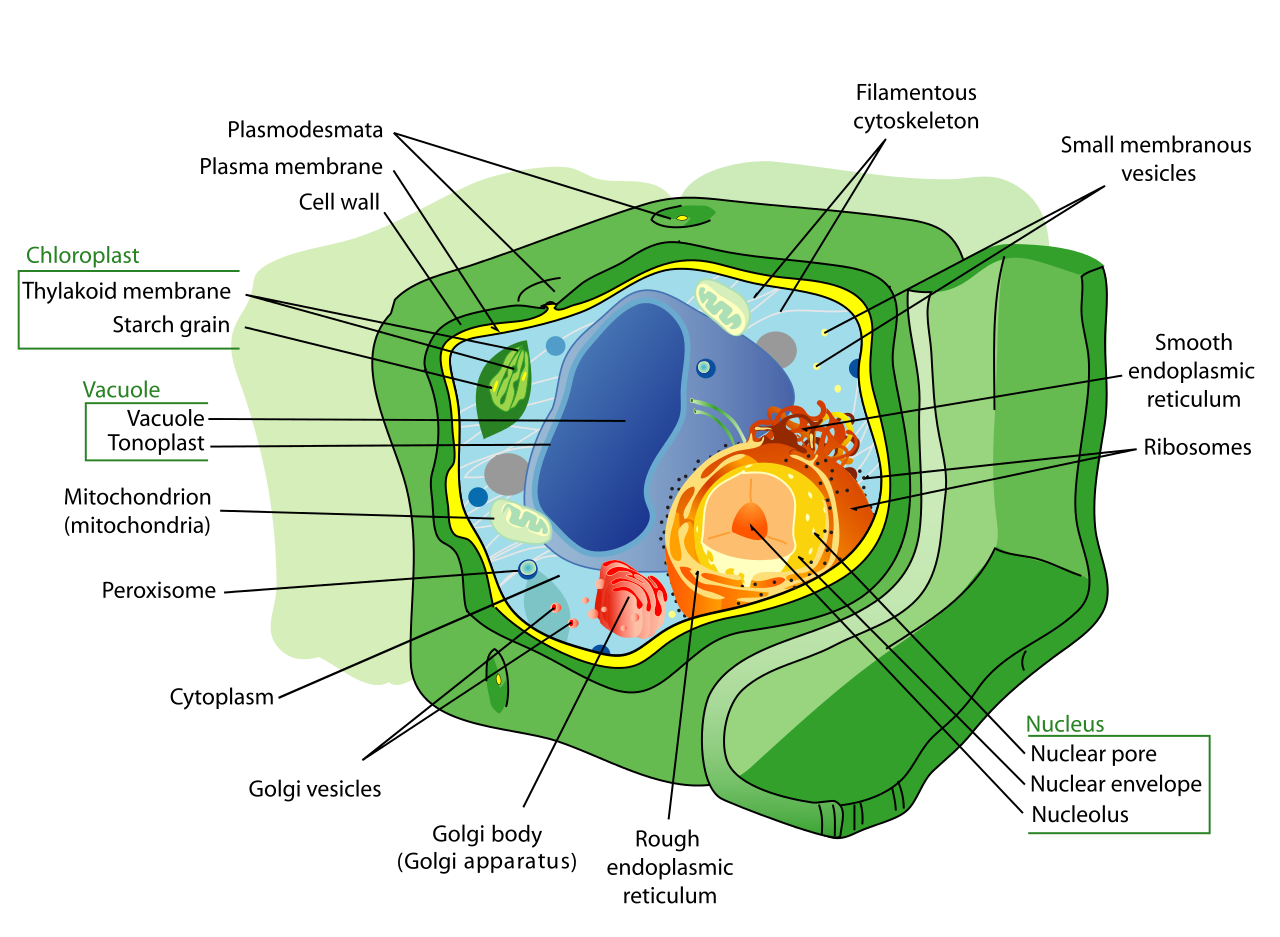
Central Vacuole: storage and hydrolytic functions
ER: connects with the plasma and nuclear membrane and may have ribosomes
Chloroplasts: power-houses that contain green pigment chlorophyll, consisting of grana within the stroma that are sites for photosynthesis
Cell Wall: semi-rigid structure composed mainly of cellulose
Starch granules: carbohydrate stored in amyloplasts
Eukaryotes and Prokaryotes both consist of a cell membrane, DNA and a cytoplasm as well as ribosomes.
Eukaryotes are larger, >10um
Prokaryotes are smaller,
Plants secrete cellulose which serves as a barrier from infections, keeps the cells from becoming turgid with too much water intake, also keeps the plant's mechanical structure supported.
Animal cells build up glycoproteins on within their extracellular matrix, attached to the membrane, that serve as anchors, cellular communicators (ID markers), and segregates tissues from the cell when attachment is not needed.
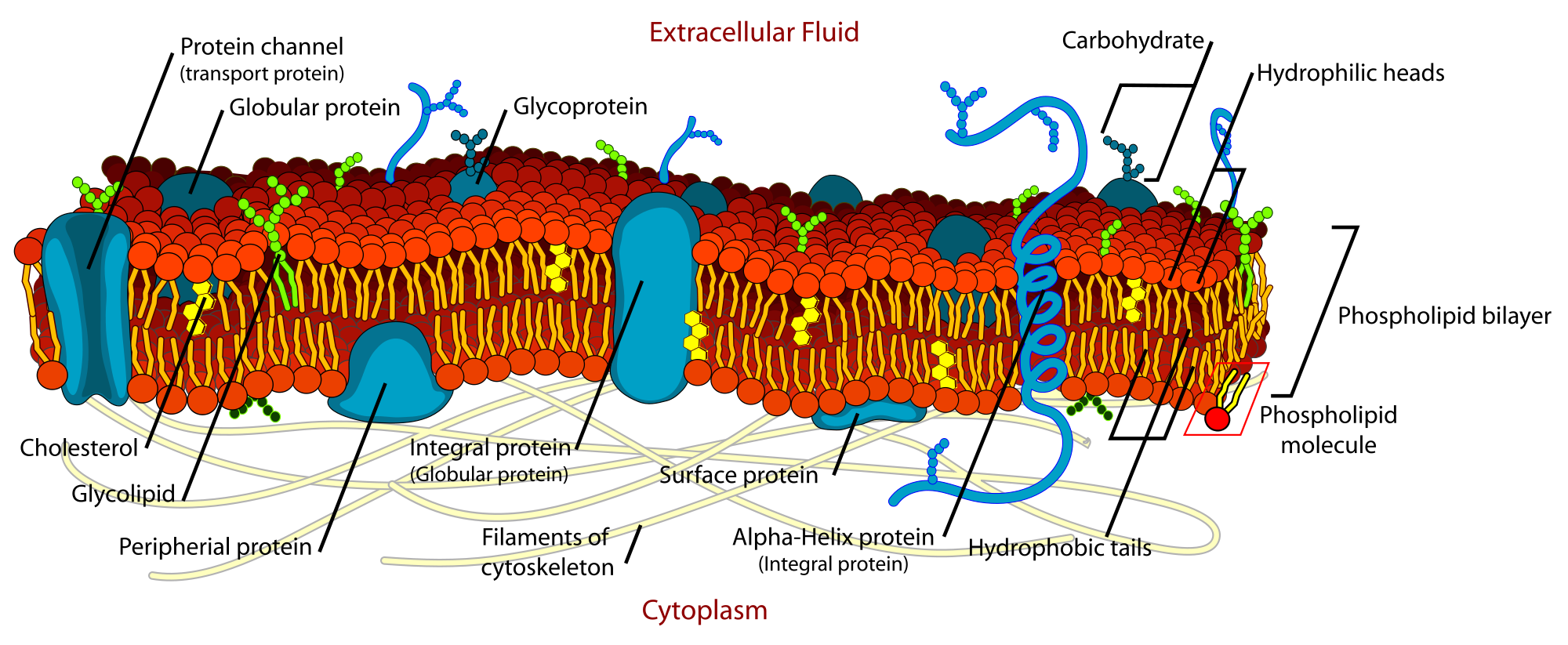
The membrane structure consists of a phospholipid bilayer. The phospholipids are made up of glycerol attached to a phosphate (hydrophilic) head and a fatty-acid (hydrophobic) tail. The bilayer also consists of cholesterol which allows continuous fluidity with a wider range of temperature. Channel proteins allow larger molecular structures to enter the intracellular area. The glycoproteins act as ID markers and communicators with extracellular components.
The mosaic structure of the membrane gives the cell; more movement and able to slightly alter its shape according to the surroundings, endocytosis, the controlling of incoming molecules.
Passive Transport:
Diffusion is the act of moving particles from a high concentration gradient to a low concentration gradient until equilibrium.
Osmosis is a type of diffusion. It is the movement of water across a semi-permeable membrane from a region with low solute concentration to high solute concentration.
Facilitated diffusion is the use of channel proteins that change shape in order to pass molecules through a membrane, with no energy required.
Active transport requires energy in the form of ATP activating a protein pump in order to translocate molecules against the concentration gradient - specific pumps are given for specific molecules as to regulate intake.
Polypeptides come from the Endoplasmic Reticulum to be better packaged in vesicle (membrane sacs). The protein enters the cis side of the golgi and after passing through and going through alteration it exits through the trans side of the golgi, packaged in a membrane sac and undergoing phagocytosis (solid endocytosis whereas pinocytosis is liquid). Once the sac reaches the plasma membrane the polypeptides fuse with the cell resulting in the secretion of the vesicle's contents also known as exocytosis.
The cell cycle consists of several phases. A cell will fully mature, carry out its cellular functions (G1), begin to replicate its DNA into chromatid sisters (S), further grow in preparation for division and increase organelle amounts, forming microtubules (G2) during Interphase - the majority of the cell's life-span.
After Interphase, Prophase begins
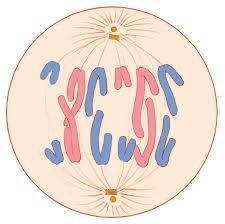
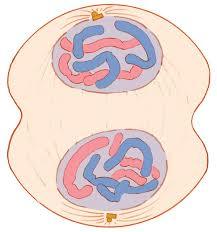
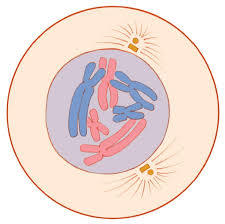
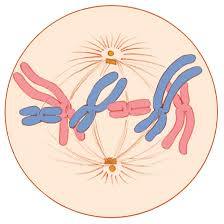
Prophase is the stage at which the centrioles have formed microtubules and place themselves at opposite sides of the cell's cytoplasm. During pro-metaphase the nuclear membrane will break and the microtubules will begin to connect with the kinetochores of the chromatid sisters.
Metaphase is the stage at which the chromatid sisters align on the cell's equator and the mitotic spindles will attach to the kinetochores of each centromere in preparation to break apart the pairs.
Anaphase occurs when the microtubules' are shortened and hence pull the, now, chromosomes apart and towards the two opposite sides of the cell. The centromeres are attached to the microtubules and therefore are pulled first (hence the shape of the chromosomes in microscopic images).
Telophase occurs when separate new membranes form, surrounding the chromosomes with cleavage beginning to form between the expanded singular cell in order to invaginate and cause division.
Cytokinesis is the final division of the cell resulting in two separate cells with 46 chromosomes each.
Informações
- Descrição
- High school (IB Program) Biologia (Topic 1 and 2) Notas sobre Statistical Data and Cells, criado por Sonja Lundin em 20-03-2015.
- Criado por
- Sonja Lundin
- Visualizações
- 8
- Avaliação