
Notas
Cell Cycle Notes/Karyotype/Cancer
Conteúdo das notas (6)
Página 1
Basic Info
Levels of Organization
cell --> tissue --> organs --> organ system --> organism
Why Do Cells Reproduction
Increase cell size
Cell maintenance
Make new cells
Repair and replace
Parent vs Daughter Cells
Parent Cell
original cell
divides to make two daughter cells
Daughter Cell
new cells formed from original
genetically identical to the parent cell
Checkpoints
Checkpoints exist to prevent mutations in the DNA.
1. End of G1 - will check for proper cell growth
Checks for:
Nutrients
Growth Factors
DNA Damage
2. End of G2 - checks for DNA malfunctions and proper cell size
Checks for:
Cell Size
DNA Replication
3. Middle of Mitosis
Checks for:
Chromosome Spindle Attachment
Internal vs External Factors
External Signals: if the cell starts touching other cells, the cell cycle is turned off
Internal Signals: different types of growth hormones and proteins turn the cell cycle on or off
Página 2
Cell Cycle
a continuous process where cells grow, make copies of chromosomes, and divide to make daughter cells
Consists of three major phases
1. Interphase
Interphase is the period of growth and DNA replication that occurs between cell divisions. This process consists of three phases.
1. Gap 1 (G1)
The period of cell growth before DNA is duplicated. This period takes place in the daughter phase.
2. Synthase Phase (S)
The period when DNA or chromosomes are being duplicated.
3. Gap 2 (G2)
The period after DNA is duplicated and prepares for cell division.
Página 3
2. Mitosis
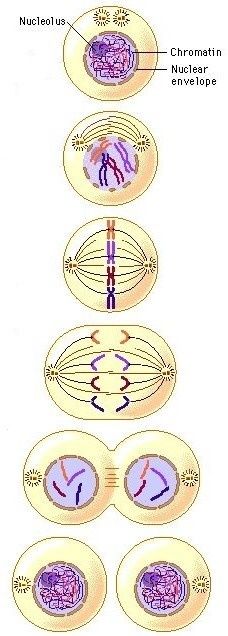
Mitosis: division of the nucleus
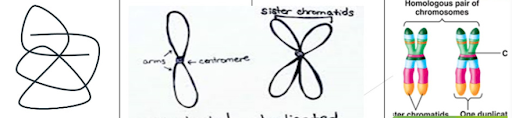
Chromatin
DNA is unraveled (string-like)
Sister Chromatid
A single chromosome
Homologous Chromosome
2 chromatids connected from each parent
Homologous Pairs
2 of the same homologous chromosome
Phases of Mitosis
Prophase
Chromatin condenses into chromosomes
Centrioles separate
Spindle fibers form
Nucleus breaks down
Metaphase
Chromosomes line up in the center of the cell
Spindle fibers connect to chromosomes
Anaphase
Chromosomes separate at the centromere and sister chromatids move away from each other
Chromosomes pulled towards opposite poles of the cell by spindle fibers
Telophase
Chromosomes unravel into thin strands of DNA (chromatin)
Spindle fibers disappear
Nucleus membrane reappears as nuclei are formed
Results in two identical cells
Cytokinesis
The actual division of the cytoplasm
Different in plant and animal cells
Animal cells - pinches the cells apart
Plant cells - a cell plate is formed, this becomes the new cell wall
Página 4
3. Meiosis
Meisosis: cell divison to make gametes
Haploid: cell has half the number of chromosomes (n)
In humans, the haploid amount is 23 (n)
Diploid: cell has a full set of chromosomes (2n)
In humans, the diploid amount is 46 (2n)
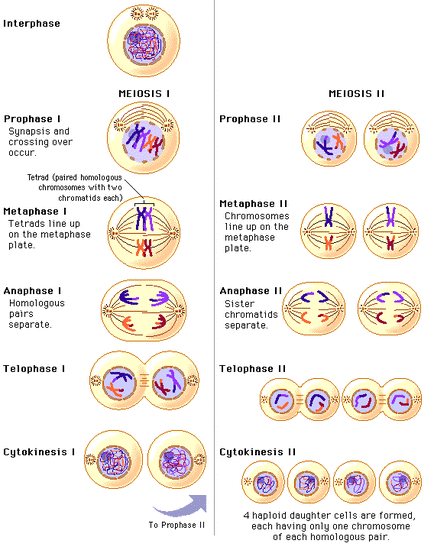
Meiosis 1
Interphase 1
DNA is in chromatin form
During the S phase, DNA replicates
Cells grow in prep for the division
Prophase 1
Chromatin condenses into a homologous chromosome
Nucleus disappears
Spindle fibers form
Tetrad occurs
Crossing over occurs: exchange of genetic material between a homologous pair
Metaphase 1
Tetrads (homologous pairs) line up in the middle of the cell
Anaphase 1
Tetrads separate and each homologous chromosome moves to opposite ends of the cell
Telophase 1
Nucleus appears
Spindle fibers disappear
Cytokinesis 1
Cytoplasm divides into 2 cells
2 haploid daughter cells
Meiosis 2
Interkinesis
Resting phase
No DNA replication
Prophase 2
Chromosomes form again in both cells
Nucleus disappears
Spindle fibers form
Crossing over does not occur
Metaphase 2
Homologous chromosomes line up in the middle of the cell
Anaphase 2
Chromosomes pull apart at the centromere
Sister chromatids move to opposite ends of the cell
Telophase 2
Nucleus reappears
Spindle fibers disappear
Chromosomes unravel
Cytokinesis 2
Cells divide into 4 cells
All cells are now haploid gametes (sex cells)
All cells are genetically different
Página 5
Karyotype
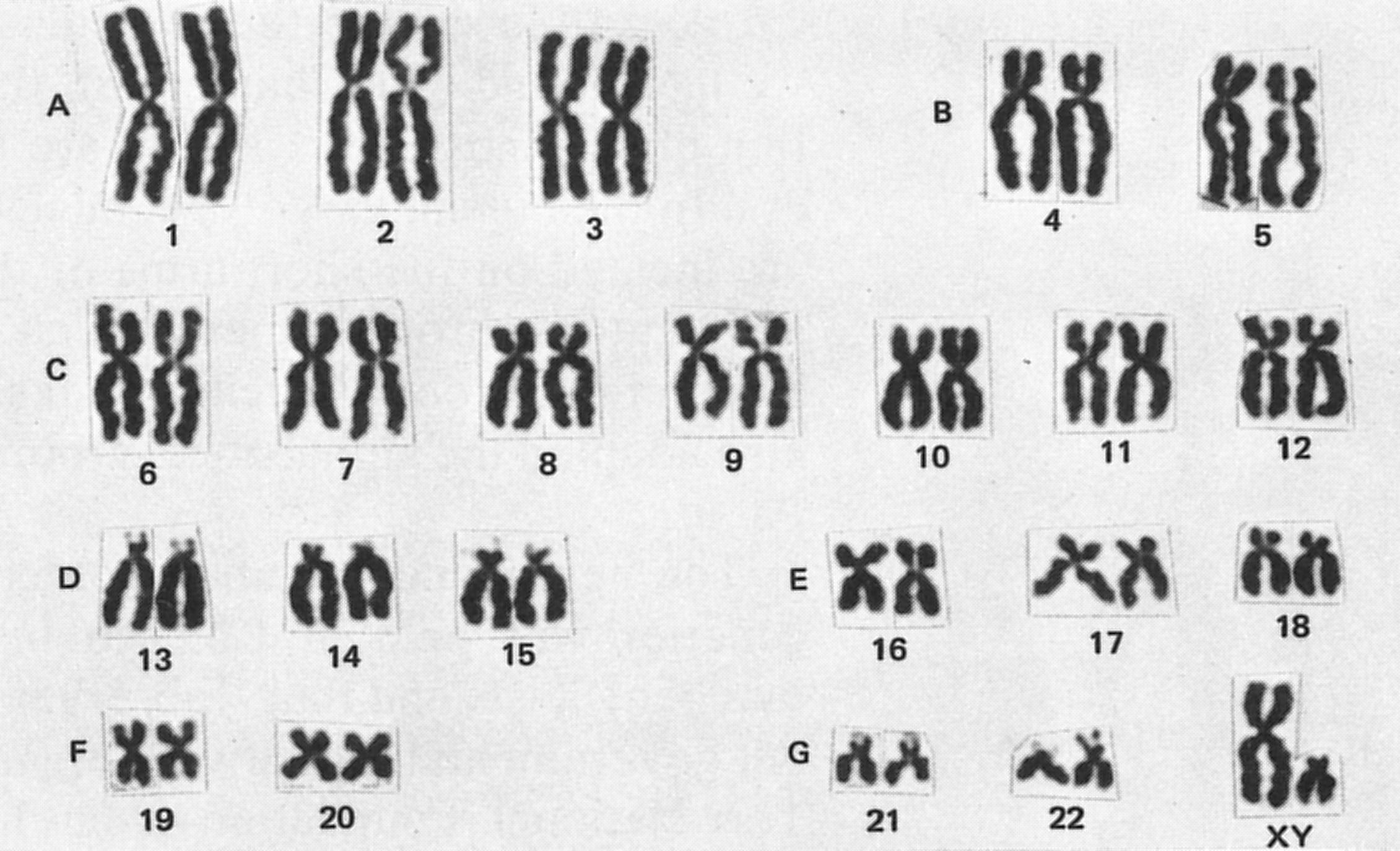
A karyotype is a picture of all chromosomes in an organism. It is used to help identify genetic disease due to abnormal numbers or damaged chromosomes.
Nondisjunction: results in too few or too many chromosomes in a cell
Can lead to:
Monosomy: having only 1 chromosome instead of 2
Trisomy: having 3 chromosomes instead of 2
Página 6
Cancer
Cancer is an error in the DNA replication process that can alter genes that regulate cell growth.
Cancer: cells that do not “listen” to checkpoints and signal from the body to stop dividing (continuous uncontrolled cell division)
Cancer is caused by mutations and carcinogens, which are environmental factors that cause mutations in DNA.
Informações
- Descrição
- Includes: - Cell cycle - Why do Cells Reproduce - Cell Cycle - Checkpoints - Phases of the Cell Cycle (not in-depth) - Internal vs External Factors Made by a student. Just notes.
- Criado por
- Skye Mo
- Visualizações
- 110
- Tags
- Avaliação