
Notas
1.0 DATABASE CONCEPT - created from Mind Map
Conteúdo das notas (1)
Página 1
1.1 Introduction to Database
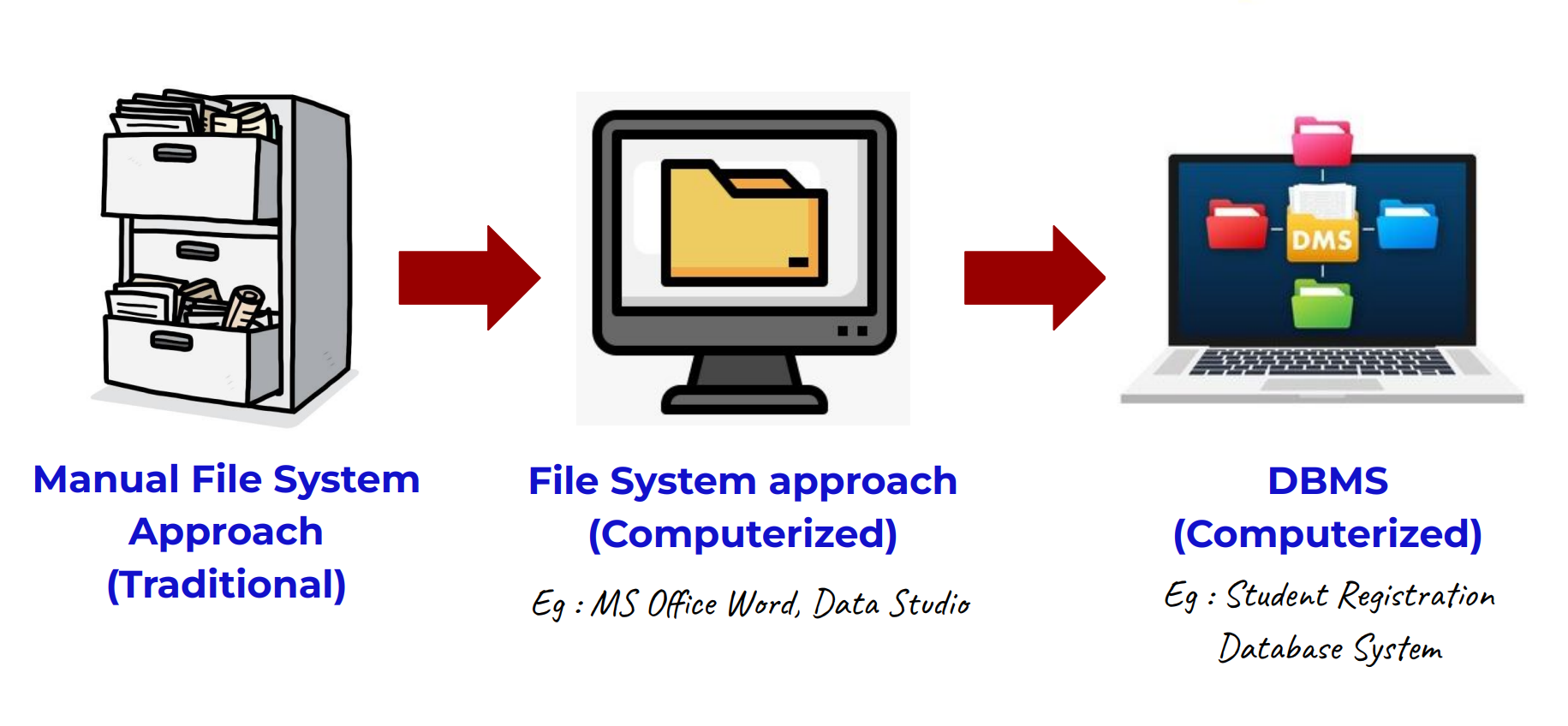
1.2 Database System vs File System Data Processing
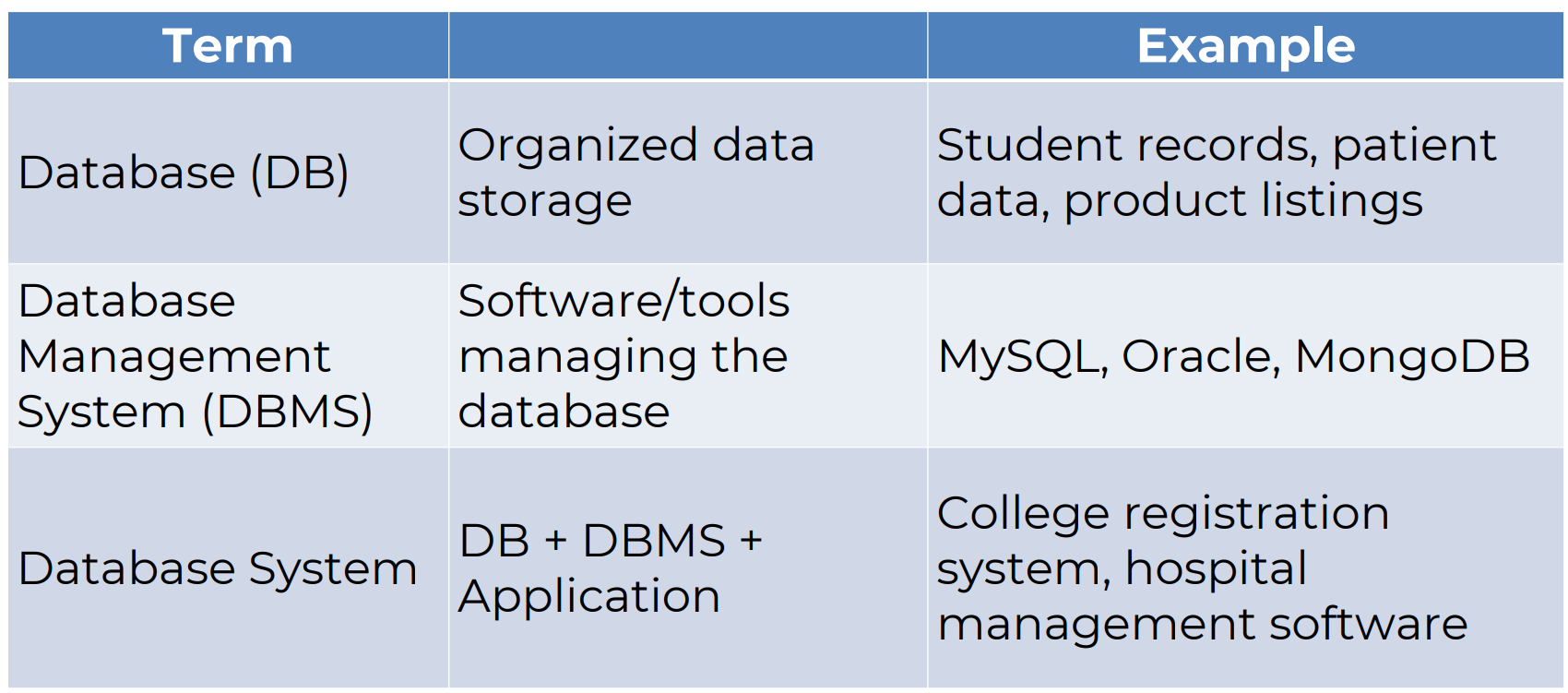
DATABASE
Database Management System (DBMS)
Database System
Business Intelligence (BI)
Definition
Types of Data:
Examples of Related Data
Characteristics
shared, integrated computer structure that stores related data
End-user data → raw facts (interest to user)
Metadata → data about data
Describes characteristics of data
Shows relationships between data
Provides complete picture of database
Data organization
Persistent storage
Data integrity
Security
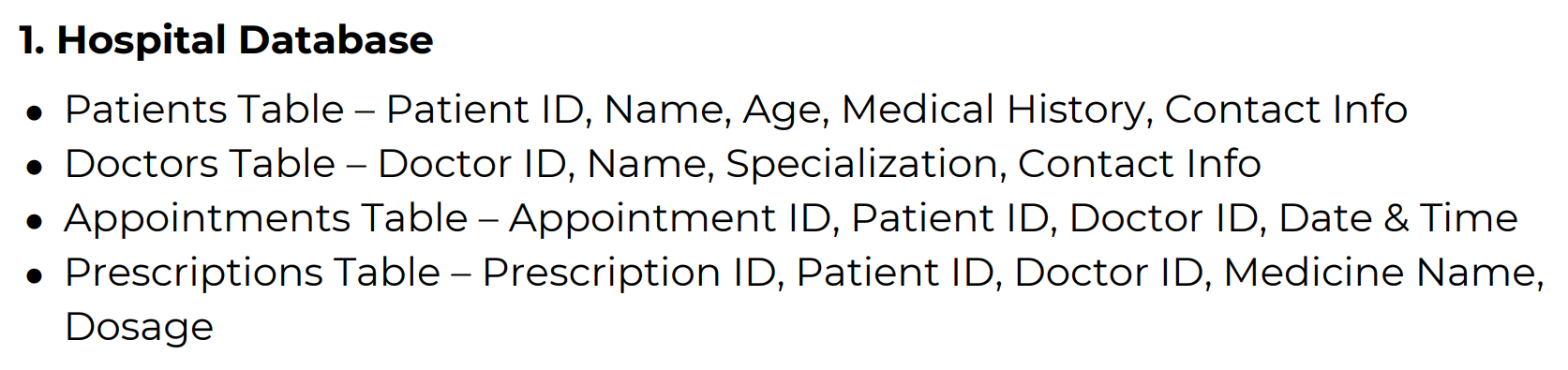
organized in a structured format using tables
the data remains available and unchanged until it is explicitly modified or deleted
data is accurate, consistent and reliable through constraints and validation rules
mechanisms to control access and protect data from unauthorized access
DBMS
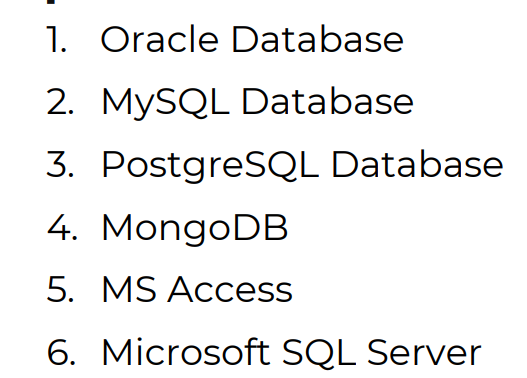
Examples of DBMS
Characteristics
Collection of programs
manages the database structure and controls access to the data stored in the database
Data storage
Data manipulation
Data integrity
Data security
Manages the storage of data, ensuring it is stored efficiently and can be retrieving quickly
Provides tools for inserting, updating, deleting and retrieving data
Ensure that data remains accurate and consistent across the database
to protect data from unauthorized access and ensure data privacy
Database system
Characteristics
Importances
organization of components
define and regulate the collection, storage, management, and use of data within a database environment
Data schema
Database engine
Database applications
Components
defines how data is stored and how the data elements are related
core service for storing, processing, and securing data
Software applications that use the database to store and retrieve data
Hardware, Software, Data, Users, Procedures
Support for Decision-Making
Competitive advantage
Opinion Mining (Social Media Analytics)
Artificial Intelligence (AI) & Machine Learning (ML)
Sentiment Analysis
BI
Example
Benefits of database systems
Comprehensive and integrated set of tools/processes
capture, collect, integrate, store, and analyze data
generating and presenting information
Decision Making
Company Questions: Best-selling products ? Peak sales time of year ? Best-performing store ?
BI Tools → Convert raw data into
Graphs, Reports, Dashboards
Goal → Guide company decisions
Improved Data Quality
Faster Processing & Analysis
Enhanced Security & Access Control
Scalability
Integration with Various Tools
Data
Information
File System Data Processing
Database System
Raw facts
Unprocessed / No meaning yet
End user
Result of processing raw data
Transformed data → has meaning
Facilitates decision-making
How data stored ?
Disadvatages
Stores data in isolated files, leading to redundancy and inefficiency
Lengthy development times
Difficulty of getting quick answers
Complex system administration
Lack of security and limited data sharing
Extensive programming
Structural and Data Dependence
Data Redundancy
How data stored
Advantages
Uses a structured format with relationships, enhancing efficiency and security
Improved Data Sharing
Improved Data Security
Better Data Integration
Improved Data Access
Improved Decision-Making
Increased End-User Productivity

Informações
- Descrição
- Information Technology Notas sobre 1.0 DATABASE CONCEPT - created from Mind Map, criado por AMIR MUJAHID em 10-09-2025.
- Criado por
- AMIR MUJAHID
- Visualizações
- 0
- Histórico
-
- Criado por AMIR MUJAHID · 10 set 2025
- Copiado para Nota por AMIR MUJAHID · 10 set 2025
- Avaliação