
Notas
C4 - Chemical Patterns
Conteúdo das notas (5)
Página 1
Atoms & Line Spectrums
Atoms
Number protons = number electrons -> electrons added/removed -> changes charge
Neutrons -> neutral (0) -> relative mass: 1
Protons -> posotive (+1) -> relative mass: 1
Decides element
Same no. protons -> same element
Diff no. protons -> diff. element
Elements -> diff. properties -> diff. atomic structure
Electrons -> negative (-1) -> relative mass: 0.0005
No mass
Negative Charge
Tiny -> cover lots of space
Size of atom depends on volume of orbit
Move around nucleus
Arranged in shells (energy levels)
Nucleus
Whole mass concentrated
Contains protons & neutrons
Overall positive charge (protons)
Middle of atom
Line Spectrums
Lithium (Li) -> red flame
Sodium (NA) -> yellow/orange flame
Potassium -> lilac flame
What it is:
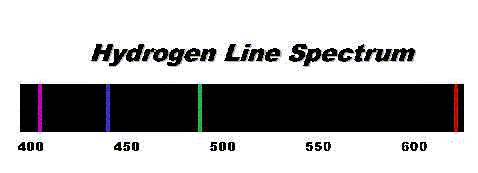
Electrons heated -> release energy as light
Wavelength emitted -> recorded as line spectrum
Diff elements -> diff wavelengths -> each element has diff electron arrangments
Used to identify elements -> spectroscopy
Examples:
Caesium & rubidium -> discovered by line spectrum
Helium -> line spectrum of Sun
Página 2
History of Periodic Table & Modern Periodic Table
History of Periodic Table
1800s:
Only thing measurable -> relative atomic mass
Known elements organised in order of atomic mass
1828 -> Dobereiner:
Made: list elements in groups based on chemical properties
Groups of 3 (triads)
Middle element of triad had relative atomic mass -> average of other 2
1865 -> Newlands' Law of Octaves:
Realised: when elements arranged in relative atomic mass -> every 8th -> similar properties
1865 -> presented theory to Chemical Society
Criticised because:
Mixed metals & non-metals
Groups contained elements with no similar properties
Didn't leave gaps for undiscovered elements
1869 -> Dimitri Mendeleev:
Arranged Table of elements w/ various big gaps
In order of atomic mass
Kept elements w/ similar properties in vertical groups
Predicted properties of undiscovered elements
When found -> fitted patterns (confirmation)
Modern Periodic Table
Proton number -> no. protons & electrons in nucleus
Relative atomic mass -> no. protons & neutrons
Neutrons = no. protons - relative atomic mass
Rows -> periods -> represents full shell
Metals -> left
Non-metals -> right
Similar properties -> columns -> groups
Group number -> no. electrons in shell (group 0 -> 8 electrons)
Group 1 -> react more vigorously going down
Group 7 -> reactivity decreases going down
Página 3
Electron Shells, Ionic Bonding & Ions and Formulas
Electron Shells
1) Lowest shells always filled 1st:
1st shell: 2
2nd shell: 8
3rd shell: 8
2) Atoms want outer shell to be full
Ionic Bonding
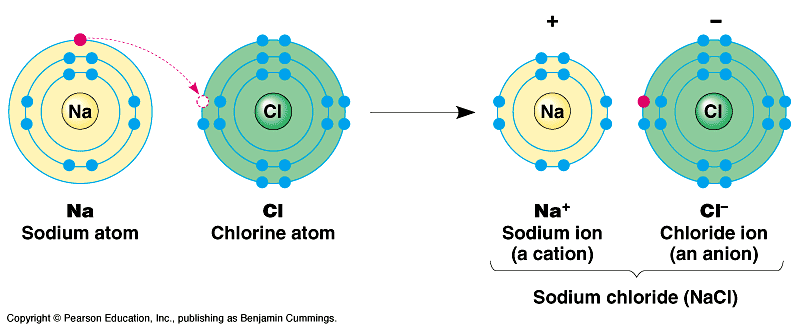
Group 1 lose electron -> posotive ion
Group 7 lose electron -> negative ion
How are Ionic Bonds made?
Atoms lose/gain electrons -> form charged particles -> ions
Can be made from single atom (Cl-) or group of atoms (NO3-)
Atoms lose/gain electrons -> trying to gain full outer shell
Transferring Electrons
Oppositely charged ions -> strongly attracted
Ionic Compounds
Solid ionic compounds -> giant lattice of ions
Each lattice -> single crystal
Become molten/dissolved -> conduct electricity -> because ions able to move
Ions and Formulas
Diff ions -> diff charges
No. in brackets -> size of positive charge on ion (e.g Iron(II) -> charge of 2+ -> Fe 2+)
In compounds -> total charge always add up to zero
If ions in compound have same size charge it's easy -> e.g Li+ & F- = LiF
If ions have diff size charges -> put in some no.s to balance -> e.g Ca2 & Cl- =CaCl2
If know formula & charge on one of the ions -> can work out charge of other ion -> e.g LiBr - Br1- = Li+1
Página 4
Group 1 - Alkali Metals & Group 7 - Halogens
Group 1 - Alkali Metals
Include: lithium, sodium, potassium
All have 1 outer shell -> very reactive & similar properties
Alkali metals react -> form similar compounds
Shiny when freshly cut -> quickly react with O2 in moist air
Go down group 1 -> more reactive
Outer electron is more easily lost -> further away from nucleus
Higher density -> atoms have more mass
Lower melting point
Lower boiling point
Reaction with cold water produces hydrogen gas
Lithium/Sodium/Potassium -> in water -> react very vigorously
Move around surface -> fizzing furiously
Produce hydrogen gas
Potassium -> hot enough to ignite -> lighted splint indicate hyrdrogen -> "squeaky pop"
Reaction makes alkali solution -> hydroxide of metal forms e.g sodium hyrdroxide (NaOH), potassium hyrdroxide (KOH) etc
More violent reaction -> more reactive alkali metal is
Reaction with chlorine produces salt
Alkali metals -> react vigorously w/ chlorine
Produces colourless crystalline salts e.g lithium chloride (LiCl), sodium chloride (NaCl), potassium chloride (KCl)
Group 7 - Halogens
Include: chlorine, bromine, iodine
7 outer shells -> very reactive & similar properties -> form similar compounds
Form diatomic molecules -> pairs of atoms
Go down group 7 -> less reactive
Outer electrons -> further from nucleus -> additional electrons -> attracted less strongly
Higher melting point
Higher boiling point
Go from gases to solids down group -> shows trend in melting & boiling point
e.g chlorine more reactive than bromine which more reactive than iodine
Coloured vapours at room temp & pressure
Fluorine -> very reactive -> poisonous yellow gas
Chlorine -> fairly reactive -> poisonous dense green gas
Bromine -> dense -> poisonous -> orange volatile liquid -> orange gas
Iodine -> dark grey crystalline solid at room temp -> purple vapour
Reactions with alkali metals
Form salts -> metal halides
Reactions less vigorous as go down
Reactions with iron
Form coloured solids -> iron halides
Reactions less vigorous as go down
Displacement Reactions
More reactive element 'pushes out' (displaces) less reactive element from a compound
e.g chlorine more reactive than iodine -> chlorine reacts with potassium iodide solution -> form potassium chloride -> iodine left in solution
e.g chlorine displace bromine from solutions of bromide & bromine displace iodine -> because trend of reactivity
Página 5
Safety of Alkali Metals and Halogens
Alkali Metals
Really reactive -> combust spontaneously
Contact w/ water vapour in air -> violent reaction -> depending how much alkali metal present
Stored under oil to prevent violent reaction
Never touched with bare hands -> sweat on skin enough cause reaction -> produce lots of heat & corrosive hydroxide
Every piece of apparatus -> completely dry
Halogens
Chlorine & iodine -> very toxic
Fluorine -> most reactive halogen -> too dangerous use in lab
Liquid bromine -> corrosive -> avoid contact w/ skin
Poisonous vapours -> irritate respiratory system & eyes -> used in fume cupboard
Informações
- Descrição
- Core Science (Chemistry) Notas sobre C4 - Chemical Patterns, criado por Raphaela Dowding-Green em 06-11-2016.
- Criado por
- Raphaela Dowding-Green
- Visualizações
- 0
- Avaliação