
Notas
Homeostasis and Excretion
Conteúdo das notas (5)
Página 1
HOMEOSTASIS:
Maintenance of a constant and stable internal environment
Página 2
THE URINARY SYSTEM:
Two kidneys at back of abdominal cavity
Excrete waste nitrogen as urea
Eliminate excess salts
Osmoregulate to maintain water content of blood
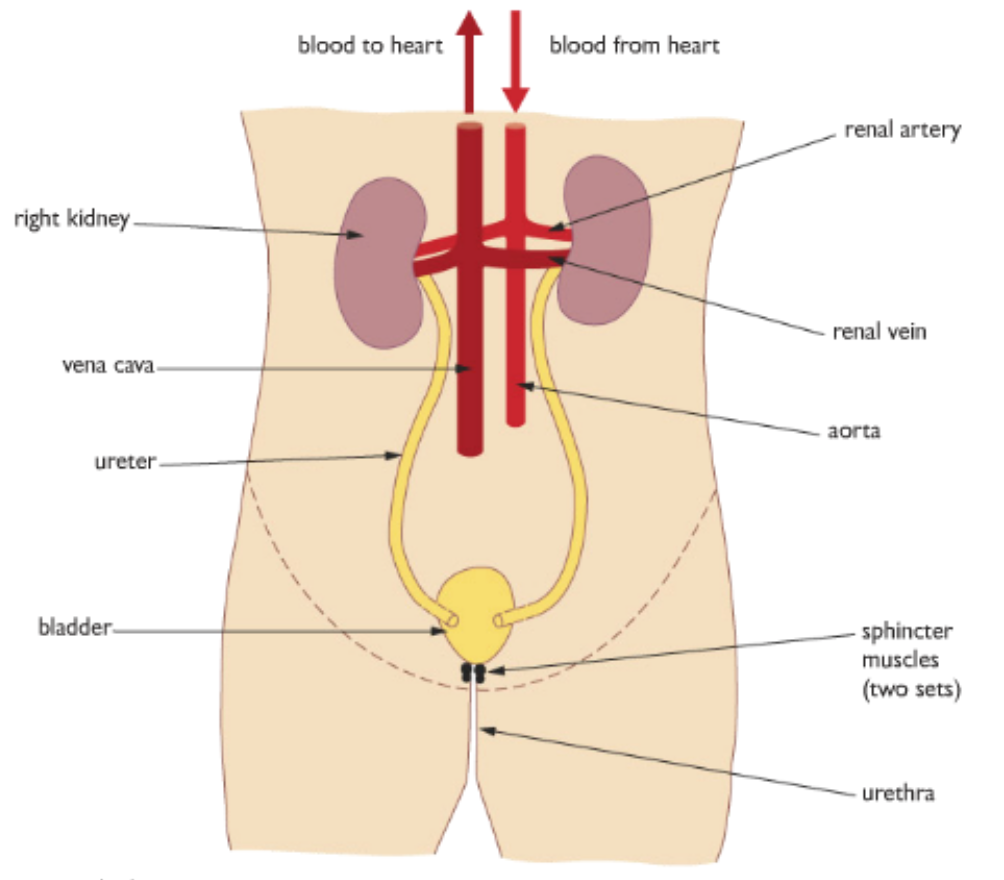
Blood supplied to kidney through renal artery
From aorta so blood enter at high pressure
Blood filtered and passes out through renal vein to vena cava
Urine passes out through ureters and stored in bladder
Bladder has tube leading to outside called urethra
Wall of urethra has sphincters, 2 ring-like muscles which contract to hold back urine
Página 3
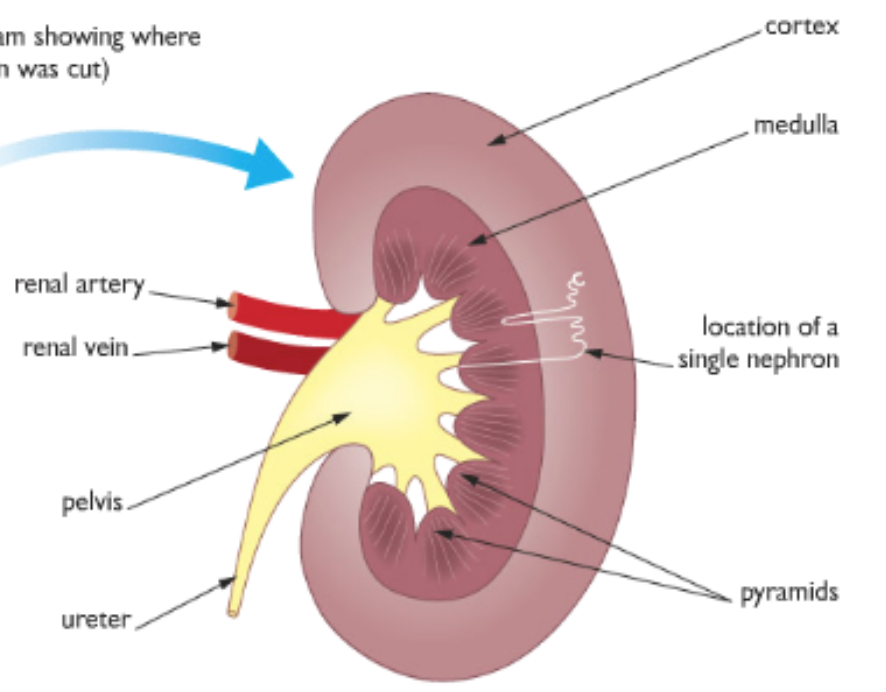
THE KIDNEYS:
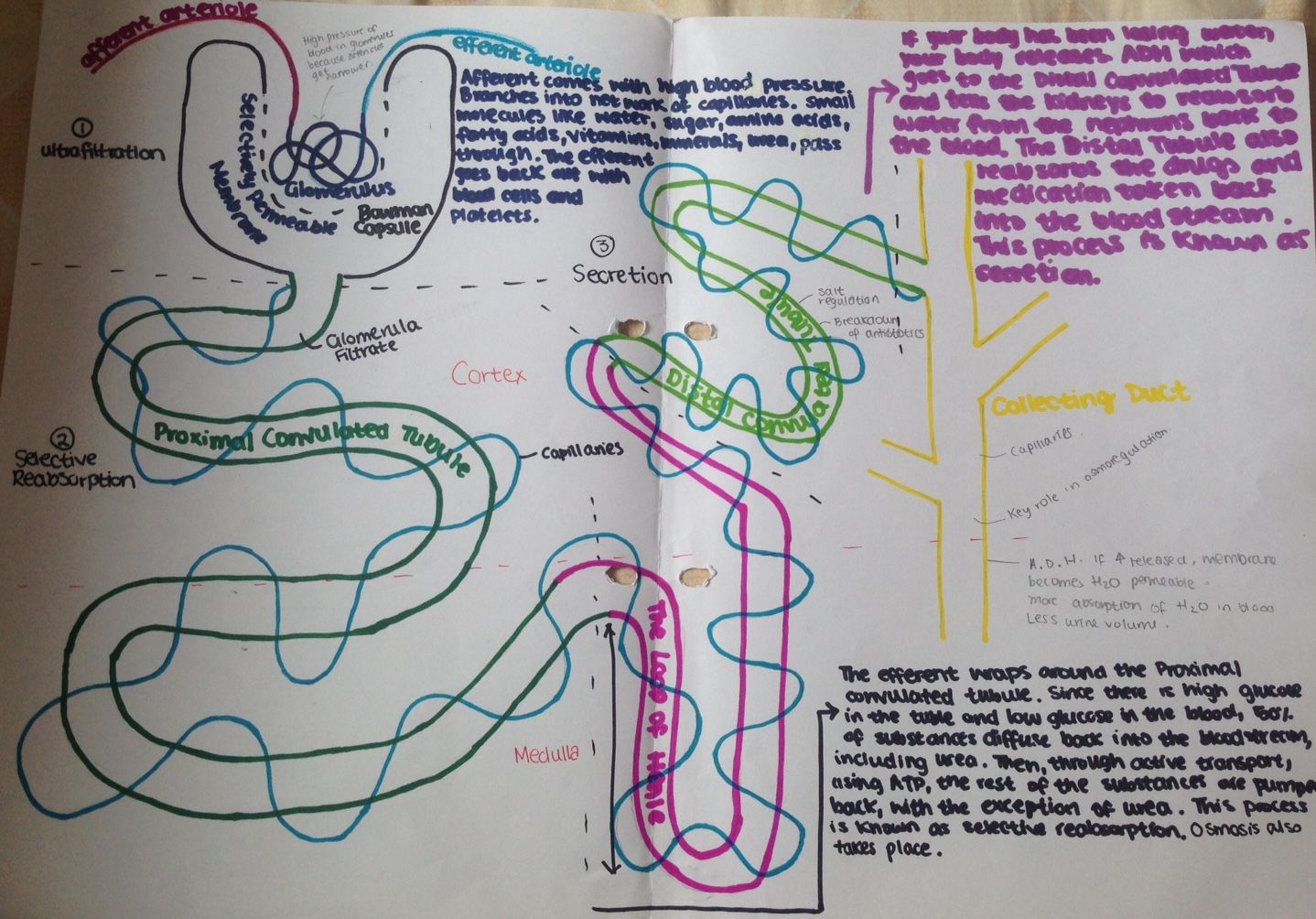
ULTRAFILITRATION:
Arterioles branch into network of capillaries in glomerulus
Small molecules E.G. water, sugar, amino acids, vitamins, minerals, urea pass into Bowman’s capsule through selectively permeable membrane from glomerulus to form the glomerular filtrate
Larger substances E.G. RBC, WBC, proteins, platelets, too large to be filtered or pass through membrane
SELECTIVE REABSORPTION:
Efferent wraps around proximal convoluted tubule
Some substances diffuse back into blood stream
Since higher glucose in tube than blood, half diffused back into bloodstream
Then, through active transport, most substances go back into the blood, except for urea
Osmosis also takes place
SECRETION:
Excessive quantities of certain dissolved substances secreted in distal convoluted tubule E.G. creatinine, hydrogen and potassium ions, some hormones and drugs
Blood pH level maintained
If body needs water reabsorbed back into blood from collecting duct
Página 4
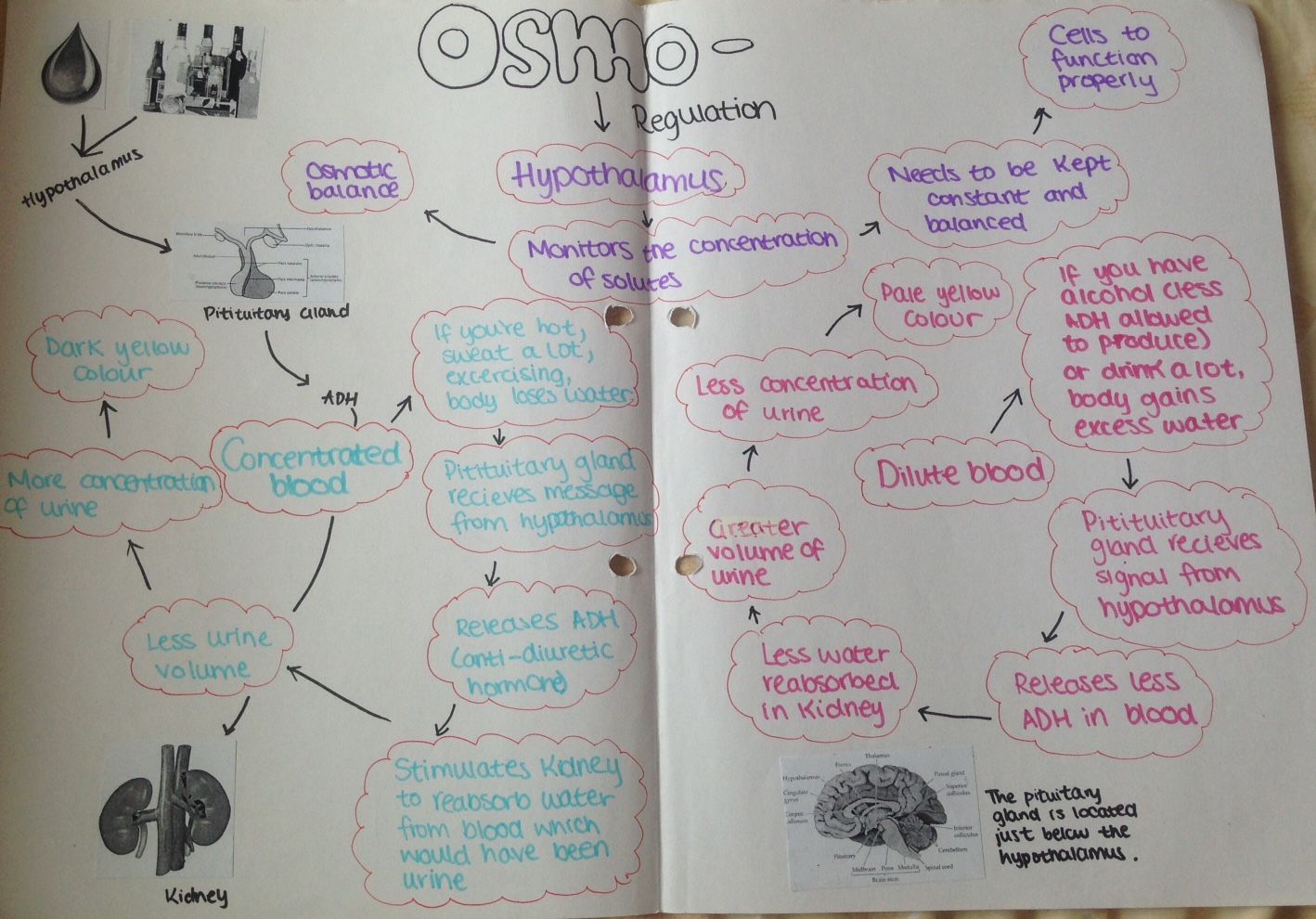
CONTROL OF THE BODY’S WATER CONTENT:
Página 5
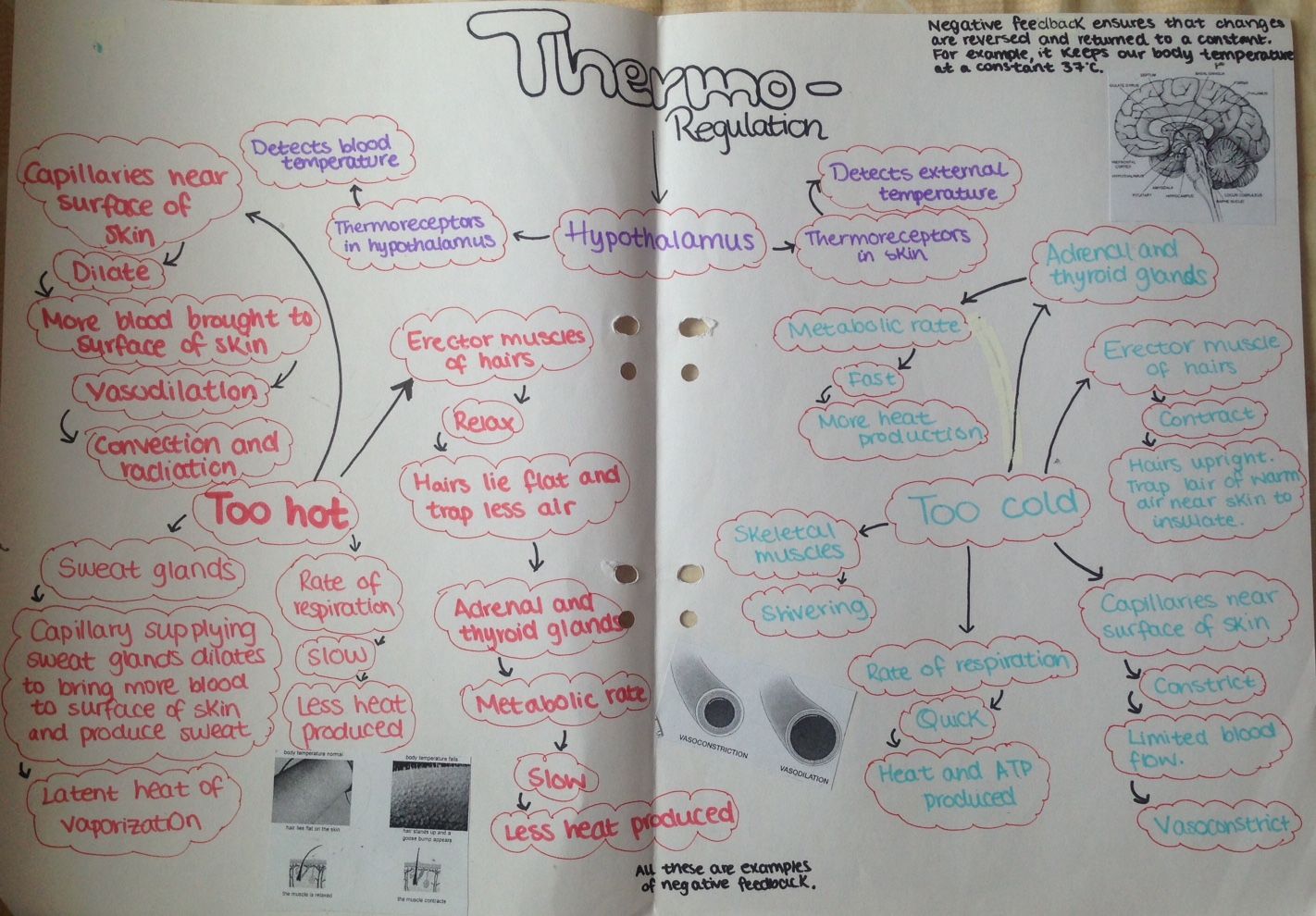
CONTROL OF BODY TEMPERATURE:
Informações
- Descrição
- IGCSE Biology Notas sobre Homeostasis and Excretion, criado por Aarushi Jain em 21-11-2016.
- Criado por
- Aarushi Jain · nov 2016
- Atualizado
- 22 nov 2016
- Visualizações
- 101
- Avaliação