
How To Analyse Paintings
Slides do conjunto (7)
-
What To Consider When Analyzing Art
- Compostion
- Subject
- Line
- Colour
- Perspective
-
- Depends on artist choices or choices imposed on artist due to spacial constraints (e.g. canvas space and other artworks in vicinity) - Everything is taken into account.
- Format can be determined by ratios (phi, golden section, pyramid & frieze) These determine points of the canvas that draw viewer's attention. High vs low, character gaze etc. Symmetry draws attention to centre
- This can be seen by drawing lines to show paintings organisation
- Can also be seen through size and proportions + Depth of field and perspective
- Empty vs Full Composition
- The balance of space in the painting - be it around the subject to make them stand out or in the more general sense of the painting with space and stuff
- Open vs closed Composition
-
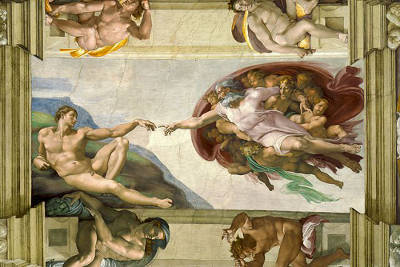
- Legenda: Until 20th Century; art was figurative; grounded in realism and often religious. Secular subjects began bit by bit in 14th Century and became more prevalent over time - due to growing appreciation for Nature & Architecture & Common folk as subjects
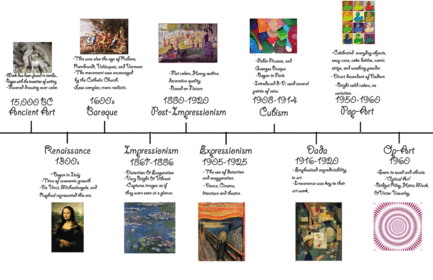
- Legenda: New / Newer subjects and styles were used in art. E.g.History, landscapes/scenery. portraits, everyday life & Still life
-
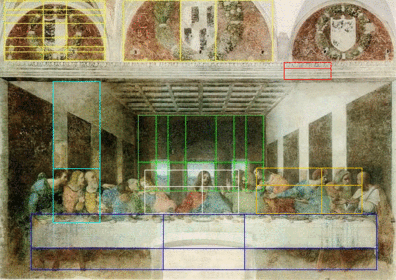
- Legenda: Proportions are often calculate through ratios - a common one is the golden ratio phi [Φ = (1+ √5)/2]
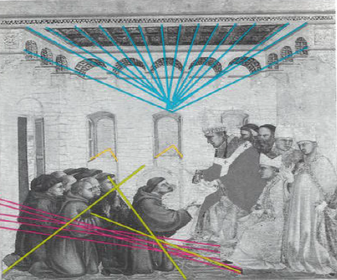
- Legenda: Lines and proportions allow for focus on certain figures because they draw attention by organizing space and figures
-
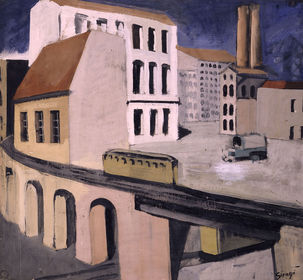
- Legenda: Colour schemes and use of monochrome can denote dreary, desolate landscapes
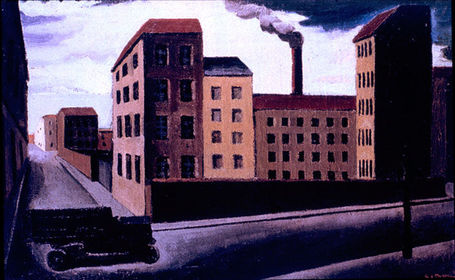
- Legenda: Colour use also includes the use of shadow and light. Shadows denote darkness or badness; Light adds to realism if sun perspective is noticeable or goodness.
-
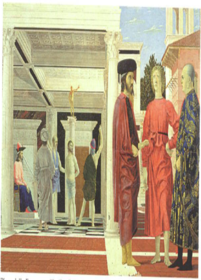
- Legenda: Enhances narratives by providing background context and depth
Informações
- Descrição
- Cities and the human figure
- Criado por
- Jamal Hassan · jan 2017
- Atualizado
- 21 fev 2017
- Visualizações
- 27
- Tags
- Avaliação