
Periodic Table
Slides do conjunto (7)
-
-
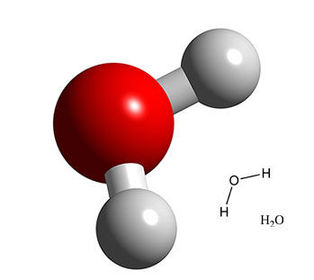
- Water is a compound because 2 Hydrogen atoms are bonded with 1 Oxygen atom to form H2O.
-
- Protons and Neutrons are found in the nucleus of an atom.
- Electrons are found on shells (energy levels) of an atom
- The number of protons is equal to the number of electrons, balancing each other out. This make a atom a neutral particle.
- Rules of electronic structure.
- Start by filling the inner inner shell, a maximum of two electrons
- The sub-sequential can take up to 8 electrons.
-
- Atomic Mass is the number of protons + the number of neutrons
- No. of neutrons = mass number - no. of protons
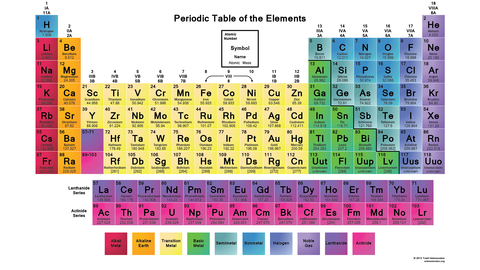
- Across the table (rows) is called periods, it shows the number of shells
- Down the table, columns, shows the number of electrons on the outer shell
- Halogens - Group 7 elements - non-metals which are reactive
- Noble Gases - Group 0 - unreactive gases
- Alkali Metals - Group 1 elements - alkali metals because they dissolve in water to form metal hyrdroxides which are strong alkali.
- The less electrons on the outer shell the more reactive the element will be.
-
-
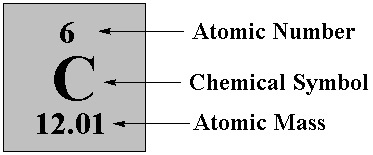
- Legenda: NO. OF NEUTRONS = Mass Number - No. of protons
-
- Rate of reaction is how fast or slow a reaction takes place, this depends on a number of factors of factors.
- Temperature - increased temperature increases the rate of a reaction because when particles heat up they gain kinetic energy and their speed increases. This increases the frequency of collision therefore increasing the chances of successful collisions. Without collisions there is no reaction.
- Surface Area - More of the reactant is exposed, this means that there is a larger area for the reaction to take place, this increases the rate of reaction
- Catalyst - These work by reducing the activation energy of a reaction. This means that less energy is required for a reaction to take place.
- Pressure/Concentration - If this increases ther will e more particles within a given space. Particles will therefore collide more often.
Informações
- Descrição
- Year 9 Science (Chemistry) Slides sobre Periodic Table, criado por Jas San em 07-12-2015.
- Criado por
- Jas San
- Visualizações
- 0
- Avaliação