
Quiz
Limbic System & Limbic System Neurotransmitters
This quiz has question types that open in the usual player.
Questions in this quiz (63)
1"Hippo Hat"
HIPPO - hippocampus
H - hypothalamus
A - Amygdala
T - thalamus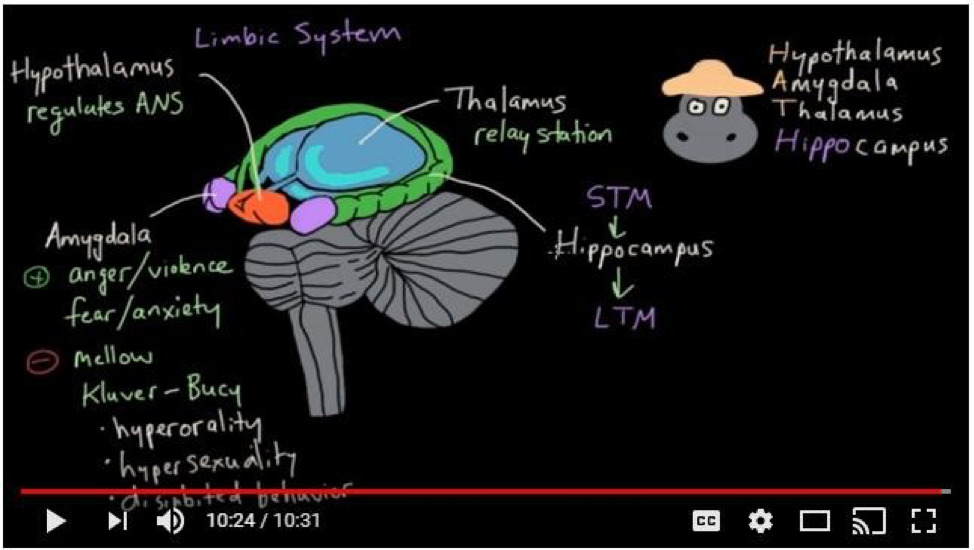
- ATrue
- BFalse
2The purpose of the limbic system is
- Aprocess sensory information
- Bit attaches emotional significance to our perceptions and drives our actions
- Callows is to act (move) in the world
3Feelings underlying love, altruism, morals, as well as anger, resentment, jealousy and greed are all generated by the limbic system.
- ATrue
- BFalse
4The limbic system is an [blank_start]integrative[blank_end] system that utilizes information from and has complex connections with, many different subsystems (motor, sensory, and autonomic systems).
- Aintegrative
- Bseparate
- Cequilizing
5The following are functions of the limbic system
- AIntegrate all experiences
- BAttaches emotional value & drive responses to them
- CConsolidates emotional experiences into memories
- DInnervates organ systems and muscles that are not under voluntary control
- EControls the release of hormones from the pituitary gland
6Which functions are the limbic system involved in?
- Alearning
- Bsensory
- Cmemory
- Dmotor movement
- Eemotion
- Fexecutive function
- Ghomeostatic control
7limbic lobe was identified as consisting of a ring-like area of cortex on the medial surface of each cerebral hemisphere, including the cingulate gyrus, parahippocampal gyrus and septal cortex – all three of which are interconnected by a white matter pathway called the [blank_start]cingulum[blank_end]
- Acingulum
- Bstriatum
- Cmesolimbic pathway
8The Papez Circuit includes the following areas of the brain:
- AOlfactory tracts & cortex
- BHippocampus
- CAmygdala
- DHypothalamic nuclei (e.g. mammillary bodies)
- EThalamic nuclei (anterior nucleus)
- FOrbitofrontal & dorsolateral prefrontal cortex
- GSuprachiasmatic nucleus
9Label the diagram:
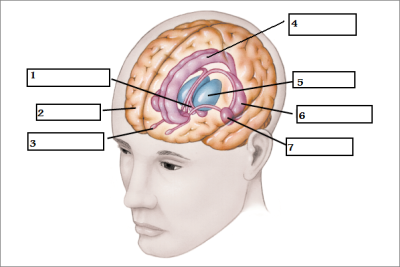
- AHypothalamus
- BHippocampus
- CPrefrontal cortex
- DAmygdala
- EThalamus
- FHippocampu
- GHippocampus
- HThalamus
- IAmygdala
- JHippocampus
- KOlfactory bulb
- LAmygdala
10The Papez Circuit:
Hippocampus connects to [blank_start]Mammillary Bodes (Hypothalamus)[blank_end] through the fornix
Mammillary Bodes (Hypothalamus) connect to the [blank_start]Anterior nuclei of the thalamus[blank_end] through the mammilo-thalmic tract
Anterior nucli of the thalamus connect to [blank_start]cingulate gyrus[blank_end] through internal capsule
Cingulate gyrus connects to [blank_start]hippocampus[blank_end] through cingulum- AMammillary Bodies (Hypothalamus)
- BAnterior nuclei of the thalamus
- Ccingulate gyrus
- Dhippocampus
11In the Papez circuit, the hippocampus is connected to the Mamillary Bodies (Hypothalamus) by the
- Amammillo-thalamic tract
- Bfornix
- Cinternal capsule
- Dcingulum
12In the Papez Circuit, the Mammillary Bodies (hypothalamus) are connected to the anterior nuclei of the thalamus by the
- Afornix
- Bmammillo-thalamic tract
- Cinternal capsule
- Dcingulum
13In the Papez Circuit, the anterior nuclei of the thalamus is connected to the cingulate gyrus by the
- Afornix
- Bmammillo-thalamic tract
- Cinternal capsule
- Dcingulum
14In the Papez Circuit, the cingulate gyrus is connected to the hippocampus by the
- Afornix
- Bmammillo-thalamic tract
- Cinternal capsule
- Dcingulum
15The functions of the limbic system can be divided into four basic categories:
- AOlfaction
- BHomeostatic functions (autonomic & neuroendocrine)
- CLearning & memory
- DEmotions & Drives
- EExecution of movement
16One of the things that makes the olfactory system unique is that smells evoke strong feelings, emotionally enhance our experiences, and facilitate the establishment of memories (all key limbic system functions).
- ATrue
- BFalse
17Olfactory cortex includes a part of the orbitofrontal cortex and the medial aspect of the temporal lobe known as the pyriform cortex that includes a medial bulge known as the uncus.
- ATrue
- BFalse
18The uncus is of clinical significance because:
- ASeizures can originate in this area (“uncinate fits”) and manifest as hallucinations of disagreeable odors
- Bpathways that course through the uncus, and facilitate communication between specific hypothalamic nuclei and between the hypothalamus and many other brain regions
- CLesions in the hemispheres of the brain can result in swelling (or edema), which can subsequently cause herniation of the uncus into the upper brainstem with serious consequences (“uncal herniation”)
19The limbic system modulates and, at times, directly activates the hypothalamus.
- ATrue
- BFalse
20[blank_start]Explicit[blank_end] memory refers to the conscious recollection of facts
[blank_start]Implicit[blank_end] memory refers to the subconscious learning of skills, habits or behaviors- AExplicit
- BImplicit
- CExplicit
- DImplicit
21Explicit memory includes
- Asemantic memory (facts and general knowledge)
- BProcedural memory (motor & cognitive skills)
- CEpisodic memory (personally experienced events)
- DPriming (enhanced identification of objects and words)
22The main structure in the limbic system that is important for establishing explicit memories is the
- Aamygdala
- Bthalamus
- Chippocampus
- Dhypothalamus
23Implicit memory refers to the subconscious learning of skills, habits or behaviors (e.g., how to ride a bike), and occurs through circuits of the
- AHippocampus
- BExtrapyramidal system
- CThalamus
- DCerebellum
24Severe memory deficit is usually observed only when the damage is [blank_start]bilateral[blank_end]
- Abilateral
- Bunilateral
25When lesions/damage create issues in the consolidation process of placing short-term memories into long-term storage this is referred to as [blank_start]anterograde[blank_end] amnesia while [blank_start]retrograde[blank_end] amnesia refers to the loss of previously formed long-term memories.
- Aanterograde
- Bretrograde
- Canterograde
- Dretrograde
26What brain structure is a major target in Alzheimer's Disease
- Ahypothalamus
- Bhippocampus
- Camygdala
- Dthalamus
27What nutritional deficiency causes Wernicke-Korsakoff Syndrome-
- ARiboflavin
- BFolate
- CThiamine
- DNiacin
28Thiamine deficiency in Wernicke-Korsakoff Syndrome, which is usually caused by ETOH can be manifested in
- Ainability to form memories
- Bseizures
- Cconfabulation of facts
- Daggression
29Prefrontal cortex:
[blank_start]Dorsolateral[blank_end] = executive, problem solving and analyzing
[blank_start]Ventomedial[blank_end] = role in emotional processing
[blank_start]Orbitofrontal cortex (OFC)[blank_end] = regulate impulses, compulsions, and drives
[blank_start]Anterior cingulate cortex (ACC)[blank_end] = selective attention, emotions, depression, and anxiety- ADorsolateral
- BVentomedial
- COrbitofrontal cortex (OFC)
- DAnterior cingulate cortex (ACC)
- EVentomedial
- FDorsolateral
- GOrbitofrontal cortex (OFC)
- HAnterior cingulate cortex (ACC)
- IOrbitofrontal cortex (OFC)
- JDorsolateral
- KVentomedial
- LAnterior cingulate cortex (ACC)
- MAnterior cingulate cortex (ACC)
- NDorsolateral
- OVentomedial
- POrbitofrona
30In the limbic system, the ________is responsible for constructing the perceptions of emotional feelings, making judgements about our experiences, and determining actions in response to the emotional value we place on our experiences
- Ahypothalamus
- Bamygdala
- Cprefrontal cortex
- Dhippocampus
31 The ________, which is part of the prefrontal cortex, is involved in impulse control, moral judgement, abstracting the rules of social interaction, and the ability to appreciate the consequences of one's actions
- Adorsolateral prefrontal cortex
- Borbitofrontal cortex
- Cventomedial prefrontal cortex
- Danterior cingulate cortex
32The _________ is involved primarily in executive functions, contributing to our ability to prioritize and carry out actions, and adapt to change.
- Aorbitofrontal cortex
- Bventomedial prefrontal cortex
- Cdorsolateral prefrontal cortex
- Danterior cingulate cortex
33[blank_start]Mood[blank_end] is an internal subjective state that fluctuates in response to physiological and environmental circumstances
[blank_start]Temperament[blank_end] refers to the relatively stable characteristics and personality traits of individuals and how they engage with the world throughout their lifetime- AMood
- BTemperament
- CMood
- DTemperament
34When there is dysfunction of the limbic system circuits that give rise to mood and temperament, there can be a significant change in how an individual reacts in the world and with others.
- ATrue
- BFalse
35The endogenous reward system involves which structures in the brain
- APrefrontal cortex
- BVentral tegmental area (VTA)
- CNucleus accumbens
- DAmygdala
36Ventral tegmental area (VTA) is a tiny group of dopaminergic (releasing or involving dopamine as a neurotransmitter) neurons located in the midbrain that gives rise to two major projections or pathways:
- AFornix
- BCingulum "association" pathway
- CMesolimbic
- DMesocortical
37Mesolimbic:
- AProjection is to the nucleus accumbens, and the amygdala.
- Bprojection is to the cortex, predominantly the prefrontal cortex
- CInvolved in pleasure and reward; stimulation of this pathway results in a sense of pleasure
- Dinvolved in motivational behavior; tied to pleasure and reward
38Mesocortical pathway:
- AProjection is to the nucleus accumbens and the amygdala.
- BProjection is to the cortex, predominantly the prefrontal cortex
- CInvolved in pleasure and reward; stimulation of this pathway results in a sense of pleasure
- Dinvolved in motivational behavior; tied to pleasure and reward.
39VTA and its projections to the nucleus accumbens is involved in virtually every type of addiction
- ATrue
- BFalse
40The ability to attach negative emotions to experiences, which then drive behavior, is what underlies survivability for all animals, including humans.
- ATrue
- BFalse
41The major structure of the brain that pairs experience with emotion, including fear, is the __________, a subcortical nuclear complex located in the temporal lobe.
- Ahippocampus
- Bhypothalamus
- Cthalamus
- Damygdala
42Functions of the amygdala include:
- ADetermines emotional significance of sensory input
- BCoordinates a multisystem response to sensory input, especially that which requires immediate attention, such as potential threats
- CFacilitates the establishment of emotional memory
- DInfluences sexual behavior and food & water intake.
- Erelease hormones to the anterior lobe by way of a special capillary bed
43Kluver-Bucy Syndrome is a clinical condition where the removal of the bilateral temporal lobes (including the amygdala) leads to:
- Amild retrograde and severe anterograde amnesia;
- Borthostatic hypotension
- Chypersexual, docile and unresponsive to innate threats, and developed a voracious appetite.
- Dpoikilothermia, a condition in which body temperature varies with the environment.
44The amygdala has widespread and often reciprocal connections to many areas of the brain, including the neocortex, hippocampus, hypothalamus, nuclei of the extrapyramidal motor system, and thalamus.
- ATrue
- BFalse
45Amygdala receives direct projections from sensory relay nuclei of the [blank_start]thalamus[blank_end], bypassing the [blank_start]cortex,[blank_end] so that emotional significance can be paired with incoming sensory information even before there is a conscious perception of what the stimulus actually is.
- Athalamus
- Bcortex,
46The amygdala is involved in quickly reacting to acute threatening situations by:
- AReceiving direct projections from sensory relay nuclei of the thalamus
- BRapidly judging experiences and directing an immediate behavioral response
- CActivating the region of the hypothalamus involved in control of the SNS
- DActivating the PNS after the threat is over, to bring about a state of rest and relaxation
47If the amygdala and associated limbic system circuits are continuously responding to perceptually stressful stimuli, such as in the setting of chronic stress, there can be negative consequences, including dysfunction of the immune system, the cardiovascular system, and parts of the nervous system.
- ATrue
- BFalse
48Each of the nuclei in the limbic system uses a specific neurotransmitter to communicate with other parts of the brain.
- ATrue
- BFalse
49[blank_start]Glutamate[blank_end] = turns brain on; builds memory; regulates awareness, movement, sensation & mood
[blank_start]GABA[blank_end] - turns brain off; involved in sleep, sedation, relaxation, reducing anxiety & decreasing muscle tension
[blank_start]Endocannabinoids[blank_end] = regulate pain, appetite
[blank_start]Serotonin[blank_end] = regulate mood, anxiety, appetite, sleep cycle
[blank_start]Noradrenaline[blank_end] = feelings of alertness, attention, concentration, raising BP, lifts mood, can cause anxiety
[blank_start]Dopamine[blank_end] = creates feelings of motivation and drive, liking, attention, pleasure & enjoyment in food
[blank_start]Acetylcholine[blank_end] = regulates sleep cycle and alertness and builds memory- AGlutamate
- BGABA
- CEndocannabinoids
- DSerotonin
- ENoradrenaline
- FDopamine
- GAcetylcholine
- HGABA
- IGlutamate
- JEndocannabinoids
- KSerotonin
- LNoradrenaline
- MDopamine
- NAcetylcholine
- OEndocannabinoids
- PGlutamate
- QGABA
- RSerotonin
- SNoradrenaline
- TDopamine
- UAcetylcholine
- VSerotonin
- WGlutamate
- XGABA
- YEndocannabinoids
- ZNoradrenaline
- AADopamine
- ABAcetylchonie
- ACNoradrenaline
- ADGlutamate
- AEGABA
- AFEndocannabinoids
- AGSerotonin
- AHDopamine
- AIAcetylcholine
- AJDopamine
- AKGlutamate
- ALGABA
- AMEndocannabinoids
- ANSerotonin
- AONoradrenaline
- APAcetyhlcholine
- AQAcetylcholine
- ARGlutamate
- ASGABA
- ATEndocannabinoids
- AUSerotonin
- AVNoradrenaline
- AWDopamine
50Within the CNS, there are high concentrations of cholinergic neurons in
- Amidbrain reticular formation (which facilitates wakefulness)
- Bbasal forebrain (crucial role in establishment of memory)
- CRaphe nucei
- DNucleus locus coeruleus
51Acetylcholine acts on target neurons in the _________ and the __________, strengthening the neural circuits that are involved in memory formation.
- Aprefrontal cortex
- Bcerebral cortex
- Chippocampus
- Dorbitocingulate cortex
52Serotonin (5–HT) is a monoamine (specifically, an indoleamine) that is produced by [blank_start]raphe[blank_end] nuclei, small groups of serotonergic neurons in the reticular formation extending from the medulla to the midbrain
- Araphe
53Dopamine is a monoamine (specifically, a catecholamine) that is produced by several different nuclear groups in the brain. One of these nuclear groups – the [blank_start]ventral tegmental area[blank_end] – is located in the midbrain, and has major connections to limbic system structures via the mesolimbic and mesocortical pathways
- Aventral tegmental area
54[blank_start]Mesolimbic pathway[blank_end] (VTA nucleus accumbens and other limbic system structures such as the amygdala) – involved in pleasure and reward; stimulation of this pathway results in a sense of pleasure.
[blank_start]Mesocortical pathway[blank_end] (VTA prefrontal cortex) – involved in motivational behavior; tied to pleasure and reward.- AMesolimbic pathway
- BMesocortical pathway
- CMesolimbic pathway
- DMesocortical pathway
55Dopamine (via the mesolimbic & mesocortical pathways) plays a major role in addiction. Any drug that elicits the subjective sense of pleasure or joy acts on these dopaminergic pathways (i.e., the endogenous reward system); and such drugs can be physiologically and/or psychologically addicting.
- ATrue
- BFalse
56Norepinephrine is a monoamine (specifically, a catecholamine) that, in the CNS, is produced by the ____________, a tiny, paired nucleus that lies dorsolaterally in the pontine reticular formation.
- Aventral tegmental area (VTA)
- Braphe nuclei
- Cnucleus locus coeruleus
- Dnucleus accumbens
57Monoamine neurotransmitters modulate our emotional response to the world and our mood. If the levels of the monoamines are increased, there is a feeling of well-being. If levels are decreased, the result can be depression.
- ATrue
- BFalse
58The standard classes of medications used to treat depression modulate monoamine neurotransmitters. These drugs might facilitate the transmission of monoamine synaptic connections by:
- Afacilitate the release of neurotransmitters at the presynaptic terminal
- Bblock reuptake of neurotransmitters into the presynaptic terminal
- Cprevent the breakdown of the neurotransmitter in the synaptic cleft
- Dfacilitate the reuptake of neurotransmitters into the presynaptic terminal
59The four categories of "antidepressant" medications are:
- ATricyclic antidepressants
- BMonoamine oxidase inhibitors (MAOIs)
- CSelective-serotonin reuptake inhibitors (SSRIs)
- DDesigner antidepressants – drugs specifically designed to affect one or more neurotransmitters at sites that are not targeted by TCAs, MAOIs or SSRIs
- EGoing to dinner and drag on a Friday night
60Tricyclic antidepressants work by
- Ainhibiting monoamine oxidase is the enzyme that breaks down monoamine neurotransmitters therby increasing the availability of dopamine, serotonin and dopamine in the synaptic cleft
- Binhibiting the reuptake of monoamine neurotransmitters (particularly serotonin and norepinephrine), thereby increasing the concentration and availability of the monoamines to bind postsynaptic receptors.
61Glutamate is the [blank_start]most[blank_end] used neurotransmitter in the nervous system and is [blank_start]always[blank_end] thought to cause an excitatory postsynaptic response.
- Amost
- Bleast
- Calways
- Dnever
62Neurons that release opioids are also involved in limbic system circuits; in fact, the highest density of opioid receptors is in limbic system structures.
- ATrue
- BFalse
63Papez Circuit
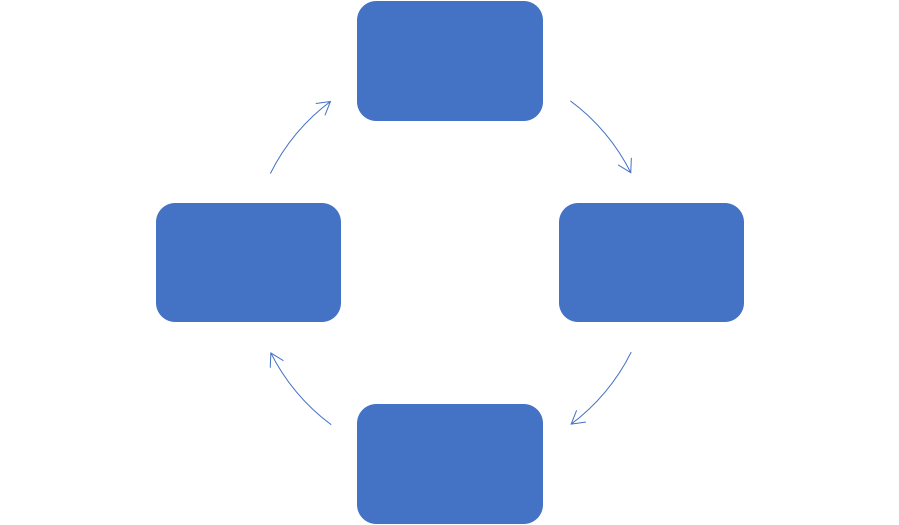
- AHippcampus
- BMamillary Bodies
- CFornix
- DMammillo-thalamic tract
- EAnterior nuclei of the thalamus
- FInternal capsule
- GCingulate gyrus
- HCingulum
Information
- Description
- Quiz on Limbic System & Limbic System Neurotransmitters, created by Melanie Grynsztejn on 11/02/2018.
- Author
- Melanie Grynsztejn
- Language
- English
- Views
- 2,201
- Tags
- Rating
- No ratings yet Rate this quiz