
Quiz
B6 Quiz
Create a free account to finish this quiz
Save your progress and see your final score.
Already have an account? Sign in
Questions in this quiz (102)
1What does the strand of DNA in a bacterial cell's cytoplasm do?
- AControls the cell's activities and replication
- BControls the cell's activities and respiration
2What are the small loops of DNA in a bacterial cell called?
- APlasmids
- BPlasmas
- CPlastics
3What does the flagellum do?
- AActs like a tail and helps the bacterial cell to move
- BActs like a tail and helps the bacterial cell to swim
- CActs like a tail and helps the bacterial cell to reproduce
4What are the four shapes of bacterial cells?
- ARods
- BCurved rods
- CBent rods
- DSpheres
- ESpirals
5Why can bacteria survive in almost any habitat (e.g. soil, water, air, the human body and food)?
- ABecause they consume a huge range of organic nutrients from their surroundings which provides them with energy
- BBecause some bacteria can even produce their own nutrients such as by photosynthesis
- CBecause some bacteria can even produce their own nutrients such as by respiration
- DBecause they consume a small range of organic nutrients from their surroundings which provides them with energy
6Bacteria reproduce by asexual reproduction:
- AThey reproduce very quickly. If disease-causing bacteria enter your body, they can reproduce and cause disease before your body has a chance to respond
- BThey reproduce by a process called binary fission (splitting into two) and are clones of each other
- CThey reproduce faster when it's warm and there's a good source of nutrients
- DThey reproduce faster when it's cold and there's a good source of nutrients
- EThey reproduce very slowly. If disease-causing bacteria enter your body, they can reproduce and cause disease before your body has a chance to respond
7In a fridge, the cold temperature slows down the bacteria's reproduction and things like meat won't spoil as quickly.
- ATrue
- BFalse
8Bacteria can be cultured on an agar plate - a Petri dish containing agar jelly. Bacteria can then be transferred to the plate from a sample using a wire inoculation stick.
- ATrue
- BFalse
9When you culture bacteria, it's important to use aseptic technique to protect yourself from infection and to stop the agar from being contaminated by other microbes. This involves:
- AWearing gloves and keeping hair tied back (so it doesn't fall in the culture).
- BSterilising equipment before and after use - e.g. passing the inoculation loop through a Bunsen burner flame to kill any unwanted bacteria on it
- CSealing the dish once you've transferred bacteria onto it
- DDisposing of cultures safely after use - usually done by pressure sterilising in an autoclave
- EDisposing of cultures safely after use - usually done by pressure sterilising in an auton
- FSealing the dish before you transfer bacteria onto it
10Using bacteria to make yoghurt:
- AThe equipment is sterilised to kill off any unwanted microorganisms
- BThe milk is pasteurised (heated up to 72 degrees for 15 seconds) to kill off any unwanted microorganisms. The milk is then cooled
- CA starter culture of Lactobacillus bacteria is added. The mixture is incubated (heated to about 40 degrees) in a vessel called a fermenter. The bacteria break down the lactose sugar in the milk into lactic acid. The lactic acid causes the milk to clot and solidify into yoghurt
- DA sample is taken to check the consistency. Then flavours (e.g. fruit) and colours are sometimes added and the yoghurt is packaged
- EThe milk is pasteurised (heated up to 72 degrees for 15 seconds) to kill off any unwanted microorganisms. The milk is then heated
- FA starter culture of Lactobacillus bacteria is added. The mixture is incubated (heated to about 40 degrees) in a vessel called a fermenter. The bacteria break down the lactose sugar in the milk into amino acids. The lactic acid causes the milk to clot and solidify into yoghurt
11Bacteria are used to make cheese, vinegar, silage and compost.
- ATrue
- BFalse
12When yeast respires anaerobically (without oxygen):
- AEthanol, carbon dioxide and energy are produced
- BWater, carbon dioxide and energy are produced
- CThe process is called fermentation
- DC6H12O6 → 2C2H5OH + 2CO2 (+ energy)
- EC6H12O6 → 2C2H4OH + 2CO2 (+ energy)
- FThe fermentation process is used to make beer and wine
13When yeast respires aerobically (with oxygen):
- AEthanol, carbon dioxide and energy are produced
- BWater, carbon dioxide and energy are produced
- CMore energy is released than anaerobic respiration
- DLess energy is released than anaerobic respiration
- EAerobic respiration is the same for yeast as it is for plants and animals
- FAerobic respiration is different for yeast than it is for plants and animals
14Yeast prefers to respire anaerobically because it releases more energy so fermentation only takes place in the absence of oxygen.
- ATrue
- BFalse
15The faster yeast respires, the faster it's able to reproduce. It's growth rate varies:
- AThe warmer it is, the faster the yeast reproduces (growth rate doubles for every 10 degree rise in temperature until the optimum is reached) but the yeast dies if it is too hot
- BThe more food (glucose) there is, the faster the yeast reproduces
- CBuild-up of toxic waste products, e.g. ethanol, slows down reproduction
- DThe pH has to be just right. Too high or too low a pH slows down reproduction
- EThe pH has to be just right. Too high or too low a pH speeds up reproduction
- FThe warmer it is, the faster the yeast reproduces (growth rate triples for every 10 degree rise in temperature until the optimum is reached) but the yeast dies if it is too hot
16How can you measure how fast the yeast is reproducing?
- ABy measuring how much glucose (sugar) the yeast breaks down. The faster the yeast reproduces, the more glucose will be broken down
- BBy measuring how much ethanol (alcohol) the yeast breaks down. The faster the yeast reproduces, the more ethanol will be broken down
17Why does yeast reproduce faster in the presence of oxygen?
- ABecause it's able to respire aerobically, giving it more energy for reproduction
- BBecause it's able to respire anaerobically, giving it more energy for reproduction
18Wastewater can be cleaned up with yeast:
- AFood-processing factories need to get rid of sugary water. They can't release it into waterways because it would cause pollution - bacteria in the water would feed on the sugar and reproduce quickly, using up all the oxygen in the water, killing organisms like fish that need oxygen
- BYeast can be used to treat the contaminated water before it's released - it uses up the sugar in respiration
- CYeast can be used to treat the contaminated water before it's released - it uses up the sugar in fermentation
- DFood-processing factories need to get rid of sugary water. They can't release it into waterways because it would cause pollution - bacteria in the water would feed on the sugar and reproduce quickly, using up all the carbon dioxide in the water, killing organisms like fish that need carbon dioxide
19Making wine:
- AThe grapes are mashed and water is added
- BYeast is added and the mixture is incubated (kept warm) and the yeast ferments the sugar into alcohol
- CThe wine is drawn off through a tap and clarifying agents are sometimes added to remove particles and make it clearer
- DThe wine is not pasteurised - any yeast left carry on slowly fermenting the sugar and it is bottled
- EThe wine is pasteurised - any yeast left carry on slowly fermenting the sugar and it is bottled
- FYeast is added and the mixture is incubated (kept warm) and the yeast ferments the sugar into wine
20Getting the sugar out of the grain (usually barley) to make beer:
- AThe barley grains are allowed to germinate for a few days, during which the starch in the grains is broken down into sugar by enzymes. Then the
grains are dried in a kiln. This process is called malting - BThe malted grain is mashed up and water is added to produce a sugary solution with lots of bits in it. This is then sieved to remove the bits
- CHops are added to the mixture to give the beer its bitter flavour
- DThe malted grain is mashed up and water is added to produce an alcoholic solution with lots of bits in it. This is then sieved to remove the bits
- EThe barley grains are allowed to germinate for a few days, during which the starch in the grains is broken down into sugar by yeast. Then the
grains are dried in a kiln. This process is called malting
- AThe barley grains are allowed to germinate for a few days, during which the starch in the grains is broken down into sugar by enzymes. Then the
21Germination is when a seed starts to grow into a new plant.
- ATrue
- BFalse
22Things about fermentation in brewing:
- AThe fermenting vessels are designed to stop unwanted microorganisms and air getting in (to make sure the yeast respires anaerobically)
- BThe rising concentration of alcohol (ethanol) in the fermentation mixture due to anaerobic respiration eventually starts to kill the yeast. As the yeast dies, fermentation slows down
- CDifferent species of yeast can tolerate different levels of alcohol. Some species can be used to produce strong wine and beer with a high concentration of alcohol
- DThe fermenting vessels are designed to stop unwanted microorganisms and air getting in (to make sure the yeast respires aerobically)
- EThe rising concentration of alcohol (ethanol) in the fermentation mixture due to anaerobic respiration eventually starts to kill the yeast. As the yeast dies, fermentation speeds up
23Beer is pasteurised (heated) to kill any yeast left in the beer and completely stop fermentation. Beer tastes better if it's unpasteurised and aged in the right conditions but big breweries pasteurise it because there is a risk pasteurised beer will spoil if it's not stored in the right conditions after it's sold.
- ATrue
- BFalse
24If cane sugar is fermented and distilled, you get rum.
- ATrue
- BFalse
25Sometimes the products of fermentation are distilled to increase the alcohol content. This produces spirits:
- ADistillation is used to separate the alcohol out of the alcohol-water solution that's produced by fermentation
- BThe fermentation products are heated to 78 degrees, the temperature at which the alcohol (but not the water) boils and turns into vapour
- CThe alcohol vapour rises and travels through a cooled tube which causes it to condense back into liquid alcohol and run down into a collecting vessel
- DThe distillation of alcohol is a commercial process that can only be done on licensed premises
- EThe distillation of alcohol is a commercial process that can be done anywhere
- FThe fermentation products are heated to 78 degrees, the temperature at which the water (but not the alcohol) boils and turns into vapour
26Biomass:
- ALiving or recently-dead organic material e.g. plant matter
- BA store of energy which can be transferred into more useful forms e.g. heat from burning
- CFast growing trees can be burnt, releasing heat
- DBiomass can be fermented by yeast and bacteria to create products such as biogas, which can be used as fuel
- EFast growing trees can be burnt, releasing gas
- FDead, decomposed organic material e.g. plant matter
27Biogas usually contains:
- A70% methane (CH4)
- B30% carbon dioxide (CO2)
- C30% methane (CH4)
- D70% carbon dioxide (CO2)
- ETraces of hydrogen, nitrogen and hydrogen sulfide
- FTraces of hydrogen, nitrogen and hydrogen oxide
28Biogas containing more than 50% methane burns easily but if it contains around 10% methane it can be explosive.
- ATrue
- BFalse
29Where does the methane come from in biogas?
- AThe bacteria's respiration in the digester
- BThe bacteria's fermentation in the digester
30Biogas as fuel:
- ABurned to power a turbine and generate electricity (good for remote areas with no mains supply)
- BBurned to heat water and produce steam to heat central heating systems
- CUsed as a fuel for cars and buses
- DBurned to heat water and produce steam in power stations
- EBurned to power a turbine and generate electricity (good for city areas with no mains supply)
31Biogas is made by anaerobic fermentation of waste material e.g. plant waste and animal poo on a small scale and sludge waste (from sewage works or sugar factories) on a large scale. Substances are broken down without oxygen so biogas is made in a simple fermenter called a digester which has anaerobic conditions:
- ASeveral different types of bacteria are used. Some decompose the organic matter and produce waste, then another type decompose that waste, and so on, until you get biogas
- BBiogas digesters need to be kept at a constant warm temperature (30-40 degrees). This is the optimum temperature for the bacteria's respiration. Any cooler and the bacteria don't produce biogas as fast. Any hoter and the bacteria will be killed
- CThe simple biogas generator (digester) has an inlet for the waste material, an outlet for the digested material and an outlet for the biogas
- DOnly one type of bacteria is used. They decompose the organic matter and produce waste, then they decompose that waste, and so on, until you get biogas
- EBiogas digesters need to be kept at a constant warm temperature (50-60 degrees). This is the optimum temperature for the bacteria's respiration. Any cooler and the bacteria don't produce biogas as fast. Any hoter and the bacteria will be killed
32Large-scale biogas production uses a continuous flow method. What is a continuous flow method?
- AWhere organic waste is continuously fed into the digester, and the biogas and solid digested material are continuously removed at a steady rate
- BWhere organic waste is continuously fed into the digester, and the biogas and solid digested material are continuously removed at a fast rate
33Advantages of biofuels:
- AThey can be produced in a sustainable way. The crops which are decomposed to make biogas can be replaced quickly with new plants whereas there is as finite supply of fossil fuels
- BThey are carbon neutral because the carbon dioxide (a greenhouse gas) removed from the atmosphere when the plants photosynthesise is equal to the amount of carbon dioxide released when the biogas is burnt. This is good because greenhouse gas levels are causing global warming
- CBiogas is a cleaner fuel than diesel or petrol because when it is burnt it doesn't produce particulates which can cause lung disease
- DBiogas is a cleaner fuel than diesel or petrol because when it is burnt it doesn't produce smoke which can cause lung disease
- EThey can be produced in an unsustainable way. The crops which are decomposed to make biogas can be replaced quickly with new plants whereas there is as finite supply of fossil fuels
- FThey are carbon neutral because the carbon dioxide (a greenhouse gas) removed from the atmosphere when the plants photosynthesise is larger than the amount of carbon dioxide released when the biogas is burnt. This is good because greenhouse gas levels are causing global warming
34Disadvantages of biofuels:
- ABiogas doesn't contain as much energy as the same volume of natural gas (from underground supplies) because it's more dilute
- BLarge areas of land are sometimes cleared of vegetation to create space to produce biofuels and this increases greenhouse gas levels and creates huge problems from ecosystems
- CAs plants are cleared, the habitats of many plant and animal species are destroyed
- DThe loss of habitats and a change in food availability might mean that some species become extinct in the area
- EBiogas doesn't contain as much energy as the same volume of natural gas (from underground supplies) because it contains more methane
- FLarge areas of land are sometimes cleared of vegetation to create space to produce biofuels and this decreases greenhouse gas levels and creates huge problems from ecosystems
35Burning biofuels is only carbon neutral if:
- AThe biofuels are burnt at the same rate that the new biomass is produced
- BAreas of land are cleared to grow biomass without burning other vegetation. When the vegetation is burnt it releases more carbon dioxide into the atmosphere
- CAreas of land are cleared to grow biomass without burning other vegetation. When the vegetation is burnt it releases less carbon dioxide into the atmosphere
- DThe biofuels are burnt at the same rate that the new biomass is burnt
36Ethanol can be burnt as a fuel. It can be used to power adapted cars when it is mixed with petrol to create gasohol. Gasohol is a mixture of about 10% ethanol and 90% petrol. There are many advantages of using ethanol and gasohol:
- AEthanol is a cleaner fuel than petrol or diesel, producing fewer pollutants
- BEthanol is a renewable resource. It is produced by using yeast to ferment glucose. Materials like sugar cane, corn and barley can be used as a source of glucose in ethanol production
- CUsing gasohol instead of pure petrol means that less crude oil is being used up
- DThe growth of crops for ethanol production means that carbon dioxide is being absorbed from the atmosphere in photosynthesis. This goes some way towards balancing out the release of carbon dioxide when the gasohol is burnt
- EUsing gasohol instead of pure petrol means that more crude oil is being used up
- FEthanol is a renewable resource. It is produced by using yeast to ferment glucose. Materials like sugar cane, corn and barley can be used as a source of energy in ethanol production
37Why is gasohol good for countries like Brazil?
- AIt is more economically viable to use gasohol in areas where there is plenty of sugar cane (e.g. tropical countries) and not a lot of oil
- BIt is more economically viable to use gasohol in areas where there is plenty of sugar cane (e.g. tropical countries) and a lot of oil
38Sandy soils:
- ALarge mineral particles
- BLarge pores (gaps) due to large particles
- CHigh air content due to large pores
- DVery permeable (water passes through easily) due to large pores
- EHigh air content due to small pores
- FLow permeability (water doesn't pass through easily) due to large pores
39Clay soils:
- AMostly tiny particles
- BVery small pores because small particles can pack tightly together
- CLow air content due to small pores
- DLow permeability - they tend to retain more water instead of letting it through because the water molecules cling to the small particles
- ELow air content due to large pores
- FLow permeability - they tend to relay more water instead of letting it through because the water molecules cling to the small particles
40Loam soils:
- AContain a mixture of sand and clay particles
- BContain just sand particles
- CContain just clay particles
- DTheir properties depend on the relative amounts of the different types of particles
- ETheir properties are always the same no matter what the relative amounts of the different types of particles
41What is humus?
- ADecomposed, dead organic matter which helps to support soil life
- BDecomposed, dead organic matter which helps to support water life
- CSandy organic matter which helps to support soil life
42How to measure the water content of a soil sample:
- ATake the mass of a small soil sample and then heat it to 105 degrees until it reaches a constant mass (the water in the soil will now be boiled off)
- BTake the mass of the dried soil sample and the difference between the first and second reading is equal to the mass of the water from the original soil sample
- CTake the mass of a small soil sample and then heat it to 100 degrees until it reaches a constant mass (the water in the soil will now be boiled off)
- DTake the mass of the dried soil sample and the sum of the first and second reading is equal to the mass of the water from the original soil sample
43How to measure the humus content of a soil sample:
- AWeigh a dried soil sample then heat it to 550 degrees for two hours (this will burn all the humus off)
- BTake the mass of the heated soil sample and the difference between this and the original dried mass is equal to the mass of humus in the original soil sample
- CWeigh a dried soil sample then heat it to 500 degrees for two hours (this will burn all the humus off)
- DTake the mass of the dried soil sample and the difference between this and the original dried mass is equal to the mass of humus in the original soil sample
44How to measure the air content of a soil sample:
- ALoosely pack a sample of soil into a beaker or test tube and measure the volume of soil
- BFill up a pipette (or measuring cylinder) with a known volume of water and gradually add it to the beaker, letting it seep down into the soil sample, until the water comes up to the top of the soil sample
- CTo find out how much water you added, subtract the volume of water left in the pipette from the volume you started with. As the water has replaced the air in the soil, the volume of water added is the same as the volume of air that was in the sample to begin with
- DFill up a pipette (or measuring cylinder) with an unknown volume of water and gradually add it to the beaker, letting it seep down into the soil sample, until the water comes up to the top of the soil sample
- ETo find out how much water you added, subtract the volume of water left in the pipette from the volume you started with. As the water has replaced the air in the soil, the volume of water left in the pipette is the same as the volume of air that was in the sample to begin with
45Why do plants need soil?
- AFor anchorage (to stop them falling over)
- BFor a supply of minerals and water
- CFor a supply of minerals and oxygen
46Soil is an ecosystem in itself - it contains complex food webs with herbivores, carnivores and detritivores.
- ATrue
- BFalse
47What other organisms live in the soil?
- AMicroscopic protozoans, fungi, nematode worms and bacteria
- BMicroscopic protozoans, fungi, earthworms and bacteria
- CMicroscopic protozoans, fungi, nematode worms and viruses
48What herbivores, carnivores and detritivores live in the soil?
- ASnails (herbivore), spiders (carnivore) and earthworms (detritivore)
- BGround beetles (herbivore), spiders (carnivore) and earthworms (detritivore)
- CSnails (herbivore), slugs (carnivore) and earthworms (detritivores)
49In order for a soil to support life, it must contain water and oxygen. All living things need water to carry out reactions in their cells, and cannot survive without it. Almost everything needs oxygen too, for respiration. For example, the roots of plants need to get oxygen from the soil in order to respire. The presence of humus also helps support life in the soil:
- AAs organic material (humus) is slowly broken down by decomposers, minerals and nutrients are released into the soil. These compounds can then be used by other organisms
- BHumus increases the air content of the soil, making more oxygen available to the organisms that live there
- CAs organic material (humus) is quickly broken down by decomposers, minerals and nutrients are released into the soil. These compounds can then be used by other organisms
- DHumus increases the air content of the soil, making less oxygen available to the organisms that live there
50Charles Darwin spent a lot of time studying earthworms. He observed them closely and experimented on them to see what sort of food they ate and how they behaved. He discovered these reasons why worms are good for soil structure and fertility:
- AEarthworms bury leaves and other organic matter in the soil, where bacteria and fungi can decompose them
- BTheir burrows allow air to enter the soil (aeration) and water to drain through it. Aeration provides organisms with oxygen and drainage stops the soil from getting waterlogged which decreases the amount of oxygen that is available
- CThey mix up the soil layers, distributing the nutrients more equally
- DThe soil in earthworm poo is less acidic than the soil they eat. This can help to neutralise soil acidity which is good because acidic soils are less fertile than neutral or alkaline soils (although worms tend to avoid very acidic soils)
- ETheir burrows allow air to enter the soil (aeration) and water to drain through it. Aeration provides organisms with oxygen and drainage stops the soil from getting waterlogged which increases the amount of oxygen that is available
- FThe soil in earthworm poo is more acidic than the soil they eat. This can help to neutralise soil acidity which is good because acidic soils are less fertile than neutral or alkaline soils (although worms tend to avoid very acidic soils)
51Farmers and gardeners can buy earthworms (from worm factories) and add them to their soil to improve it.
- ATrue
- BFalse
52Advantages of living in water:
- AThere's a plentiful supply of water so there shouldn't be any danger of water shortage or dehydration (unless a drought makes streams dry up)
- BThere's less variation in temperature because water doesn't heat up or cool down as quickly as air so you don't normally get sudden changes in temperature which water life can find it difficult to withstand
- CWater provides support for plants and animals that have no skeletal system (e.g. jellyfish)
- DWaste disposal is easier. Poo and wee are easily dispersed and the loss of water in wee doesn't matter because there's plenty of water about to make up for it
- EThere's less variation in temperature because water doesn't heat up or cool down as quickly as air so you normally get sudden changes in temperature which water life can find it difficult to withstand
- FThere's a plentiful supply of water so there shouldn't be any danger of water shortage or hydration (unless a drought makes streams dry up)
53Disadvantages of living in water:
- AWater is more resistant to movement than air, so animals living in water have to use more energy to move about
- BAquatic animals have to be able to control the amount of water in their body (water regulation) because the water an animal lives in has a different concentration of solutes from the animal's cells. If the animal couldn't regulate water, water molecules would enter or leave the animal's cells by osmosis to even up the solute concentrations
- CWater is more resistant to movement than air, so animals living in water have to use less energy to move about
- DAquatic animals have to be able to control the amount of water in their body (water regulation) because the water an animal lives in has a different concentration of solutes from the animal's cells. If the animal couldn't regulate water, water molecules would enter or leave the animal's cells by diffusion to even up the solute concentrations
54If an animal lived in salt-water:
- AIts cells would probably contain a lower solute concentration than the surrounding water
- BWater molecules would leave its cells by osmosis, causing them to shrivel and die if they couldn't regulate water
- CIts cells would probably contain a higher solute concentration than the surrounding water
- DWater molecules would enter its cells by osmosis, causing them to swell and burst if they couldn't regulate water
55If an animal lived in freshwater:
- AWater molecules would leave its cells by osmosis, causing them to shrivel and die if they couldn't regulate water
- BWater molecules would enter its cells by osmosis, causing them to swell and burst if they couldn't regulate water
- CIts cells would probably contain a lower solute concentration than the surrounding water
- DIts cells would probably contain a higher solute concentration than the surrounding water
56Most single-celled organisms, like amoebas, only have a cell membrane between them and the surrounding water. So they regulate their water content like this:
- AAmoebas regulate water with a contractile vacuole which collects the water that diffuses in by osmosis
- BThe contractile vacuole moves to the cell membrane and contracts to empty the water outside the cell
- CThe contractile vacuole moves to the cell membrane and contracts to empty the water inside the cell
- DAmoebas regulate water with a contractile nucleus which collects the water that diffuses in by osmosis
57Plankton are microscopic organisms that live in fresh and salt water. There are two types:
- APhytoplankton are microscopic plants which photosynthesise and are the main producers in aquatic food webs so are very important in both freshwater and salt-water ecosystems
- BZooplankton are microscopic animals which feed on phytoplankton
- CZooplankton are microscopic animals which feed on dead organic matter
- DPhytoplankton are microscopic plants which photosynthesise and are the main producers in aquatic food webs so are very important in freshwater ecosystems
58Photosynthesis is affected by temperature, light intensity and the availability of minerals like nitrates. These factors vary at different depths and in different seasons, causing the rate of photosynthesis to vary too:
- ADuring the winter months and in deep water, light intensity and temperature are low. Mineral concentration on the other hand is relatively high. In these conditions, light intensity and temperature limit the rate of photosynthesis
- BDuring the summer and near the water's surface, light intensity and temperature are higher but mineral concentration is much lower. Mineral concentration limits the amount of photosynthesis
- CDuring the summer months and in near the water's surface, light intensity and temperature are low. Mineral concentration on the other hand is relatively high. In these conditions, light intensity and temperature limit the rate of photosynthesis
- DDuring the winter months and in deep water, light intensity and temperature are high. Mineral concentration on the other hand is relatively high. In these conditions, light intensity and temperature limit the rate of photosynthesis
59Phytoplankton populations usually increase between late spring and late summer. This is called an algal bloom (phytoplankton are a type of algae). An algal bloom makes the water go all green and murky. The increase is due to longer, sunnier days in summer:
- AMore light is available for photosynthesis and the energy is used for growth
- BTemperatures increase, causing both photosynthesis and growth rates to increase
- CThe population of zooplankton increases because there is more phytoplankton to feed on
- DMore light is available for photosynthesis and the energy is used for food
- ETemperatures increase, causing both photosynthesis and growth rates to decrease
60Most ocean food webs are "grazing food webs" which means they begin with a living producer (an organism which can produce its own food). Producers in oceans food webs are often phytoplankton. But in deep water where light can't penetrate, photosynthesis can't take place:
- AGrazing food webs in deep water are supported by bacterial producers that rely on sulfur from deep sea vents (instead of sunlight)
- BIn other deep-sea food webs, animals often feed on dead, decomposing material that has slowly fallen from nearer the surface. This "marine snow" is the major source of nutrients for these food webs
- CGrazing food webs in deep water are supported by fungal producers that rely on sulfur from deep sea vents (instead of sunlight)
- DIn other deep-sea food webs, animals often feed on dead, decomposing material that has slowly fallen from nearer the surface. This "marine snow" isn't a source of nutrients for these food webs
61Pollution of water by fertilisers and sewage causes eutrophication - fertilisers and sewage enter water adding extra nutrients, algae grow rapidly, algae die and decay, bacteria feed on dead algae using up oxygen in the water and animals are unable to respire and die.
- ATrue
- BFalse
62Some organisms are particularly sensitive to the level of oxygen in the water. These species are used by scientists to indicate how polluted the water is (the less oxygen, the more polluted). For this reason they are called indicator species:
- AClean - Mayfly nymph
- BLow - freshwater shrimp
- CHigh - Waterlouse
- DVery high - rat-tailed maggot
- EHigh - sludgeworm
63Species that are sensitive to different pHs can be used as indicator species. By seeing which species live in a particular area, scientists can make a pretty good estimate of the pH.
- ATrue
- BFalse
64Chemicals which have caused water pollution include pesticides like DDT (used to kill lice and mosquitoes) and industrial chemicals like PCBs (used as coolants and electrical insulators):
- AIf water is polluted by these, they are taken up by organisms at the bottom of the food chain. They aren't broken down by the organisms, so when they're eaten the chemical is passed on
- BThe concentration of the chemical increases as it is transferred up the food chain because each organisms eats many of the organisms below it. Organisms at the top of the food chain, e.g. whales, accumulate a huge dose and may die
- CIf water is polluted by these, they are taken up by organisms at the top of the food chain. They aren't broken down by the organisms, so when they're eaten the chemical is passed on
- DThe concentration of the chemical decreases as it is transferred up the food chain because each organisms eats many of the organisms below it. Organisms at the top of the food chain, e.g. whales, accumulate a huge dose and may die
65What are enzymes?
- AMolecules made of protein which speed up (catalyse) chemical reactions in living organisms
- BMolecules made of protease which speed up (catalyse) chemical reactions in living organisms
66Some stains are caused by soluble chemicals so they wash out easily with water. Stubborn stains contain insoluble chemicals like starch, proteins and fats. They don't wash out with just water. Non-biological washing powders (detergents) contain chemicals that break up the stains. Biological washing powders contain these chemicals too but also contain a mixture of enzymes which break down the stubborn stains:
- ACarbohydrate (e.g. jam, chocolate) - amylases break it down into soluble simple sugars that can be easily washed out with water
- BLipid / fats (e.g. butter, oil) - lipases break it down into soluble fatty acids and glycerol that can be easily washed out with water
- CProtein (e.g. blood, grass) - proteases break it down into soluble amino acids that can be easily washed out with water
- DLipid / fats (e.g. butter, oil) - lipases break it down into soluble amino acids and glycerol that can be easily washed out with water
- ECarbohydrate (e.g. jam, chocolate) - amylases break it down into insoluble simple sugars that can't be easily washed out with water
67Biological washing powders:
- AThey usually work best at moderate wash temperatures because the enzymes are denatured (destroyed) by high temperatures and are inactive in low temperatures (although some newer powders contain enzymes that are more resistant to heat so can be used with hotter water)
- BThey might not work very well in acidic or alkaline tap water. This is because the enzymes can be denatured by extremes of pH
- CYou can buy special stain removers (e.g. for wine, blood or oil). Some of these are just special solvents, but some contain specific enzymes that will break down the stain
- DThey might not work very well in acidic or alkaline tap water. This is because the enzymes can be inactive in extremes of pH
- EThey usually work best at moderate wash temperatures because the enzymes are denatured (destroyed) by low temperatures and are inactive in high temperatures (although some newer powders contain enzymes that are more resistant to heat so can be used with hotter water)
68Diabetes is diagnosed by the presence of sugar in the urine:
- AMany years ago, doctors used to taste patients' urine to test for sugar. Later they tested the urine for sugar using Benedict's solution. When it's heated, the solution changes colour from blue to orange if sugar is present. This test relies on chemical properties (not enzymes)
- BNowadays, doctors use reagent strips (strips of paper with enzymes and chemicals in them) to test for sugar in urine. They're dipped in urine and change colour if sugar is present
- CThe reagent strip test is based on a sequence of enzyme reactions. The product of the enzyme-controlled reactions causes a chemical embedded in the strip to change colour
- DMany years ago, doctors used to taste patients' urine to test for sugar. Later they tested the urine for sugar using Benedict's solution. When it's heated, the solution changes colour from blue to orange if sugar is present. This test relies on enzyme properties (not chemicals)
- EThe reagent strip test is based on a sequence of enzyme reactions. The reagents of the enzyme-controlled reactions causes a chemical embedded in the strip to change colour
69How are enzymes used to make cheese?
- AThe enzyme rennet is used to clot milk in the first stages of cheese production
- BThe enzyme pectinase is used to clot milk in the first stages of cheese production
70How are enzymes used in juice extraction?
- AThe enzyme pectinase is used in fruit juice extraction. It breaks down pectin (a part of the cell wall in apples and oranges), causing the cell to release its juice
- BThe enzyme invertase is used in fruit juice extraction. It breaks down pectin (a part of the cell wall in apples and oranges), causing the cell to release its juice
71Enzymes are used to make low-calorie food:
- AIn the food industry an enzyme called sucrase (or invertase) is used to break down sucrose (normal table sugar) into glucose and fructose. Glucose and fructose are much sweeter than sucrose
- BThis process means you can get the same level of sweetness using less sugar. This helps to make low-calorie food sweeter without adding calories
- CIn the food industry an enzyme called sucrase (or invertase) is used to break down glucose (normal table sugar) into sucrose and fructose. Glucose and fructose are much sweeter than sucrose
- DThis process means you can get the same level of sweetness using less glucose. This helps to make low-calorie food sweeter without adding calories
72Not everyone can use biological washing powders. Some of the enzymes remain on the clothes and can irritate sensitive skin, making it sore and itchy. People with sensitive skin have to use non-biological powders.
- ATrue
- BFalse
73When enzymes are used to speed up reactions, they end up dissolved in the mixture with the substrates and products and can be difficult to remove. One way many industrial processes avoid this is by using immobilised enzymes which don't need to be separated out from the mixture after the reaction has taken place. Enzymes can be immobilised in different ways. This is one way:
- AEnzymes are encapsulated in alginate beads. The beads are formed by mixing the enzyme with alginate, then dropping the mixture into a calcium chloride solution
- BThe immobilised enzymes are still active and still help speed up reactions
- CThe immobilised enzymes are still active and still help slow down reactions
- DEnzymes are encapsulated in alginate beads. The beads are formed by mixing the enzyme with alginate, then dropping the mixture into a calcium sulfate solution
74Advantages of immobilising enzymes:
- AThe enzymes don't contaminate the product
- BImmobilised enzymes in alginate beads can be used in continuous flow processing
- CThe enzymes contaminate the product
- DImmobilised enzymes in algar beads can be used in continuous flow processing
75The sugar lactose is naturally found in milk (and yoghurt). It's broken down in your digestive system by the enzyme lactase. This produces glucose and galactose, which are absorbed into the blood:
- ASome people lack the enzyme lactase. If they drink milk the lactose isn't broken down and gut bacteria ferment it, causing abdominal pain, wind and diarrhoea. These people are said to be lactose intolerant
- BLactose-free milk can be produced using immobilised lactase. The lactase breaks down lactose into glucose and galactose. These simple sugars can be absorbed by someone who's lactose intolerant
- CSome people lack the enzyme lactase. If they drink milk the lactose isn't broken down and gut bacteria ferment it, causing abdominal pain, wind and diarrhoea. These people are said to be lactase intolerant
- DLactose-free milk can be produced using immobilised sucrase. The lactase breaks down lactose into glucose and galactose. These simple sugars can be absorbed by someone who's lactose intolerant
76Continuous flow processing is often used to make lactose-free milk:
- AThe substrate solution (milk) is run through a column of immobilised lactase
- BThe enzymes convert the substrate (lactose) into the products (glucose and galactose), but only the products emerge from the column. The enzymes stay fixed in the column - they are not used up so don't need to be replaced
- CThe substrate solution (milk) is run through a column of immobilised lactose
- DThe enzymes convert the substrate (lactose) into the products (glucose and galactose), but only the products emerge from the column. The enzymes stay fixed in the column. However, they are used up so need to be replaced
77Diabetics use reagent strips to measure their blood glucose concentration on a daily basis:
- AThey are quick and convenient to use. Before reagent strips diabetics had to guess when they needed to inject insulin (e.g. before meals), because there was no quick way of knowing what their glucose level was because enzymes are highly sensitive to temperature (which is why they are immobilised to make them more stable)
- BThere a immobilised enzymes on the reagent strips. A drop of blood from a finger prick is added to the strip. The enzymes in the strip cause it to change colour depending on the glucose concentration. The colour is then compared to a chart to find out the level of blood sugar
- CThere a immobilised enzymes on the reagent strips. A drop of blood from a finger prick is added to the strip. The enzymes in the strip cause it to change colour depending on the glucose concentration. The colour is used to find out the level of blood sugar - if it is orange, it is too high. If it is blue, it is too low
- DThey are quick and convenient to use. Before reagent strips diabetics had to guess when they needed to inject insulin (e.g. before meals), because there was no quick way of knowing what their glucose level was because enzymes are highly sensitive to air (which is why they are immobilised to make them more stable)
78Genes can be transferred between different organisms:
- AGenetic engineering alters the genetic code of an organism. A gene giving a desirable characteristic is removed from one organism and inserted into another organism
- BWe're able to transfer genes from one organism to another because the genetic code is universal (i.e. the same four bases are used in the DNA of all organisms)
- CA genetically modified organism is called a transgenic organism
- DWe're able to transfer genes from one organism to another because the genetic code is universal (i.e. the same three bases are used in the DNA of all organisms)
- EA genetically modified organism is called a transgender organism
79Whatever gene you're transferring, and whatever organisms you're transferring it from or to, you need to do the same thing:
- AIdentify the gene that you're after in an organism and remove it from their DNA
- BCut open the DNA of the organism that you want to put the gene into (using enzymes)
- CInsert the gene into the DNA of the second organism (using enzymes) where the gene should now work
- DThe host is now a transgenic organism. You can clone it to produce more copies
- EInsert the gene into the DNA of the first organism (using enzymes) where the gene should now work
- FThe host is now a transgender organism. You can clone it to produce more copies
80How bacteria can be engineered to produce human insulin:
- AScientists identify the gene which controls the production of human insulin and remove it from the DNA of a human cell by "cutting it out" with restriction enzymes. This leaves the DNA with so-called "sticky ends"
- BA loop of bacterial DNA called a plasmid is then prepared for the insulin gene to be inserted. Restriction enzymes are used to cut open the plasmid, leaving it with sticky ends too
- CThe insulin gene is inserted in the plasmid. The sticky ends allow another enzyme called ligase to join DNA strands together. The plasmid is then taken up by bacteria (the plasmid is a vector - something that carries a gene into another organism)
- DThe bacteria are now transgenic organisms. They're checked to make sure they contain the new gene using assaying techniques and are then cultured by cloning. Millions of bacteria can be produced in this way, allowing large quantities of insulin to be harvested
- EScientists identify the gene which controls the production of human insulin and remove it from the DNA of a human cell by "cutting it out" with ligase enzymes. This leaves the DNA with so-called "sticky ends"
- FThe insulin gene is inserted in the plasmid. The sticky ends allow another restriction enzymes to join DNA strands together. The plasmid is then taken up by bacteria (the plasmid is a vector - something that carries a gene into another organism)
81Sticky ends - restriction enzymes make very precise cuts through the DNA (two parallel strands with bases between them) but they do not cut straight across the strands - most of them make a staggered cut, leaving a few unpaired bases exposed on the ends of the strands and these are called sticky ends. Because the new gene is cut by the same enzyme, the same type of sticky ends will be created and the new gene will fit into the vector's cut DNA and the sticky ends will come together (the enzyme ligase is used to do this).
- ATrue
- BFalse
82Assaying technique is used to check that the bacteria have taken up the new gene:
- ABacteria is grown on agar with a coloured dye. The plasmid that carries the human gene also has a second gene included in it. This gene codes for an enzyme that causes a colour change in a dye (in the agar), turning it blue
- BIf the human insulin gene is in the plasmid, it damages the gene that makes the colour-change enzyme. So no colour-change enzyme is produced, and the agar around the bacteria will stay colourless
- CIf the human insulin gene is not present, the colour-change gene will be intact, and will make the enzyme. The result will be that the agar will go blue
- DThe colourless colonies of bacteria and selected and cloned (as they contain the human insulin gene)
- EThe blue colonies of bacteria and selected and cloned (as they contain the human insulin gene)
- FIf the human insulin gene is in the plasmid, it damages the gene that makes the colour-change enzyme. So no colour-change enzyme is produced, and the agar around the bacteria will turn blue
83Your DNA is unique (unless you're an identical twin):
- ADNA fingerprinting (or genetic fingerprinting) is a way of comparing DNA samples to see if they come from the same person or from two different people
- BDNA fingerprinting is used in forensic science. DNA (hair, skin flakes, blood, semen etc.) taken from a crime scene is compared with a DNA sample taken from a suspect
- CDNA fingerprinting can be used in paternity tests - to check if a man is the father of a particular child
- DDNA fingerprinting is used in forest science. DNA (hair, skin flakes, blood, semen etc.) taken from a crime scene is compared with a DNA sample taken from a suspect
- EDNA fingerprinting can be used in maternity tests - to check if a man is the father of a particular child
84Advantage of everyone's genetic fingerprints being stored on a national genetic database:
- ADNA from a crime scene could be checked against everyone in the country to see whose it was - which would make solving some crimes much easier
- BSome people think that it is a big invasion of privacy, and they worry about how safe the data would be and what else it might be used for
85Disdvantages of everyone's genetic fingerprints being stored on a national genetic database:
- ASome people think this is a big invasion of privacy, and they worry about how safe the data would be
- BSome people worry about what else the data might be used for
- CThere are scientific problems - false positives can occur if errors are made in the procedure or if the data is misinterpreted
- DThere are scientific problems - positive falses can occur if errors are made in the procedure or if the data is misinterpreted
- EThe DNA from a crime scene could be checked against everyone in the country to see whose it was
86How to make a DNA fingerprint - first the DNA is extracted from the cells in the sample:
- ARestriction enzymes are then used to cut the DNA into fragments. They cut it at every place where they recognise a particular order of bases. Where these sections are in the DNA will be different for everyone
- BIf the DNA sample contains that little section of bases lots of times, it'll be cut into lots of little bits. If it only contains that little section of bases a few times, it'll be left in bigger bits
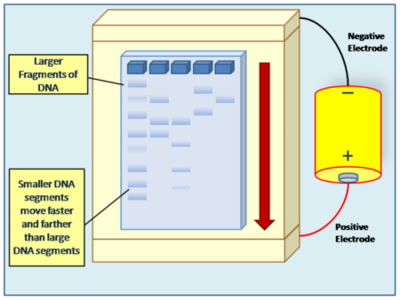
- CThe DNA fragments are separated out using a process called electrophoresis. The fragments are suspended in a gel and an electric current is passed through the gel. DNA is negatively charged, so it moves towards the positive anode. Small bits travel faster than big bits, so they get further through the gel
- DThe DNA is "tagged" with a radioactive probe. Then it's placed onto photographic film. The film goes dark where the radioactivity is, revealing the positions of the previously invisible DNA fragments
- ERestriction enzymes are then used to cut the DNA into fragments. They cut it at every place where they recognise a particular order of bases. Where these sections are in the DNA will be the same for everyone
- FThe DNA fragments are separated out using a process called electrophoresis. The fragments are suspended in a gel and an electric current is passed through the gel. DNA is positively charged, so it moves towards the negative anode. Small bits travel faster than big bits, so they get further through the gel
87Natural disasters like earthquakes and hurricanes can damage the infrastructure of an area, and completely disrupt health services. In these conditions disease can spread rapidly among the population:
- ASome natural disasters damage sewage systems and water supplies. This can result in contaminated drinking water containing the microorganisms that cause diseases like cholera
- BPeople can become displaced when their homes are destroyed. They might move into temporary camps, with large numbers of other people and poor sanitation. In these conditions, diseases could spread easily
- CElectricity supplies are often damaged by natural disasters. This means that food goes off quickly because refrigerators can't work - this can lead to an increase in food poisoning
- DHealth services can be disrupted by damaged transport links - allowing infections to spread rapidly
- EPeople can become displaced when their homes are destroyed. They might move into temporary camps, with small numbers of other people and poor sanitation. In these conditions, diseases could spread easily
- FElectricity supplies are often damaged by natural disasters. This means that food goes off slowly because refrigerators can't work - this can lead to an increase in food poisoning
88Louis Pasteur (1822 - 1895) came up with the germ theory. He argued that there are microbes (germs / microorganisms) in the air which cause disease and decomposition. He carried out experiments to prove this theory, e.g.:
- AHe heated broth in two flasks, both of which were left open to the air. However, one of the flasks had a curved neck so that bacteria in the air would settle in the loop, and not get through to the broth (because microbes are heavier than air)
- BThe broth in the flask with the curved neck stayed fresh, proving that it was the microbes and not the air causing it to go off
- CThe broth in the flask without the curved neck stayed fresh, proving that it was the microbes and not the air causing it to go off
- DHe heated broth in two flasks, one of which were left open to the air. However, the other flask had a curved neck so that bacteria in the air would settle in the loop, and not get through to the broth (because microbes are heavier than air)
89Joseph Lister (1827 - 1912) was the first doctor to use antiseptics in surgery:
- AWhen Lister first started working as a surgeon, hospital conditions were pretty unhygienic. Nearly half of patients undergoing surgery died from infections of their wounds, known as "hospital gangrene" or "sepsis"
- BLister's observations of wounds led him to think sepsis was a type of decomposition. He knew about Pasteur's work on microbes in the air. He realised he needed to kill microbes that were getting into wounds from the air
- CLister began to treat and dress wounds using the antiseptic carbolic acid. This killed the bacteria in the wounds and prevented sepsis. Gradually, Lister's techniques were taken up by the rest of the medical profession
- DLister's observations of wounds led him to think sepsis was a type of disease. He knew about Pasteur's work on microbes in the air. He realised he needed to kill microbes that were getting into wounds from the air
- ELister began to treat and dress wounds using the antiseptic hydrochloric acid. This killed the bacteria in the wounds and prevented sepsis. Gradually, Lister's techniques were taken up by the rest of the medical profession
90Alexander Fleming (1881 - 1955) dicovered the antibiotic penicillin in 1928 - by accident:
- AFleming was clearing out some plates containing bacteria. He noticed that one of the plates of bacteria also had mould on it and the area around the mould was free of the bacteria
- BHe found that the mould (called Penicillium notatum) on the plate was producing a substance that killed the bacteria - this substance was penicillin
- CFleming was clearing out some plates containing bacteria. He noticed that one of the plates of bacteria also had mould on it and the area around the mould was full of the bacteria
- DHe found that the mould (called Penicillium notatum) on the plate was producing a substance that killed the bacteria - this substance was the mould
91Viruses:
- AViruses are not cells. They're usually no more than a protein coat around a strand of genetic material
- BViruses can only reproduce inside living cells, so they must infect other organisms in order to mulitiply
- CViruses can infect plant, animal and bacterial cells
- DA particular type of virus will only attack specific cells
- EA particular type of virus will attack any cells
- FViruses are not cells. They're usually no more than a cell wall around a strand of genetic material
92How a virus reproduces:
- AThe virus attaches itself to a specific host cell and injects its genetic material into the cell
- BThe virus then uses the host cell to make the components of new viruses
- CThis eventually causes the host cell to split open - releasing the new viruses
- DThis eventually causes the host cell to shrivel up and die - releasing the new viruses
- EThe virus then uses the host cell to survive
93Diseases transmitted by food e.g. food poisoning:
- AEating food that's been contaminated with bacteria can make people ill
- BIt can be prevented by good hygeine and by making sure food is properly cooked before it's eaten
- CIt can be prevented by sneezing into a tissue, washing your hands properly and disinfecting contaminated surfaces
94Diseases transmitted by water e.g. cholera:
- APeople can get infected with cholera by drinking water that's been contaminated with sewage
- BGood sanitation can prevent cholera and other waterborne diseases
- CIt isn't a big problem in the developed world, but it kills many people in developing countries where sanitation is poor
- DIt isn't a big problem in the developing world, but it kills many people in developed countries where sanitation is poor
- EGood sanitation can prevent cholera and other airborne diseases
95Diseases transmitted by airborne droplets e.g. influenza (flu):
- AFlu and other viruses can be spread via the tiny airborne droplets released when people cough or sneeze
- BSneezing into a tissue, washing your hands properly and disinfecting contaminated surfaces can all help to prevent the spread of flu
- CFlu and other viruses can be spread via the tiny waterborne droplets released when people cough or sneeze
96Diseases transmitted through contact e.g. athlete's foot:
- AThe fungas which causes athlete's foot can be spread by people walking bare feet on damp floors in places like showers and bathrooms
- BYou can prevent it by washing your feet regularly and by not walking around bare foot. Disinfecting surfaces also helps
- CThe fungas which causes athlete's foot can be spread by people walking bare feet on dry floors in places like showers and bathrooms
- DYou can prevent it by washing your hands regularly and by not walking around bare foot. Disinfecting surfaces also helps
97The incidence of a disease is the number of new cases that occurs in a population in a certain time:
- AGood sanitation and public health measures are linked to a low incidence of disease. A clean water supply, good sewage works, public health education and clean hospitals prevent the spread of disease
- BFor example, government campaigns about how influenza is spread are designed to help lower the incidence of flu
- CPoor sanitation is linked with a high incidence of disease. E.g. a high incidence of food poisoning and cholera might be caused by a lack of clean water or a rubbish sewage system
- DDeveloping countries are less likely to be able to afford good sanitation and public health measures so they tend to have a higher incidence of disease
- EDeveloped countries are less likely to be able to afford good sanitation and public health measures so they tend to have a higher incidence of disease
- FGood sanitation and public health measures are linked to a high incidence of disease. A clean water supply, good sewage works, public health education and clean hospitals prevent the spread of disease
98Four stages in an infectious disease:
- AThe microorganism enters the body - e.g. through the nose or mouth
- BOnce the microorgansim is in the body, it reproduces rapidly, producing many more microorganisms
- CThe microorganisms then produce toxins (poisonous substances) which damage cells and tissues
- DThe toxins cause symptoms of infection, e.g. pain, diarrhoea and stomach cramps. Your immune system's reaction to the infection can also cause symptoms, e.g. fever
- EOnce the microorgansim is in the body, it reproduces slowly, producing many more microorganisms
- FThe microorganism enters the body - e.g. through the nose or mouth or eyes
99The time between exposure to the microorganism and the development of symptoms is called the incubation period.
- ATrue
- BFalse
100Antiseptics and antibiotics help control diseases - they are chemicals that destroy bacteria or stop them growing:
- AAntiseptics are used outside the body to help clean wounds and surfaces. They're used to prevent infection rather than treat it. Plenty of household products contain antiseptics, e.g. bathroom cleaners. Antiseptics are also used in hospitals and surgeries to try to prevent infections like MRSA
- BAntibiotics are drugs used inside the body, usually taken as a pill or injected. They're used to treat patients who are already infected. They only kill bacteria though - viruses aren't affected by them
- CAntiseptics are used inside the body to help clean wounds and surfaces. They're used to prevent infection rather than treat it. Plenty of household products contain antiseptics, e.g. bathroom cleaners. Antiseptics are also used in hospitals and surgeries to try to prevent infections like MRSA
- DAntiseptics are used outside the body to help clean wounds and surfaces. They're used to treat infection rather than prevent it. Plenty of household products contain antiseptics, e.g. bathroom cleaners. Antiseptics are also used in hospitals and surgeries to try to prevent infections like MRSA
- EAntibiotics are drugs used inside the body, usually taken as a pill or injected. They're used to treat patients who aren't already infected. They only kill bacteria though - viruses aren't affected by them
101Bacteria can evolve and become resistant to antibiotics:
- ARandom mutations in bacterial DNA can lead to changes in the bacteria's characteristics. Sometimes, they mean that the bacteria are less affected by a particular antibiotic
- BBacteria with these genes are better able to survive and reproduce in a host who's being treated to get rid of the infection
- CThe gene for antibiotic resistance is passed on to lots of offspring - it's just natural selection. The gene spreads and becomes more common in a population of bacteria over a period of time
- DBacteria that are resistant to antibiotics (e.g. MRSA) are a huge problem because they now cause infections that are very hard to treat
- EThe gene for antibiotic resistance is passed on to lots of offspring - it's just natural selection. The gene spreads and becomes more common in a population of bacteria straight away
- FBacteria with these genes are not as able to survive and reproduce in a host who's being treated to get rid of the infection
102The more often antibiotics are used, the bigger the problem of antibiotic-resistance becomes. This can be prevented:
- AIt's not that antibiotics actually cause resistance, but they do create a situation where naturally resistant bacteria have an advantage and so increase in numbers. It's important that doctors only prescribe antibiotics when it's really necessary to avoid creating this situation
- BLots of people stop bothering to take their antibiotics as soon as they feel better, but this can increase the risk of antibiotic resistant bacteria emerging - so you must complete the dose
- CIt's not that antibiotics actually cause resistance, but they do create a situation where naturally resistant bacteria have a disadvantage and so decrease in numbers. It's important that doctors only prescribe antibiotics when it's really necessary to avoid creating this situation
- DLots of people stop bothering to take their antibiotics as soon as they feel better, but this can decrease the risk of antibiotic resistant bacteria emerging - so you must complete the dose
Information
- Description
- N/A Biology (B6) Quiz on B6 Quiz, created by RueFromDistrict11 on 03/04/2015.
- Author
- RueFromDistrict11
- Language
- English
- Views
- 23
- History
- Created on 3 Apr 2015 · updated on 6 Apr 2018
- Tags
- Rating
- No ratings yet Rate this quiz