
Quiz
NMS Set 1 Quiz - Pharmacology, Nerve damage and RMP.
Questions in this quiz (38)
1What name is given to the label 1?
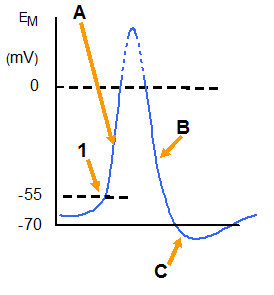
- AThreshold
- BDepolarisation
- CRepolarisation
- DHyperpolarisation
2What name is given to A?
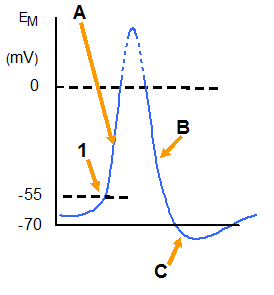
- ADepolarisation
- BRepolarisation
- CHyperpolarisation
- DThreshold
3What name is given to B?
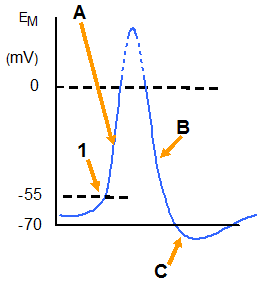
- ARepolarisation
- BHyperpolarisation
- CDepolarisation
- DThreshold
4What name is given to C?
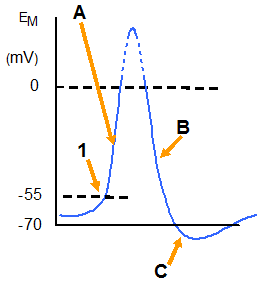
- AHyperpolarisation
- BDepolarisation
- CRepolarisation
- DThreshold
5The absolute refractory period refers to the period of hyperpolarisation in an action potential.
- ATrue
- BFalse
6The refractory period is important for what?
- AUnidirectionality
- BDiscrete action potentials
7Conductance is approximately equal to permeability.
- ATrue
- BFalse
8How is an action potential propagated in a non-myelinated axon?
- AThe local current in an axonal section flows to the next "segment" of the axon, causing depolarisation of that part of the membrane. This continues, causing propagation of the action potential.
- BThe non-myelinated axon is insulated by a myelin sheath which allows current to 'jump' from node to node, via "saltatory conduction".
9Anterograde transport occurs away from the cell body of a neurone.
- ATrue
- BFalse
10Kinesin are motor proteins that partake in anterograde transport.
- ATrue
- BFalse
11Kinesin walk towards the positive end of microtubules found in the axon, which usually leads away from the cell body of the neuron.
- ATrue
- BFalse
12Motor proteins carry vesicles or membrane bound organelles like mitochondria to their desired location.
- ATrue
- BFalse
13What is the correct process of wallerian degeneration?
- ATrauma -> Axonal breakdown -> Macrophage invasion from nearby blood vessels -> Phagocytosis -> Ready for regeneration
- BTrauma -> Axonal breakdown -> Axonal fragments absorbed into bloodstream -> Ready for regeneration
14What is the correct process of wallerian regeneration?
- AEdge of trauma site develops an axonal sprout -> the sprout encourages schwann cell division -> the schwann cells release neurotrophins to guide the growth cone -> growth cone grows -> axon regenerated
- BEdge of trauma site develops an axonal sprout -> the sprout encourages oligodendrocyte division -> the oligodendrocytes release neurotrophins to guide the growth cone -> growth cone grows -> axon regenerated
15A class 1 nerve injury would cause what?
- AMinor compression and no axon degeneration
- BCrushing and resulting degeneration
- CSevere tear and endoneurium will be compromised
16A class 2 nerve injury would cause what?
- AMinor compression and no axon degeneration
- BCrushing and resulting degeneration
- CSevere tear and endoneurium will be compromised
17A class 3 nerve injury would cause what?
- AMinor compression and no axon degeneration
- BCrushing and resulting degeneration
- CSevere tear and endoneurium will be compromised
18Reactive astrocytes contribute to CNS nerve regeneration.
- ATrue
- BFalse
19What part of a local anaesthetic is shown by the red question mark?
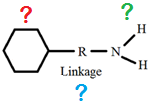
- AAromatic ring
- BLinkage
- CAmine group
20What part of a local anaesthetic is shown by the green question mark?
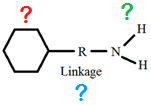
- AAmine group
- BAromatic ring
- CLinkage
21What different type of link may be present in the part of the LA labelled with a blue question mark?
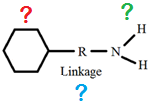
- AEster
- BAmide
- CCarbonyl
- DKetone
22Why do most modern local anaesthetics have an amide linkage rather than an ester linkage?
- ABroken down more slowly - longer time of action
- BBroken down more quickly - shorter time of action
- CMore prone to causing allergies
- DLess prone to causing allergies
23The function of the aromatic ring in the local anaesthetic is to provide lipid soluble properties.
- ATrue
- BFalse
24Local anaesthetics are...
- AWeak bases
- BWeak acids
- CStrong bases
- DStrong acids
25Following on from the previous question, would a local anaesthetic be ionised in...
- AAcidic conditions
- BAlkaline conditions
26The ionised form of the local anaesthetic can cross the plasma membrane to exhibit its action.
- ATrue
- BFalse
27The ionised version of the local anaesthetic blocks the voltage-gated Na+ channels to prevent action potentials being generated.
- ATrue
- BFalse
28Why is local anaesthetic less effective when a bacterial infection is present?
- ALocal anaesthetics are weak bases. Bacteria that are present at the infection site will be metabolising substances which creates an acidic environment. An acidic environment will cause ionisation of the local anaesthetic. The ionised form of the local anaesthetic cannot cross the plasma membrane. Less local anaesthetic crossing the PM means there is less blocking of VG Na+ channels and therefore the local anaesthetic is less effective.
- BLocal anaesthetics are weak acids. Bacteria that are present at the infection site will be metabolising substances which creates an alkaline environment. An alkaline environment will cause ionisation of the local anaesthetic. The ionised form of the local anaesthetic cannot cross the plasma membrane. Less local anaesthetic crossing the PM means there is less blocking of VG Na+ channels and therefore the local anaesthetic is less effective.
29Lower diameter, less myelinated axons are more sensitive to local anaesthetic.
- ATrue
- BFalse
30What is topical application of local anaesthetics?
- ASurface application
- BBlocking a branch of nerve fibres
- CBlock somewhere along the length of the nerve before it branches
31What is meant by infiltration in the context of application of local anaesthetics?
- ASurface application
- BBlocking a branch of nerve fibres
- CBlock somewhere along the length of the nerve before it branches
32What is meant by nerve block in the context of application of local anaesthetics?
- ASurface application
- BBlocking a branch of nerve fibres
- CBlock somewhere along the length of the nerve before it branches
33What side effects could result from local anaesthetic in high doses?
- ADecrease cardiac muscle contractility.
- BIncrease cardiac muscle contractility.
- CVasodilatation
- DVasoconstriction
34What adjunct might be used with local anaesthetic?
- AAdrenaline
- BBupivicaine
- COmeprasole
- DAcetylcholine
35Transmitter binding to post-synaptic receptors causes a conformational change.
- ATrue
- BFalse
36Many neurotransmitters can bind to one receptor subtype.
- ATrue
- BFalse
37Metabotropic receptors are an ion channel pore which opens upon neurotransmitter binding.
- ATrue
- BFalse
38Temporal summation increases the number of synapses firing at the same time to help threshold to be exceeded.
- ATrue
- BFalse
Information
- Description
- ww
- Author
- . .
- Language
- English
- Views
- 90
- Tags
- Rating
- No ratings yet Rate this quiz