
Quiz
Oral Flora and Dental Plaque
This quiz has question types that open in the usual player.
Questions in this quiz (41)
1Prokaryotic organisms have
- ANo nuclear envelope
- BA nuclear envelope
- CChromosomes
2Which of these are examples of oral habitats for microorganisms?
- ABuccal mucosa
- BDorsal surface of tongue
- CAppliances
- DGingival crevice
- ETooth surface
3Which of these are non-specific defence factors found in saliva?
- ALactoferrin
- BLysozyme
- CIgA
- DHCO3
- EPO4
4Which of these are specific defence factors found in saliva?
- AIgA
- BLysozyme
- CLactoferrin
- DCalcineurin
5What are the most important buffer systems of saliva?
- AHCO3
- BHPO4
- CNa
- DK
6Lysozyme functions by cleaving the [blank_start]beta[blank_end]-1-4 linkage between N-acetylg[blank_start]lucosamine[blank_end] and N-acetylm[blank_start]uramic[blank_end] acid which is the repeating [blank_start]di[blank_end]saccharide unit of cell wall p[blank_start]eptidoglycan[blank_end]. This means it can lyse many streptococci.
- Abeta
- Blucosamine
- Curamic
- Ddi
- Eeptidoglycan
7What pH of saliva promotes growth of some cariogenic bacteria?
- AAcidic
- BNeutral
- CAlkaline
8Which of these are functions of GCF?
- AFlushing out microbes
- BBuffering
- CProvision of defence factors
- DPhagocytosis of bacteria by T cells
- EPhagocytosis of bacteria by neutrophils
9What is an example of a defence factor in GCF?
- AInterleukin 1 beta
- BInterferon alpha
- CBacteriocin like inhibitory substrate
- DGingipains
10What is the predominant leukocyte in GCF?
- ANeutrophils
- BB cells
- CT cells
- DMacrophages
11What is an example of a synergistic interaction of bacteria?
- ABacteria using metabolic end products as nutrient sources
- BThe production of BLIS by strep salivarius to inhibit strep pyogenes
- COccupation of niches to prevent colonisation by new species
12Co-aggregation of the same species of bacteria is known as...
- AHomotypic
- BHeterotypic
- CTransience
- DCoexistence
13What does BLIS stand for?
- ABacteriocin like inhibitory substance
- BBacterial inhibitory substance
- CBacterial lysis substance
14What is the main prerequisite for host colonisation?
- AAdherence to oral surfaces
- BFailure of host immunity
- CPrevious dental caries
15Which of these substances are extracellular polysaccharides produced by certain bacteria?
- AGlucan
- BFructan
- CLevan
- DDextran
16What species of bacteria predominates in fissures?
- AStreptococci
- BLactobacilli
- CActinomyces
17Prevotella, Porphyromonas and Spirochaetes tend to colonise the
- ATeeth
- BGingival crevice
- CBuccal mucosa
18Strep and Actinomyces spp. tend to attach to the
- ATeeth
- BGingival crevice
- CDorsum of the tongue
- DVestibule
19Anaerobic bacteria do not tend to appear until adolescence.
- ATrue
- BFalse
20Loss of all the teeth (senility) leads to oral microflora similar to..
- AThose with appliances
- BChildren before eruption
- CAdults with acute necrotising ulcerative gingivitis
- DThose found in the gingival crevice
21Denture plaque is most similar to...
- AEnamel plaque
- BCrevicular plaque
- CMucosal plaque
22Dental plaque contains...
- ADead bacteria
- BLiving bacteria
- CHost compounds derived mainly from Saliva
- DPrions
- EMetabolic end products of bacteria
23Organic matrix makes up ___ of plaque
- A30%
- B40%
- C10%
- D75%
24Plaque is the result of mineralisation of calculus
- ATrue
- BFalse
25Glucose is a better intracellular store than glycogen for bacteria.
- ATrue
- BFalse
26The enzyme(s) involved in extracellular polysaccharide formation is/are...
- AFructosyltransferase
- BGlucosyltransferase
- CHexokinase
- DFructokinase
27Xylitol is fermented but very slowly
- ATrue
- BFalse
28Starch is less cariogenic than sucrose
- ATrue
- BFalse
29Cooked starch and sucrose is more cariogenic than sucrose alone
- ATrue
- BFalse
30____________________ help bacteria to continue to produce acid after dietary sugar is exhausted
- AIntracellular polysaccharides
- BExtracellular polysaccharides
- CGlucosyltransferase and fructokinase
31The most important acid resulting in caries is...
- ALactic acid
- BAcetic acid
- CPropionic acid
32Why can sucrose readily diffuse into plaque?
- ASmall molecular size
- BLots of energy released upon its breakdown
- CBacterial metabolism is rapid
33Label the green question mark
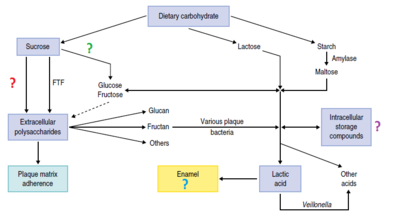
- AInvertase
- BGlucosyltransferase
- CHexokinase
- DSucrase
34Label the red question mark
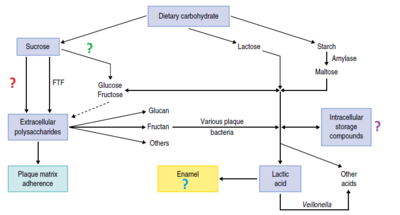
- AGlucosyltransferase
- BFructosyltransferase
- CInvertase
- DMaltase
35Label the purple question mark
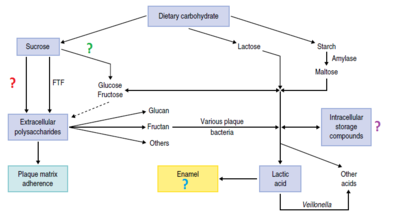
- AGlycogen
- BGlucose
- CGlucan
- DDextran
36Label the blue question mark
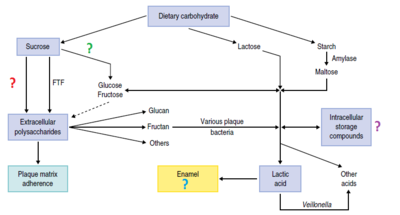
- ADissolution
- BRemineralisation
- CDeposition
37Glucosyltransferase can break down sucrose.
- ATrue
- BFalse
38Fructosyltransferase can break down sucrose.
- ATrue
- BFalse
39Glucosyltransferase converts sucrose into fructans and glucans.
- ATrue
- BFalse
40Label the diagram

- AFructosyltransferase
41Irreversible short range interactions of plaque involve
- AAdhesin receptors
- BVan Der Waals forces
- CHydrogen bonding
Information
- Description
- .
- Author
- 0 9
- Language
- English
- Views
- 75
- Tags
- Rating
- No ratings yet Rate this quiz