
Quiz
Division of labour.
This quiz has question types that open in the usual player.
Questions in this quiz (15)
1What were Parsons model of Family roles?
- AWomen: Expressive role: Primary socialisation of children, homemaker, meeting the family's emotional needs.
Men: Instrumental role: Work and provide financial support. - Bjoint and segregated conjugal roles
- AWomen: Expressive role: Primary socialisation of children, homemaker, meeting the family's emotional needs.
2What were Bott's view of the division of labour in 1957?
- AJoint conjugal role: where both couples take equal roles in the home and in work.
Segregated conjugal role: Men are the 'bread winners' and women are the ones that does childcare and domestic work. - Bexpressive and instrumental roles
- AJoint conjugal role: where both couples take equal roles in the home and in work.
3Which one of these did Young and Willmott outline in their study of the symmetrical family in 1973?
- AThat there is a "march of progress." There is progress but there is not fully equal.
- BThey see that families are more equal and democratic.
- CMore joint conjugal roles
- DMore common amongst younger couples.
- EResult off major social changes
4[blank_start]Feminist[blank_end] view of housework- O[blank_start]akley[blank_end] (1974)- Believes that the family is still an unequal institution with women still doing most of the house work. Claims that [blank_start]Young[blank_end] and WillMott's "March of Progress," view is exaggerated. In her study found that the percentage of men doing [blank_start]housework[blank_end] was [blank_start]15[blank_end]% and doing [blank_start]childcare[blank_end] was [blank_start]25[blank_end]%.
- Aakley
- BYoung
- C15
- D25
- Ehousework
- Fchildcare
- GFeminist
5[blank_start]Bolton's[blank_end] research in 1983 supports [blank_start]Oakley[blank_end], in that she found that fewer than [blank_start]20[blank_end]% of husbands had a major role in childcare; mothers were always responsible for security and well being, fathers had more menial tasks.
- ABolton's
- BParsons
- CDurkheim
- DOakley
- EAinsley
- FDebase
- G20
- H15
- I24
- J25
6Which one of these results matched up to the study that were conducted by Warde and Hetherington, that supports that of Oakley's study of division of labour?
- ASex-typing of domestic tasks remained strong
- BMen would carry out routine 'feminine' tasks when women were not around.
- CYoung men agreed that they could do more to help out
7True or False?
The Future Foundation (2000) studied 1000 adults and found that 60% of men claims to do more housework than their father and 75% of women claimed to do less than their mother.- ATrue
- BFalse
8Which one of these is the dual burden?
- APaid work and domestic work
- Bdomestic work
- Cpaid work
9Which one of these is Marsden's theory of the triple burden/shift?
- APaid, emotional and domestic work
- BPaid and domestic
- CEmotional and domestic
10Man Yee Kan (2001) found that [blank_start]income[blank_end], employment, e[blank_start]ducation[blank_end] and [blank_start]age[blank_end] affect amount of housework: better paid, younger, educated women did less [blank_start]housework[blank_end]. (e.g. every £[blank_start]10,000[blank_end] increase in annual income [blank_start]reduces[blank_end] her weekly housework time by [blank_start]2[blank_end] hours.)
- A2
- B10,000
- Chousework
- Dreduces
- Eincome
- Fducation
- Gage
11What are Gershuny's statistics and findings in trends towards inequality? (There are multiple answers, you need to select all of them.)
- AWives who did not go to work did 83% of the housework and even part-time workers did 82%
- BWives who work full-time did 73%. The larger she had been in paid work, the more housework her husband was likely to do.
- CCouples whose parents had a more equal relationship were likely to share housework more equally themselves. This is because of a gradual change in values and parental role models, social values adapting to women working.
- D60% women work.
- E85.4% of men do domestic work
12True or false?
Crompton (1997) accepts Gershuny's theory but says more about economic factors (e.g. a women's earning power increases, does men's duty in the home.) However, women's earnings are only about 3/4 of men's- therefore, domestic tasks will remain unequal.- ATrue
- BFalse
13Select the options that were outlined by Silver and Schor in 1987 about Commercialisation of Housework.
- AMicrowave meals = no need for cooking
- BFast food = less cooking and washing up.

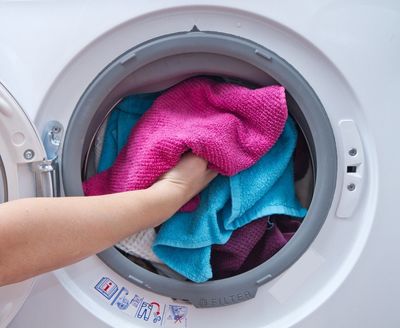
- CWashing machines = less washing up.
- DCleaning chemicals = don't need to make chemicals

- EAutomatic hoover = Less manual housework

- FRole of a housewife has been reduced greatly.
- GWorking class might not be able to benefit through commercialisation because they cannot afford it.
- HTV = Down time
14Emotional work:
H[blank_start]ochschild[blank_end] (1983) - Women more likely to be performing jobs involving [blank_start]emotional[blank_end] labour.
M[blank_start]organ[blank_end] (1997) - Women c[blank_start]aring[blank_end] for sick children.
Marsden - 'Triple shift'- Aochschild
- Bareven
- Cemotional
- DDomestic
- EInstrumental
- Forgan
- Gassey
- Haring
- Iare
15Which Post-modentist sociologist outlined that lesbians are more equal as there are no gender differences or assumptions?
- AGillian Dunne
- BHareven
- CStacey
- DWeeks
Information
- Description
- Includes sociologists with statistics.
- Author
- Sam Yarnall
- Language
- English
- Views
- 165
- Tags
- Rating
- 4.5 out of 5 · 2 ratings Rate this quiz