
Quiz
Untitled
This quiz has question types that open in the usual player.
Questions in this quiz (18)
1I learned two languages in the same environment and simultaneously developed two linguistics sets of concept. Who am I?
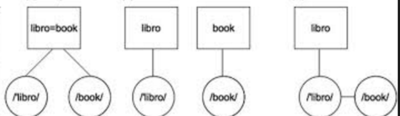
- ACompound bilingual
- BCoordinate bilingual
- CSubordinate bilingual
2What's the difference between simultaneous and sequential bilinguals?
- ASimultaneous bilinguals learn two languages from birth, while sequential bilinguals are the ones that learn an L2 later on in life.
- BSimultaneous bilinguals learn one language from birth, while sequential bilinguals learn two languages from birth.
- CSimultaneous bilinguals learn an L2 later on in life (usually after 3), while sequential bilinguals learn an L2 from birth.
3At 24 months, most babies will produce >50 words.
- ATrue
- BFalse
4True or False: It is at the third stage of negation that an individual is able to use the correct form of auxiliary verbs.
- ATrue
- BFalse
5Which stage of questions describes this:
order of declarative + rising intonation: You like this? I have some?- Astage 1
- Bstage 2
- Cstage 6
- Dstage 3
6'Here is a wug. Now there are two of them. There are two __. This is an example of the [blank_start]Wug Test[blank_end] which consists of showing drawings of imaginary creatures with novel names to children. Completing the sentence helps children demonstrate that they know the patterns for [blank_start]plurals[blank_end] in English.
- Aplurals
- BWug Test
7Innatism by Chomsky can be described as:
- AAll human languages are based on some innate universal principles
- BLanguage is not part of cognition; it is separated from other learning processes.
- CThere's a small contribution from the environment; doesn't need to be taught
- DAll of the above
8Universal grammar is described as follow: Humans have an innate mechanism of universal grammar with universal principles designed specifically for language acquisition.
- ATrue
- BFalse
9Which of the following statement describes best the critical period hypothesis (CPH)?
- AThe adult brain is more developed than the children brain. Therefore, adults learn more easily.
- BChildren learn more easily than adults because their brains are easier to mold & use both hemisphere; it gives a more emotional and contextualized approach to the L2. As for adults, they give a more rational approach to the L2
- CThe CPH says that humans are genetically programmed to acquire certain kinds of knowledge at specific times in life. Therefore, adults learn easier than children because they have many learning experiences.
10Which letter contains the three right questions that we should ask ourselves if we want to know if a child acquired a language properly?
- A- does the child understand language?
- does the child respond?
- is the child having learning disabilities? - B- does the child understand language?
- does the child respond?
- Is there human interaction/natural opportunities for language exchange?
- A- does the child understand language?
11Since I started my English language education at McGill, I have lost my French. The precedent statement is an example of subtractive bilingualism.
- ATrue
- BFalse
12True or false: metalinguistic awareness is when a learner is too concerned about form that he/she tends to have a hard time with meaning.
- ATrue
- BFalse
13World knowledge is having cultural knowledge, being aware of different rituals and knowing the universal logic/scripts. Adults learners doesn't have that advantage.
- ATrue
- BFalse
14Which of the following doesn't represent the learning conditions?
- ASilence: Up to a certain age it’s normal for kids to choose whether or not to speak. Work obligations or meeting with teachers oblige parents/adults to speak up.
- BAmple Time: Children don’t really have other responsibilities therefore; they can concentrate on L2 more. They get lots of encouragement. Adults want a miracle, they want to learn L2 quickly, and they usually choose non-intensive courses.
- CCorrective Feedback: when is it appropriate? Grammar, vocabulary, meaning, word choice, politeness
- DModified input:
1) L1: child-directed speech
2) Foreigner talk
3) Teacher talk - EContrastive analysis approach: Transfer from L1 causes errors in L2
- FInterlanguage: Not always explained through L1. L2 learner language is rule-governed and predictable
- GFossilization: Fossilization refers to the process in which incorrect language becomes a habit and cannot easily be corrected.
15Many advanced level learners who have Spanish as an L1 do not distinguish between ‘he' and ‘she'. This is what type of error?
- AThis could be a fossilized error.
- BThis could be a semantic error.
- CThis could a pronunciation error.
16My name is Leo. My L1 is French. I am learning English at school. Four aspects of my L1 influence me when I learn new aspects of the English language. The first aspect is having a hard time not using plurals possessive pronoun in English. This aspect is called [blank_start]morpheme[blank_end] salience . The second aspect is called linguistic [blank_start]complexity[blank_end]. The third aspect is [blank_start]semantic[blank_end] transparency. The fourth one is [blank_start]frequency.[blank_end]
- Amorpheme
- Bfrequency.
- Csemantic
- Dcomplexity
17Pragmatics is the study of how language is used in social contexts.
- ATrue
- BFalse
18Pronunciation: decontextualized instruction doesn’t help improve pronunciation.
- ATrue
- BFalse
Information
- Description
- English Quiz on Untitled, created by sofya iden on 03/10/2016.
- Author
- sofya iden
- Language
- English
- Views
- 5
- Tags
- Rating
- No ratings yet Rate this quiz