
Quiz
Breathing
This quiz has question types that open in the usual player.
Questions in this quiz (13)
1What is tidal volume?
- Athe volume of air we breathe in and out at each breath - at rest
- Bthe maximum volume of air we can inhale and exhale (fit people, singers and those who play wind instruments a high one)
2What is vital capacity?
- Athe maximum volume of air we can inhale and exhale
- Bthe volume of air we breathe in and out at each breath - at rest
3What is a spirometer?
- Aequipment to measure lung volumes, including tidal volume and vital capacity
- Bequipment to measure oxygen uptake in small animals
4Spirometer - as the person breathes in and out of the spirometer, the change in [blank_start]air volume[blank_end] inside causes the [blank_start]floating lid[blank_end] to rise or fall. The movement is recorded as a [blank_start]trace[blank_end], which can be used to measure depth and frequency of breathing. It can also be used to determine rate of [blank_start]oxygen consumption[blank_end] by the subject. The rate of oxygen consumption can be calculated by working out the decrease in volume between 2 points on the trace, which gives the volume of oxygen used in a given time. This is divided by the time for the fall in seconds, giving a value in cm3s-1.
- Afloating lid
- Bair volume
- Ctrace
- Doxygen consumption
5Label the diagram:
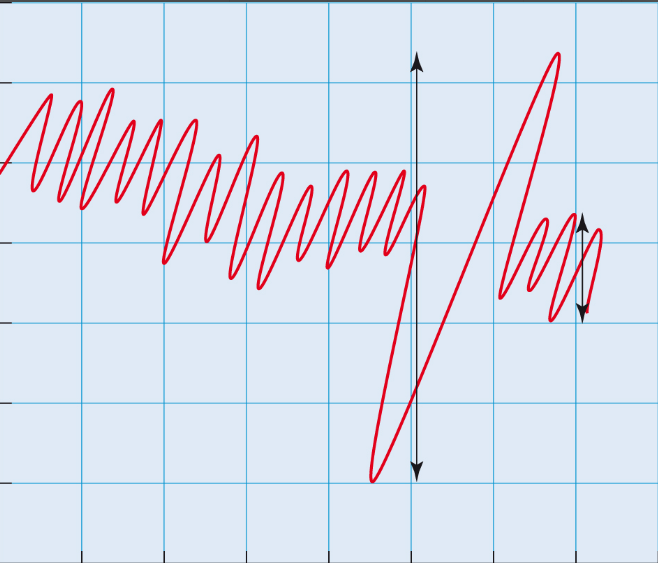
- Avital capacity
- Btidal volume
6[blank_start]Minute ventilation[blank_end] is the volume of air taken into the lungs in one minute. This is calculated by multiplying the [blank_start]tidal volume[blank_end] (the average volume of one breath in dm3) by breathing the breathing rate (number of breaths per minute). At rest a person takes 12 breaths on average. Minute ventilation units are dm3min-1.
- AMinute ventilation
- Btidal volume
7The ventilation centre in the [blank_start]medulla oblongata[blank_end] of the brain controls breathing. The ventilation centre sends nerve impulses every [blank_start]2-3[blank_end] seconds to the [blank_start]external[blank_end] intercostal muscles and diaphragm muscles. Both of these sets of muscles causing [blank_start]inhalation[blank_end]. During deep inhalation, not only are the external intercostals and diaphragm muscles stimulated, but the [blank_start]neck[blank_end] and upper chest muscles are also used.
- Amedulla oblongata
- Bhypothalamus
- C2-3
- D10
- Eexternal
- Finternal
- Ginhalation
- Hexhalation
- Ineck
- Jfeet
8As the lungs inflate, stretch receptors in the [blank_start]bronchioles[blank_end] are stimulated. The stretch receptors send inhibitory impulses back to the [blank_start]ventilation[blank_end] centre. As a consequence, impulses to the muscles [blank_start]stop[blank_end] and the muscles relax, stopping inhalation and allowing exhalation. Exhalation is caused by the elastic [blank_start]recoil[blank_end] of the lungs and by gravity helping to lower the ribs. Not all of the air in the lungs is exhaled with each breath. The air remaining in the lungs, residual air, mixes with the air inhaled with each breath. The [blank_start]internal[blank_end] intercostal muscles only contract during deep exhalation e.g. during vigorous exercise a larger volume of air is exhaled, leaving less residual air in the lungs.
- Abronchioles
- Btrachea
- Cventilation
- Dcardiovascular control
- Estop
- Fstart
- Grecoil
- Hstretch
- Iinternal
- Jexternal
9At [blank_start]rest[blank_end], the most important stimulus controlling the breathing rate and depth of breathing is the [blank_start]concentration of dissolved CO2[blank_end] in arterial blood, via its effect on [blank_start]pH[blank_end]. A small increase in blood CO2 concentration causes a large increase in [blank_start]ventilation[blank_end].
- Aconcentration of dissolved CO2
- Brest
- CpH
- Dventilation
10CO2 dissolves in the blood plasma, making [blank_start]carbonic[blank_end] acid. Carbonic acid dissociates into [blank_start]hydrogen[blank_end] ions and hydrogencarbonate ions, thereby lowering the [blank_start]pH[blank_end] of the blood. [blank_start]Chemoreceptors[blank_end] sensitive to [blank_start]H+[blank_end] ions are located in the ventilation centre of the medulla oblongata. They detect the rise in H+ ion concentration. Impulses are sent to other parts of the ventilation centre. Impulses are sent from the ventilation centre to stimulate the muscles involved in breathing.
- Acarbonic
- Bhydrochloric
- Chydrogen
- Dhydroxide
- EpH
- Ftemperature
- GChemoreceptors
- HOsmoreceptors
- IH+
- JOH-
11There are also chemoreceptors in the walls of the [blank_start]carotid[blank_end] artery and [blank_start]aorta[blank_end]. These are stimulated by changes in [blank_start]pH[blank_end] resulting from changes in CO2 concentration. These chemoreceptors moniter the blood before it reaches the brain and send impulses to the ventilation centre.
- Acarotid
- Baorta
- CpH
12Increasing [blank_start]CO2[blank_end] and the associated fall in pH leads to an [blank_start]increase[blank_end] in rate and depth of breathing through more frequent and stronger [blank_start]contraction[blank_end] of appropriate muscles. The more frequent and deeper breaths maintain a steep [blank_start]concentration gradient[blank_end] of CO2 between the alveolar air and the blood. This is turn ensures efficient [blank_start]removal[blank_end] of CO2 from the blood and [blank_start]uptake[blank_end] of oxygen into the blood. The opposite response occurs with a decrease in CO2, the pH rises leading to a decrease in rate and depth of breathing. The control of CO2 levels in the blood is an example of homeostasis operating via negative feedback.
- ACO2
- Bincrease
- Ccontraction
- Dconcentration gradient
- Eremoval
- Fuptake
13The [blank_start]motor cortex[blank_end] of the brain is the region that controls [blank_start]movement[blank_end]. As soon as exercise begins, [blank_start]impulses[blank_end] from the motor cortex have a direct effect on the [blank_start]ventilation centre[blank_end] in the medulla oblongata, increasing ventilation sharply. Ventilation is also increased in response to impulses reaching the ventilation centre from [blank_start]stretch receptors[blank_end] in tendons and muscles involved in movement. The various chemoreceptors sensitive to CO2 levels and to changes in blood temperature increased the depth and rate of breathing via the ventilation centre. There are also receptors sensitive to changing [blank_start]oxygen[blank_end] concentrations in the blood; however, they're rarely stimulated under normal circumstances.
- Amotor cortex
- Bmovement
- Cventilation centre
- Dimpulses
- Estretch receptors
- Foxygen
Information
- Description
- 13 questions
- Author
- Ella Middlemiss
- Language
- English
- Views
- 25
- Tags
- Rating
- No ratings yet Rate this quiz