
Notizen
B1a: Fitness and health

Inhalt der Notizen (5)
Seite 1
Measuring Fitness
Healthy - being free of any infections or diseases
Fitness - a measure of how well one can perform physical tasks
Fitness can be measured by:
Strength
- Lifting weights
Stamina - Bleep Test
Speed - 100m sprint
Agility - An assault course
Flexibility - Stretching
Cardiovascular efficiency - Recovery rate
Seite 2
Blood Around the Body
How is blood pumped around the body?
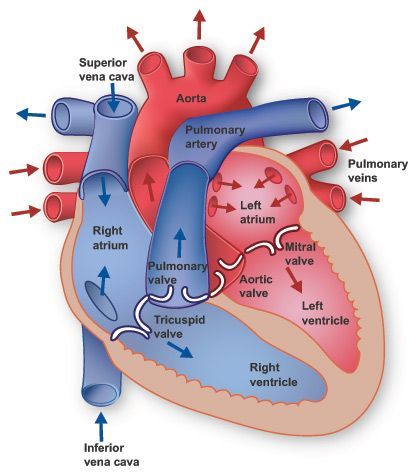
The blood is pumped around the body by the contractions of the heart - increasing the blood pressure.
The blood leaves the heart, via the arteries and capillaries, going to every cell in the body.
The blood then flows back to the heart via the veins - the blood pressure gets lower as it flows through the system.
Why is blood under pressure in arteries?
Blood in the arteries is under pressure
because of the contractions of the heart muscles. This allows the blood
to reach all parts of the body.
Seite 3
Measuring Blood Pressure
Blood pressure is measured in millimeters of mercury, mmHg. There are two measurements:
systolic pressure - the higher measurement (when the heart beats, pushing blood through the arteries)
diastolic pressure - the lower measurement (when the heart rests between beats)
A young, fit person should have a blood pressure of about 120
over 70, which means their systolic pressure is 120 mmHg and their
diastolic pressure 70 mmHg.
Seite 4
High and Low Blood Pressure
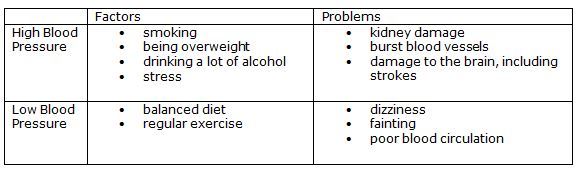
This table shows the factors
that causes high and low blood pressure. It also shows the consequences
of the two types of blood pressure.
Seite 5
Increasing Blood Pressure
Smoking
increases blood pressure by raising the heart rate:
Nicotine itself
increases the heart rate.
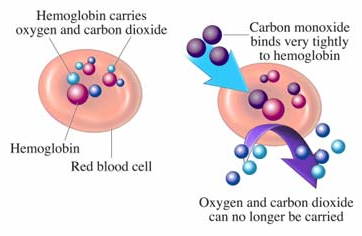
Carbon monoxide reduces the oxygen-carrying
capacity of the blood. It combines with haemoglobin in red blood cells,
preventing oxygen combining with the haemoglobin. This causes an
increase in heart rate to compensate for the reduced amount of oxygen
carried in the blood.
Saturated fats causes a build up of cholesterol:
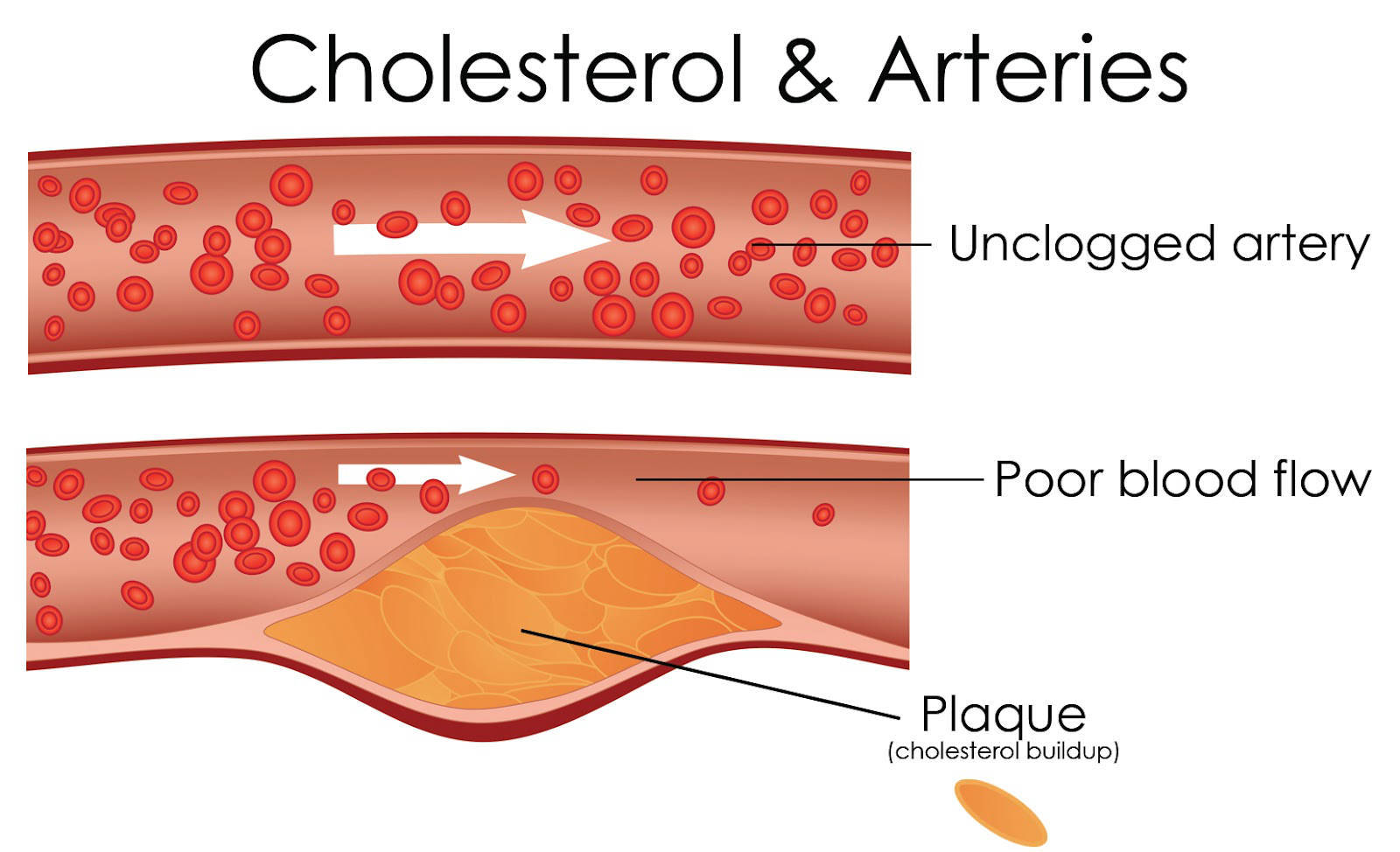
Cholesterol is a fatty substance. It can be used to make cell membranes but is if there is too much, it builds up in the arteries - this build up forms a plaque in the artery wall.
The hard outer layer of the plaque is cracked and the softer layer is exposed.
Platelets stick to this soft layer and a blood block is formed - called a thrombosis.
This narrows arteries - restricting the flow of blood. The thrombosis could also detach and block smaller blood vessels.
Either way the heart muscle receives no oxygen and dies.
High levels of salt can increase blood pressure:
Salt is necessary for a healthy diet but eating too much causes high blood pressure.
High blood pressure increases the risk of damaging the arteries - this can encourage the build up of plaques.
Informationen
- Beschreibung
- GCSE Biology (Module B1: Understanding Organisms) Notiz am B1a: Fitness and health , erstellt von Carina C am 27/03/2016.
- Erstellt von
- Carina C
- Aufrufe
- 76
- Tags
- Bewertung