
Quiz
0654 Topic B4 Nutrition
Dieses Quiz enthält Fragetypen, die sich im gewohnten Player öffnen.
Fragen in diesem Quiz (21)
1 Fats and [blank_start]carbohydrates[blank_end] both provide the body with energy, but fats can provide [blank_start]twice[blank_end] as much
as carbohydrates. Excess fats can be stored in the body but carbohydrates must be changed
into [blank_start]glcogen[blank_end] or fat before they can be stored. The main types of carbohydrates are starch , sugar and [blank_start]cellulose[blank_end] Examples of foods rich in starch are butter, cheese and fatty meat.
foods rich in fat are [blank_start]……..[blank_end] and [blank_start]……..[blank_end]- Acarbohydrates
- Blipids
- Cproteins
- Dminerals
- Etwice
- Ften times
- Gonly half
- Hglycogen
- Iamino acids
- Jglucose
- Kcellulose
- Lcellotape
- Mcarbohydrase
- Nbutter
- Opotatoes
- Plollies
- Qfish
- Rcheese
- Stomatoes
- Tlemons
2In a balanced diet, which constituents provide most energy?
- AA carbohydrate and protein
- BB fat and carbohydrate
- CC fat and fibre
- DD vitamins and protein
3 The table shows some information about enzymes found in the human alimentary canal.
Select the correct answer that completes each space (A-H) in the table.
A: [blank_start]............[blank_end] B :[blank_start].............[blank_end] C: [blank_start]............[blank_end] D: [blank_start]...........[blank_end] E: [blank_start]............[blank_end] F: [blank_start].............[blank_end] G: [blank_start]...........[blank_end] H: [blank_start]............[blank_end]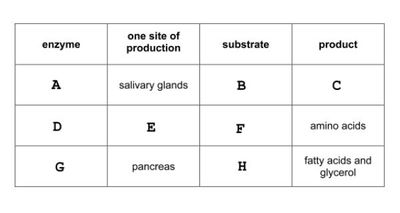
- Aprotease
- Bamylase
- Clipase
- Dpepsinogen
- Eglucose
- Flarge fat molecules
- Gproteins
- Hstarch
- Icarbo acids
- Jamino acids
- Kmaltose
- Lfatty acids & glycerol
- Mglycase
- Nprotease
- Ocarbohydrase
- Plipase
- Qstomach only
- Rpancreas only
- Sliver
- Tboth stomach and panceas
- Ucarbohydrates
- Vlipids
- Wproteins
- Xvitamins
- Yfattyase
- Zlipase
- AAglycocarbase
- ABlipidase
- ACLipids
- ADCarbohydrates.
- AEProteins
- AFWater
4The table shows the amount of protein and fat in 100 g samples of some foods.
Which foods are the best value for body-building?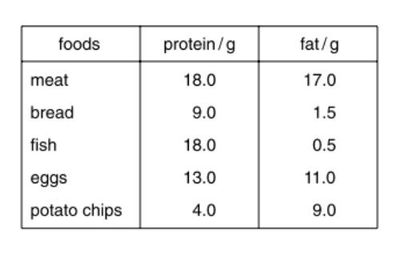
- Abread and meat
- Bbread and potato chips
- Cmeat and eggs
- Dmeat and fish
5The diagram shows the human alimentary canal.
Proteases are produced by structure Q .
What is structure Q and what nutrient does protease digest?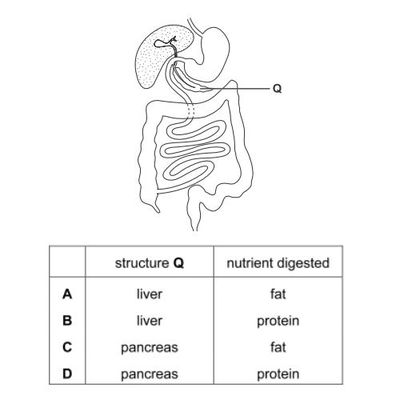
- AA
- BB
- CC
- DD
6The diagram shows the alimentary canal of a dog.
Where does egestion occur?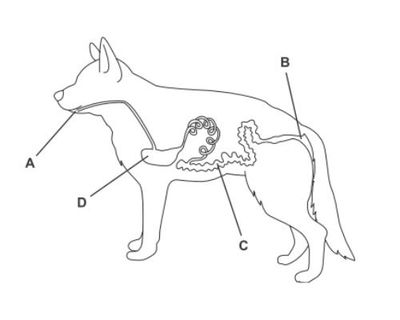
- AA
- BB
- CC
- DD
7A food contains reducing sugar, but no starch.
What colours will be obtained if samples of the food are tested with Benedict's reagent and with iodine solution?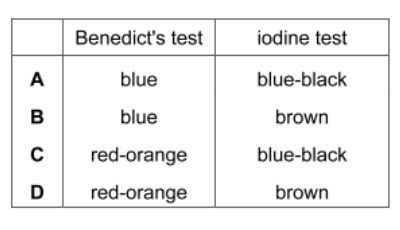
- AA
- BB
- CC
- DD
8The diagram shows how a large food molecule is changed into smaller molecules.
What is process X?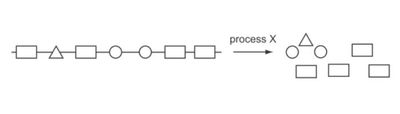
- Aabsorption
- Bchewing
- Cdigestion
- Degestion
9An elderly person has broken several bones. The doctor advises him to drink more milk.
What is the reason for this advice?- AMilk helps to prevent dehydration.
- BMilk is a good source of calcium.
- CMilk is a good source of iron.
- DMilk is low in fat.
10Muscle wastage, lack of growth and the accumulation of fluid in tissues are conditions which result from the lack of nutrient X in the diet.
What is nutrient X?- Acalcium
- Bcarbohydrate
- Cfat
- Dprotein
11The diagram shows parts of the digestive system.
Which labelled parts are the small intestine and the pancreas?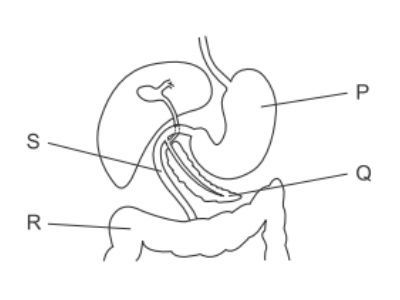
- AP and Q
- BQ and R
- CS and R
- DS and Q
12The diagram shows a section through a green leaf.
Where are carbohydrates made?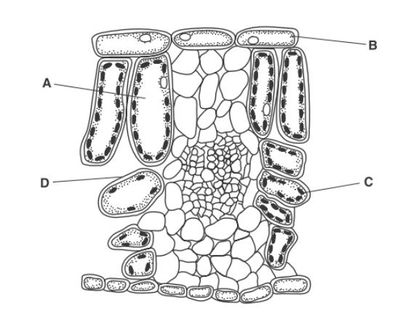
- AA
- BB
- CC
- DD
13The diagram shows a plant cell.
Which structure carries out photosynthesis?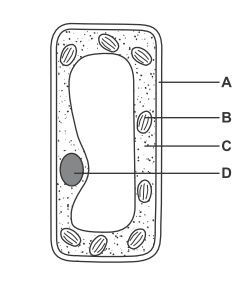
- AA
- BB
- CC
- DD
14The diagram shows the stages in testing a green leaf for starch.
Which liquid is alcohol (methylated spirits) ?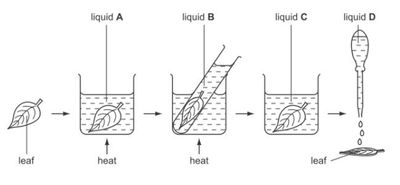
- AA
- BB
- CC
- DD
15A plant has leaves which are green and white. One of the leaves is partly covered on both sides by a piece of black card. The plant is left under a lamp for two days.
The leaf is then removed from the plant and tested for starch (the carbohydrate made during photosynthesis).
Which row in the table is correct?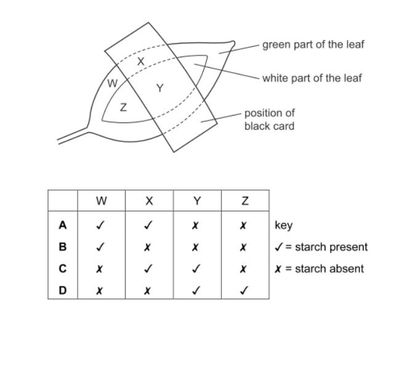
- AA
- BB
- CC
- DD
16 The diagram shows a tooth with a cavity caused by decay.
Which part of the tooth has been exposed (made unprotected) by the decay?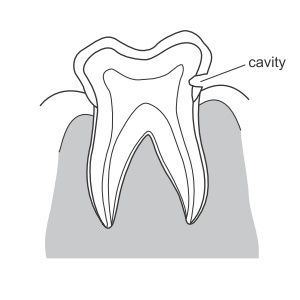
- Aenamel
- Bdentine
- Cpulp
- Droot
17The diagram shows part of the digestive system.
Which labels identify the liver, pancreas and stomach?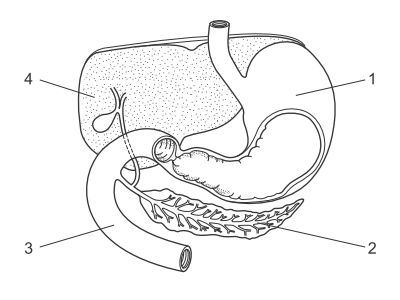
- AA
- BB
- CC
- DD
18A test-tube containing a starch-amylase mixture is incubated at 35 ° C. The graph shows how the amount of starch in the test-tube changes over the next five minutes.
Which of the four graphs (A,B,C or D) shows what happens if a similar starch-amylase mixture is incubated at 100 ° C?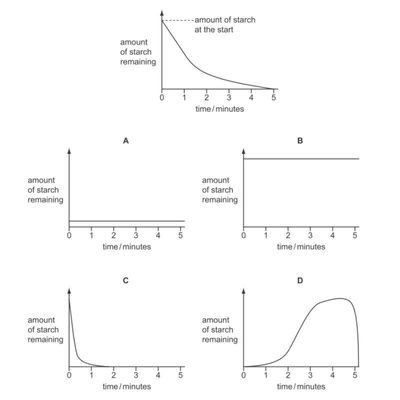
- AA
- BB
- CC
- DD
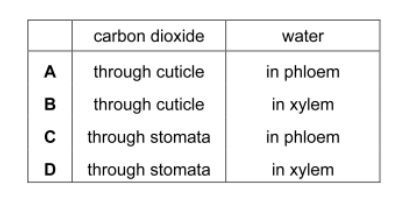
19During photosynthesis, where does most of the carbon dioxide and water enter a leaf?
- AA
- BB
- CC
- DD
20The diagram shows the human alimentary canal.
Label the organs marked.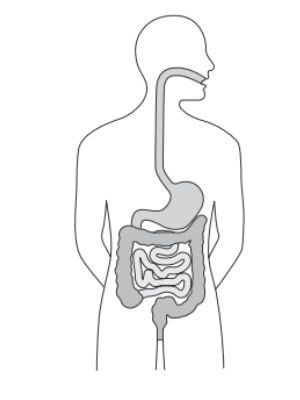
- Asmall intestine
- Bstomach
- Canus
- Dlarge intestine
21The diagram shows the teeth of the lower jaw of a human.
Which tooth is an incisor?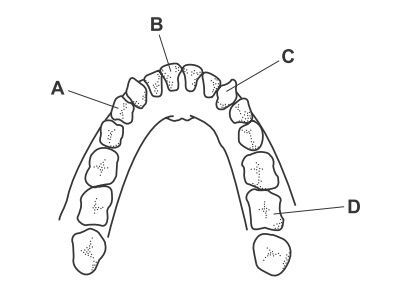
- AA
- BB
- CC
- DD
Informationen
- Beschreibung
- Quiz for IGCSE Coordinated Sciences Topic B4.
- Autor
- Jeffrey Piggott
- Sprache
- English
- Aufrufe
- 812
- Verlauf
- Erstellt am 17 Dez 2016 · aktualisiert am 6 Apr 2018
- Schlagwörter
- Bewertung
- Noch keine Bewertungen Bewerte dieses Quiz