
Karteikarten
Microbiology Lab Practical
Karten in diesem Stapel (98)
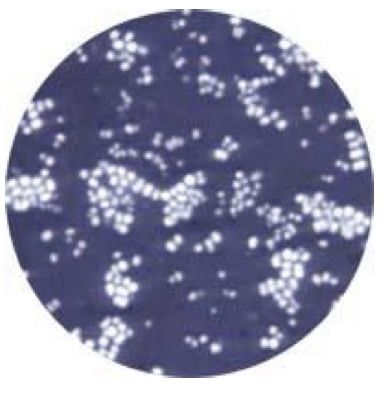
- 1What is the morphology of the organism at the right?Cocci (staph), Oval capsule (klebsiella)
- 2What staining procedure has been used here and when would it be necessary to use this stain?Negative; when cells are too delicate for heat fixing
- 3Is this stain acidic or basic?Acidic (has a negative charge)
- 4What staining procedure has been used here?Gram stain
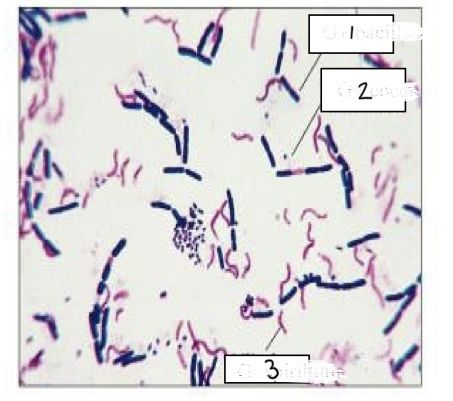
- 5Name the primary and secondary stainPrimary = crystal violet, secondary = safranin
- 6What is the morphology of 1, 2, and 3?1 = G+ bacillus, 2 = G+ cocci, 3 = G- spirillium
- 7Outline the steps of the staining procedureCrystal violet, Iodine, Alcohol, Safranin
(CIAS) - 8What medium is this?EMB
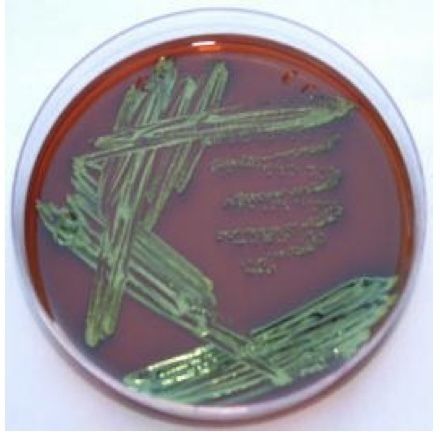
- 9The media promotes the growth of what type of organisms (general/genus)?Coliforms/ ecoli
- 10What is the selective ingredient?Eosin and MB
- 11What is the differential ingredient?Lactose
- 12What is the name of this test?MSA
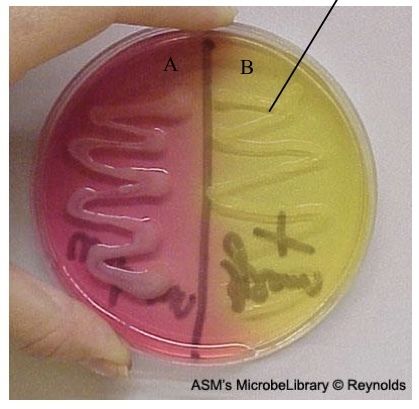
- 13Is the pathogen on A or B? What is the pathogen?B; staph aureus
- 14Why is the media yellow?Acid turns phenol red yellow
- 15What is the selective ingredient?Salt
- 16What is the differential ingredient?Mannitol
- 17What is the salt range of most bacteria?1-3%
- 18A ___ bacteria requires specific media due to complex nutritional requirementsFastidious
- 19What is the name of this test? Is A, B, or C the pathogen?Macconkey; C
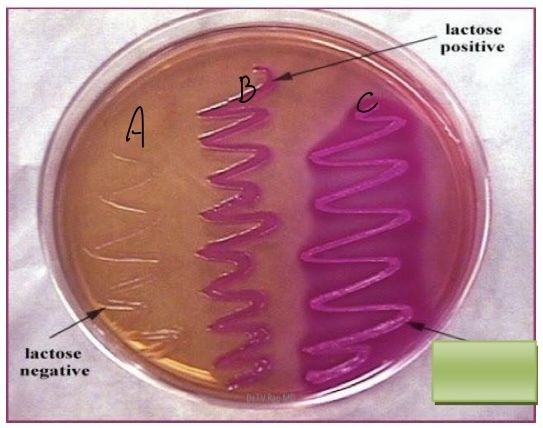
- 20Name the organism that is isolated on this mediaEcoli
- 21Why is the media pink?Fermented, acid, neutral red turns red
- 22What is the selective ingredient? (2)Bile salt and CV
- 23What is the differential ingredient?Lactose
- 24What specific situtation would this media be the preferred media?In hospitals
- 25What is the name of this test?PEA
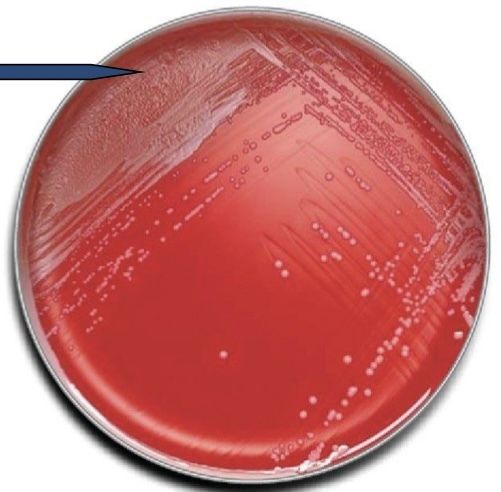
- 26What is the selective ingredient?PEA
- 27What is the differential ingredient?None
- 28Name the organism that is isolated on this mediaStaph or strep
- 29What is the name of this test?Hektoen
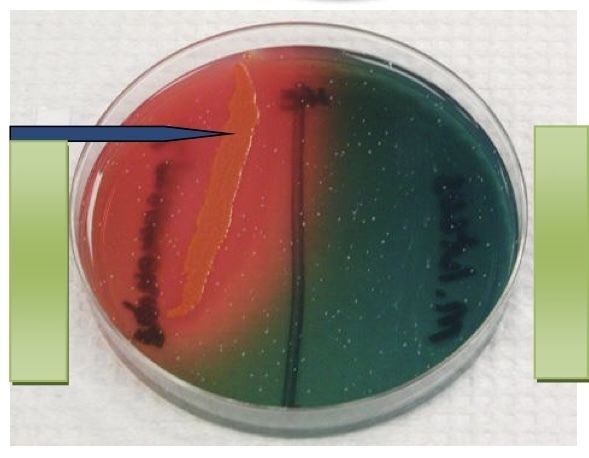
- 30What is the selective ingredient?Bile salts
- 31What is the differential ingredient? (2)Sucrose salacin sugars, reducable sulfur
- 32Name the organism that is isolated on this mediaShigella
- 33What is the name of this test?Chocolate agar
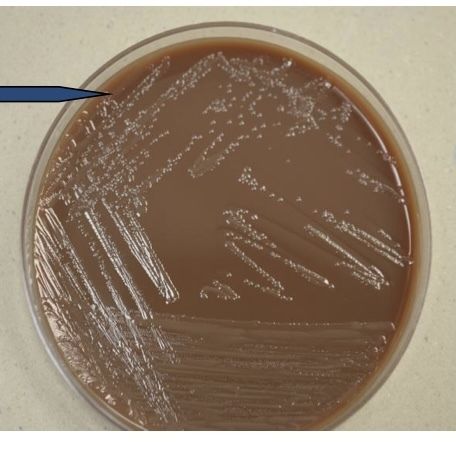
- 34What is the selective ingredient?None
- 35What is the differential ingredient?Lysed RBCs
- 36Name the organisms that are isolated on this mediaNeisseria (large gray)
H. flu (small gray)
Strep pneumonia (green alpha hemolysis) - 37What test or medium is this?Gelatinase
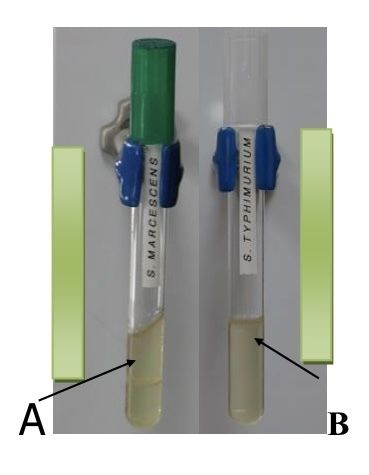
- 38Which tube shows a positive reaction?Tube A
- 39What enzyme is present in the organism with a positive reaction?Gelatinase
- 40What media is this?TSI
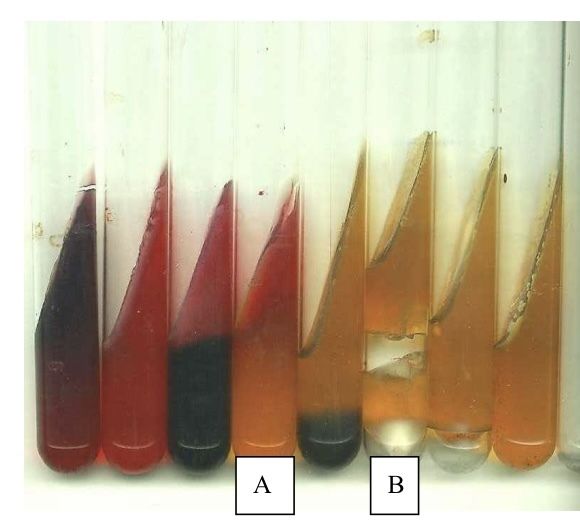
- 41What is the reaction in tube A?Reversion
- 42What is the reaction in tube B?Acid/ acid
Lactose
Fermenter - 43What does the black precipitate indicated? Which tubes are positive for this?H2S+ production
Sulfur reduction
3rd and 5th tube are H2S+ - 44What test is this?Sugar fermentation
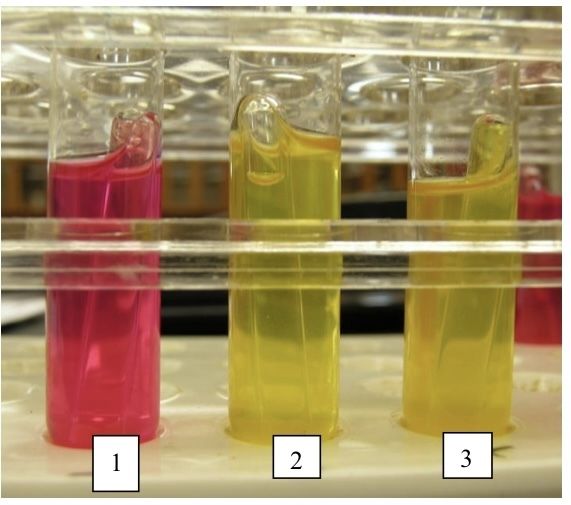
- 45What tube is the acid/ gas reaction?Tube 2 (it has the bubble in the tube)
- 46What reaction is in tube 1?Negative for sugar fermentation
- 47Describe the pH and the reaction in tube 3Acidic
- 48Which tube is positive and what organism shows this reaction?Tube 2 and 3; ecoli
- 49What is the name of this test?MRVP
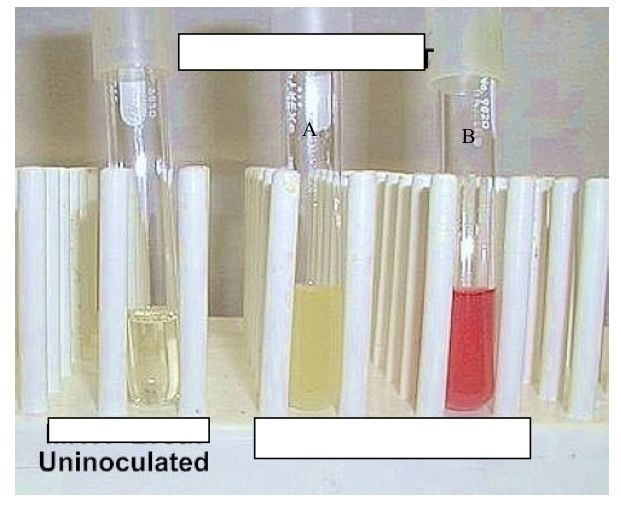
- 50Which tube shows the positive reaction? A or B?B
- 51What is added to the tube to show the positive reaction?MR (methyl red) and VP (VPa and VPb)
- 52What was the organism able to do that gave us this positive reaction?Acetoin production
- 53What medium is this?DNase
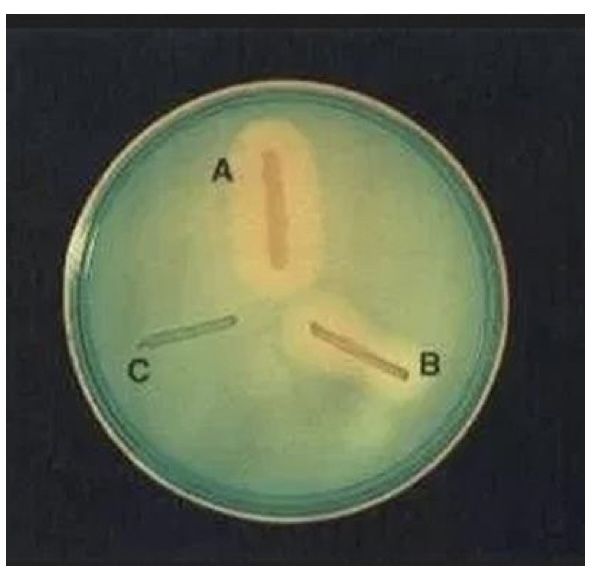
- 54What is this test used for?Detecting DNase
- 55Which zones are positive?A and B
- 56What specific enzyme does this media detect in the positive reaction?DNase
- 57What are the products?Nucleotides
- 58Is this test part of the IMVic?Yes
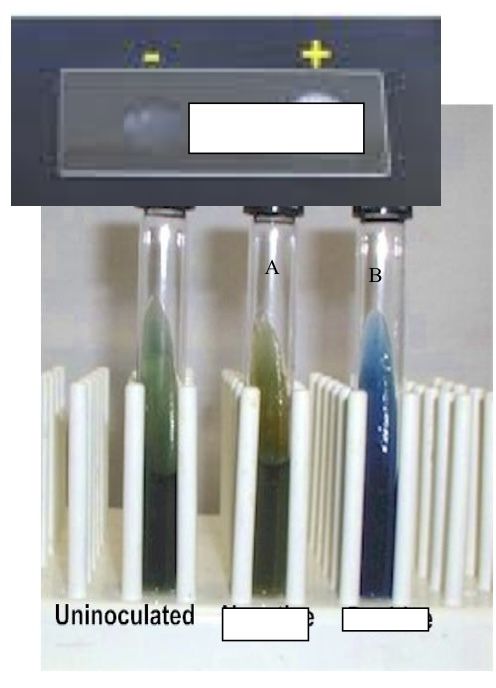
- 59Which tube is a positive reaction?Tube B
- 60What is the pH indicator in this test?Bromothymol blue
- 61Does this indicator turn color in acid or alkaline products?Alkaline
- 62What test is this?Starch
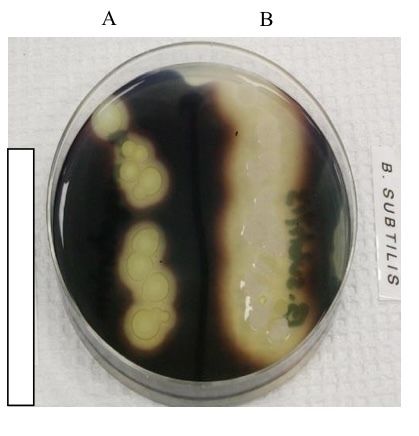
- 63Which of these areas (A or B) shows a positive reaction?Both but B is more positive
- 64What is the name of the enzyme?Amylase
- 65What organism can produce these results?Bacillus
- 66What is this test?Oxidase
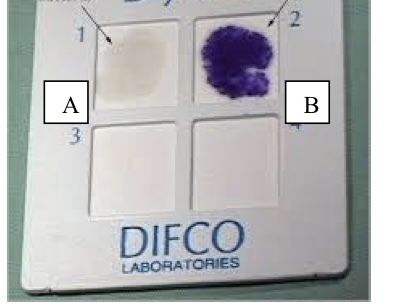
- 67What does this test detect?Cytochrome C oxidase
- 68This test is to isolate what type of bacteria?Aerobe
- 69Label the positive test results (A or B)B
- 70What is this test? Which tube shows a positive reaction?Urease, Tube B
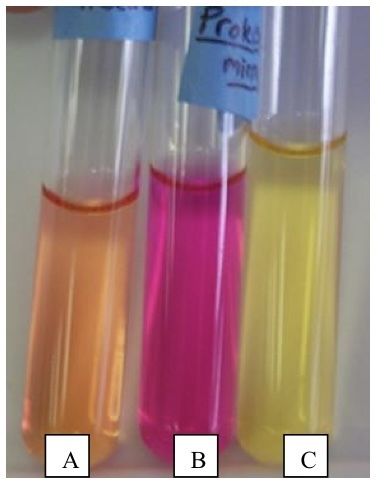
- 71What enzyme did this organism possess?Urease
- 72What component added to the test would indicate a strong enzyme producer?Buffer
- 73Which tube shows a weak reaction?Tube A
- 74What is the name of this test?Kirby bauer
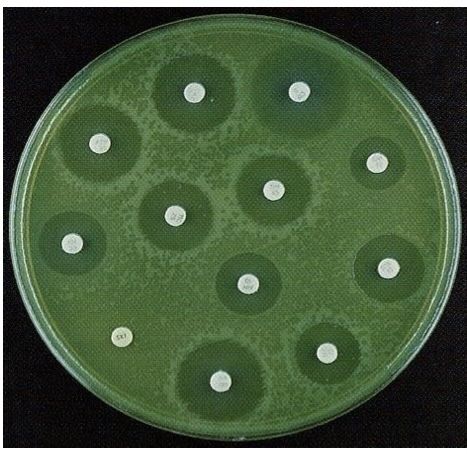
- 75What is this test used for?Testing antibodies
- 76What specific antibiotic would you use: S, I, or R?S (susceptible)
- 77An organism’s ability to break down all the sugars and begin catabolism of proteins is called ___.Reversion
- 78When the pH goes above a pH of 8.4, the phenol red indicator turns what color in media?Pink
- 79You obtain a pure culture from the streak plate and transfer to a sterile slant. The first step to identify your unknown is to:Gram stain your culture
- 80The objective megnification is ___, when using the oil immersion lens.100x
- 81The solidifying agent found in most solid bacterial media is:Agar
- 82The steps for removing bacteria from a liquid medium are given below. What is the correct order of occurrence? 1. Flame tube, 2. Flame loop, 3. Remove cap, 4. Replace cap, 5. Inoculum2,3,1,5,1,4
- 83What is the smallest size object that can be seen with the light microscope?0.2 um
- 84In microscopy, immersion oil is used to:Minimize light scattering
- 85The limit of resolution for the light microscope is ___.0.2 um
- 86What is the solidifying agent found in most solid bacterial media?Polysaccharide
- 87A gram negative rod bacteria would appear what color after you apply the alcohol in gram stain?Colorless
- 88What is a countable plate size?30-300
- 89Why do we have the three zones in a streak plate?It is a method of isolation
- 90What medium is used to differentiate between members of the genus streptococcus?Blood agar
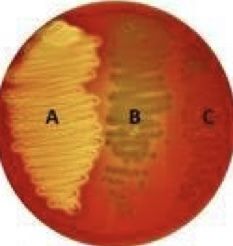
- 91Which organisms show alpha beta gamma - hemolysis?A = beta (complete hemolysis)
B = alpha (partial)
C = gamma (none) - 92What is the differential?RBCs
- 93What is the selective ingredient?None
- 94Outline the first steps in identifying your unknown bacteria1. Streak plate
2. Gram stain
3. Sugar fermentation - 95What kingdom does this organism belong to?Fungi
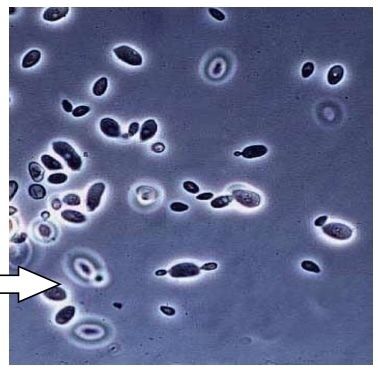
- 96Is this organism a prokaryote or eukaryote?Eukaryote
- 97Does this organism cause disease?No
- 98Why is this organism important in microbiology?Yeast and antibiotics
Informationen
- Beschreibung
- Biology Karteikarten am Microbiology Lab Practical, erstellt von Maya Nunez am 30/11/2021.
- Erstellt von
- Maya Nunez
- Aufrufe
- 7
- Bewertung