
Karteikarten
Renaissance and Mannerism in Italy chapter 1 art works
Karten in diesem Stapel (32)
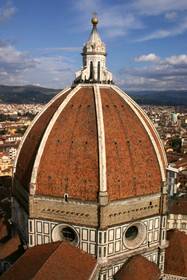
- 1—Filippo Brunelleschi, Florence Cathedral, dome, 1420-36, lantern completed 1471
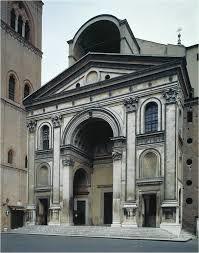
- 2—Leon Battista Alberti, Sant'Andrea, Matue, facade, designed 1470, an ideal demontration of early renaissance devotion to the antique = ancient temple + ancient triumphan arch
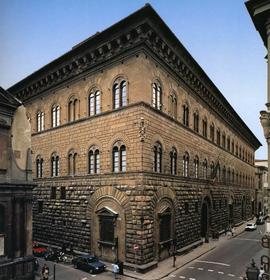
- 3—Michelozzo di Bartolommeo, Palazzo Medici-Riccardi, Florence, exterior, begun 1445, probably completed 1452, ground floor windows by Mickelango, ca. 1517
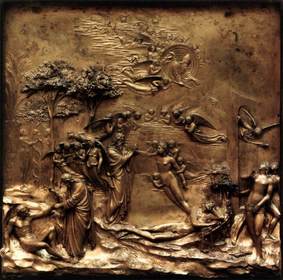
- 4—Lorenzo Ghiberti, the creation of adam and eve, relief panel from the gates of Paradise, east doors, Baptistery, Florence, 1425-52, gilt bronze
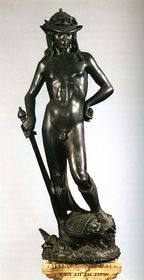
- 5—Donatello, David, ca. 1425-30, bronze, the early renaissance interest in antiquity and the accurate portrayal of the nude are evidenced in Dontallo's work
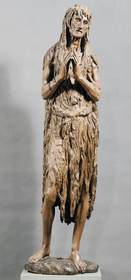
- 6—Donatello, Mary Magdalene, 1453-55, wood, painted and gilded, not only beauty, but also its absence can be used to create emotionally moving art, as in this portrayal of the repentant sinner
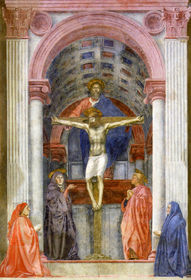
- 7—Masaccio, Trinity with the Virgin, St. John the Evangelist, and Donors, Santa maria Novella, Florence, probably 1427/28, the architectural setting demonstrates the early renaissance interest in the antique and in spatial illusion, the naturalistic portrayal of the life size donors indicates the new concern for the indivitual
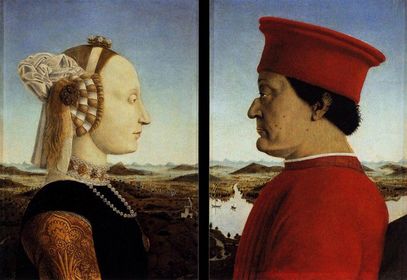
- 8—Piero della Francesca, Battista Sforza and Federica da Montefeltro, 1472/73, early renaissance profile, later 3/4 view popular, unsparing realism, an accident in combat accounts for the count's curious profile
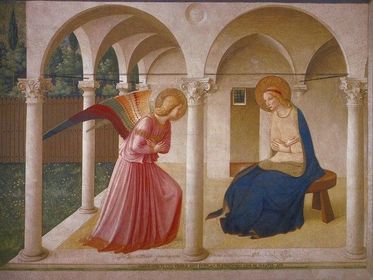
- 9—Fra Angelico, annunciation, monastery of San Marco, Florence, 1438-45, Angelico cleverly painted it as if it were taking place within the actual architecture of the monastery of San Marco
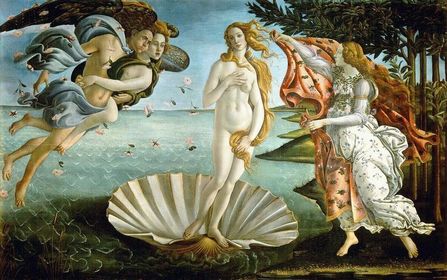
- 10—Sandro Botticelli, Birth of Venus, ca. 1484-86, temera on canvas, Botticelli painted this important revival of the nude based upon antique prototypes
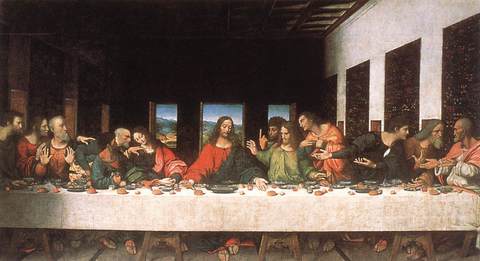
- 11—Leonardo da Vinci, The Last Supper, 1495-98, tempera and oil on plaster, the murals poor contition is due to the experiemtna media in which its painted, nevertheless, his ability to merge from and content, using perspective to create simultaneously an illusion of a cubic space and focus the viewer's attion on jesus can still be appreciated
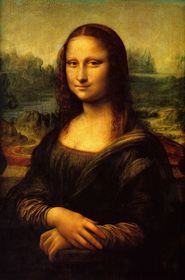
- 12—Leonardo da Vinci, Mona Lisa, ca. 1503, oil on panel, probably the most famous painting in the world, Mona Lisa's mysterious smile continues to intrigue viewers today
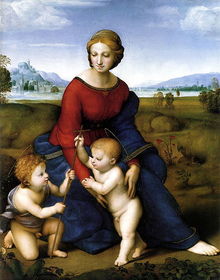
- 13—Raphael, Madonna of the Meadows, 1505, oil on panel, often cosidered the epitome of high renaissance painters, raphael was celebrated for his ability to arrage several figues into compact units, Mary, Jesus, and John the Baptist form a pyramid, a favorite renaissance compositional device
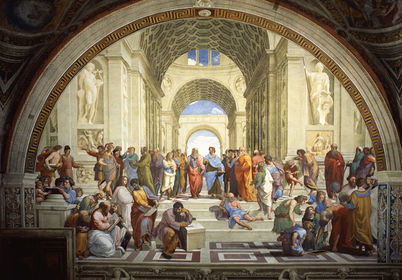
- 14—Raphael, School of Athens, 1510-11, fresco, Statues of Apollo and Minerva Flank Plato and Aristotle, shown surrounded by scientists and philosophers of antiquity, some of whom have been give the facial features of Raphael's contemporaries
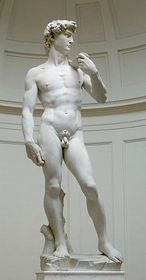
- 15—Michelangelo, David, 1501-04, marble, a magnificent marble man, akin to the heroic nudes of antiquity and undated by costume, David becomes a universal symbol of the individual facing unseen conflict
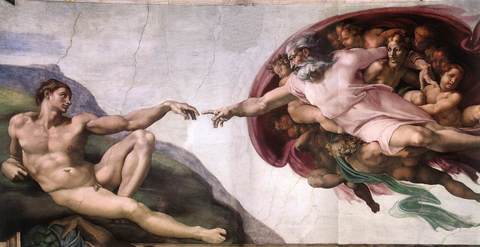
- 16—Michelangelo, Creation of Adam, 1511-12, fresco, Adam's enormous latent power will be released in the next instant when swift-moving God, with Eve already under his arm, brings him to life.
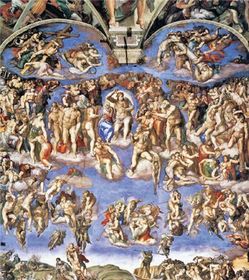
- 17—Michelangelo, The Last Judgment, 1536-41, Michelangelo's optimism and the idealized beauty of the ceiling of this chapel are now replaced with a pessimistic view and anatomical anomalies (fall of rome?)
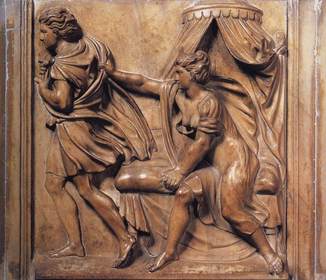
- 18—Properzia de' Rossi, Joseph and Potiphar's Wife, ca. 1520, marble bas-relief, powerful full figures, so admired during the high renaissance, move rapidly through space in this compact composition, the garments revealing the bodies beneath as well as enhancing the action.
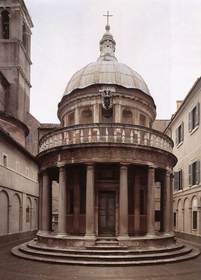
- 19—Donato Bramante, Tempietto, Rome, 1502-after 1511, small in size but of great importance, the Temietto demonstrates the reuse of anient page architecture for renaissance christian pursoses
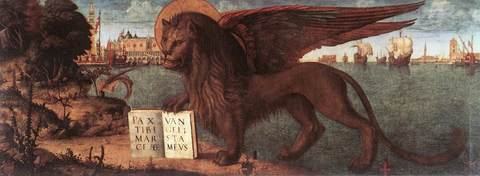
- 20—Vittore Carpaccio, lion of St. Mark, 1516, oil on canvas, the winged lion was a symbol of the evangelist Mark of Venice, this painting documents the early sixteenth-century appears of the city, with its campanile, Ducal palace, and the domes of st. Mark's Cathedral
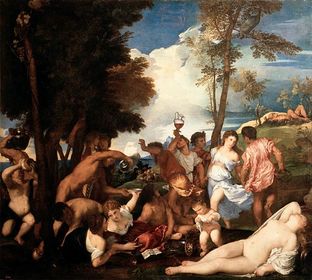
- 21—Titian, Bacchanal, ca. 1518, oil on canvas, Botticelli's slender early renaissance figure type matured in the work of high renaissance painters such as titian to a full-bodied ideal of beauty
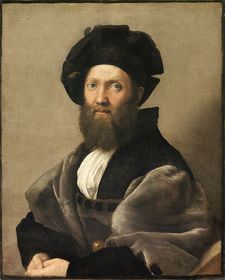
- 22—Raphael, Baldassacre castiglione, ca 1515 he wrote about qualities of ideal courtier, personal friend of raphael, calm restraint recommemended by castiglion> restricted range of color
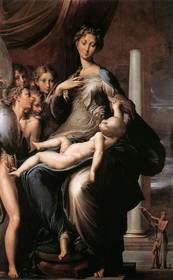
- 23—parmigianino, madonna with the long neck, 1534-40, mannerist preference for distored figures and spatial ambiguity
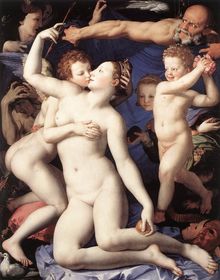
- 24—agnolo bronzino, allegory with venus and cupid, 1546, iconography, erotic encounter venus and cupid,, pictorial space choked with figures
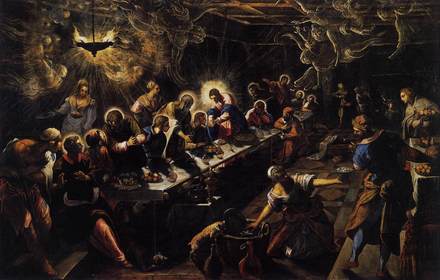
- 25—tintoretto, the last supper, 1592-94 difficulty locating jesus, perspective leads away from jesus
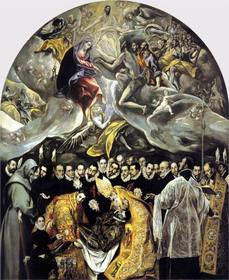
- 26—el greco, the burial of count orgaz, 1586, distorted figures, once attributed to astigmatism, now mannerist preference for elongated bodily proportions
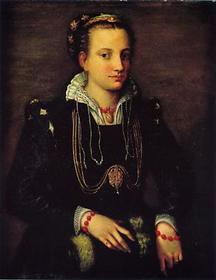
- 27—sofonisba anguissola, portrait of artist's sister minerva, 1564, was specialized in portraits, interest in individual> renaissance
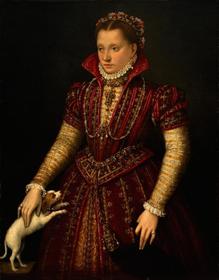
- 28—lavinia fontana, portrait of a noblewoman, 1580,red= wedding gown, dog= marital fidelity
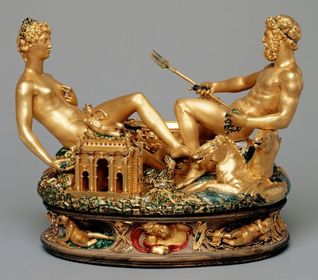
- 29—benvenuto cellini saltcellar of francis I, 1539-43, extreme elegance and opulence, table ornament for salt and peper
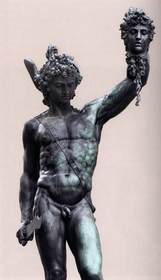
- 30—benvenuto cellini, perseus, 1545-54, mythological, attains elegance in the mannerist style
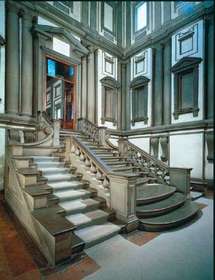
- 31—designed by michelangelo vestibule of laurentian library
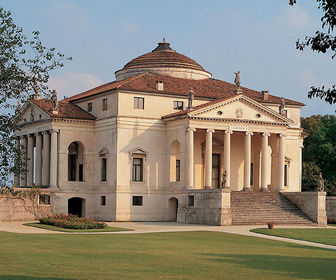
- 32—andrea palladio, villa rotonda
Informationen
- Beschreibung
- Renaissance and Mannerism in Italy chapter 1 art works flash cards
- Erstellt von
- Ayla de Klerk
- Aufrufe
- 235
- Tags
- Bewertung