
Mindmap
1.1 Pathogens
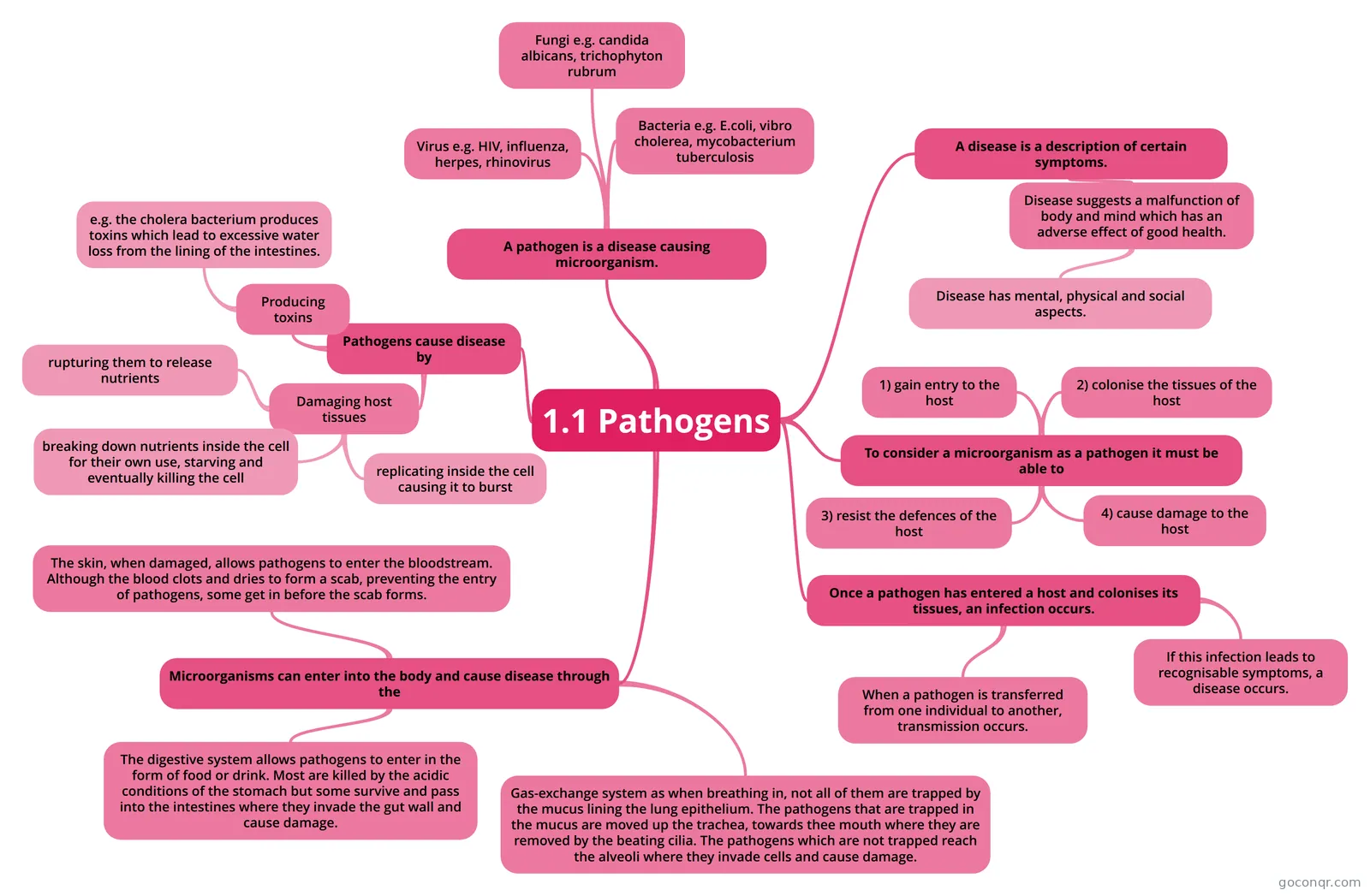
Mind map: Pathogens
Inhalt der Mindmap
1.1 Pathogens
A pathogen is a disease causing microorganism.
- Virus e.g. HIV, influenza, herpes, rhinovirus
- Bacteria e.g. E.coli, vibro cholerea, mycobacterium tuberculosis
- Fungi e.g. candida albicans, trichophyton rubrum
A disease is a description of certain symptoms.
- Disease suggests a malfunction of body and mind which has an adverse effect of good health.
- Disease has mental, physical and social aspects.
- Disease suggests a malfunction of body and mind which has an adverse effect of good health.
To consider a microorganism as a pathogen it must be able to
- 1) gain entry to the host
- 2) colonise the tissues of the host
- 3) resist the defences of the host
- 4) cause damage to the host
Once a pathogen has entered a host and colonises its tissues, an infection occurs.
- If this infection leads to recognisable symptoms, a disease occurs.
- When a pathogen is transferred from one individual to another, transmission occurs.
Pathogens cause disease by
- Producing toxins
- e.g. the cholera bacterium produces toxins which lead to excessive water loss from the lining of the intestines.
- Damaging host tissues
- rupturing them to release nutrients
- breaking down nutrients inside the cell for their own use, starving and eventually killing the cell
- replicating inside the cell causing it to burst
- Producing toxins
Microorganisms can enter into the body and cause disease through the
- Gas-exchange system as when breathing in, not all of them are trapped by the mucus lining the lung epithelium. The pathogens that are trapped in the mucus are moved up the trachea, towards thee mouth where they are removed by the beating cilia. The pathogens which are not trapped reach the alveoli where they invade cells and cause damage.
- The skin, when damaged, allows pathogens to enter the bloodstream. Although the blood clots and dries to form a scab, preventing the entry of pathogens, some get in before the scab forms.
- The digestive system allows pathogens to enter in the form of food or drink. Most are killed by the acidic conditions of the stomach but some survive and pass into the intestines where they invade the gut wall and cause damage.
Informationen
- Beschreibung
- A detailed mindmap on 1.1 Pathogens AQA spec.
- Erstellt von
- lucy.warnes
- Aufrufe
- 195
- Tags
- Bewertung
Mehr zu Pathogens and disease transmission