
Mindmap
GCSE Chemisty C1.4 + C1.5 - Crude oil and fuels
Inhalt der Mindmap
GCSE Chemisty C1.4 + C1.5 - Crude oil and fuels
Crude oil
- Crude oil: is a mixture containing different compounds, most of these are hydrocarbons. Mixture meaning the compounds are no chemically combined.
- Being a mixture means it can easiely be seperated by physical methods e.g) Fractional distillation
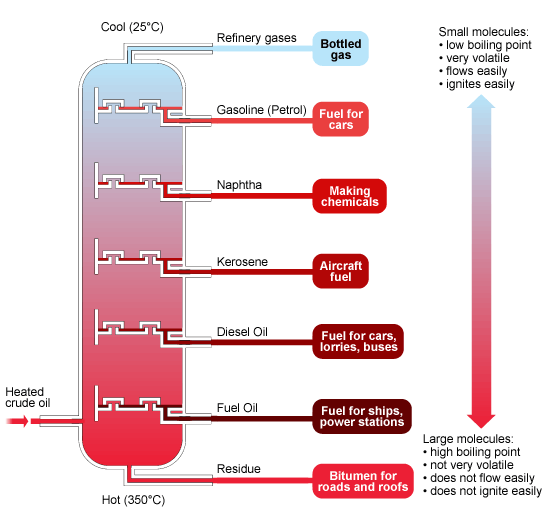
- Fractional Distillation:
- < Fractionaing column
- METHOD:
- The crude oil is heated, once heated the steam enters the fractionating column and condenses at different temperatures in the fractionating column. The long chained hydrocarbon condense at the bottom of the column (high melting/boiling point) where as the short chained hydrocarbons condesnse at the top of the column (lower boiling/melting point).
- Fractional Distillation:
- Being a mixture means it can easiely be seperated by physical methods e.g) Fractional distillation
- Crude oil: is a mixture containing different compounds, most of these are hydrocarbons. Mixture meaning the compounds are no chemically combined.
Alkanes
- SATURATED
- Only make 4 C-C Bonds!
- ALL C-C BONDS ARE SINGLE BONDS!
- GENERAL FORMULAE! CnH2n+2
- ALL C-C BONDS ARE SINGLE BONDS!
Hydrocarbon fuels
- When hydrocarbon fuels are burned, this is known as a combustion reaction
- COMBUSTION
- combustion reactions are actually oxidation reactions as the carbon gains oxygen (when burned) to form CO2 and hydrogen is oxidised to form water vapour H2O (gas)
- There can be incomplete combustion (not enough oxygen) and complete combustion (enough oxygen during a reaction)
- Complete combustion --> produces CO2 (carbon dioxide)
- Incomplete combustion --> produce CO (carbon monoxide)
- Short chained hydrocarbons
- When burned release: Sulfur dioxide, carbon dioxide, carbon monoxide (all green house gases, cause global warming) and water vapour. Can also lead to nitrogen oxides being produced & Soot.
- Sulfur dioxide - Acid rain & Global warming
- Carbon dioxide - Global Warming
- Carbon particles - Soot - Global dimming, reduction in light.
- Nitrogen oxides - Acid rain
- When burned release: Sulfur dioxide, carbon dioxide, carbon monoxide (all green house gases, cause global warming) and water vapour. Can also lead to nitrogen oxides being produced & Soot.
Bio Fuels
- Are produced by plant materials and include ethanol and biodiesel.
Fuel
- Fossil Fuels
- Ethanol
- Hyrdrogen
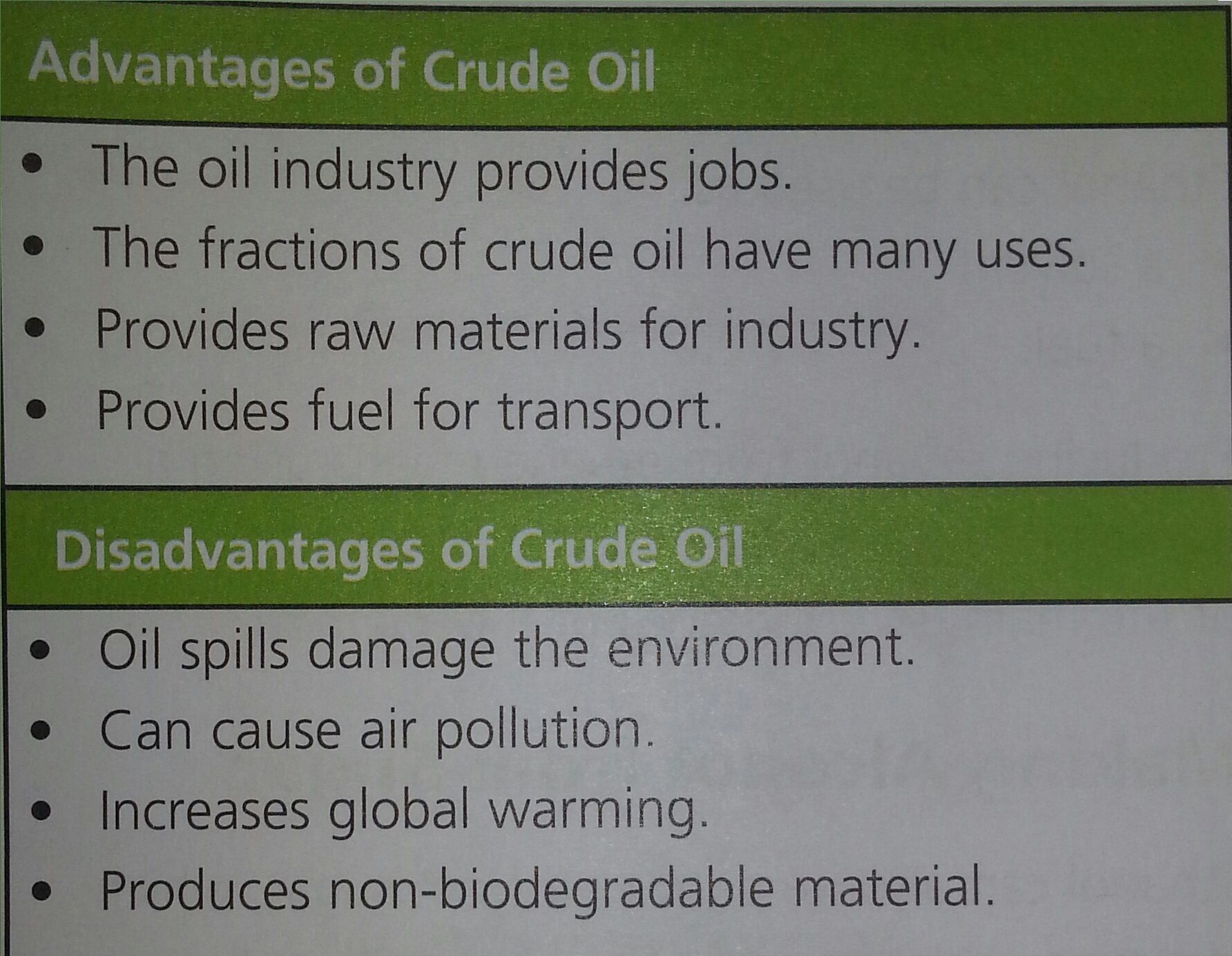
Advantages
- Power stations = jobs
- energy for homes
- doesnt take up much space
- energy for homes
- Doesnt affect peformance of cars
- SAve money
- Renewable
- Less carbon emissions
- Less carbon monoxide produced
- No harmful gases produced
- Less carbon monoxide produced
- Less carbon emissions
- Renewable
- SAve money
- Power stations = jobs
Disadvantages
- pollutants
- Global warming from gases
- non renewable
- Global warming from gases
- Pay to convert engines
- More sugar need to grow to meet demand
- Price of sugar will rise
- Produces less energy than petrol
- Expensive to produce
- Difficult to store and transport safely
- Expensive to produce
- Produces less energy than petrol
- Price of sugar will rise
- More sugar need to grow to meet demand
- pollutants
CRACKING HYDROCARBONS
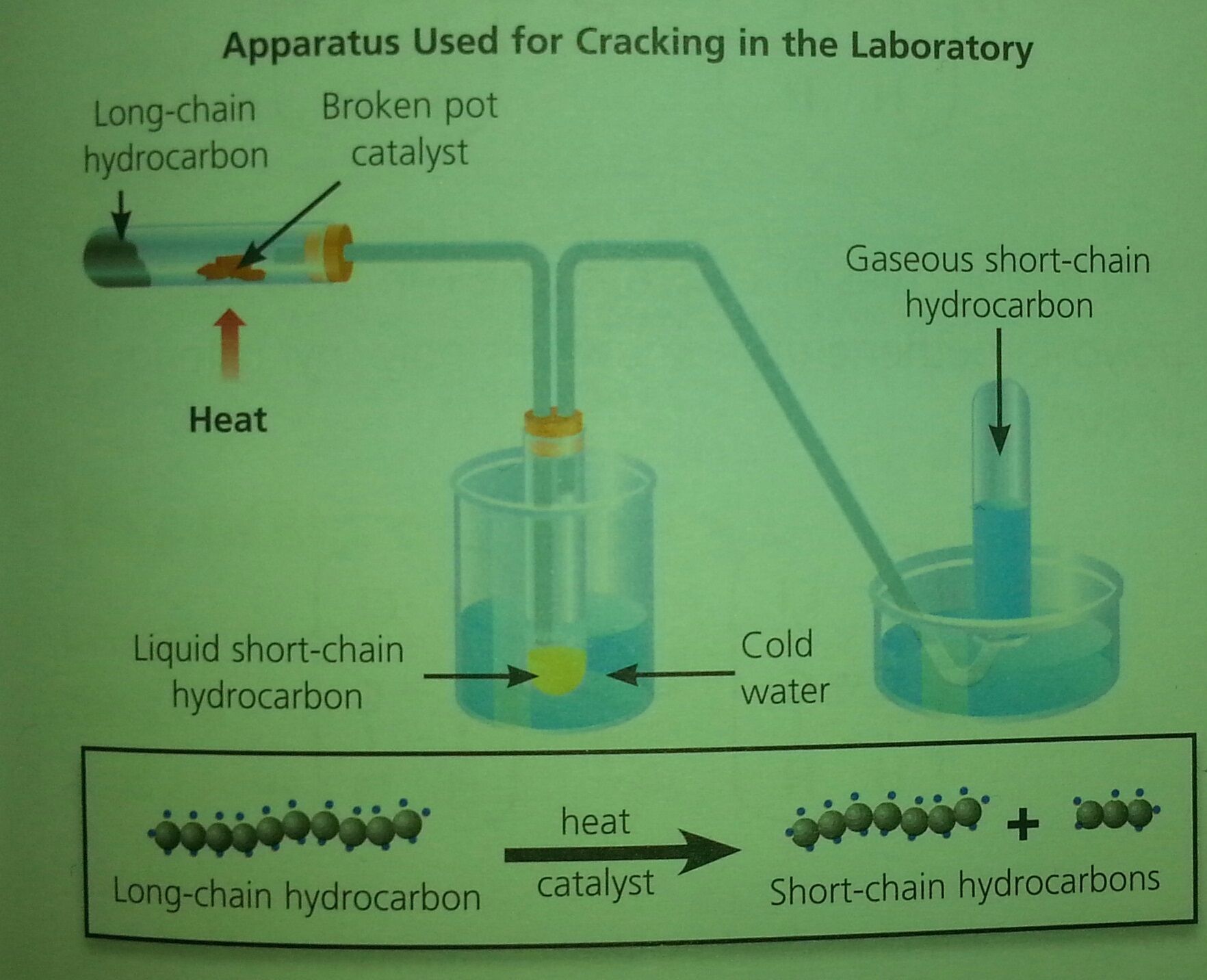
- Cracking - broken down into shorter chained hydrocarbons using heat.
- When cracking long chained hydrocarbons, short chained alkanes and alkenes are produced.
- The short chained ALKANES are more useful as fuels
- The short chained ALKENEs are more useful as polymers
- When cracking long chained hydrocarbons, short chained alkanes and alkenes are produced.
- <Cracking - hydrocarbons are cracked by heating them until they vapourise, then passing over a heated catlyst where a thermal decomposition reaction takes place.
- Cracking - broken down into shorter chained hydrocarbons using heat.
ALKENES
- UNSATURATED
- DOUBLE c-c BONDS
- fORMULAE - CnH2n
- DOUBLE c-c BONDS
- UNSATURATED
Polymerisation
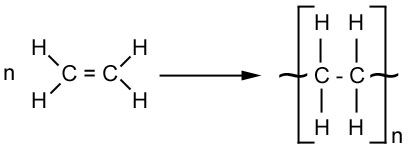
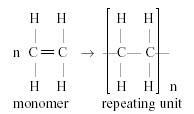
- alkenes are very reactive due to their double bonds, when small alkene molecules join to make long chain molecules this is caled polymerisation
- Representing Polymerisation >
- General equation >
- Use of polymers
- PVC (polyvinyl chloride) - make waterproof items, drain pipes and electrical insulator
- Polystyrene - casing for electrical appliances and it can be expanded to make protective packaging
- Polyethen - plastic bags and bottles
- poly(propene) - crates and ropes
Disposing of plastics
- Plastics cannot be broken down as they are not biodegradeable. This means that plastics take up a lot of space on landfill sites. In order to dispose of plastics we must be burnt to save space on landfills however this does produe harmful green house gases such as carbon dioxide.
- Biodegradeable polymers
- Polymers that are able to be broken down my microbes.
- Biodegradeable polymers
- Plastics cannot be broken down as they are not biodegradeable. This means that plastics take up a lot of space on landfill sites. In order to dispose of plastics we must be burnt to save space on landfills however this does produe harmful green house gases such as carbon dioxide.
Alcahol from ethene
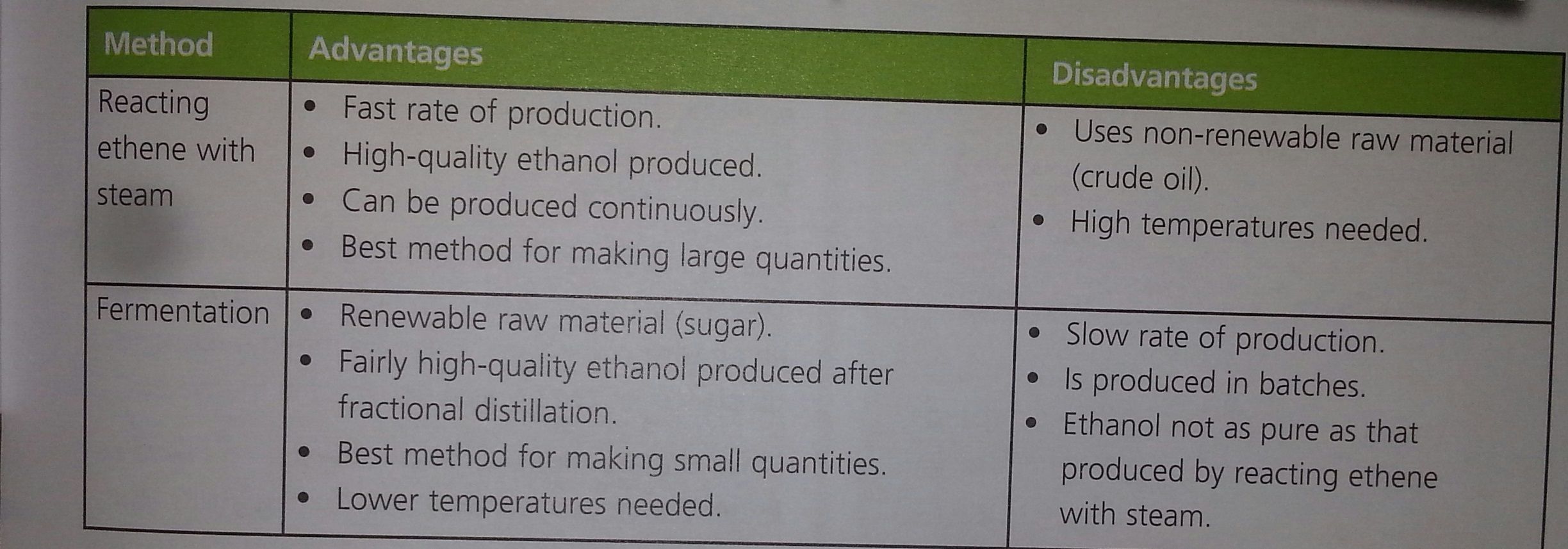
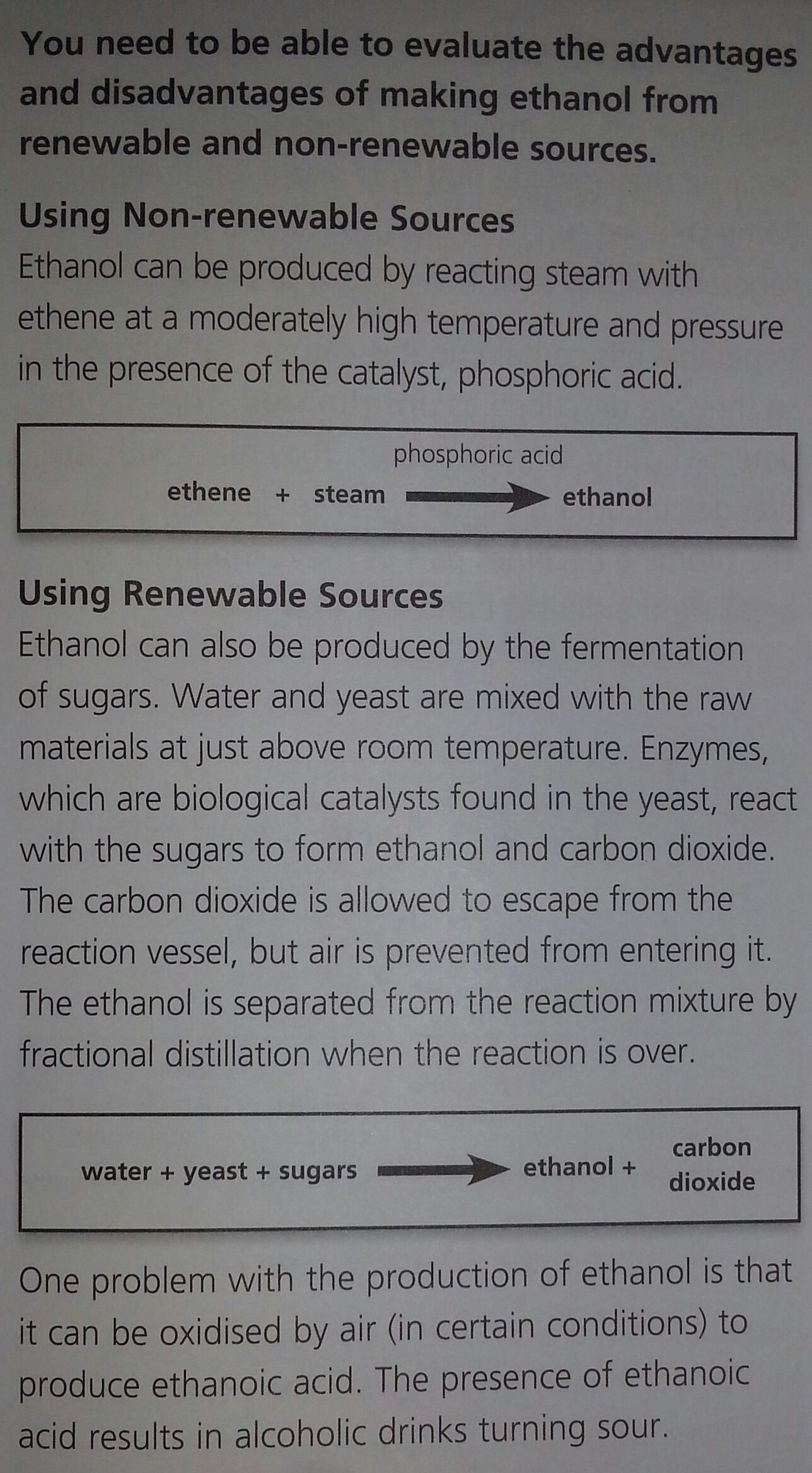
- Alcohol can be made by reacting ethene with steam at a high temp and pressure, in the presence of phosphoric acid and a catalyst.
- Ethene + Steam ------------> Ethanol
- Phosphoric acid
- Catalyst
- Alcohol can be made by reacting ethene with steam at a high temp and pressure, in the presence of phosphoric acid and a catalyst.
Alcohol from sugar
- fermentation
- Carried out in solution using yeast at 37 degrees
- Sugar ------------> ethanol + Carbon dioxide
- yeast
- Carried out in solution using yeast at 37 degrees
- fermentation
Bilder und Dateien der Mindmap
Informationen
- Beschreibung
- GCSE Chemistry - GCSE Mindmap am GCSE Chemisty C1.4 + C1.5 - Crude oil and fuels, erstellt von chancice.branscombe am 05/01/2015.
- Erstellt von
- chancice.branscombe
- Aufrufe
- 215
- Tags
- Bewertung