
Mindmap
Graphics
Inhalt der Mindmap
Graphics
Design of Products
- Social issues
- Essential to consider the view of others when designing new products
- Anthropometrics and Ergonomics
- Study of people
- Shape
- Size
- Designing products to suit humans
- eg. a phone that fits in the hand
- Study of people
- Signs and symbols
- Materials
- Safety
- Moral isues
- Working condidtions
- Labour costs
- Fairtrade
- User safety
- Ethical Trading Inititative
- Organisation that works with trade unions in order to increase the rights of workers worldwide.
- Help is generally in LEDCs
- Organisation that works with trade unions in order to increase the rights of workers worldwide.
- Working condidtions
- Cultural Issues
- Valuing the responses of others to design solutions
- The impact of different cultures on modern products
- Environmental Issues
- Select materials that are appropriate and sustainable
- Reduce
- Use of chemicals
- eg. bleaches, CFCs
- Use of materials dangerous to the environment
- eg. toxic materials
- Use of chemicals
- Carbon footprint
- Transportation
- Manufacturing
- Carbon offsetting
- The counteracting of carbon dioxide emissions with an equivalent reduction of carbon dioxide in the atmosphere.
- Deforestation
- Rethink
- Disposal of redundant products
- Packaging
- Environmentally friendly
- Minimal wasteage
- Design Issues
- How good is the design?
- Improves quality of life
- Safety
- Response to changing...
- styles
- taste
- technology
- environmental pressures
- Eco-design
- Design concept to finished product
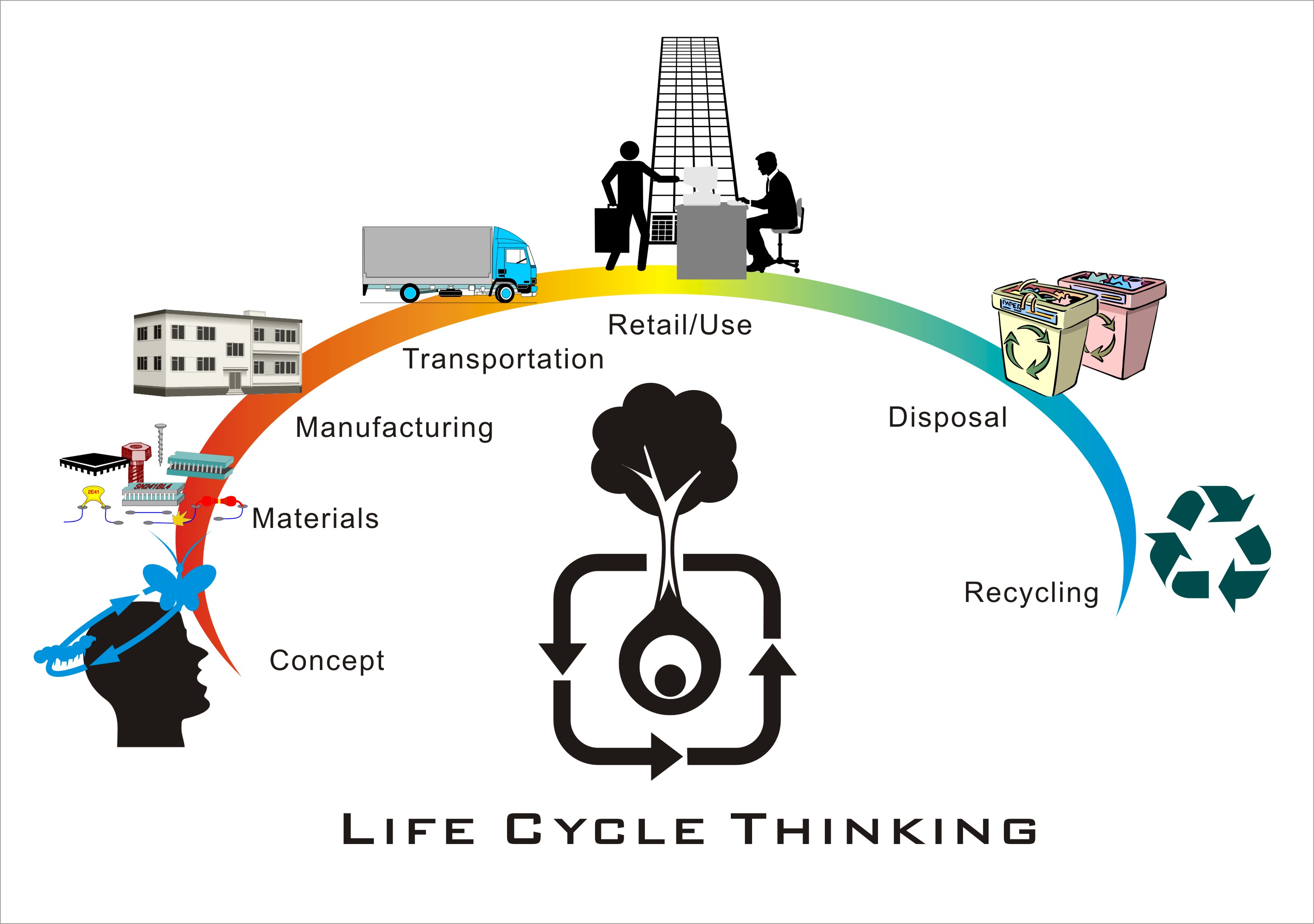
- Use of materials and energy product LCA
- Globalisation
- How good is the design?
- Social issues
5 R's
- Reduce
- Life cycle of a product
- Energy and waste of production process
- Built in obscolecence
- Materials wastage
- Life cycle of a product
- Reuse
- Products that can be reused
- Same purpose
- Different purpose
- adapted for alternative use
- eg. wine glass could be a rose vase
- Products that can be reused
- Recycle
- Recyclable products
- Glass
- Plastic
- Metals
- Products that use recycled materials
- Disassembly
- Tertiary recycling
- Types of recycling
- Primary
- Same as reusing a product
- eg. refilling plastic bottle
- Secondary
- Taking something apart and making something else
- eg. making a pair of jeans into a bag
- Tertiary
- When products are broken down and reformulated
- eg. plastic bottles into fleece fabric
- Primary
- Recyclable products
- Rethink
- Is it possible to approach design problems differently?
- More sustainably?
- How?
- Utalising wastage products or components of old products
- Is it possible to approach design problems differently?
- Repair
- Try to fix and mend broken products
- Products
- Can they be fixed?
- Is it safe to fix this product?
- Refuse
- Issues relating to sustainable design
- Expensive
- Not yet cost effective
- Materials we should refuse to use
- Plastic
- Refuse to purchase unneeded prducts
- Issues relating to sustainable design
- Reduce
Materials
- Classification
- Card
- Paper
- Foam Board
- Sheet plastic
- Suitability of thermoplastics for formation
- Corriflute
- Styrofoam
- See Materials: A Booklet
- Properties
- Suitability
- Properties
- Physical
- Hardness
- Roughness
- Strength
- Flexibilty
- Impact Resistance
- Strength to weight ratio
- Aesthetic
- Importance of understanding properties when selecting material for use
- Choice considering ergonomics
- Finish of product
- Laminating
- Varnish
- UV lacqure
- Embossing
- Foil Aplication
- Physical
- Joining
- Glue
- PVA
- Spray adhesive
- Solvent cement
- Hot melt glue
- Glue gun
- Epoxy resin
- Glue sticks
- Adhesive tape
- Single sided
- Double sided
- Glue
- Smart materials
- Polymorph
- Polymer
- Use
- Modelling
- Prototyping
- Thermoplastic
- Reusable and Recyclable
- Thermochromic
- Change colour in response to a temperature change
- eg. mugs that change colour when hot drink is present
- Change colour in response to a temperature change
- Photochromic
- Changes colour is response to a change in the light level
- eg. white indoors, colourful outside
- Changes colour is response to a change in the light level
- Phosphorescent pigment
- stores light energy and then provides an 'afterglow'
- 'Afterglow' - glows in the dark
- eg. safety signs
- stores light energy and then provides an 'afterglow'
- Nanotechnology
- The science of extremely small things. Usually involves the study of materials on 'nano' scale.
- 1nm = 1millionth of a m
- Nanomaterials
- Stronger
- Lighter
- Electrical conductivity
- Uses
- Computer chips
- Healthcare
- Medicine
- Mobiles
- Waterproofing
- Polymorph
- Design
- Evaluation and modification of ideas
- Considering creativity
- Considering sustainability
- Task or user needs
- Design in accordance to criteria
- Justicifation
- Choice
- Rejection
- Materials
- Select and Justify
- Prototyping
- Importance
- Purpose
- Reducing waste
- Does prototype meet needs?
- Does it work?
- Ergonomics and Anthropometrics
- Be designed to suit human usage
- Evaluation and modification of ideas
- Equipment
- Knowledge
- Selecting for use
- Safety
- Examples
- Glue gun
- Laser cutter
- Craft knife
- Classification
Processes
- Graphic shapes
- Triangles
- Quadrilaterals
- Polygons
- 5
- 6
- 8
- Elipses
- Graphic shapes
Bilder und Dateien der Mindmap
Informationen
- Beschreibung
- Exam Board: OCR Unit A535
- Erstellt von
- nicole_j_baldwin
- Aufrufe
- 212
- Tags
- Bewertung