
Mindmap
ENVIRONMENTAL SCIENCE - UNIT 1
Inhalt der Mindmap
ENVIRONMENTAL SCIENCE - UNIT 1
CHAPTER 2 : Environmental Systems: Matter, Energy, and Life
- SYSTEMS DESCRIBE INTERACTIONS
- SYSTEMS
- a network of interdependent components and processes, with materials and energy flowing from component of the system to another
- ECOSYSTEM
- complex assemblage of animals, plants, and their environment, thru which materials and energy move
- OPEN SYSTEMS
- those that receive input from their surroundings and produce outputs that leave the system *all ecosystems are open
- CLOSED SYSTEMS
- exchanges no energy or matter with its surroundings
- THROUGHPUT
- energy and/or matter that flow into, through, and out of a system
- ALL ECOSYSTEMS ARE OPEN
- FEEDBACK LOOPS HELP STABALIZE SYSTEMS
- POSITIVE FEEDBACK
- tends to increase a process or component ex. more plants equals more rabbits
- NEGATIVE FEEDBACK
- diminishes a process or component ex. less plants equals less rabbits
- POSITIVE FEEDBACK
- ALL OF LIFE IS DEPENDENT ON THE SUN
- SYSTEMS
- ELEMENTS OF LIFE
- ATOM
- smallest particle that exhibits the characteristic of an element
- STRUCTURE OF AN ATOM
- NUCLEUS
- consists of PROTONS (positively charged) and NEUTRONS (neutral, no charge)
- ORBITALS
- consists of electrons (negatively charged)
- IONS
- charged atoms caused by loss or gain of an electron(s)
- ANIONS
- CATIONS
- positively charged ion, LOSS of electrons
- IONIC BONDS
- electrical attraction between two oppositely charged ions; forms compound
- negatively charged ion, GAIN of electrons
- CATIONS
- MOLECULE
- pair or group of atoms that can exist as a single unit ex. H2
- COMPOUND
- substance composed of 2 or more different kinds of atoms ex. H2O
- COVALENT BONDS
- atoms form bonds by sharing electrons
- NUCLEUS
- UNIQUE PROPERTIES OF WATER
- water molecules are POLAR; is the UNIVERSAL SOLVENT
- is the predominant inorganic liquid in nature; CRITICAL FOR LIFE
- exhibits high degree of COHESION (sticks to itself) and ADHESION (sticks to other surfaces)
- EXPANDS when it turns SOLID
- HIGH HEAT vaporization; requires lots of heat to become water vapor (gas)
- MOST COMMON ELEMENTS
- MATTER
- anything that takes up space and has mass; matter consists of elements
- ELEMENTS HAVE UNIQUE STRUCTURE
- ATOMIC NUMBER
- number of protons per atom
- ATOMIC MASS
- protons + neutrons = mass
- ISOTOPE
- forms of a single element that differ in their atomic mass
- ATOMIC NUMBER
- ELEMENTS HAVE UNIQUE STRUCTURE
- THE LAW OF CONSERVATION OF MATTER
- matter is neither created nor destroyed but is recycled over and over again
- ACIDS AND BASES
- ACID
- substance readily gives up hydrogen ions in water (H+); RED; BELOW 7
- BASE (ALKALINE)
- substance that releases hydroxide ions in water (OH-); BLUE; ABOVE 7
- NEUTRAL
- 7
- ORGANIC COMPOUNDS HAVE A CARBON BACKBONE
- ORGANIC COMPOUNDS
- formed by chains of carbon atoms; make up biomolecules
- FOUR CATEGORIES:
- LIPIDS
- CARBOHYDRATES
- PROTEINS
- NUCLEIC ACIDS
- NUCLEOTIDES
- complex molecule made of a 5-carbon sugar, one or more phosphate groups, nitrogenic base
- form long chains called NUCLEIC ACIDS that store and express genetic info ex. RNA, DNA
- NUCLEOTIDES
- composed of chains of amino acids; provides structures and enzymes; many functions
- NUCLEIC ACIDS
- sugars and starches; store energy (short term); cellulose, cell structure, long chains of simple sugar
- PROTEINS
- fat and oils; store energy (long term); provide structure for cell membranes
- CARBOHYDRATES
- LIPIDS
- HYDROCARBON
- hydrogen and carbon
- CELLS ARE FUNDAMENTAL UNITS OF LIFE
- cell is basic unit of life
- protists are unicellular, ur mom is multicellular
- NITROGEN AND PHOSPHORUS ARE KEY NUTRIENTS IN ALL ECOSYSTEMS
- carbon is captured from air by plants
- oxygen and hydrogen derive from air and/or water
- nitrogen and phosphorus are essential parts of proteins, lipids, sugars, and nucleic acids in cells
- LOW levels of NITROGEN and PHOSPHORUS LIMIT growth in ecosystems
- ex. yellow corn leaves hint at low nitrogen levels in soil
- ABUNDANCE of NITROGEN and PHOSPHORUS cause RUNAWAY growth
- ex. excessive algae growth in ponds
- LOW levels of NITROGEN and PHOSPHORUS LIMIT growth in ecosystems
- nitrogen and phosphorus are essential parts of proteins, lipids, sugars, and nucleic acids in cells
- oxygen and hydrogen derive from air and/or water
- EUTROPHICATION
- blooms and/or explosion of plant growths (i.e. mostly algae), plant consumes all nutrients, plants then die, they decay, bacteria that consume the decay use up all of the available oxygen, water becomes oxygen deprived, resulting in mass dies offs of the surrounding organisms (i.e. usually aquatic species)
- carbon is captured from air by plants
- ORGANIC COMPOUNDS
- ACID
- anything that takes up space and has mass; matter consists of elements
- NCHOP; nitrogen, carbon, hydrogen, oxygen, phosphorus
- MATTER
- ATOM
- ENERGY AND LIVING SYSTEMS
- ENERGY
- ability to do work
- FORMS OF ENERGY
- kinetic, heat electricity, chemical, potential, nuclear, thermal
- POTENTIAL ENERGY
- KINETIC ENERGY
- energy in moving objects
- HEAT
- energy that can be TRANSFERRED between objects of different temperatures
- stored energy; chemical energy ex. foods, gasoline
- KINETIC ENERGY
- 1ST LAW OF THERMODYNAMICS
- ENERGY is always CONSERVED
- 2ND LAW OF THERMODYNAMICS
- with each successive energy transfer in a system, less energy is available to do work
- entropy tends to increase in all natural systems
- ENERGY FOR LIFE
- SUN IS ULTIMATE ENERGY SOURCE
- energy is CAPTURED by green PLANTS called PRIMARY PRODUCERS
- green PLANTS CREATE carbohydrates and other COMPOUNDS using SUNLIGHT, AIR, WATER
- CHEMOSYNTHESIS
- organisms gain their energy from a process which allows them to extract energy from inorganic chemical compounds such as hydrogen sulfide (H2S)
- CHEMOSYNTHESIS
- green PLANTS CREATE carbohydrates and other COMPOUNDS using SUNLIGHT, AIR, WATER
- energy is CAPTURED by green PLANTS called PRIMARY PRODUCERS
- GREEN PLANTS GET ENERGY FROM SUN
- thermonuclear reactions from the sun emit powerful forms of radiation, including potentially deadly ultraviolet (UV) and nuclear radiation
- solar radiation is captured by green plants, algae, and some bacteria
- PHOTOSYNTHESIS
- converts light energy into useful chemical energy in the bonds that hold together organic molecules
- HOW DOES PHOTOSYNTHESIS CAPTURE ENERGY?
- photosynthesis occurs in CHLOROPLASTS, chlorophyll absorbs visible light waves
- photosynthesis relies on TWO interconnected cyclic REACTIONS: LIGHT DEPENDENT REACTIONS and LIGHT INDEPENDENT REACTIONS
- photosynthesis requires WATER and CARBON DIOXIDE; results in OXYGEN and CARBOHYDRATES
- GLUCOSE
- energy-rich molecule that fuels all metabolic processes of cells
- energy in its chemical bonds can be released in a process called CELLULAR RESPIRATION
- 6H₂O + 6CO₂ + SUN ⇨ C₆H₁₂O₆ + 6O₂
- energy in its chemical bonds can be released in a process called CELLULAR RESPIRATION
- energy-rich molecule that fuels all metabolic processes of cells
- GLUCOSE
- photosynthesis requires WATER and CARBON DIOXIDE; results in OXYGEN and CARBOHYDRATES
- photosynthesis relies on TWO interconnected cyclic REACTIONS: LIGHT DEPENDENT REACTIONS and LIGHT INDEPENDENT REACTIONS
- photosynthesis occurs in CHLOROPLASTS, chlorophyll absorbs visible light waves
- PHOTOSYNTHESIS
- solar radiation is captured by green plants, algae, and some bacteria
- thermonuclear reactions from the sun emit powerful forms of radiation, including potentially deadly ultraviolet (UV) and nuclear radiation
- SUN IS ULTIMATE ENERGY SOURCE
- with each successive energy transfer in a system, less energy is available to do work
- FROM SPECIES TO ECOSYSTEMS
- SPECIES
- POPULATION
- COMMUNITY
- ECOSYSTEM
- composed of a biological community and its physical environment
- TROPHIC LEVELS
- composed of all organisms that feed at a particular link in a food chain
- PRODUCERS and PRIMARY, SECONDARY, TERTIARY, QUATERNARY CONSUMERS
- PRIMARY PRODUCERS (AUTOTROPHS)
- require energy source (SUN) and inorganic nutrients to produce organic food molecules (photosynthesis)
- green plants, algae, cyanobacteria
- require energy source (SUN) and inorganic nutrients to produce organic food molecules (photosynthesis)
- CONSUMERS (HETEROTROPHS)
- need to ingest organic nutrients from external source
- herbivores, carnivores, omnivores
- need to ingest organic nutrients from external source
- PARASITES, SCAVENGERS, and DECOMPOSERS
- SCAVENGERS
- DETRITIVORES
- DECOMPOSERS
- complete final breakdown and recycling of organic materials ex. fungi, bacteria
- consume litter, debris, feces ex. ants, beetle
- DECOMPOSERS
- cleans up dead carcasses ex. jackals, vultures
- DETRITIVORES
- SCAVENGERS
- PRIMARY PRODUCERS (AUTOTROPHS)
- PRODUCERS and PRIMARY, SECONDARY, TERTIARY, QUATERNARY CONSUMERS
- composed of all organisms that feed at a particular link in a food chain
- all of the populations of organisms living and interacting in a particular area
- ECOSYSTEM
- all members of a species living in a given area at the same time
- COMMUNITY
- all organisms of the same kind that can successfully breed and produce viable, fertile offspring
- POPULATION
- ENERGY FLOW AND CHEMICAL CYCLING IN ECOSYSTEMS
- energy ENTERS ecosystem as SUNLIGHT and ABSORBED by PRODUCERS
- chemicals enter when producers take in inorganic nutrients
- producers make organic NUTRIENTS for themselves and ALL organisms in the ecosystem
- CONSUMERS GAIN nutrients and energy from EATING PRODUCERS, directly (HERBIVORES), indirectly (CARNIVORES)
- some ENERGY is RELEASED at each level to the environment in the form of HEAT and WASTE products
- CONSUMERS GAIN nutrients and energy from EATING PRODUCERS, directly (HERBIVORES), indirectly (CARNIVORES)
- producers make organic NUTRIENTS for themselves and ALL organisms in the ecosystem
- chemicals enter when producers take in inorganic nutrients
- ECOLOGICAL PYRAMIDS
- broad base of primary PRODUCERS, and fewer CONSUMERS in higher trophic levels
- only 10% of energy of one trophic level is availble for another
- broad base of primary PRODUCERS, and fewer CONSUMERS in higher trophic levels
- energy ENTERS ecosystem as SUNLIGHT and ABSORBED by PRODUCERS
- BIOGEOCHEMICAL CYCLES AND LIFE PROCESSES
- NITROGEN CYCLE
- CARBON CYCLE
- HYDROLOGIC CYCLE
- H₂O EVAPORATES ⇨ H₂O CONDENSES ⇨ H₂O PRECIPITATES
- PHOSPHORUS CYCLE
- phosphorus moves from ROCKS on LAND TO OCEANS thru WEATHERING; causes erosion
- gets trapped into sediments ⇨ phosphorus moves back onto land following a geological upheavel ⇨ producers take in inorganic phosphorus, incoporate it into prganic molecules ⇨ plants pass it to consumers
- HUMAN ACTIVITIES
- phosphate is a limiting inorganic nutrients for plants
- PHOSPHATES are used in FERTILIZERS, ANIMAL FEEDS, DETERGENTS
- excess phosphates in water supplies leads to EUTROPHICATION
- algal blooms decrease oxygen and can lead to massive aquatic organism degradation
- excess phosphates in water supplies leads to EUTROPHICATION
- PHOSPHATES are used in FERTILIZERS, ANIMAL FEEDS, DETERGENTS
- phosphate is a limiting inorganic nutrients for plants
- HUMAN ACTIVITIES
- gets trapped into sediments ⇨ phosphorus moves back onto land following a geological upheavel ⇨ producers take in inorganic phosphorus, incoporate it into prganic molecules ⇨ plants pass it to consumers
- phosphorus moves from ROCKS on LAND TO OCEANS thru WEATHERING; causes erosion
- begins with PHOTOSYNTHETIC ORGANISMS taking CO₂ from air and CHANGING its FORM (CARBON FIXATION)
- CARBON is CHANGED from gaseous CO₂ to less mobile ORGANIC MOLECULES like sugar ( C₆H₁₂O₆)
- SUGAR molecules are ABSORBED and made AVAILABLE to cells for CELLULAR RESPIRATION or production of more complex biomolecules
- photosynthesis TAKES up carbon dioxide from the atmosphere, cellular respiration RETURNS it to the ATMOSPHERE
- RESERVOIRS OF CARBON:
- dead organisms, fossil fuels, shells, limestones
- CARBON RECYCLING TAKES LONG TIME
- RESERVOIRS OF CARBON:
- photosynthesis TAKES up carbon dioxide from the atmosphere, cellular respiration RETURNS it to the ATMOSPHERE
- SUGAR molecules are ABSORBED and made AVAILABLE to cells for CELLULAR RESPIRATION or production of more complex biomolecules
- CARBON is CHANGED from gaseous CO₂ to less mobile ORGANIC MOLECULES like sugar ( C₆H₁₂O₆)
- HYDROLOGIC CYCLE
- SULFUR CYCLE
- most of earths sulfur is tied up underground in rocks and minerals
- weathering, emissions from deep floor vents, volcanic eruptions release inorganic sulfur into air and water
- living organisms, especially bacteria, also sequester sulfur in biogenic deposits or release it into the environment
- HUMAN ACTIVITIES
- release large quantities of sulfur by burning fossil fuels; emits SULFUR DIOXIDE (SO₂) contributes to ACID RAIN; ACID RAIN DAMAGES ECOSYSTEMS and statues
- HUMAN ACTIVITIES
- living organisms, especially bacteria, also sequester sulfur in biogenic deposits or release it into the environment
- weathering, emissions from deep floor vents, volcanic eruptions release inorganic sulfur into air and water
- most of earths sulfur is tied up underground in rocks and minerals
- NITROGEN gas makes up ~ 78% of ATMOSPHERE
- PLANTS CANNOT USE NITROGEN GAS
- PLANTS acquire nitrogen via NITROGEN-FIXING BACTERIA that live in and around their ROOTS
- the bacteria will COMBINE N₂ with HYDROGEN to make ammonia NH₃ and ammonium (NH₄ᐩ)
- consumers ingest nitrogen from their diet to produce proteins and nucleic acids
- HUMAN ACTIVITIES AFFECT NITROGEN CYCLE
- nitrogen is added to FERTILIZERS; RUNOFF contains nitrogen; leads to EUTROPHICATION
- BURNING FOSSIL FUELS release NITRUS OXIDE (N₂O) a GREENHOUSE GAS
- nitrogen is added to FERTILIZERS; RUNOFF contains nitrogen; leads to EUTROPHICATION
- HUMAN ACTIVITIES AFFECT NITROGEN CYCLE
- consumers ingest nitrogen from their diet to produce proteins and nucleic acids
- the bacteria will COMBINE N₂ with HYDROGEN to make ammonia NH₃ and ammonium (NH₄ᐩ)
- PLANTS acquire nitrogen via NITROGEN-FIXING BACTERIA that live in and around their ROOTS
- NITROGEN FIXATION:
- conversion of nitrogen to ammonium ions (N₂) ⇨ (NH₄ᐩ)
- NITRIFICATION
- production of nitrates (NO₂) which plants can use
- nitrogen gas converted to nitrate in atmosphere by lighting
- ammonium in soil converts to nitrate via nitrogen fixing bacteria
- plant CELLS ABSORB NITRATES, use them to BUILD PROTEINS
- ammonium in soil converts to nitrate via nitrogen fixing bacteria
- DENTRIFICATION
- conversion of nitrate back to nitrogen gas via dentrifying bacteria
- nitrogen REENTERS ENVIRONMENT thru the death of organisms
- fungi and bacteria DECOMPOSE DEAD organisms, which RELEASES AMMONIA and AMMONIUM IONS for NITRATE FORMATION
- PLANTS CANNOT USE NITROGEN GAS
- NITROGEN FIXATION ⇨ NITRIFICATION ⇨ ASSIMILATION ⇨ AMMONIFICATION ⇨ DENTRIFICATION
- CARBON CYCLE
- NITROGEN CYCLE
- SPECIES
- ENERGY
- CHAPTER 3 : Evolution, Species Interactions, and Biological Communities
- EVOLUTION LEADS TO DIVERSITY
- NATURAL SELECTION AND ADAPTATION
- ADAPTATION
- the acquisition of traits that allow a species to survive in its environment
- NATURAL SELECTION
- occurs when the fittest individuals are passing traits on to the next generation while those with less adaptive traits reproduce less successfully
- FITNESS
- REPRODUCTIVE SUCCESS
- FITNESS
- MUTATIONS
- changes to the DNA
- occurs when the fittest individuals are passing traits on to the next generation while those with less adaptive traits reproduce less successfully
- ADAPTATION
- LIMITING FACTORS INFLUENCE SPECIES DISTRIBUTIONS
- organisms physiology and behaviour allow them to survive in certain environments
- critical limiting factors keep an organism from expanding everywhere
- SELECTION PRESSURES
- temperature, moisture, nutrient supply, soil and water chemistry, living space
- TOLERANCE LIMITS
- each environmental factor has minimum to maximum levels, species cannot survive and/or unable to reproduce
- tolerance limit can be shown via tolerance curve; when out of optimum range, species experience stress
- organisms physiology and behaviour allow them to survive in certain environments
- HABITAT VS ECOLOGICAL NICHE
- ECOLOGICAL NICHE
- GENERALISTS
- SPECIALISTS
- species which have a narrow ecological niche
- COMPETITIVE EXCLUSION PRINCIPLE
- no two species can occupy the same ecological niche at the same time if resources are limited; leads to total exclusion
- RESOURCE OF PARTITIONING
- differences in way resource is utilized; decreases competition between two species, use different parts of the same resource and coexist within habitat
- species that tolerate a wide range of conditions and exploit a wide range of resources
- SPECIALISTS
- role played by organism, and the set of environmental factors and determine its distribution
- endemic species occur in one area
- SPECIATION LEADS TO SPECIES DIVERSITY
- SPECIATION
- development of new species
- ALLOPATRIC SPECIATION
- SYMPATRIC SPECIATION
- occurs within one geographical area due to behavioural isolation
- occurs when populations are geographically separated
- SYMPATRIC SPECIATION
- SPECIATION
- SPECIATION LEADS TO SPECIES DIVERSITY
- GENERALISTS
- TAXONOMY DESCRIBES RELATIONSHIPS AMONG SPECIES
- DOMAINS: bacteria, archaea, eukarya; kingdoms of eukarya: animals, plants, fungi, protists
- COMPETITION LEADS TO RESOURCE ALLOCATION
- INTRASPECIFIC
- INTERSPECIFIC
- competition between members of different species
- competition among members of same species
- INTERSPECIFIC
- INTRASPECIFIC
- ECOLOGICAL NICHE
- COMMUNITY DIVERSITY
- ABUNDANCE
- DIVERSITY
- # of different species in an area, # per unit in area
- communities with high diversity often have few individuals of any one species
- most communities contain a few common species and many rarer ones
- RESILIENCE SEEMS RELATED TO COMPLEXITY
- COMPLEXITY
- # of trophic levels in a community, # of species at each level
- complex interconnected community might have many trophic levels and groups of species performing the same functions
- in most cases the more complexity a community possesses, the more resilient it is when disturbance strikes
- COMPLEXITY AND BIODIVERSITY IS A GOOD THING
- in most cases the more complexity a community possesses, the more resilient it is when disturbance strikes
- PRODUCTIVITY VARIES IN ECOSYSTEMS
- PRIMARY PRODUCTIVITY
- production of biomass by photosynthesis
- produces biomass by converting solar energy into chemical energy
- depends on light levels, temperatures, moisture, and nutrient availability
- varies dramatically among different ecosystem types
- expressed as units of biomass or energy per unit area per year
- depends on light levels, temperatures, moisture, and nutrient availability
- produces biomass by converting solar energy into chemical energy
- production of biomass by photosynthesis
- biomass accumulates at different rates in different ecosystems
- PRIMARY PRODUCTIVITY
- COMPLEXITY
- RESILIENCE SEEMS RELATED TO COMPLEXITY
- most communities contain a few common species and many rarer ones
- # of individuals of a particular species in an area; density measure
- DIVERSITY
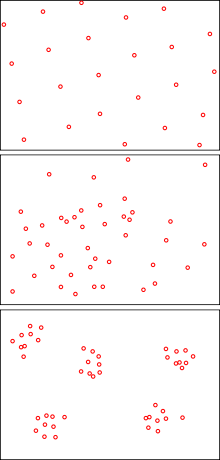
- PATTERNS PRODUCE COMMUNITY STRUCTURE
- UNIFORM DISTRIBUTION
- RANDOM DISTRIBUTION
- CLUMPED DISTRIBUTION
- species clumps together for protection, mutual assistance or reproduction; common; forms a herd ex. fish, buffalo
- individuals live where ever resources are available; chain events allow them to settle ex. trees, flowers
- CLUMPED DISTRIBUTION
- often arises from competition and territoriality ex. penguins, seabirds
- RANDOM DISTRIBUTION
- UNIFORM DISTRIBUTION
- COMMUNITIES ARE DYNAMIC AND CHANGE OVER TIME
- ECOLOGICAL SUCCESSION
- change in communitys composition over time that is directional and follows a continuous pattern of extinction and colonization by new species
- PRIMARY SUCCESSION
- establishment of plant community in a newly formed area where there is no soils; rocky volcanoes, mountains
- PIONEER SPECIES
- first plants to colonize bare substrate; lichens and mosses
- SECONDARY SUCCESSION
- the return of a community to its natural vegetation following a disturbance
- TYPES OF DISTURBANCES:
- agricultural, forest fire, natural disasters, human disturbances
- TYPES OF DISTURBANCES:
- end stage of succession depends on biome; takes 150+ years
- grasses ➜ low shrubs ➜ high shrubs ➜ shrub/tree mix ➜ low trees ➜ high trees
- SUCCESSION WILL REACH CLIMAX COMMUNITY
- CLIMAX COMMUNITY
- end stage of succession ex. temperate deciduous forest
- CLIMAX COMMUNITY
- the return of a community to its natural vegetation following a disturbance
- ECOLOGICAL SUCCESSION
- ABUNDANCE
- NATURAL SELECTION AND ADAPTATION
- SPECIES INTERACTIONS
- interactions with other species causes species to evolve i.e. competition, predation
- PREDATION AFFECTS SPECIES RELATIONSHIPS
- PREDATORS
- HERBIVORES, CARNIVORES, OMNIVORES
- PREDATION LEADS TO ADAPTATION
- COEVOLUTION; predators and prey entwined
- species with chemical defense often display distinct colouration and patterns to warn enemies
- prey camouflage; species display forms, colours, patterns that help them hide
- species with chemical defense often display distinct colouration and patterns to warn enemies
- COEVOLUTION; predators and prey entwined
- SYMBIOTIC RELATIONSHIPS
- SYMBIOSIS
- close interaction between members of two or more species; can enhance survival of one or two species
- MUTUALISM
- COMMENSALISM
- PARASITISM
- parasite derives nourishment from host ex. mosquito
- one species benefits ex. clownfish and anemones
- PARASITISM
- both species benefit ex. bee and flower
- COMMENSALISM
- SYMBIOSIS
- PREDATORS
- PREDATION AFFECTS SPECIES RELATIONSHIPS
- POPULATION GROWTH
- PATTERNS OF POPULATION GROWTH
- BIOTIC POTENTIAL
- unrestrained biological reproduction of an organism
- FACTORS THAT INFLUENCE BIOTIC POTENTIAL:
- average # of offspring per reproduction
- chances of survival until age of reproduction
- age of first reproduction
- how often each individual reproduces
- age of first reproduction
- chances of survival until age of reproduction
- INHERENT RATE OF REPRODUCTION INFLUENCES POPULATION SIZE
- average # of offspring per reproduction
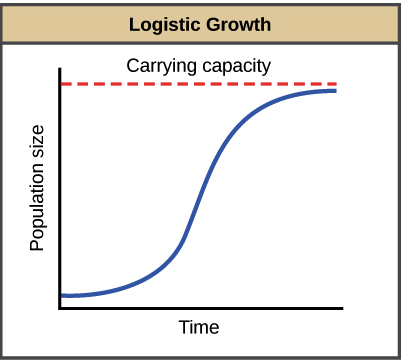
- CARRYING CAPACITY LIMITS GROWTH
- CARRYING CAPACITY
- # or biomass of organisms that can be supported in an area
- *suggests limit
- resources become limited, death rates rise, population crashes
- LIMITS TO POPULATION SIZE
- DENSITY-DEPENDENT FACTORS
- affected by population size
- food shortage, disease, parasites, predation
- DENSITY-INDEPENDENT FACTORS
- limits population that are nonbiological and are often result of acts of nature
- flood, fire, pesticides, climate and temperature change, habitat destruction, drought
- limits population that are nonbiological and are often result of acts of nature
- affected by population size
- PATTERNS OF POPULATION GROWTH
- SURVIVORSHIP GROWTH CURVE
- assume all individuals are identical; in real life individuals are different life stages
- plot # of individuals surviving over time gives survivorship curve
- COHORT
- a group of individuals born at the same time
- TYPE 1
- TYPE 2
- TYPE 3
- most individuals die early (young), low rates of death for those who survive; species produces lots of offspring ex. insects, sea turtles
- individuals that die consistently overtime; uniform rate ex. songbirds, reptiles
- TYPE 3
- most individuals survive until old age ex. humans, elephants
- TYPE 2
- assume all individuals are identical; in real life individuals are different life stages
- SURVIVORSHIP GROWTH CURVE
- DENSITY-DEPENDENT FACTORS
- CARRYING CAPACITY
- BIOTIC POTENTIAL
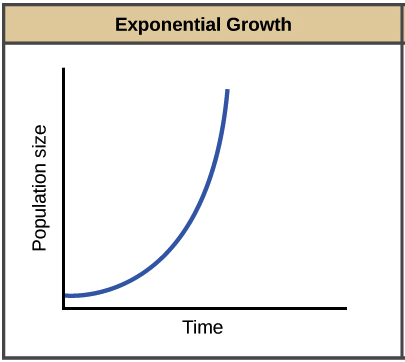
- EXPONENTIAL PATTERN OF POPULATION GROWTH
- J-SHAPED CURVE
- LAG PHASE
- growth small because population small
- EXPONENTIAL GROWTH PHASE
- growth accelerating, population exhibits biotic potential
- *usually CANNOT continue long due to environmental constraints i.e. physical space, food, water
- LOGISTIC PATTERN OF POPULATION GROWTH
- S-SHAPED CURVE
- intensity of environmental resistance increases as population grows larger
- population growth slows, levels off as it reaches carrying capacity
- *more typical
- population growth slows, levels off as it reaches carrying capacity
- R-SELECTED and K-SELECTED SPECIES
- R-SELECTED SPECIES
- K-SELECTED SPECIES
- organisms reproduce conservatively with longer generation times, late sexual maturity, fewer offspring; adapted for slower growth conditions near carrying capacity (k) of their environment ex. humans, elephants
- specialists, predators
- organisms reproduce conservatively with longer generation times, late sexual maturity, fewer offspring; adapted for slower growth conditions near carrying capacity (k) of their environment ex. humans, elephants
- organisms adapted to employ a high reproductive rate and growth (r) to secure a place in its environment ex. mice, dandelions
- generalists, prey
- K-SELECTED SPECIES
- R-SELECTED SPECIES
- PATTERNS OF POPULATION GROWTH
- interactions with other species causes species to evolve i.e. competition, predation
- Chapter 4: Human Populations
- PAST AND CURRENT POPULATION GROWTH ARE VERY DIFFERENT
- EVERY SECOND on earth 4 to 5 HUMANS are BORN, whilst 1 to 2 HUMANS DIE
- in 2011 we reached 7 BILLION PEOPLE
- as of FEBRUARY 7, 2022, we have approx. 7,925,598,275 PEOPLE
- the most recent BILLION happened in 12 YEARS
- human population is growing 1.1% per year
- HIGHEST POPULATION DENSITY:
- United States, Europe, India, China, South East Asia
- COUNTRIES WITH LARGEST POPULATION:
- China and India
- CALCULATE IMPACT - IPAT FORMULA
- impact = population x affluence x technology
- ECOLOGICAL FOOTPRINT
- a single # that estimates the relative amount of productive land required to support human population
- i.e. forests/grasslands store carbon, protect watersheds, purify water, wildlife habitats
- a single # that estimates the relative amount of productive land required to support human population
- ECOLOGICAL FOOTPRINT
- impact = population x affluence x technology
- HIGHEST POPULATION DENSITY:
- human population is growing 1.1% per year
- the most recent BILLION happened in 12 YEARS
- as of FEBRUARY 7, 2022, we have approx. 7,925,598,275 PEOPLE
- in 2011 we reached 7 BILLION PEOPLE
- HUMAN POPULATION GREW SLOWLY UNTIL RECENTLY
- before agriculture, humans were nomadic
- agriculture evolution = human population growth
- HUMAN POPULATION INCREASES ARE RELATIVELY RECENT
- human populations began to reproduce rapidly about A.D. 1600
- it took 156 years to get to 3 billion in 1960
- # of humans tripled during 20th century
- it took 156 years to get to 3 billion in 1960
- DOES ENVIRONMENT OR CULTURE CONTROL HUMAN POPULATION GROWTH?
- 1798, Malthus hypothesized humans would outstrip supplies and collapse
- Karl Marx, population growth resulted from poverty, resource depletion, pollution
- TECHNOLOGY INCREASES CARRYING CAPACITY FOR HUMANS
- surpassed earths carry capacity; or approaching
- earth is estimated to only handle 10-12 billion
- Malthus did not account for scientific and technological advances
- progress in agriculture, engineer, info, commerce, medicine, sanitation enabled there to x 1,000 more people than 10,000 years ago
- surpassed earths carry capacity; or approaching
- 1798, Malthus hypothesized humans would outstrip supplies and collapse
- human populations began to reproduce rapidly about A.D. 1600
- before agriculture, humans were nomadic
- FERTILITY IS INFLUENCED BY CULTURE
- PRONATALIST PRESSURES
- factors that increase peoples desire to have babies
- lesser countries have child labour, society also needs to replace people
- factors that increase peoples desire to have babies
- EDUCATION AND INCOME AFFECT THE DESIRE FOR CHILDREN
- HIGHLY DEVELOPED COUNTRIES
- DEVELOPING COUNTRIES
- feeding and clothing is minimally expensive, adding one more child is negligible compared to the costs in developed countries
- higher education and personal freedom affect women to not have children
- desire to spend money and time on other priorities, limits # of children
- DEVELOPING COUNTRIES
- HIGHLY DEVELOPED COUNTRIES
- DEMOGRAPHIC TRANSITION CAN LEAD TO STABLE POPULATION SIZE
- DEMOGRAPHIC TRANSITION
- a typical pattern of falling death rates and birth rates due to improved living conditions that usually accompanies economic development
- THE DEMOGRAPHIC TRANSITION MODEL
- STAGE 1
- STAGE 2
- STAGE 3
- STAGE 4
- represents conditions in developed countries, where the transition is complete and both birth and death rates are low
- populations grow rapidly when death rates have already fallen but birth rates remain high
- STAGE 4
- economic development brings better jobs, medicare, sanitation; generally improved standard of living, and death rates often fall very rapidly
- STAGE 3
- economic and social conditions change mortality and births; represent conditions in premodern society
- STAGE 2
- MANY COUNTRIES ARE IN DEMOGRAPHIC TRANSITION
- some demographers claim that a demographic transition already is in progress in most developing nations
- they believe that lag between falling death and birth rates may hide this for a time but the world populations should stabalize by 2100
- IMPROVING WOMENS LIVES HELP REDUCE BIRTH RATES
- responsible economic development, education, womens rights, high-quality health care
- FAMILY PLANNING GIVES US CHOICES
- FAMILY PLANNING
- allows couples to determine the # and spacing of their children
- BIRTH CONTROL
- any method used to reduce births including celibacy, delayed marriage, contraception, and methods that prevent embryo implantation
- FAMILY PLANNING
- some demographers claim that a demographic transition already is in progress in most developing nations
- STAGE 1
- DEMOGRAPHIC TRANSITION
- PRONATALIST PRESSURES
- EVERY SECOND on earth 4 to 5 HUMANS are BORN, whilst 1 to 2 HUMANS DIE
- MANY FACTORS DETERMINE POPULATION GROWTH
- DEMOGRAPHY
- vital statistics about people, such as births, deaths, where they live, and total population in size
- FACTORS AFFECTING POPULATION GROWTH
- average age of population (some skewed, old or young)
- varies among cultures and at different times
- mortality offsets births
- life expectancy is rising worldwide
- living longer has profound social limitations
- life expectancy is rising worldwide
- mortality offsets births
- varies among cultures and at different times
- TOTAL FERTILITY RATE IS IMPACTED BY CULTURE
- TOTAL FERTILITY RATE
- # of children born to an average woman in population during her entire reproductive life
- RATE VARIES DEPENDS ON:
- education, access to modern health care, and religious practices
- RATE VARIES DEPENDS ON:
- # of children born to an average woman in population during her entire reproductive life
- WORLD FERTILITY RATES ARE DECLINING
- ZERO POPULATION GROWTH (ZPG) occurs when births and immigration = deaths emigration
- takes several generations of replacement - level fertility to reach ZPG
- fertility rates have declined dramatically in most regions of the world over the past 50 years
- while the world still has an AVERAGE FERTILITY RATE OF 2.6, growth rates are now lower than at any time since World War II
- LIFE EXPECTANCY IS RISING WORLDWIDE
- LIFE SPAN
- LIFE EXPECTANCY
- average age that newborn infant can expect to attain in any given society
- life expectancy is related to income
- oldest age to which a species is known to survive
- LIFE EXPECTANCY
- LIVING LONGER HAS PROFOUND SOCIAL IMPLICATIONS
- AGE CLASS HISTOGRAMS
- shows differences between different ages of people in population and illustrate the social implications of population growth
- DEPENDENCY RATIO
- # of nonworking compared with working individuals in a population
- in Niger each working person supports a high # of children
- in US a declining working population is now supporting a growing # of retired persons
- by prereproductive, reproductive, postreproductive
- in US a declining working population is now supporting a growing # of retired persons
- AGE CLASS HISTOGRAMS
- LIFE SPAN
- LIFE EXPECTANCY IS RISING WORLDWIDE
- while the world still has an AVERAGE FERTILITY RATE OF 2.6, growth rates are now lower than at any time since World War II
- ZERO POPULATION GROWTH (ZPG) occurs when births and immigration = deaths emigration
- TOTAL FERTILITY RATE
- average age of population (some skewed, old or young)
- DEMOGRAPHY
- PAST AND CURRENT POPULATION GROWTH ARE VERY DIFFERENT
- EVOLUTION LEADS TO DIVERSITY
- SYSTEMS DESCRIBE INTERACTIONS
Bilder und Dateien der Mindmap
Informationen
- Beschreibung
- Biology Mindmap am ENVIRONMENTAL SCIENCE - UNIT 1, erstellt von dumb himbo am 11/02/2022.
- Erstellt von
- dumb himbo · Feb 2022
- Aktualisiert
- 14 Feb 2022
- Aufrufe
- 0
- Bewertung