
Mindmap
Weathering
Inhalt der Mindmap
Weathering
Weathering?
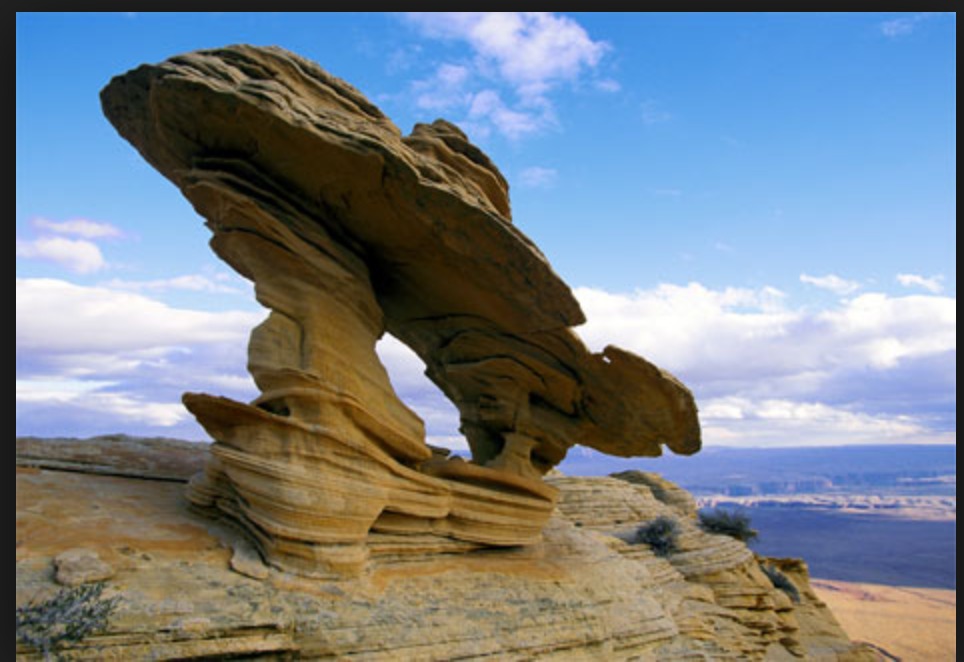
- Weathering is the mechanical and chemical hammer that breakes down and sculpts the rocks
- Climate effects weathering by the amount of water the air and temprature of an area are both part of an areas climate. Weathering occurs faster in hot, wet climates. It occurs slowly in dry climates
- What impacts does weathering have on the North American landscape? ( Grand Canyon) ( chemical and mechanical weathering) It helps break the rocks down into smaller particles which can be eroded by stormwater deeper into the canyon and eventually into the Calorado River. The canyon continues to grow at an unnoticable rate.
- Chemical Weathering?
- The break down of rocks caused by a change in their chemical make-up.
- Oxidation, dissolution, and hyderolysis are factors that affect chemical weathering
- What impacts does chemical weathering have on the North American landscape? color change
- Carbonation?
- The process of rock minerals reacting with carbonic acid
- Humidity and High temperatures affect Carbonation
- What impact does Carbonation weathering have on the North American landscape? formation of caves and it dissolves carbon dioxide in rainwater or in moist air forms carbonic acid and this acid reacts with minerals
- Hydrolysis?
- Is the chemical breakedown of a substance when combined with water
- Climate: Atmospheric conditions like temperature and rainfall affect the rate of chemical reactions.
- What imapct does Hyrdrolysis weathering have on the North American landscape? when water reacts with the rock and alters the size and chemical compositions of the minerals to weathering
- Hydration
- Expands volume and also results in rock deformation
- Climates: Atmospheric conditions like temperature and rainfall affect the rate of chemical reactions
- What imapct does Hydration weathering have on the North American landscape? hot climate
- Oxidation
- The process whereby the rock minerals lose one or more ions or atoms in the precense of oxygen
- Climate: Atomsphereic conditions like temperature and rainfall affect the rate of chemical reactions
- What impact does Oxidation weathering have on the North American landscape? It dissolves carbon dioxide in rainwater or in moist air forms carbonic acid and this acid reacts with minerals
- Leaching?
- Ions are removed by disstloution into water
- Climate
- What impact does Leaching weathering have on the North American landscape? water
- Mechanical?
- The process of breaking big rocks into little ones
- Rock composition, climate, vegatiation, and topography
- What impact does Mechanical weathering have on the North American landscape? One rock hits another. water enters a crack, expands as it frezzes, and wedges the rocks apart
- Thermal?
- the amount of solar raidation reaching a given area
- Climate:High temperatures
- the heating of rocks by sunlight or fires can cause an expansion of their componet materials
- Frost wedging?
- A form of physical weathering that involves the physical breaking of a rock
- Climate: the amount of water in the air and temperature of an area are both part of an areas climate
- caused by repeated frezeeing thaw of water found in the cracks of rocks called joints pushes the rock to the breaking piont
- Exfoliation?
- A form of mechanical wheathering in which curved plates of rock are stripped from the rock below
- Weathering, Exposure to the atmosphere, Composition of rock, and climate
- What impact does Exfoliation weathering have on North America landscape? domes occur along the planes of parting called joints, which are curved more or less parllel to the surface
- Abrosion?
- The mechanical scrapping of rock surface by friction between rocks and moving particles during their transport by wind, glaciers, waves, gravity, running water or erosion
- Climate, typography, biotic, time, and vegetation
- What impacts does Abrosion weathering have on the North American landscape? river sediments: Rivers that carry sediments have great cutting power
- Presure release?
- Known as unloading, overlying materials are removed by erosion or other processes, which causes underlying rocks to expand and fracture parallel to the surface
- Rock composition, Climate, topography and vegitation
- when a rock such as granitic pluton formed at depth under a great deal of pressure is exposed at the surface due to tectonic uplift. The release of pressure causes the rock to expand and fractures are formed parallel to the surface
- Salt Crystallisation?
- A form of mechanical or physical weathering of rock. No chemical alteration of rock constituents is involved in salt weathering. The salt derives from an external source (capillary rising ground water, eolian origin, sea water along rocky coasts, atmospheric pollution).
- rainfall and temperature
- breaks up rock materials
- Biological?
- Is the wearing and subsquent process of loosing strength of rock by plants and animals
- humidity, rock composition, hight temperatures, vegetation, and wind
- breaks down the rock or other nonliving object through either mechanical or chemical erosion
Geology?
- exposure to the atmosphere, the composition of rock and climate
- Vegetation?
- exposure to the atmosphere, the composition of rock and climate
- Climate?
- hot temperatures increase the rates of chemical reaction,increasing chemical weathering,Areas with high diurnal temperature ranges will see an increase in some physical weathering. Wet areas are going to see an increase in chemical weathering. Wet and warm areas are also likely to see an increase in the amount of vegetation, increasing biological weathering.
- Relief?
- increase physical weathering, cause weathered rocks to fall away quicker exposing fresh rock beneath to be weathered.
- Aspect?
- the amount of sunshine it receives, vegetation, increasing biological weathering
- Human?
- they can add chemicals to water courses, they can deforest or forest areas, they can introduce animals or remove animals.
Limestone pavement?
- has no vegetation cover is attacked by the weather. Rainwater can causing carbonation and also freeze-thaw weathering
- Karsts?
- formed by carbonation over millions of years. Some weaker areas are completely weathered, leaving stronger sections remaining.
- Stalactites?
- made because limestones are being weathered elsewhere. They are created by water with large amounts of dissolved calcium in them. The dissolved water leaves behind the calcium which over time build up to create stalactites and stalagmites.
- Stalagmites?
Bilder und Dateien der Mindmap
Informationen
- Beschreibung
- Mindmap am Weathering, erstellt von Jude Ahmad am 15/02/2017.
- Erstellt von
- Jude Ahmad
- Aufrufe
- 0
- Bewertung