
Notizen
Granulocytic Maturation
Inhalt der Notizen (1)
Seite 1
Characteristics
-undergo the same developmental sequence as the neutrophil
-Cytoplasm has large granules that stain w acid dyes
-Complete Function unknown but some are
-attracted to antigen- ab complexes and capable of phagocytosis
-small numbers in acute and large numbers in chronic inflammation
-Antagonizes effects of histamine
-granules can damage larvae of helminthic parasites
-affected by diurnal variation because there's a higher amount at night
Eosinophilia & Eosinopenia
- Eosinophilia > 350 ul
-associated w elevated IgE
- allergies, collagen disease, parasitic infections
-Eosinopenia
-2ndary to steroids
Characteristics
-loaded w basophilic granules stain w basic dye
-granules have histamine, heparin and serotonin
Functions
-involved w immediate and delayed hypersensitivity
- during hypersensitivity, IgE attaches to surface and stimulates degranulation
- Basophilia associated w myeloproliferative disorders and hypersensitivity
Monoctye-Macrophage
-U or S shaped, lots azurophilic granules purple
-Development
-stays in BM 60 hrs-->peripheral blood monocyte for 70-100 hours--> travels to tissues (no recirculation)--> transforms into macrophage and lives months to years
Monocyte Development
Monoblast
-Shares common stem cell with myeloid cells- CFU-GM
-reticular lacy chromatin 1-2 nucleoli
-cytoplasm gray to cloudy blue w few red granules
- divides into a promylocyte
-3-4 cell divisions happen between monoblast and monocyte
Promonocyte
-round to oval w slight indented nucleus
-cyto grey to cloudy blue w a few red granules
-stains positive w non specific esterase
-matures into a monocyte
Monocyte
-slightly larger than neutrophil
- slight chromatin clumping, no nucleoli in nucleus, brain like convolutions
-bluegray cyto often w vacuoles
Microphage- cells that engulf small particles
macrophage- cells that engulf large particles
histiocyte-cells that have scavanger tissue fragments
Tissue Macrophages all from blood monocytes
Alveolar, splenic and peritoneal macrophages
liver kupffer cells
BM osteoclasts
microglial cells of the nerous system
Characteristics
-mature monocytes have enzymes like
-acid phosphotase, B glucoronidase, lysosome, lipase, peroxidase
- they secrete chemicals like interferon, interleukin 1, plasminogen activator, plasmin inhibitor, platelet activation fator, tissue procoagulant
Types of Monocytes
1. Classic Monicyte characterized by high expression of CD 14
2. Pro inflammatory monocyte w low level of CD 14 and receptors of CD16(from classic monos, more mature and produce high amnts of cytokines like IL1 and tumor necrosis factor)
Function
-debridement, senesent or damaged cells phagocytized
-host defense
-phagocytosis and microbial activity
-immune process- accumulates antigen in immunogenic form and
interacts w leukocytes
-tumor recognition and destruction
Monocytosis
-increased in malignancies
-increased in autoimmune disorders- RA, SLE, ulcerative colitis
-nutropenia may bring monocytosis
-chronic infection
-monocytic leukemia
-TB,leprosy, salmonellosis and brucellosis
Storage cell disorders- inherited disorders asso w enzyme deficiencies that result in the excess of undigested cellular products in macrophages, particularly from lipid rich
cell membrane
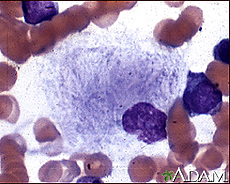
Gaucher's Disease
-Deficiency of B-glucocerebrosidase w the overload of glucoceramide. Macrophage becomes laden w fibrillar cytoplasmic inclusions
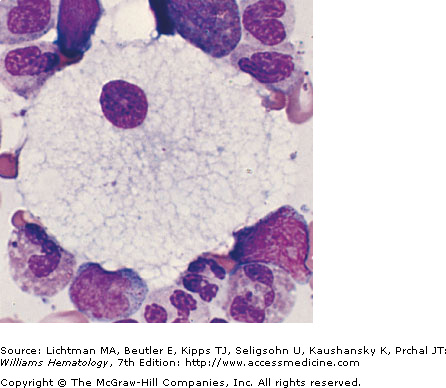
Niemann-Pick Disease
-one of the gangliosides, w deficient lysosome enzymes that lead to an accummulation of sphingomyelin or other lipid globules; foamy, vacuolated appearance of macrophage cytoplasm
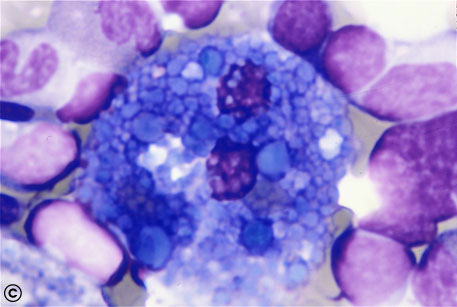
Sea Blue Histocyte
-histocyte filled w globules of ceroid, an insoluble lipid pigment representing undigested globosides from cell membrane
Neutrophil Granules
Primary Granule
-non specific, azurophilic
-1st seen in the promyelocyte
-has lysosome that contains lytic enzymes capable of breaking down
proteins, carbs and nucleic acids
-the 2 enzymes present in primary granules are myeloperoxidase and
lysosome
Secondary Granule
-specific, basophilic, eosinophilic or neutrophilic
-contains lysozyme, lactofferin, alkaline phosphotase
-translocate material from cytoplasm to membrane, where it participates in
cell adherance, chemotaxis and initiation of respiratory burst
Function: Microbial Killing
Eisenophils
Basophils
Monocyte
Storage Cell Disorders
Neutrophils
Informationen
- Beschreibung
- Hematology Notiz am Granulocytic Maturation, erstellt von Stacym09 am 05/10/2013.
- Erstellt von
- Stacym09
- Aufrufe
- 839
- Tags
- Bewertung
Mehr zu Hematopoiesis and Bone Marrow