
Notizen
Composition/Creative Writing
Inhalt der Notizen (1)
Seite 1
To understand and analyse the elements of descriptive writing.
• To understand and analyse the elements of a short story.
• To understand and analyse the elements of a personal essay.
• To practice writing for a variety of purposes.
Descriptive Writing
You can create a piece of descriptive writing by paying attention to the following:
Verbs
Adjectives
Adverbs
Similes
Metaphors
Evoking the five senses
Symbolism
Personification
Effective verb choice Walk -> saunter
Adjectives reveal character Wrinkled, sagging face
Adverbs can reveal attitude Casually sauntering
Similes add to imagery Her hair was as bright as the morning sun
Metaphors can provide imagery or capture deeper meaning He drowned in a sea of grief
As I reached the gate the smell of burning flesh filled the air The cold beads of sweat dripped down the back of my neck.
Dishevelled appearance Could be an indication of a personal/emotional struggle
he grass was dry The yellow grass screamed for water.
Creating Character
Rather than telling us things about characters, you can reveal them. This makes your character more interesting. We learn about characters from what they look like, do, say, act and what others say about them.
Effective Opening – Hooking the reader
Startle with your opening. It could be a piece of dialogue, a shocking image etc.
Open in the middle of the action.
Introduce the dilemma
Describe the setting
Set the mood
Begin with a strong character voice
Use dialogue
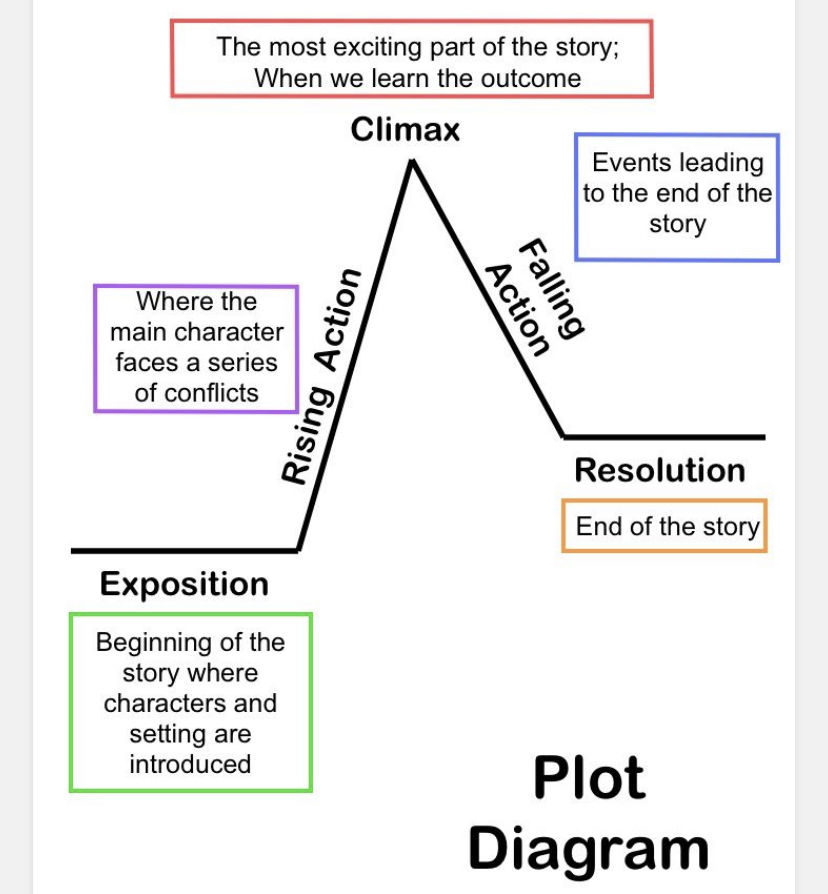
Narrative Structure
For the short story it is important that you remember the following:
Plot - your story must have a clear beginning, middle and end. (Not necessarily in that order)
Make your story interesting by adding a twist.
Your story must take place over a relatively short time span.
You do not need to include unnecessary back ground details - remember you can set the scene without telling the reader your mundane morning routine.
Before you begin you must PLAN! You may deviate from your plan as you write, but you need to have made some important decision before you begin writing e.g. setting, character and conflict.
THINK ABOUT
Setting
Where and when your story will take place. Describe it clearly so the reader can imagine being there. Use elements of descriptive writing to create the mood and atmosphere.
Character
Your time is limited so you will not have the opportunity to develop numerous characters. Remember that rather than telling us things about characters, you can reveal them. This makes your character more interesting.
Personal Writing
• First person “I”
You must be you!
Use personal experience or knowledge on a topic.
Reflective - thoughts, feelings and emotions.
Insight into thoughts, feelings and response to the event being described.
Passion and description draws the reader into the experience
Elements of effective narrative writing in the context of this task when your audience is a child
awareness of audience: use of simple language, appropriate for your audience
awareness of the role of the writer - to entertain your audience with a simple, non-threatening tale
use of descriptive or sensual language that would capture the attention of a child
interesting / unusual characters, which may or may not be based on the characters in the prompt images
interesting / unusual setting, which may or may not be based on the settings in the prompt images
• creation of an appropriate mood / tone (e.g. use of “Once upon a time” or other appropriate opening line
a satisfying and/or intriguing ending
Informationen
- Beschreibung
- Junior Certificate English Notiz am Composition/Creative Writing , erstellt von Homeschool Covey am 07/12/2021.
- Erstellt von
- Homeschool Covey
- Aufrufe
- 0
- Bewertung