
Notizen
Circulation
Inhalt der Notizen (5)
Seite 1
Transport systems, human circulation test
1. Transport systems are not necessary for single celled organisms because?
2. The best advantage of a double circulation system is?
3. What is the function of the renal artery?
4. What is the function of veins?
5. What is the function of atrio-ventricular valves?
6. What is the function of the right atrium?
7. What is it called when a blood vessel in the brain becomes blocked?
8. What is the role of the pacemaker?
9. Give one factor that can increase your heart rate, and one factor that can decrease your heart rate.
10. State the three parts of blood, and their functions.
11. A doctor will always take your blood pressure when you are getting a general check up. Write down the order of what happens when the doctor is taking your bp.
12. In one simple sentence, explain what the two numbers that the doctor tells you precisely means.
13. Red blood cells have a particular structure (shape, size, and type of organelles). What term is used to describe the shape of red blood cells?
13. How does this shape improve the function of the red blood cells?
14. The carotid artery sends blood to which organ?
15. Hear attacks are extremely serious. Provide 4 clear events that lead to a heart attack. (hint: focus on what is happening inside the coronary artery).
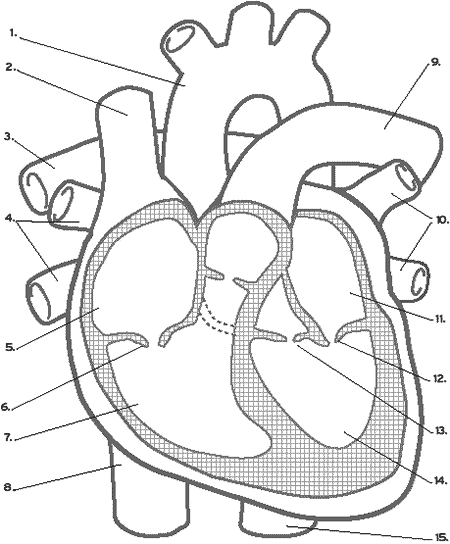
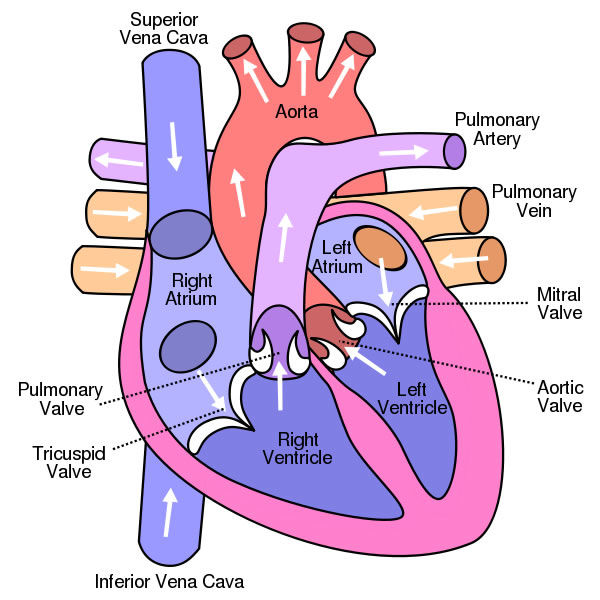
16. The mammalian heart is the center of the circulatory system. Label the following diagram.
Seite 2
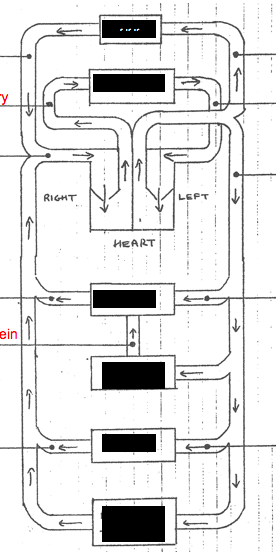
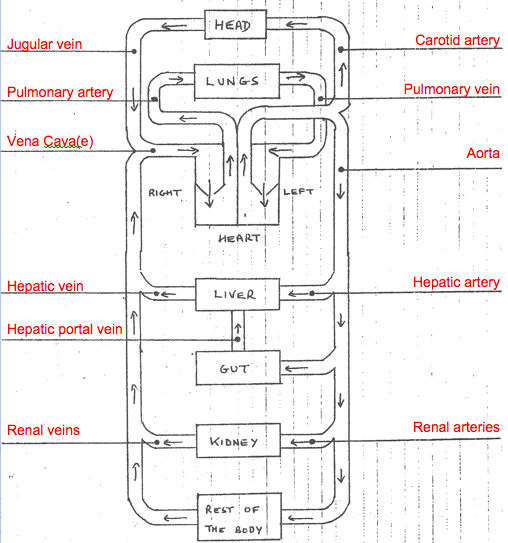
17. Label the following parts of the diagram:
Seite 3
18. Name two parts of the body that receive more blood during exercise and explain why they need more blood.
19. Explain two changes in other body systems (not the circulation) that allow the muscles to receive the resources they need during exercise.
Seite 4
Answers
1. The nutrients and wastes can passively diffuse over short distances.
2. Separation of oxygenated and deoxygenated blood.
3. Carries blood to the kidneys.
4. Veins have valves to prevent blood backflow.
5. To prevent blood backflow into the atria.
6. Receives deoxygenated blood from the body.
7. Stroke.
8. Regulate the heartbeat.
9. Exercise (increase), sleep (decrease)
10. White blood cells: less than 1% of the total blood volume. Part of the defense system against bacteria and viruses.
Red blood cells: 5-6 million of these. Transports oxygen and carbon dioxide.
Plasma: contains minerals and nutrients and transports them around the body.
11.
1. A cuff is inflated around the patients arm near the elbow.
2. Sounds are no longer heard.
3. The cuff is gradually deflated.
4. A pulsing sound can be heard through the stethoscope. Blood pressure is noted.
5. A constant sound is heard through the stethoscope. Blood pressure is noted.
12. The first number if the maximum blood pressure, and the second number is the minimum blood pressure.
13. Bi-concave disc shape.
13. There is a greater surface area to volume ratio which allows for maximum transportation of oxygen (as there is more space for oxygen to fit in)
14. The brain.
15.
1. A person eats a fat rich diet for years and plaque has built up inside the coronary artery.
2. The plaque inside the coronary artery breaks.
3. Platelets cause the red blood cells to clot and covers the breakage.
4. A clot is formed in the coronary artery, which deprives the heart of oxygen, eventually leading to a heart attack.
16:
Seite 5
17:
18. Skin (the increased blood flow results in an increase in heat emission from the body)
Heart (you need more oxygen and glucose during exercise for cellular respiration and the oxygen and glucose must go through the heart/coronary artery)
19. Respiratory system: the diaphragm and intercostal muscles operate faster, supplying the blood with more oxygen. All muscles need more oxygen.
Liver: glycogen stores convert back into glucose.
Informationen
- Beschreibung
- Biology Notiz am Circulation, erstellt von Nicole Engen am 05/05/2017.
- Erstellt von
- Nicole Engen
- Aufrufe
- 0
- Bewertung