
Notizen
Chapter 6: Respiration
Inhalt der Notizen (1)
Seite 1
https://www.youtube.com/watch?v=00jbG_cfGuQ (Einbetten)
ATP: Adenosine Triphosphate
Made up of:
-Adenine (Base)
-Ribose (Sugar)
- 3 Phosphate
Glucose is transformed into ATPs over 3 seperate stages:
-Glycolysis
-Krebs cycle
-Eletron transport and chemiosmosis
Glycolysis (1st reaction)
A metabolic pathway that takes place in the cytoplasm of the cell.
Glucose is broken down in a series of step, each catalysed by an enzyme.
A small proportion of the energy is of each glucose molecule is released and used to make a small amount of ATP
(An aerobic/anaerobic process)
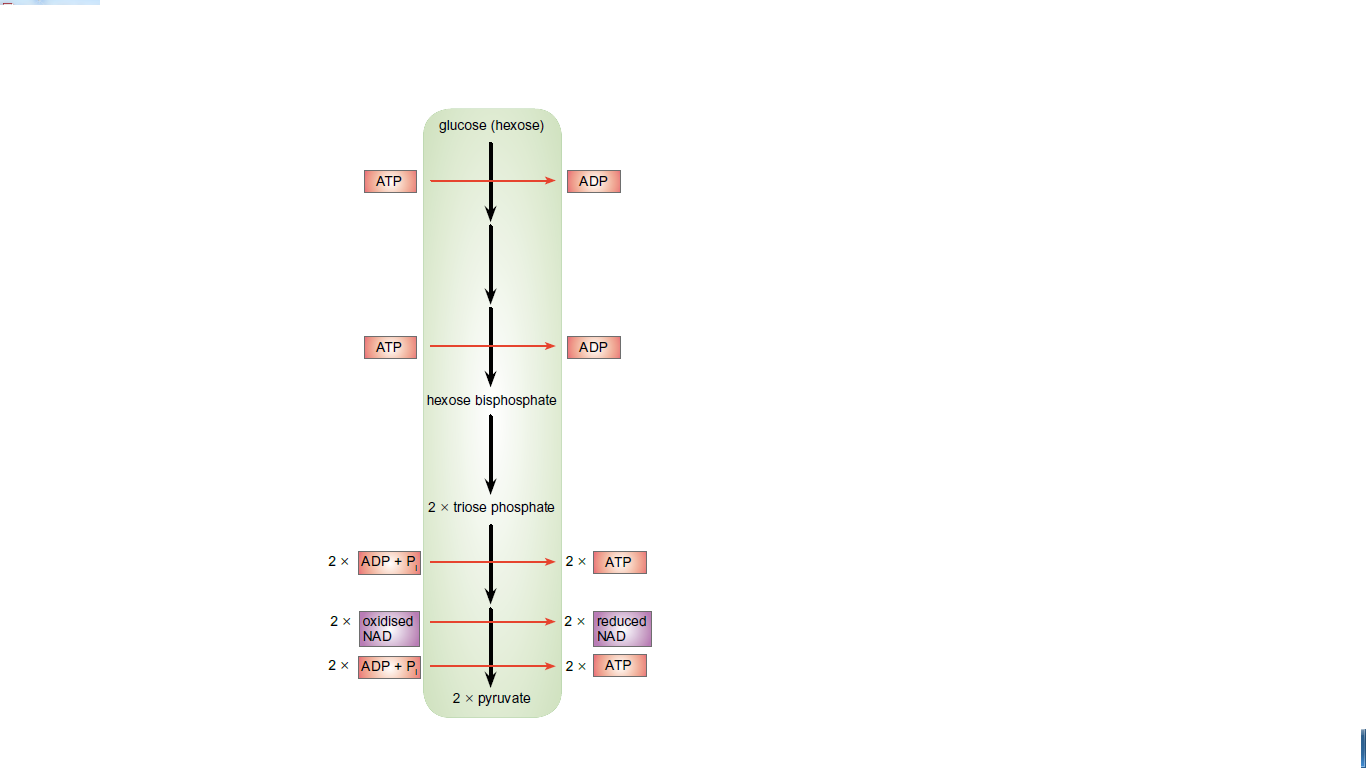
Steps in glycolosis
(1) Add phosphate group to glucose molecule
(2) Hexose biphosphate (Hexose attached to 2 phosphate groups)
-This process is known as phosphrylation, raising the energy level of the hexose
(3) Hexose biphosphate is then split into two molecules of 3-carbon molecules of a 3-carbon triose phosphate
(4)Triose phosphate are then oxidised to pyruvate via having hydrogen removed from them
-This reaction is catalysed by dehydrogenase
-This can only work if there is another molecule that accepts the hydrogen, NAD must be present (NAD accepts the hydrogen)
-NAD = Coenzyme
(5) NAD is now Reduced NAD
(6) Two ADP molecules are converted to ATP for each Triose phosphate. This uses some of the energy that was in the original glucose molecule
What happens to the pyruvate depends on the amount of oxygen available in the cell.
If there is plenty of O2 = Aerobic respiration takes place, pyruvate moves into the mitochondrion
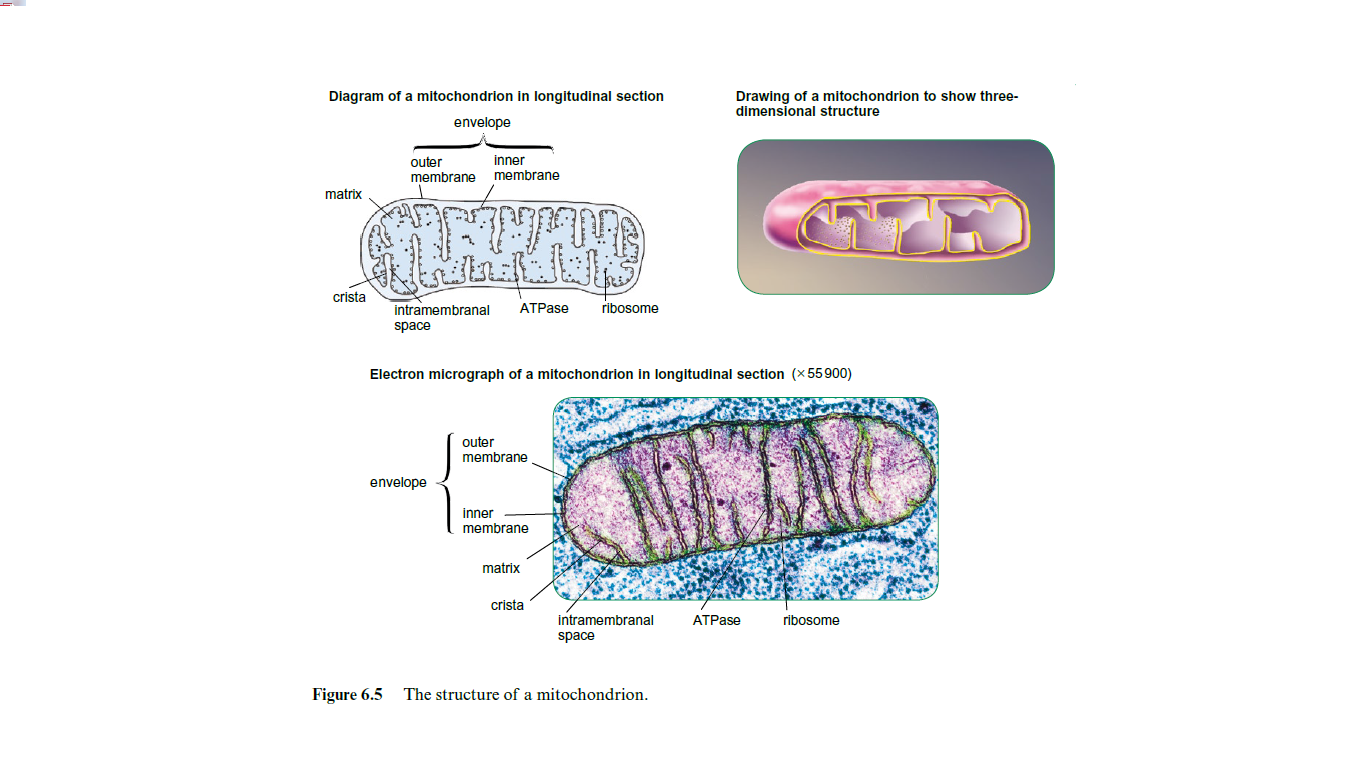
The link reaction
-Once the pyruvate is in the mitochondrion, the link reaction takes place in the matrix
(1) Carbon dioxide is removed from pyruvate (Decarboxylation: removal of CO2)
(2) Carbon dioxide is a excretory product and hence diffuses out of the mitochondrion, out of the cell etc.
(3) Pyruvate is a 3-carbon substance, removal of CO2 makes pyruvate a 2-carbon substance.
*When CO2 is removed, hydrogen is removed from pyruvate as well*
(4) NAD picks up the hydrogen producing Reduced NAD
(5) Remainder of pyruvate combines with Coenzyme A (CoA) to make acetyl CoA.
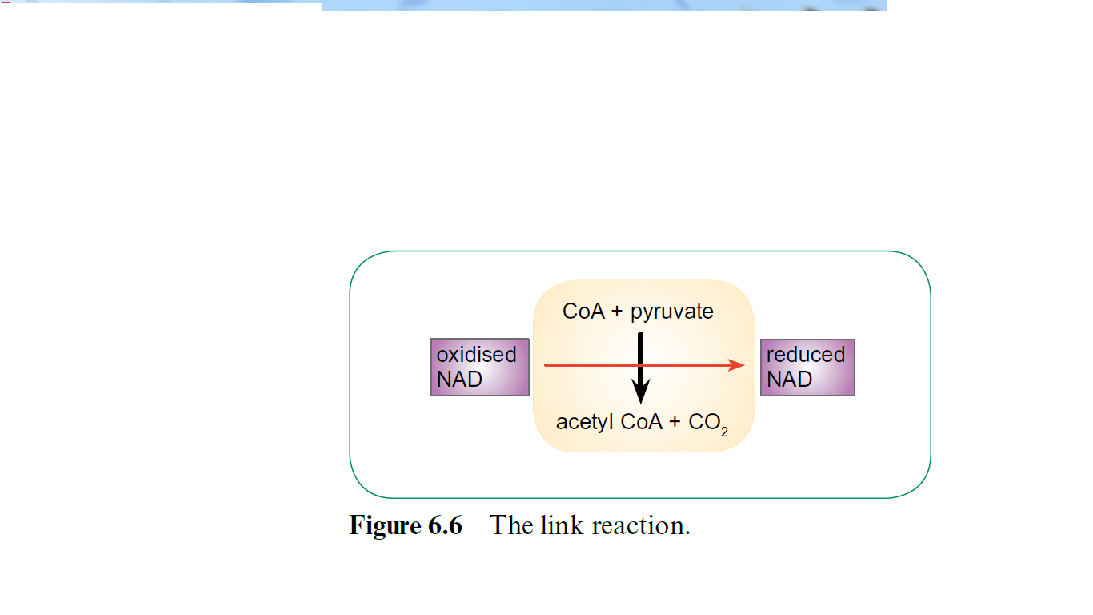
The Krebs Cycle
-Takes place in matrix of mitochondrion
-Series of reaction in which a 6-carbon compound is changed into a 4-carbon compound
(1) Acetyl CoA combines with 4-carbon compound (oxaloacetate) to become a 6-carbon compound, Citrate
-Coenzyme A is now released, ready to combine itself with more pyruvate
(Because it has served its purpose of passing 2-carbon acetyl group from acetyl group from
pyruvate to oxaloacetate)
(2) Citrate is slowly being converted back into oxaloacetate. As this occurs, more carbon dioxide is released and more NAD is reduced as it accepts hydrogen.
(3) At one point of stage, another Coenzyme: FAD accepts hydrogen. Also, at another stage ATP is made.
All steps occur in Krebs cycle is catalysed by specific enzymes that is found in the matrix of the mitochondrion
Oxidation is caused by: Oxidoreductase
Removal of CO2: Decarboxylase
One turn = 1 ATP
This direct production is known as: Substrate-level phosphorylation
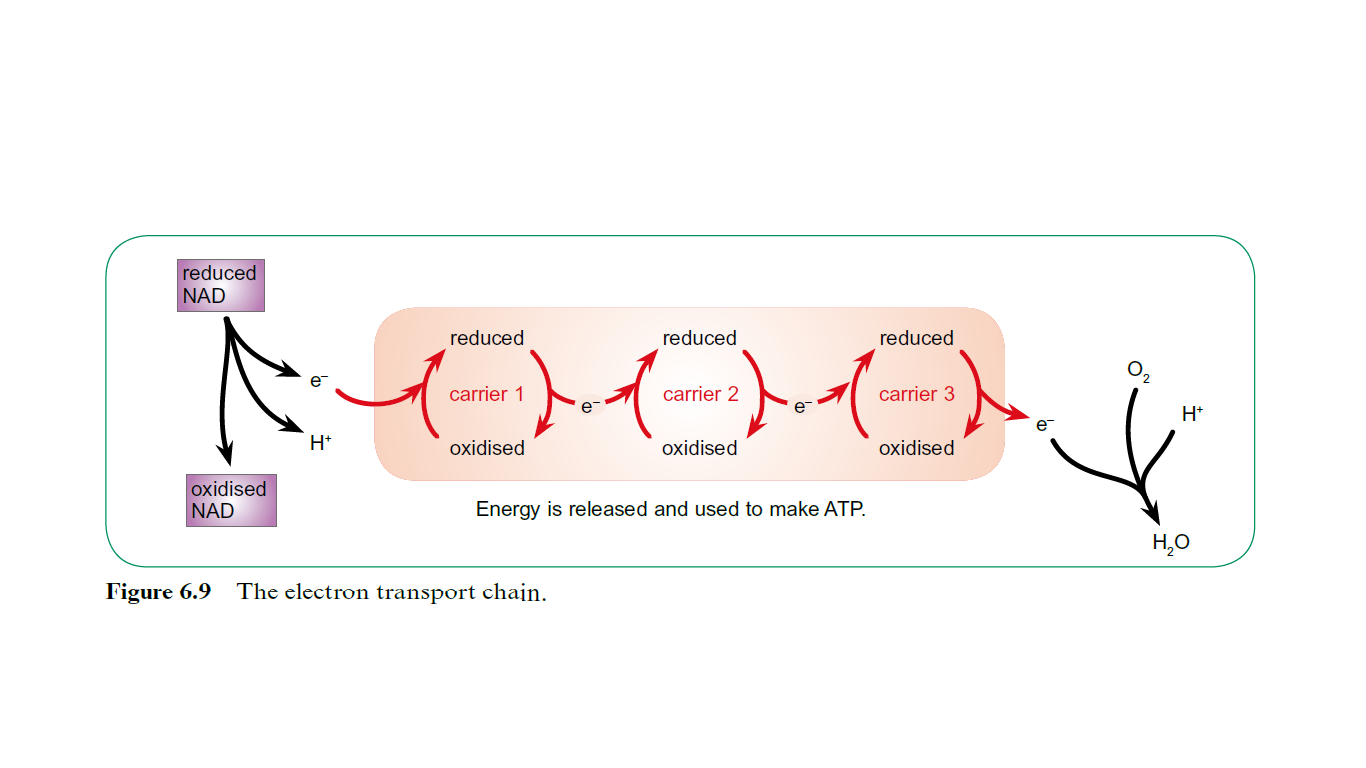
Oxidative phosphorylation:
-Production of ATP via the electron transport chain in the mitochondrion
Electron transport chain
Electron transport chain
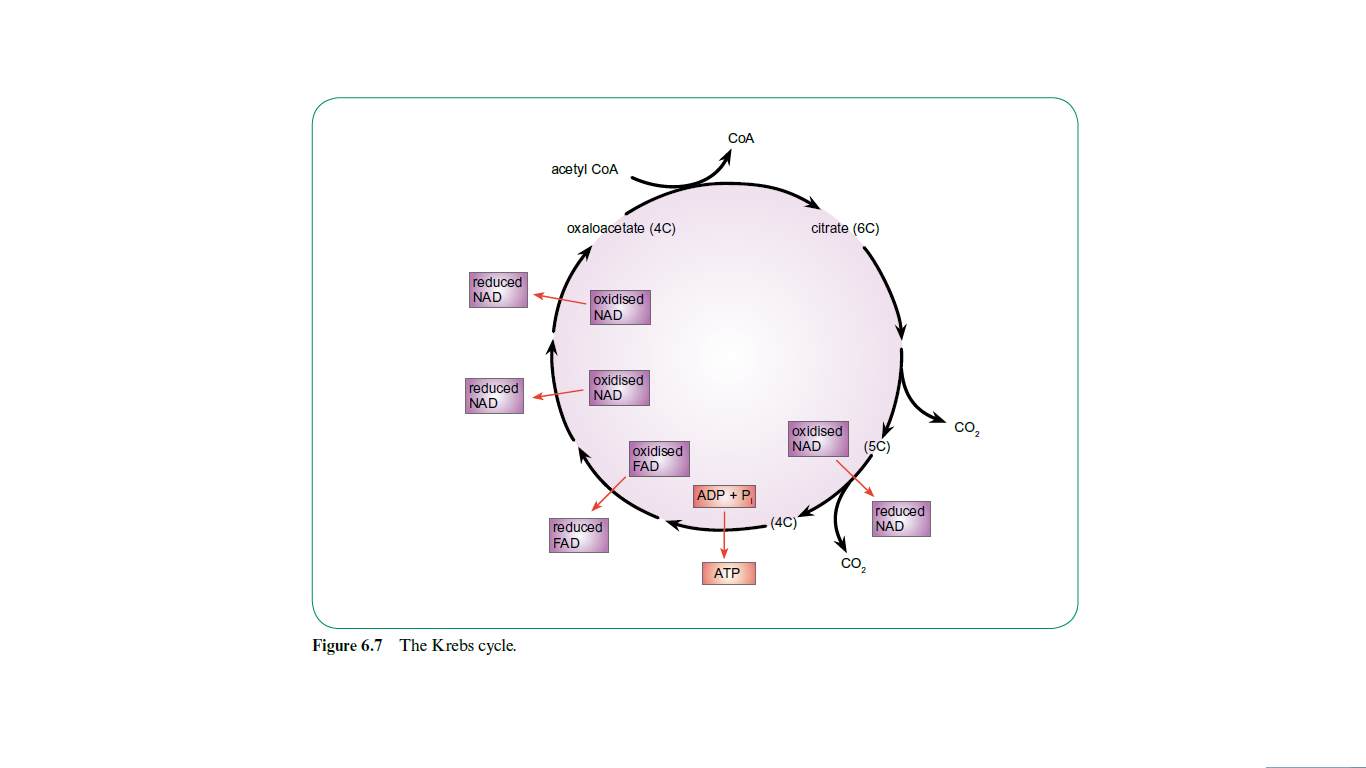
-Held in the inner membrane of the mitochondrion are molecules called electron carriers, making up the electron transport chain
1. Reduced NAD made during in Krebs cycle (in matrix) releases its hydrogen
-NAD is now oxidised and goes back to the Kreb Cycle to pick up hydrogen again
2. Hydrogen now splits into = electrons and protons
3.Electron is now passed to the 1st electron carrier, it's now reduced instead of oxidised (due to accepting the electron)
4. 1st electron carrier passes electron to 2nd carrier. 1st electron is now oxidised (because it lost the electron)
5. When electron is passed from one carrier to another, it release energy which is used to pump hydrogen ions into the intermembrane space for chemiosmosis
6 At the end of the ETC, the electron combines with a hydrogen ion with oxygen to form water
(That's why we need oxygen, oxygen acts as the final electron acceptor for the electron transport chain)
ATP Synthesis
-Electrons passing along the chain releases energy, energy is used to pump hydrogen ions across the inner membrane of the mitochondrion and into the space between the inner and outer membranes (intramembranal space)
-
New Page
New Page
New Page
Informationen
- Beschreibung
- A-Levels Biology Notiz am Chapter 6: Respiration, erstellt von andychueh96 am 21/08/2013.
- Erstellt von
- andychueh96 · Aug 2013
- Aktualisiert
- 19 Feb 2016
- Aufrufe
- 186
- Tags
- Bewertung