
Cellular Respiration and Metabolism
385 resources created by 339 users
This Cellular Respiration and Metabolism page on GoConqr gathers community-made mind maps, quizzes, flashcards and notes, from glycolysis, the Krebs cycle and the electron transport chain to aerobic and anaerobic respiration and fermentation. It's built for school students revising a topic, and for teachers after ready-made material, with a little for university students too. There are over 2,400 resources here, including more than 240 quizzes and over 1,100 mind maps, mostly at secondary level. Pick a quiz to find your gaps, then explore the maps.
Top Cellular Respiration and Metabolism resources
-
23 cardsIGCSE Biology Edexcel - Section 4 Respiration Respiration section 4 IGCSE Biology Revision
-
26 questions0654 Biology Topic B8 Gas Exchange & Respiration Quiz What is produced by anaerobic respiration in yeast?
-
22 cardsYear 10 - Topic 2: Respiration and the respiratory system in humans Where does aerobic respiration take place?
-
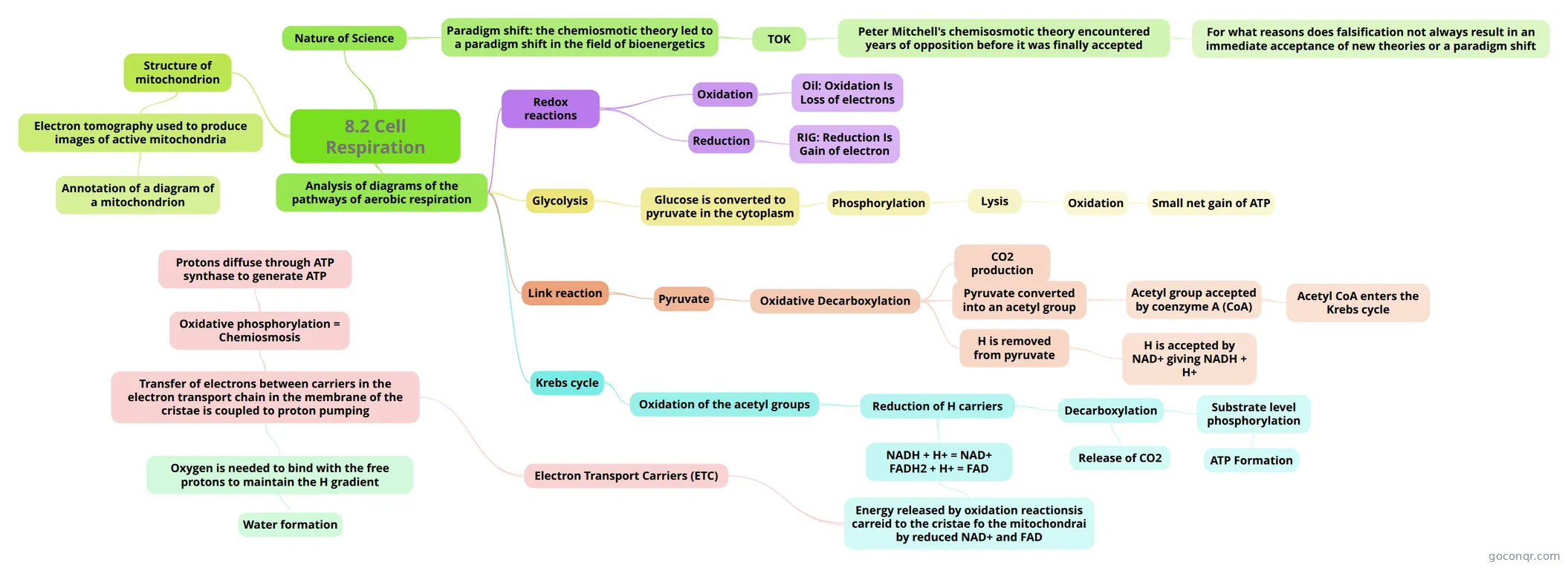 Mind map 8.2 Cell Respiration
-
187 cardsBio 2nd Midterm What is Energy
-
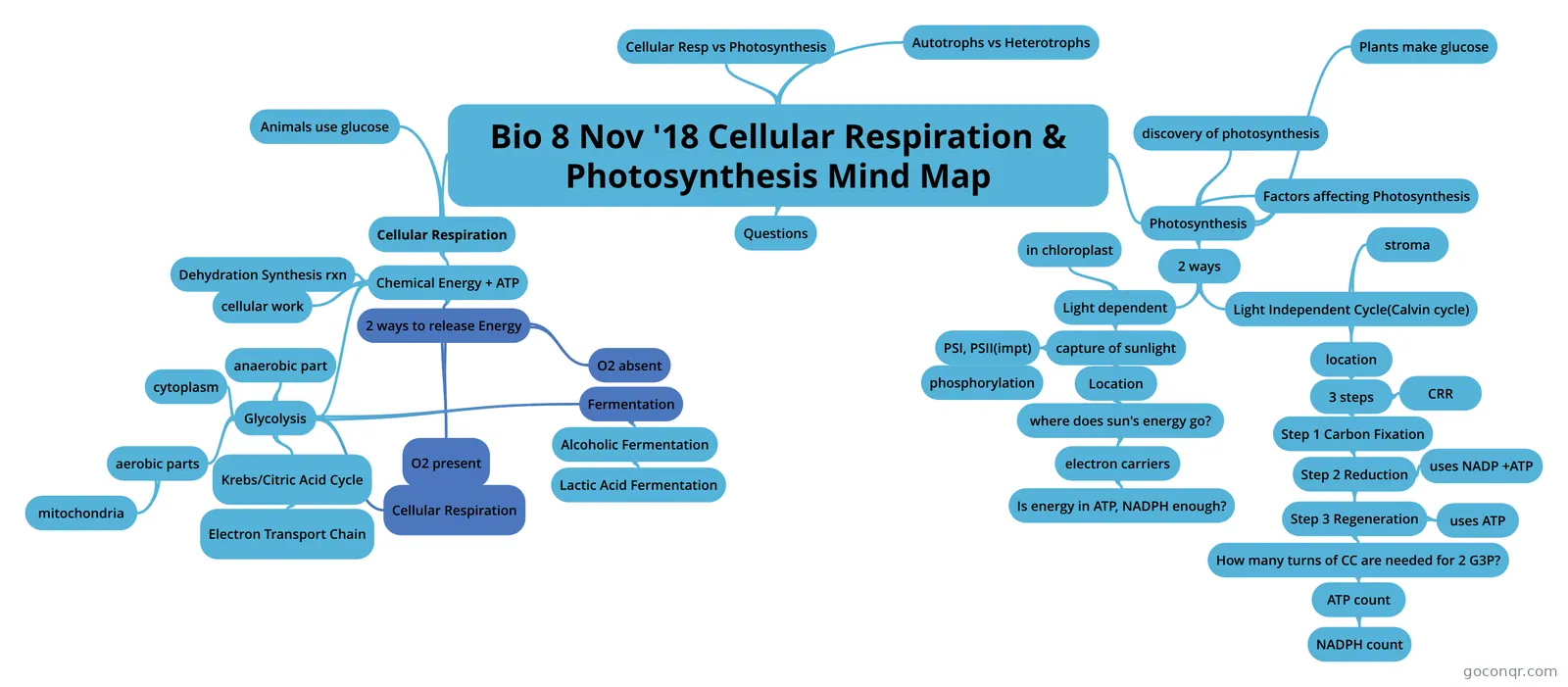 Mind map Bio 8 Nov '18 Cellular Respiration & Photosynthesis Mind Map
-
58 cardsSBI4U – Unit 2 Review Practice Questions Explain the relationship between potential energy and kinetic energy.
-
40 cardsPhotosynthesis and Respiration
Quizzes
See all 63 quizzes-
26 questions0654 Biology Topic B8 Gas Exchange & Respiration Quiz What is produced by anaerobic respiration in yeast?
-
40 questionsAQA A2 Biology Questions
-
41 questionsBiology Chapter 4 What are the reactants for photosynthesis?
-
24 questionsChapter 9 Test 1000 Calories make up 1 calorie.
-
25 questionsEnergy and Life Which molecule stores more than 90 times the energy in an ATP molecule?
-
12 questionsAerobic and Anaerobic Respiration Minitest What does 'aerobic' mean?
-
10 questionsThe Krebs Cycle Quiz Which of the following shows the correct sequence during cellular respiration?
-
10 questionsChapter 10 Respiration in organisms Food broken down without the use of oxygen is termed as....
Mind maps
See all 123 mind maps-
8.2 Cell Respiration
-
Bio 8 Nov '18 Cellular Respiration & Photosynthesis Mind Map
-
Bioenergetics
-
AP BIO Unit 2: Enzymes
-
Section 4- Respiration and Gas Exchange
-
resperation
-
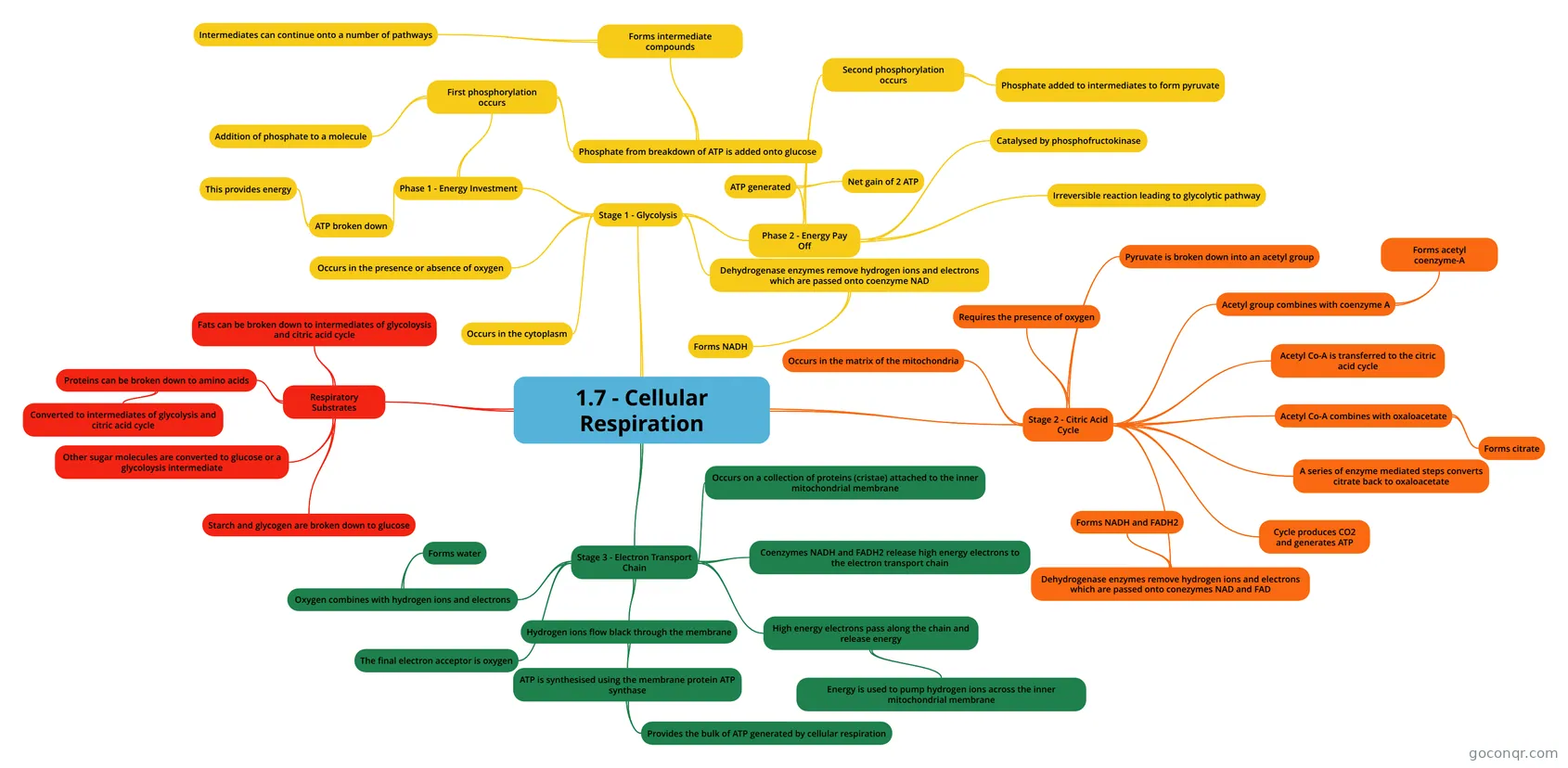 1.7 - Cellular Respiration
-
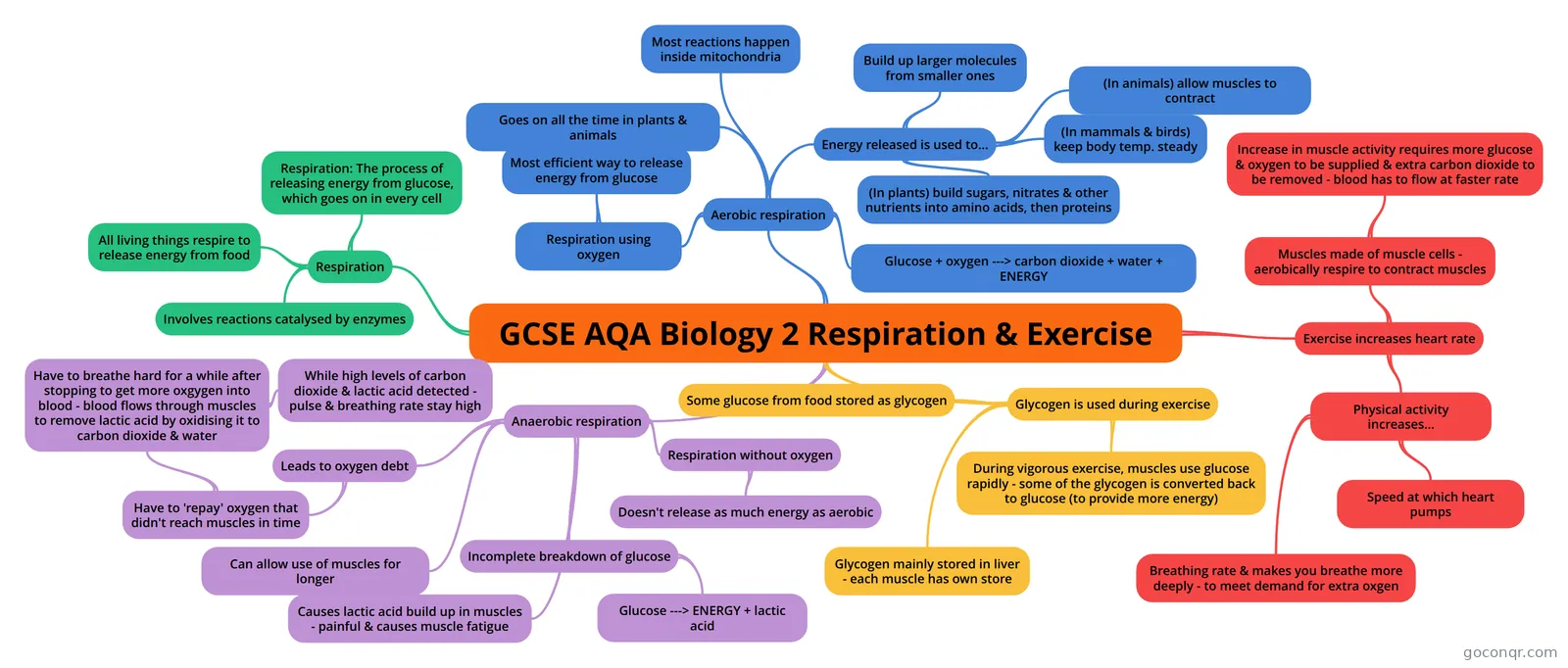 GCSE AQA Biology 2 Respiration & Exercise A mind map showing information about aerobic and anaerobic respiration, exercise increasing heart rate and ...
Flashcards
See all 158 flashcards-
23 cardsIGCSE Biology Edexcel - Section 4 Respiration Respiration section 4 IGCSE Biology Revision
-
22 cardsYear 10 - Topic 2: Respiration and the respiratory system in humans Where does aerobic respiration take place?
-
187 cardsBio 2nd Midterm What is Energy
-
58 cardsSBI4U – Unit 2 Review Practice Questions Explain the relationship between potential energy and kinetic energy.
-
40 cardsPhotosynthesis and Respiration
-
35 cardsBISC 100 - Lecture 16, 17, & 18 - cellular Respiration
-
45 cards[G] Chapter 7 Review Questions Biology RQ 1-50
-
12 cardsCellular Respiration Unit Test Food is used to make what energy rich compound found in cells?
Flowcharts
-
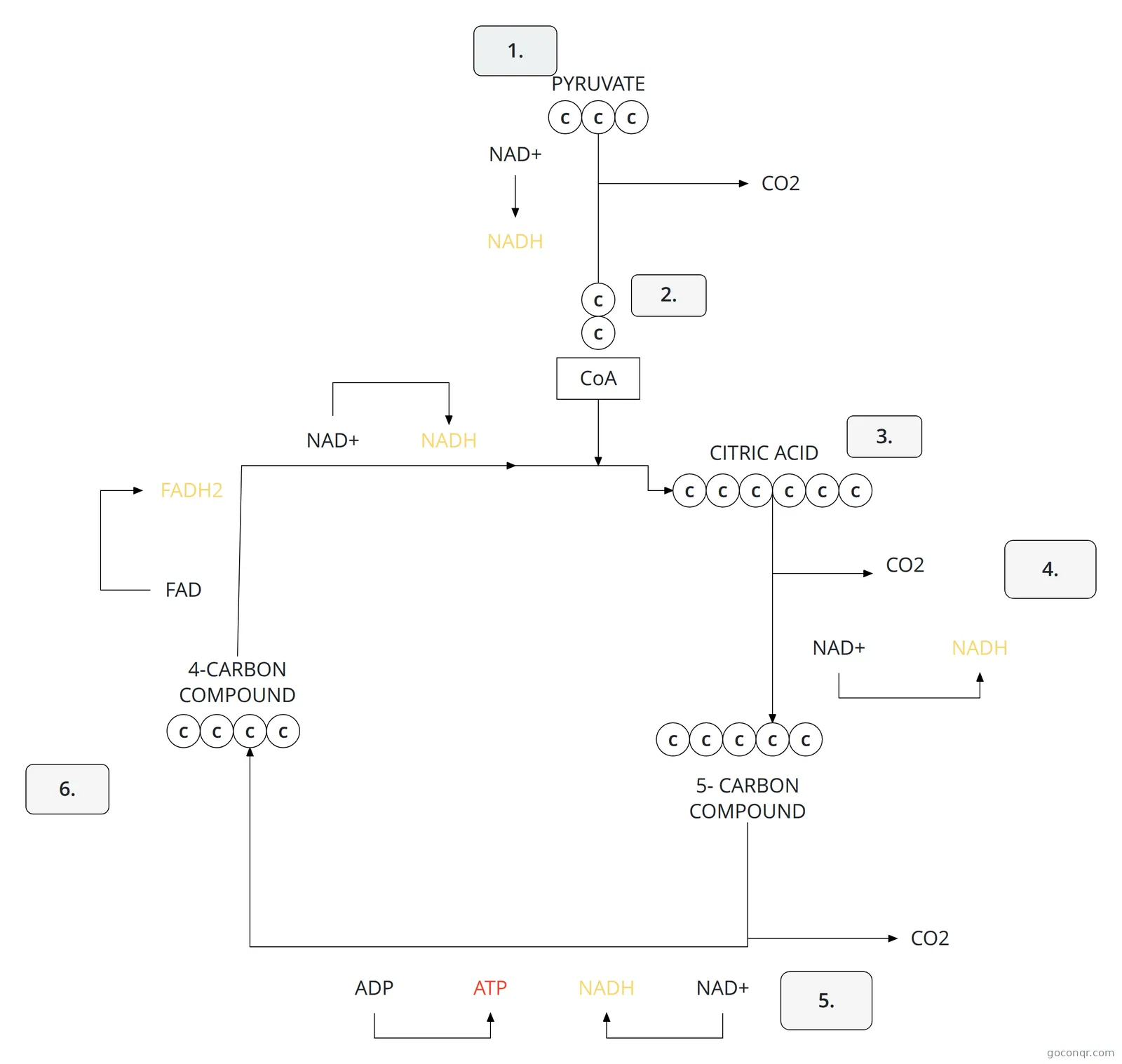 Krebs Cycle chart
-
Ventilation The process of ventilation and the muscle movement during breathing.
-
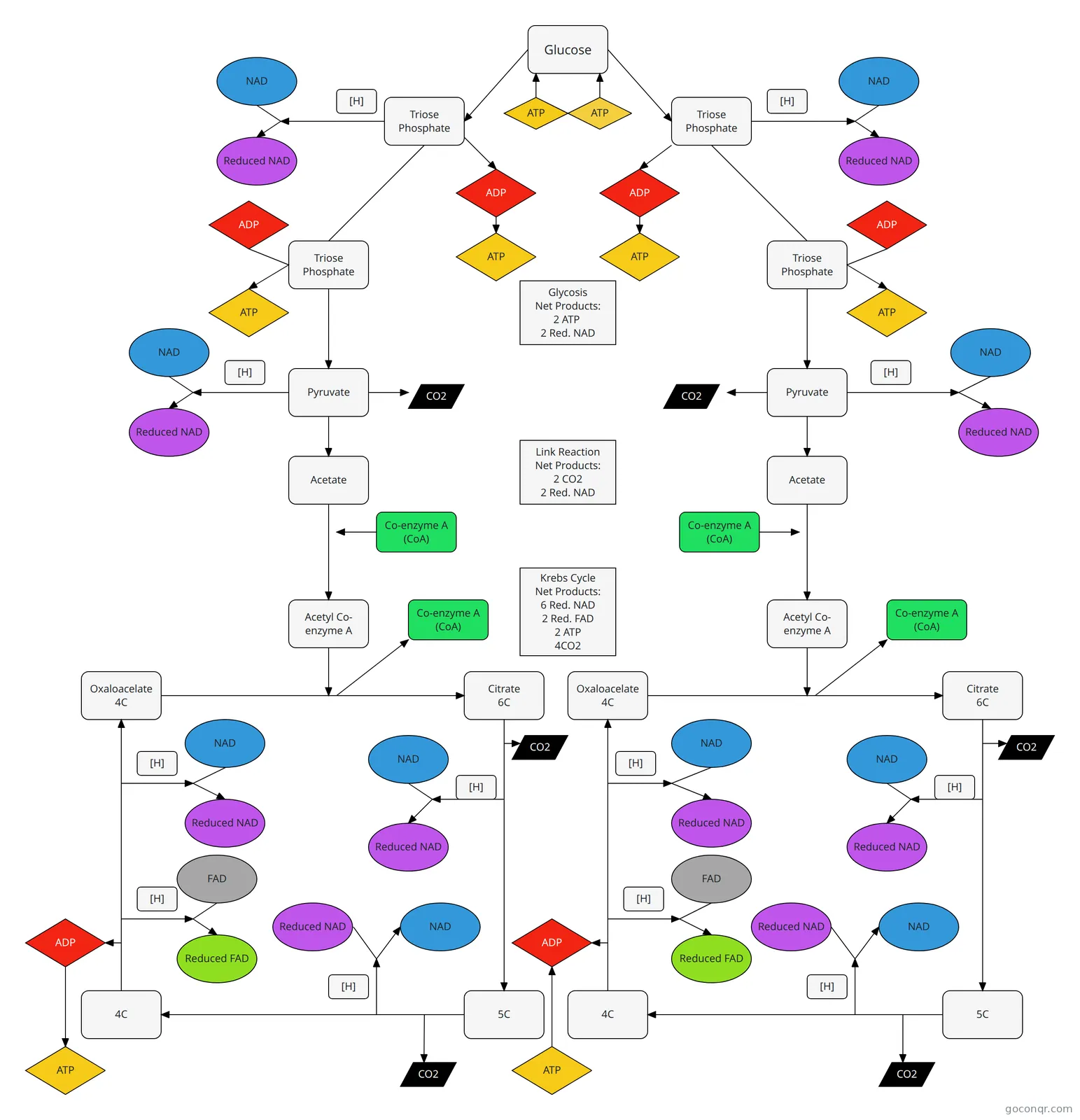 Respiration Cycle- Glycosis, Link Reaction, Krebs Cycle
-
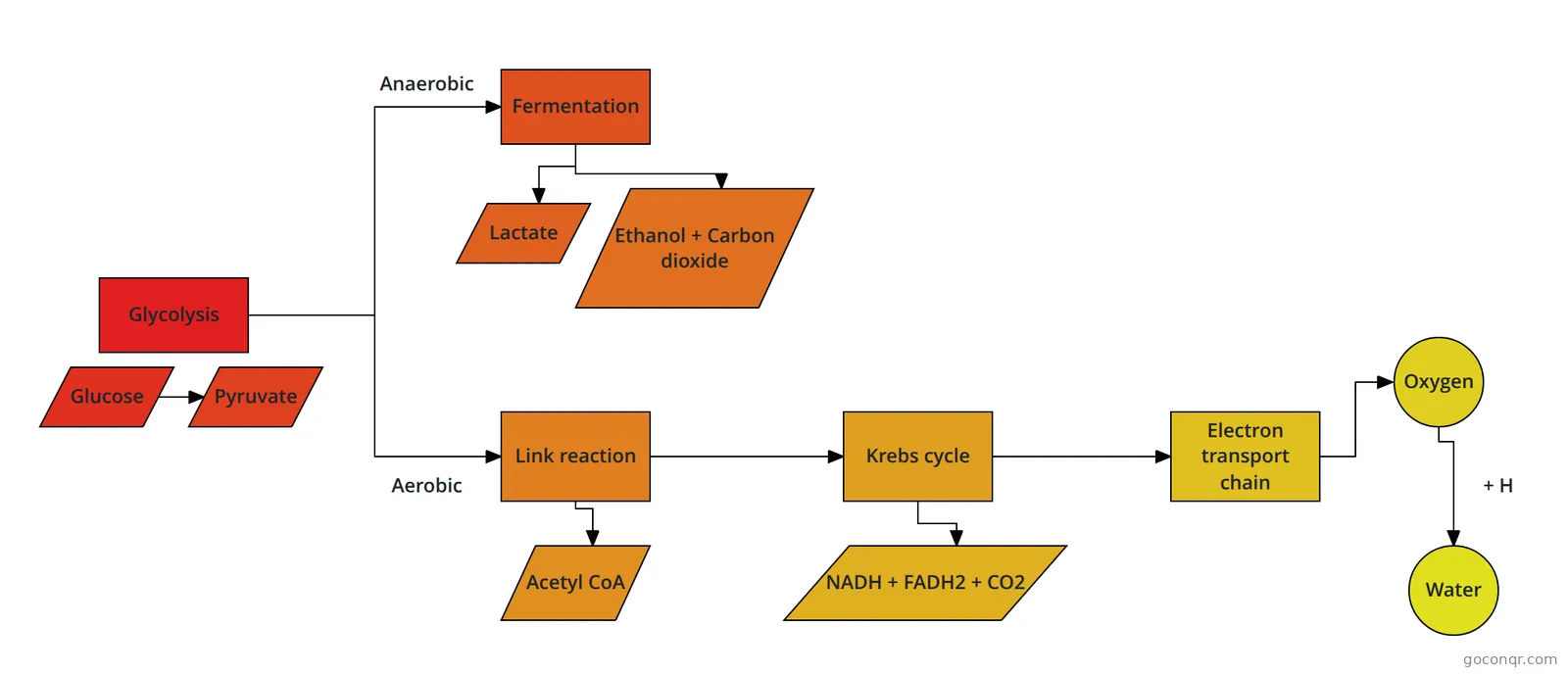 Respiration OCR A Level Biology
-
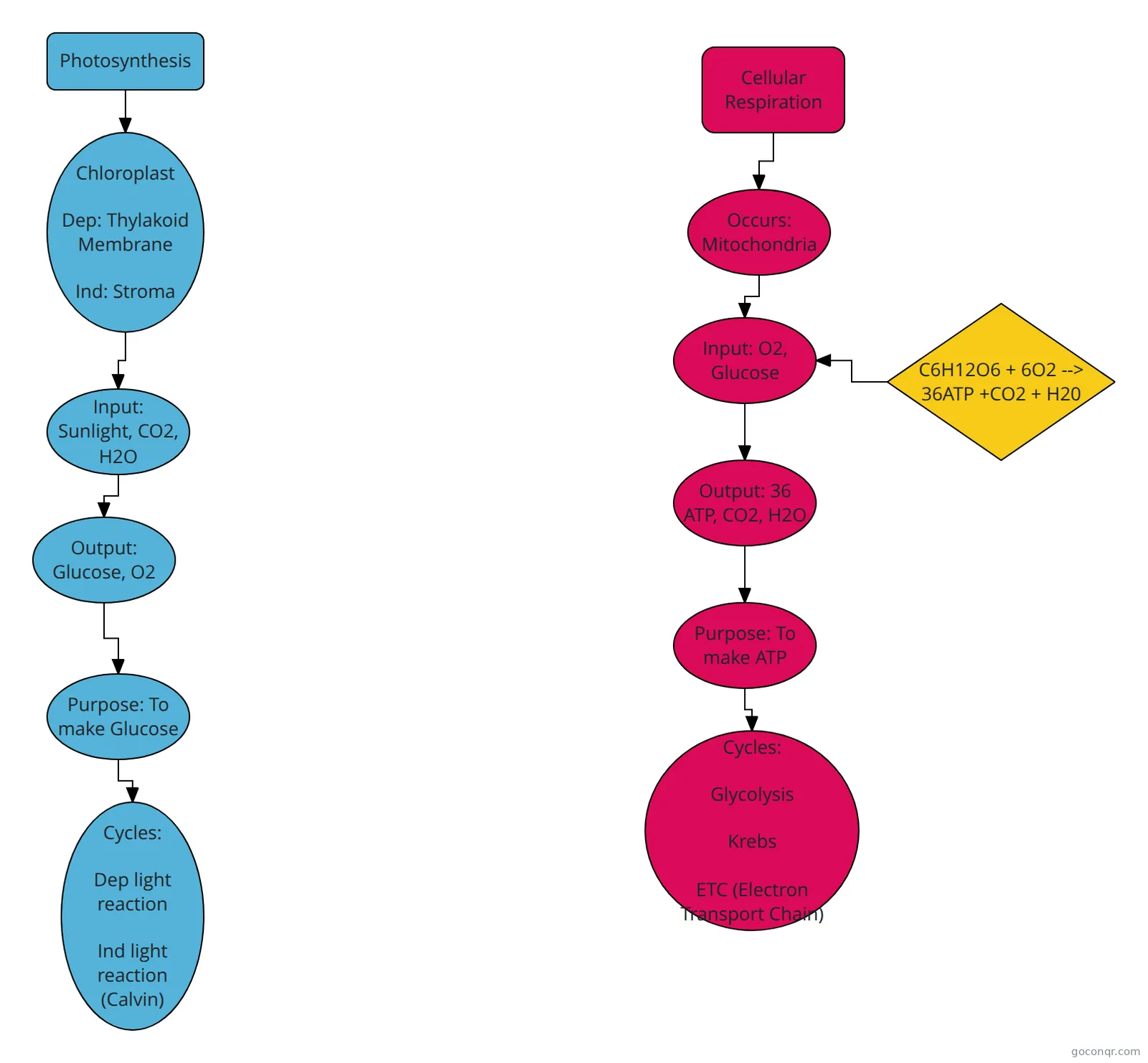 Photosynthesis and Cellular Respiration Photosynthesis and Cellular Respiration
-
Biology - B3 - Revision - GCSE Biology - B3 - Revision - GCSE
-
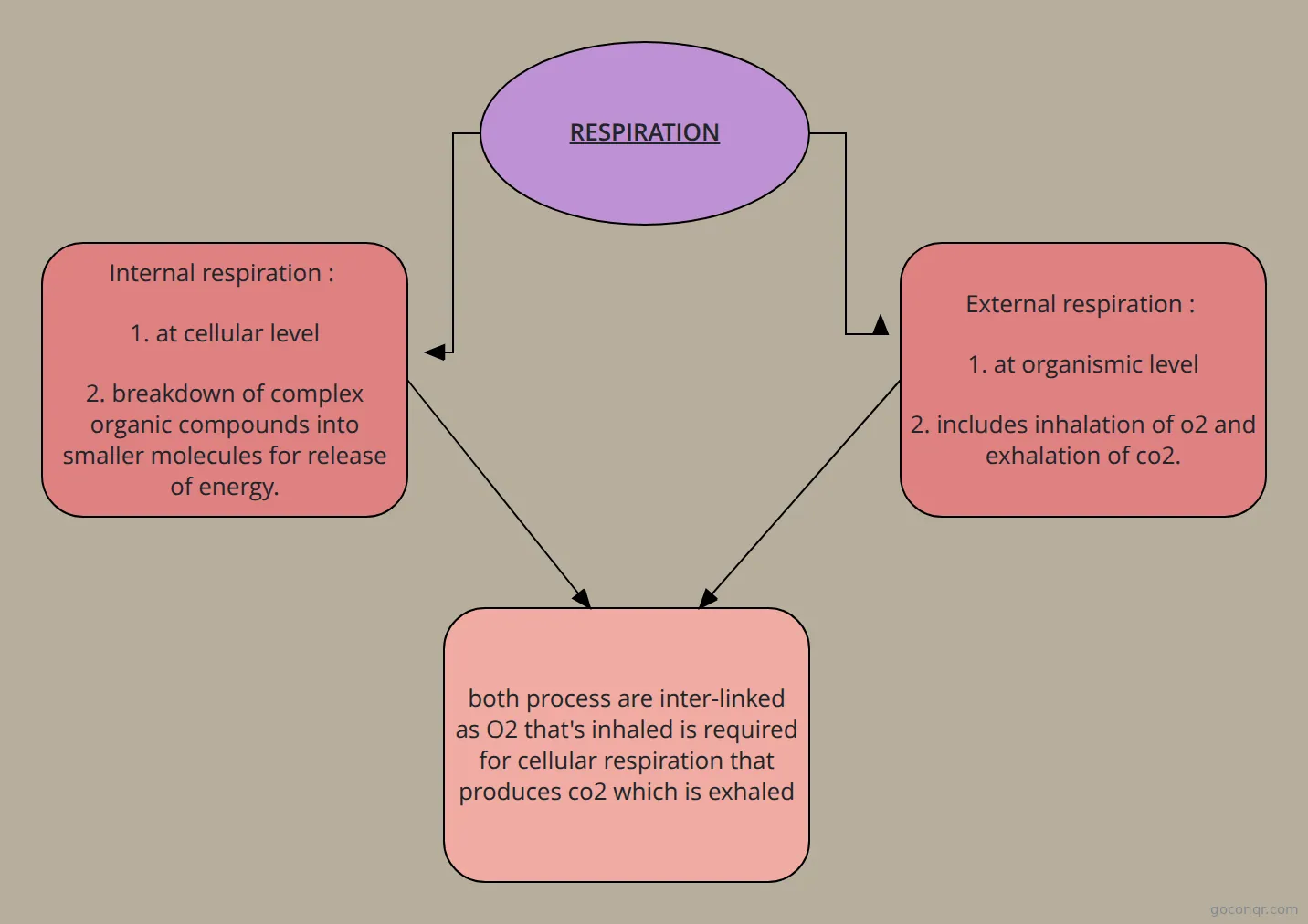 Respiration class 12 chapter 14 federal board What is respiration? Also discuss its types and how they are inter linked with each other?
-
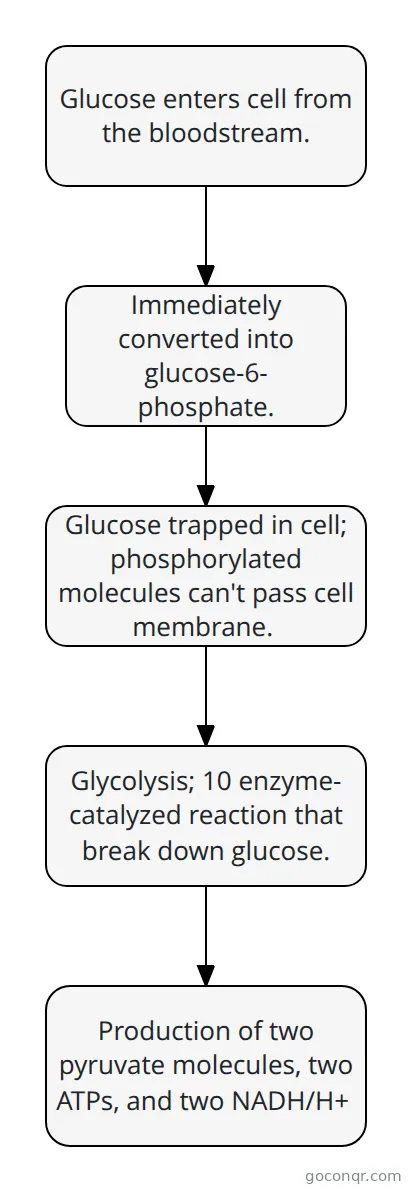 Glucose C6H12O6 Metabolism
Notes
See all 23 notes-
Respiration (GCSE) SUMMARY CELLULAR RESPIRATION: Respiration releases energy- it is an exothermic process DON'T CONFUSE IT WITH PHOTOSYNTHESIS!! Photosynthesis is the process by which plants (and some bacteria) synthes...
-
Energy release The release of energy slowly from glucose is called Respiration. ATP is formed during the respiration of glucose, but releases energy as it is used. Respiration Equation:
-
Electron Transport Chain (ETC) Electron Transport Chain (ETC)General Overview* ETC is located in inner mitochondrial membrane.* Transfer of electrons from one protein complex to the next in the ETC is called oxidation-reduction (or, redox).* NADH y...
-
12-Respiration summary notes Adenosine triphosphate is a nucleotide derivative and consists of ribose, adenine and three phosphate groups. ● Energy is released when ATP is hydrolysed to form ADP and a phosphate molecule. This process is catalysed...
-
Respiration Definition of Respiration: Breakdown/Oxidation of food substances to release energy in living cells A) Types of RespirationAerobic Respiration Breaking of food in the presence of oxygen Release lots of energ...
-
BIOLOGY 2 Krebs Cycle ( mitochondria )Oxidation of Pyruvate:1- Decarboxylation -- Carboxyl group is removed to form CO22- Reduction -- NAD+ is reduced to NADH , pyruvate loses an H3- CoA (enzyme) binds to remaining group (Acety...
-
Chapter 6: Respiration ATP: Adenosine TriphosphateMade up of:-Adenine (Base)-Ribose (Sugar)- 3 Phosphate Glucose is transformed into ATPs over 3 seperate stages:-Glycolysis-Krebs cycle-Eletron transport and chemiosmosis Glycolysis (1st reac...
-
Respiration RespirationRespiration releases energy for cells from glucose.This can be through aerobic respiration which requires Oxyen or through Anaerobic respiration which does not require oxygen.During exercise, the breathing ...
Slides
See all 10 slidesMore Biology and natural sciences topics
About Cellular Respiration and Metabolism
GoConqr OriginalWhat this unit covers
The resources follow respiration from the basic equation to the detailed pathways. Early material asks simple questions, such as what anaerobic respiration produces in yeast and what the word equation for aerobic respiration in plants is. Later material moves into glycolysis, the link reaction, the Krebs cycle and the electron transport chain. Metabolism and enzymes sit alongside, with bioenergetics and photosynthesis for comparison.
Where to start
- Open the flashcards for IGCSE Biology Edexcel - Section 4 Respiration. They cover the key points, the aerobic equation and anaerobic respiration, including in plants.
- Try the Year 10 flashcards on respiration and the respiratory system in humans, which ask where aerobic respiration takes place and which part of the cell carries it out.
- Move to the Glycolysis mind map, which splits the process into steps, including phosphorylation and the lysis of the glucose molecule, with a worked example.
- Follow with the Krebs cycle and Electron transport chain mind maps, then the Krebs Cycle Quiz.
Using maps and quizzes together
Read a mind map first, then take a quiz without looking. Wrong answers show you which branch to go back to. The Krebs Cycle Quiz asks about the sequence of cellular respiration and where the carbon atoms in pyruvic acid end up, so it pairs well with the Krebs cycle map. For wider revision, the 0654 Biology Topic B8 quiz covers gas exchange and respiration together.
For a more advanced view, the 8.2 Cell Respiration mind map covers redox reactions and the chemiosmotic theory. The B4 - Bioenergetics map links respiration to photosynthesis.
Where it fits
This unit sits in the Molecules and Cells strand of Biology and natural sciences. The resources reference exams such as GCSE Biology, IGCSE Biology, A-level Biology, AP Biology, IB Biology and SQA Higher Biology, so check the title of each one against your own course.
Choose one resource today, work through it, and then make a set of your own to fill any gaps.
Frequently asked questions
Which resource should I open first?
Start with the IGCSE Biology Edexcel - Section 4 Respiration flashcards or the Year 10 respiration flashcards if you are new to the topic. They cover the equations and where respiration happens. Once those feel comfortable, move on to the Glycolysis mind map and then the Krebs cycle.
What do the mind maps cover?
They run from general respiration and bioenergetics to the individual stages. There are maps on glycolysis, the link reaction, the Krebs cycle and the electron transport chain, plus 8.2 Cell Respiration, which includes redox reactions and the chemiosmotic theory. Others compare aerobic and anaerobic respiration.
Are the resources free to use?
Yes. Every resource listed here is free to open, study and take, with no account needed. They were made by GoConqr users, not by GoConqr itself, so it is worth checking each one against your own course.
Which exams do these resources suit?
The listed resources mention GCSE Biology, IGCSE Biology, A-level Biology, AQA A-level Biology, AP Biology, IB Biology, SQA Higher Biology and Biology 20. Most of the material is at secondary level. Look at the title and excerpt to see whether it matches your course.
Can I save my quiz scores or make my own resources?
A free account saves your quiz scores and lets you make your own quizzes, mind maps, flashcards and notes. That is useful if you spot a gap in the topic, such as fermentation or enzymes, and want to build something to fill it.
Is there anything for teachers?
Yes. Teachers can use the ready-made quizzes, flashcard decks, mind maps and notes as starting points for revision lessons or homework. Examples include the Krebs Cycle Quiz and the Electron Transport Chain Quiz, which suit a quick check after a lesson.