
Notizen
Simple Carbohydrates
Inhalt der Notizen (1)
Seite 1
They are distributed widely in nature and are a key intermediate of metabolism. Polysaccharides are involved in cell to cell recognition. Small chains that are covalently bound by glycosidic links to hydroxyl groups on proteins (glycoproteins) act as markers on cell surfaces and determine things like blood type.
Simple sugar like monosaccarides can't be hydrolysed into smaller sugars. Carbohydrates are made of two or more simple sugars: Oligosaccarides are several untis; polysaccarides are lots of units. Sucrose is a disaccharide made from two monosaccharides.
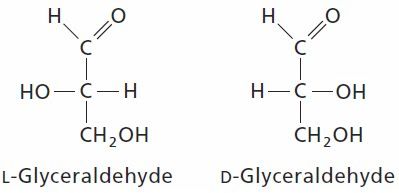
Fischer Projections:
Chiral carbon centre
The most oxidised group is at the top
CH2OH group at the bottom
Vertical substituents away
Horizontal substituents towards
D or L depends on position of the -OH group on the penultimate carbon.
Monosaccarides
These are the simplest carbohydrate, they are aldehydes orketones with 2 or more hydroxyls:
ALDOSE contains an ALDEHYDE
KETOSE contails a KETONE
3 Carbons: trioses 4 Carbons: tetroses 5 Carbons: pentoses 6 Carbons: hexoses 7 Carbons: heptoses
Chiral Carbon/ Asymmetry
Chiral carbons have 4 different groups and are asymmetric. If two groups are swapped around then the compound will have different physical properties. The number of isomers =2^n(number of chiral carbons).
Due to their asymmetic properties most sugar are optically active and rotate the plane of a beam of polarised light. The specific rotation = rotation of a beam of polarised light by 100g of solute in 100ml of solvent with a path length of 10cm.
D and L- glyceraldehyde have identical physical and chemical properties except when exposed to a chiral environment then they have different physical properties as they rotate plane polarized light in equal but opposite directions.
EPIMERS: sugars that differ at A single asymmetric centre
DIASTEREOISOMERS: sugar that differ at ONE OR MORE chiral centres but ARE NOT ENANTIOMERS
ENANTIOMERS: sugars differ at ALL asymmetric centres and are therefore mirror images
Epimers and anantiomers can overlap, therefore a sugar can be both.
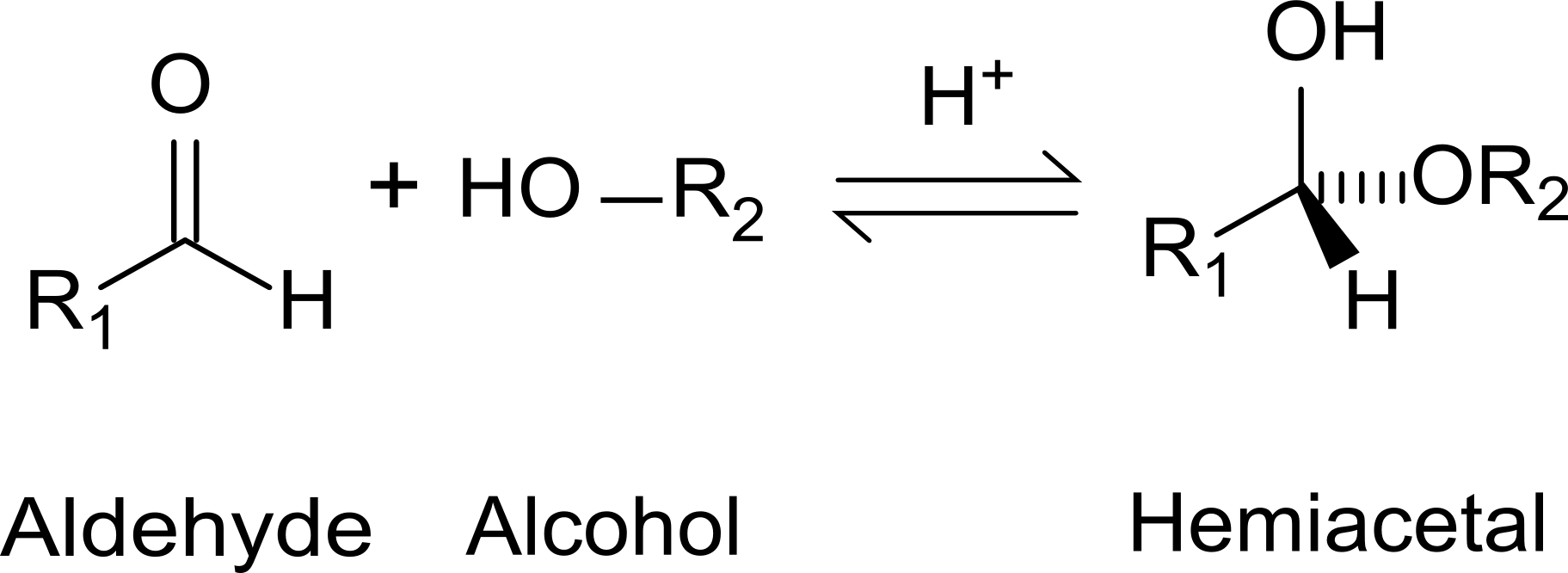
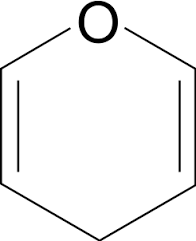
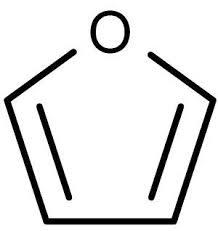
Pentoses and hexoses cyclise to form furanose (5 membered ring) and pyranose (6 membered ring). Intramoleculars nucleophilic addition creates cyclic hemiacetals in sugars. They can be alpha or beta due to additional chiral centre created during the formation of the cyclic hemiacetalthese diastereomers are called ANOMERS
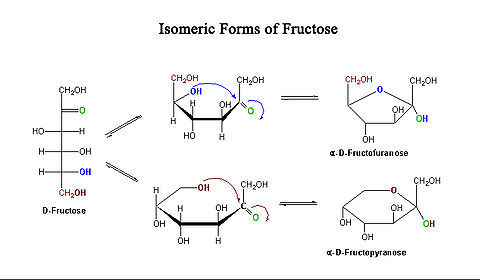
Mutarotation
This occurs if an alpha OR beta-D-glucose is dissolved in water, equilibrium can occur as the cyclic version opens up but when it reforms it produces a mixture of alpha AND beta.
Glycosidic Bonds
These join carbohydrates to alcohols and amines at the anomeric end. Sugar can be linked to each other by O-glycosidic bonds to form disaccharides and polysaccharides. The anomeric carbon of a sugar can be linked to the nitrogen of an amine by an N-glycosidic bond
Informationen
- Beschreibung
- University Biochemistry Notiz am Simple Carbohydrates, erstellt von Beckie Thorne am 22/04/2015.
- Erstellt von
- Beckie Thorne · Apr 2015
- Aktualisiert
- 19 Feb 2016
- Aufrufe
- 3
- Bewertung