
Notizen
Cardiovascular Disease
Inhalt der Notizen (1)
Seite 1
Cardiovascular Disease
Cardiovascular diseases are diseases linked to the cardiovascular
system.
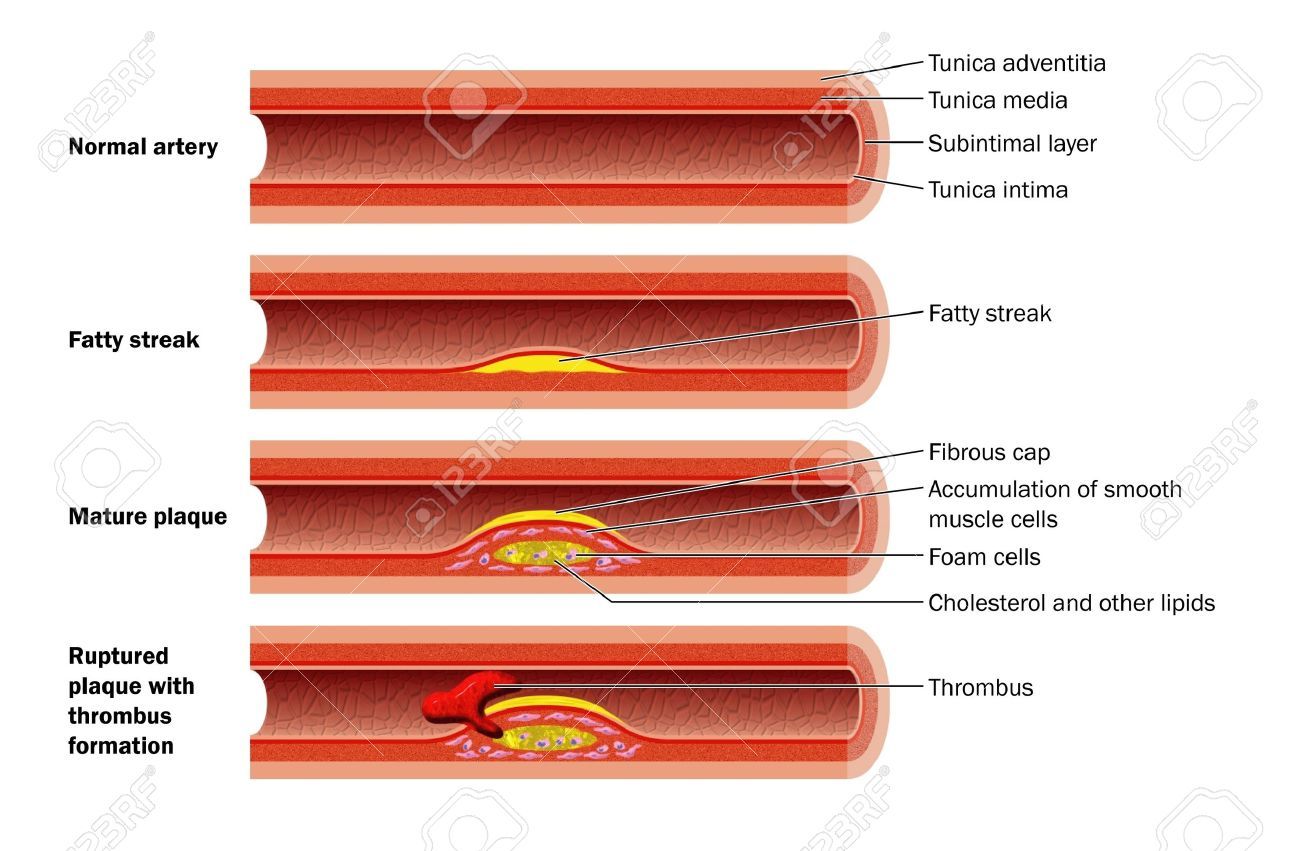
Atherosclerosis means hardening of arteries and it’s a build up of
fatty deposits (plaques) in the arteries
A plaque can build up until it restricts it blood flow partially or
completely.
Plaques are more likely to form in the (coronary arteries of the heart)
and the (carotid arteries of the neck)
Arteries over veins:
atherosclerosis is more likely to happen in the arteries rather than
the veins
This is because the blood in the arteries flow fast under high
pressure this puts more strain on the endothelium layers which can cause small
areas of damage.
The veins are under lower pressure so damage to the endothelium is
less likely to happen
The events that lead to atherosclerosis:
1)
The endothelium
layer is usually smooth and unbroken. Damage to the endothelial lining of the
blood leads to the formation of plaque and this can be caused by many factors
such as High blood pressure and chemicals In tobacco smokers
2)
Once the damage
has occurred the body inflammatory response begins. White blood cells (mostly
macrophages) arrive at the site of the damage. These cells accumulate chemicals
in the blood, particularly cholesterol. This leads to a fatty deposit called
atheroma forming in the endothelial lining of the artery.
3)
Fibrous tissues
and calcium salts build up around the fatty deposit, turning it into hardened
plaque. This means that artery walls will harden so its less elastic. This is
atherosclerosis.
Effect of atherosclerosis:
Lumen becomes smaller due to
plaque
This increases blood
pressure, making it harder to pump blood around the body.
This increases the blood
pressure making it harder to pump blood around the body. This increased blood
pressure most likely will cause damage to the endothelium layer in other areas.
This will cause the
formation of more plaque and will lead to and even higher blood pressure.
Heart Disease:
There are many but the two
main ones are angina and myocardial infraction (heart attack)
Both are related to atherosclerosis
Myocardial Infraction:
If one of the branches of
the coronary arteries becomes blocked part of the heart muscle will be starved
of oxygen (for respiration) and the person will have a heart attack.
Many heart attacks are
caused by blood clots due to atherosclerosis
1)
The wall
affected by the plaque is stiff making it more easy to crack or get damaged
2)
An atheroma can
rupture (burst through) the endothelium layer on an artery leaving a damaged
and rough surface
3)
Platelets come
in contact with the damages surface of the plaque and clotting is triggered
4)
Or the plaque
itself may break open and release cholesterol which when comes in contact with platelets
will cause clotting
5)
A clot may
simply happen because the endothelial lining is damaged
6)
A clot in the
blood is called a thrombosis
7)
This clot can
rapidly block the whole blood vessel, particularly narrowed by plaque. The blood clot can become dislodged and block
a vessel somewhere else in the body.
8)
A clot that gets
stuck in the coronary artery is called coronary thrombosis
9)
The clot can
block the artery starving the heart muscle of oxygen and nutrients
Leading
to a heart attack.
10)
A heart can cause
death and the death of the heart muscle
11)
Symptoms include
pain in the chest and upper body, shortness of breath and sweating
12)
If large areas
are affected it can lead to heart failure
Strokes:
A stroke is caused by an
interruption of blood supply to the brain. This comes from a blood clot, an
atheroma or combination
Sometimes blood clots form
somewhere else then is carried in the blood to get stuck in the brain artery.
This means less oxygen
Damage happen quickly
A block to a main artery can
lead to serious stroke and even death
Factors that can increase
the risk of cardiovascular disease:
Age:
A you get older your blood
vessels start to get les elastic and narrow making you more likely to suffer
from CVD. Specially heart disease. When its less elastic there will be higher
pressure during systole. This will lead
to hypertension (abnormal high pressure). So more atherosclerosis
Gender:
Men are more likely to
suffer.
The female hormone
osterogen, which plays an important role in the women menstrual cycle, appears
to reduce plaque. This gives them protection till menopause.
Women have less stressful
jobs so less hypertension
Genes:
Some people inherit
particular alleles. Some genetics may cause arteries to be more easily damaged,
which will make them more likely to get (hypertension) high blood pressure or
high blood cholesterol, so more likely to suffer from CVD
Hypertension:
This increases the risk of
damage to the artery walls; this increases the risk of atheroma, which can lead
to CVD
Excessive alcohol
consumption, stress and diet can all increase blood pressure
Diet:
A diet in saturated fat
increases CVD
This is because of the
increase of blood cholesterol level, which leads to atheroma formation.
Atheroma can lead to blood clot= leads to heart attack or stroke.
A diet high in salts also
increases CVD because it increases the risk of high blood pressure
Alcohol causes hypertension.
Eating more calories causes
BMI to increase. Associated to Atheroma.
Smoking:
Chemicals in tobacco cause
damage to the lining of the arteries, making it build up plaque more likely
Causes arteries to narrow,
raising blood pressure and increasing risk of CVD
CO mixes with hemoglobin and
this reduces the amount of oxygen transported in the blood. This reduces the
amount of oxygen available to the tissue. If the heart doesn’t receive enough
oxygen it will get a heart attack. If the brain doesn’t receive enough oxygen
it will lead to a heart attack.
Nicotine makes platelets
sticky, increasing the chance of blood clot forming, increases CVD
Smoking decreases amount of
antioxidants in the blood – these are important for protecting cells from
damage. Fewer antioxidants means cell damage in the artery walls and can lead
to atheroma formation = increase risk of CVD
Inactivity-
Lack of exercise increases
risk of CVD because it increases blood pressure
Lower BMI = less
hypertension
Fitter heart = less
hypertension
Exercises decreases LDL
levels
Exercise increases metabolic
rate, which means lower BMI
High blood cholesterol
increases CVD
Cholesterol is a lipid made
in the body
Some is needed for the body
to function normally
Cholesterol needs to be
attached to a protein to be moved so the body forms lipoproteins, made of
lipids and proteins
High saturated fats = high cholesterol
levels = cholesterol is in plaque so form
atherosclerosis
Two types of lipoproteins:
HDL:
Formed by unsaturated fats,
cholesterol and protein
They carry cholesterol from
your body tissues to your liver where it is broken down, lowering cholesterol
levels
HDL can also help to remove
cholesterol from fatty plaques on the arteries, reducing the risk of heart
diseases from atherosclerosis. Their function is to decreases blood cholesterol
when it’s too high.
LDL:
Are formed from saturated
fats, cholesterol and protein
They carry more cholesterol
that HDLs and bind to cell membranes after being taken to the cells. If LDL
levels are too high, your cell membranes become saturated and more LDL
cholesterol is left in the body
They carry cholesterol from
liver to blood
This function is to increase
blood cholesterol when it is too low.
High total blood cholesterol
level (the level of HDL, LDL and other cholesterol )and high LDL level have
both been linked to an increased risk of CVD.
A diet high in saturated
fats raises LDL levels, so more cholesterol is transported to the blood,
increasing total blood cholesterol increasing risk of CVD
A diet high in polysaturated
fat (corn oil, sunflower oil oily fish) mainly HDL – so more cholesterol is
transported from the blood to the liver. This decreases total blood cholesterol
level decreasing the risk of CVD
Drugs which are used to
treat CVD
Antihypertensive: All of these reduce blood pressure, so
there is less damage to the artery walls.
This reduces atheroma forming and blood clots.
Diuretics
– The Loop of Henle is the part of the nephron (in the kidney)
that regulates water reabsorption. Essentially, it puts Na+ back into the
blood by active transport. This lowers the water potential in the blood, so
water follows the Na +
By osmosis. Most diuretics block the protein that actively
transports the Na +, so less water is returned to the blood, thus reducing the
pressure. This means more urine Is produced.
This gets rid of excess salts and fluids. Dp the blood volume falls.
With less blood, a smaller volume is pumped from the heart and the blood
pressure falls. Three problems with this. The blood gets more viscous, which
makes the heart beat harder. Dehydration can occur. Only treating the symptom.
Beta Blockers.
They block the response of the heart to hormones such as
adrenaline, which normally speed up the heart and increase blood pressure. So
beta blockers makes the heart rate slower and contraction less strong, so the
blood pressure is lower
Vasodilators: Widen blood
vessels
Sympathetic nerve inhibitors:
Affect the sympathetic nerve
from your central nervous system to all parts of your body
Sympathetic nerves stimulate
your arteries to constrict, which in turn raises your blood pressure. The inhibiters
prevent these signaling to the arteries, which helps to keep them wide and keep
blood pressure low
Angiotensin is a hormone,
which stimulates the constriction of your blood vessels and so causes the blood
pressure to rise. ACE inhibitors block the production of angiotensin, reducing
the constriction of your blood vessels and you blood pressure lower.
Benefits:
The different types of drugs
work in different ways, so they can be in a combination to reduce blood
pressure.
The risk of CVD is decreases
Damage to the kidneys and
eyes from high blood pressure decreases
Risks:
If not monitored carefully
blood pressure can fall too low, which can lead to falls and injuries
Has a side effect:
Palpitations (rapid beating
of the heart)
Abnormal heart rhythms
Swelling of ankles
Impotence and tiredness
Fainting
Headaches
Allergic reactions
Depression
Plant statins:
Statins are a group of drugs
that lower the level of cholesterol in your blood. They block the enzyme in the
liver that is responsible for making cholesterol. More effective in stopping the
creation of LDL. They improve the balance of LDLs and HDL and reduce
inflammation in the lining of the arteries. Both of these functions reduce the
risk of atherosclerosis.
* Plants contain chemicals
called stanols and sterols. They are referred to as plant statins. Sold in
spreads and yogurts. They reduce the amount of cholesterol absorbed in the gut
into your blood, which makes it easier for your body to deal with cholesterol
and reduce the levels of LDLs in the blood. A lower blood cholesterol level reduces
atheroma formation, which reduces the risk of CVD. To consume enough plant statins
you’d have to eat lots of plants but now can be found in foods such as some
margarine.
Benefits:
Statins reduce the risk of
developing CVD
Risks
Reduce the absorption of
some vitamins
Anticoagulants:
Anticoagulants (e.g.
warfarin, heparin) help to reduce blood clotting. It interferes with the
manufacture of prothrombin in the body. Low prothrombin levels make the blood
clot less easily. This means blood clots are less likely to form at sites of
damage artery walls. So less chance of blocking a blood vessel. This reduces
CVD.
Benefits:
Used to treat people who
already have blood clots or CVD
They prevent existing clots
from growing any larger
Prevent new clots from
forming
Can’t get rid of existing
blood clots
Risks
If someone badly injured the
reduction in blood can cause escssive bleeding, lead to fainting and even death
Allergic reactions and
osteoporosis and tissue swelling
Drugs may damage fetus
Platelets inhibitor drugs
(Eg aspirin) are a type of
anticoagulant, which makes platelets less sticky, so reduces the blood clotting
ability. This stops them from clumping together so less chance a blood vessel
gets blocked.
Benefits:
Can be used to treat someone
who already has blood clots and CVD
Risks:
Rashes,
Diarrhea
Nausea
Live function problems and
excessive bleeding
Informationen
- Beschreibung
- AS - Level Biology (Cardiac Cycle) Notiz am Cardiovascular Disease , erstellt von lulwa421999 am 30/10/2015.
- Erstellt von
- lulwa421999 · Okt 2015
- Aktualisiert
- 15 Mär 2016
- Aufrufe
- 11
- Bewertung