
Quiz
Ionic Bonding
Dieses Quiz enthält Fragetypen, die sich im gewohnten Player öffnen.
Fragen in diesem Quiz (13)
1label...
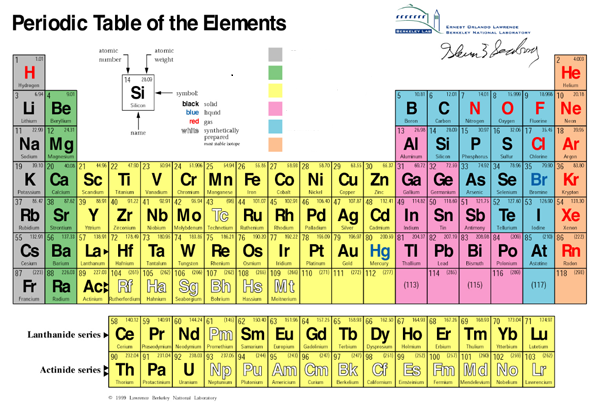
- Aalkali metals
- Balkaline earth metals
- Ctransition metals
- Dother metals
- Enon metals
- Fnobel gases
- Gbecomes 1+ ion
- Hbecomes 2+ ion
- Ibecomes 1- ion
- Jbecomes 2- ions
2what do you get when different elements join/bond together?
- Aa molecule
- Ba compound
- Can element
- Dcovalent bond
3"compounds must be joined covalently?"
- ARichtig
- BFalsch
4name the types of bonding in compounds...
- Aionic
- Bcovalent
- Cdiatomic
- Delectrostatic
- Emetallic
5[blank_start]ions[blank_end] are formed when one or more [blank_start]electrons[blank_end] are [blank_start]transferred[blank_end] from one atom to another.
the [blank_start]simplest[blank_end] ions are single atoms which have either lost or gained electrons, [blank_start]e-,[blank_end] so they will have a [blank_start]full outer shell[blank_end].- Aions
- Belectrons
- Ctransferred
- Dsimplest
- Ee-,
- Ffull outer shell
6a [blank_start]sodium atom[blank_end], Na, loses [blank_start]one[blank_end] electron to form a [blank_start]sodium ion[blank_end], Na+
shown by [blank_start]na-> na+ + e-[blank_end]
a magnesium [blank_start]ion[blank_end], Mg, loses [blank_start]two electrons[blank_end] o form a magnesium ion, [blank_start]Mg+[blank_end]
shown by [blank_start]mg-> mg2+ + 2e-[blank_end]
a chlorine atom, [blank_start]Cl[blank_end], gains one electron to form a chloride ion, [blank_start]Cl-[blank_end]
shown by [blank_start]cl + e- -> cl-[blank_end]
an [blank_start]oxygen atom[blank_end], O, [blank_start]gains[blank_end] two electrons to form an [blank_start]oxide ion[blank_end], O2-
shown by [blank_start]o + 2e- -> o2-[blank_end]- Asodium ion
- Bchloride atom
- Csodium
- Dnitrogen atom
- Eone
- Fthree
- Gmore than one
- Hsodium isotope
- Isodium molecule
- Jisotope
- Kna-> na+ + e-
- Lna + e- -> na-
- Mna->2na+ +2e-
- NCl
- OCl2
- Pion
- Qmetal
- Ratom
- Smolecule
- Ttwo electrons
- Uone electron
- Vmass
- WMg+
- XMg-
- YMg2+
- Zmg-> mg2+ + 2e-
- AAmg->mg- -e-
- ABmg-> mg+ +e-
- ACCl-
- ADCl+
- AECl2-
- AFoxygen atom
- AGdiatomic oxygen
- AHoxygen molecule
- AIcl + e- -> cl-
- AJcl-> cl- +e-
- AKcl->cl2+ +2e+
- ALgains
- AMloses
- ANoxide ion
- AOoxygen ion
- APo + 2e- -> o2-
- AQo2 +2e- ->o2-
- ARo-> o2+ +2e-
7[blank_start]electrostatic attraction[blank_end] holds positive and [blank_start]negative[blank_end] ions together- it's very [blank_start]strong[blank_end]. when [blank_start]atoms[blank_end] are held together like this it is called [blank_start]ionic bonding[blank_end].
- Anegative
- Belectrostatic attraction
- Cstrong
- Datoms
- Eionic bonding
8ions that are made up of groups of atoms with an overall charge are called...
- Acompound ions
- Bcompounds
- Cions
- Dmolecules
- Eisomers
- Fmolecular ions
9sulfate [blank_start]SO4^2-[blank_end]
hydroxide [blank_start]OH-[blank_end]
Nitrate [blank_start]NO3-[blank_end]
Carbonate [blank_start]CO3^2-[blank_end]
ammonium [blank_start]NH4+[blank_end]- ASO4^2-
- BOH-
- COH+
- DNO4-
- ENO3+
- FCO2^4
- GNO3-
- HCO3^2-
- INH4+
- JNH3
- KNH3+
- LNH4-
10[blank_start]Ionic[blank_end] compounds are made up of a [blank_start]positive[blank_end] part and a negative part. the [blank_start]overall[blank_end] compound charge is [blank_start]zero[blank_end].
- AIonic
- Bpositive
- Coverall
- Dzero
11ionic crystals are...
- Agiant lattices of ions
- Bpositive and negative compound joined
- Cions bonded by electrostatic attraction
12[blank_start]ionic[blank_end] crystals are [blank_start]giant lattices[blank_end] of ions. a [blank_start]lattice[blank_end] is just a [blank_start]regular[blank_end] structure.
the structures called [blank_start]giant[blank_end] because its made of the [blank_start]same basic unit[blank_end] repeated over and over again.
in sodium [blank_start]chloride[blank_end], the Na+ and Cl- ions are [blank_start]packed together[blank_end]. the sodium chloride lattice is [blank_start]cube shaped[blank_end]- different ionic [blank_start]compounds[blank_end] have [blank_start]different[blank_end] shaped structures, but they're all still giant lattices.- Aionic
- Bgiant lattices
- Clattice
- Dregular
- Egiant
- Fsame basic unit
- Gchloride
- Hpacked together
- Icube shaped
- Jcompounds
- Kdifferent
13[blank_start]ionic[blank_end] compounds conduct [blank_start]electricity[blank_end] when molten or in [blank_start]liquid[blank_end] but not when solid. the ions in a liquid are free to [blank_start]move[blank_end] and carry [blank_start]a charge[blank_end] but in a solid the ions are in a [blank_start]fixed position[blank_end].
ionic compounds have [blank_start]high[blank_end] melting points. [blank_start]giant ionic lattices[blank_end] are held together by [blank_start]strong electrostatic forces[blank_end]. it takes a [blank_start]lot of energy[blank_end] to overcome these forces, so melting points are very high.
ionic compounds tend to [blank_start]dissolve[blank_end] in water. water molecules are [blank_start]polar[blank_end] -part of the molecule has a small negative charge and other bits have small [blank_start]positive[blank_end] charges. these charged parts [blank_start]pull away[blank_end] from the lattice, causing it to dissolve.- Aionic
- Bcovalent
- Cdiatomic
- Delectricity
- Echarges
- Fprotons
- Gliquid
- Han aqueous solution
- Ia solid
- Jmove
- Kleave the molecule
- Lgain electrons
- Ma charge
- Nelectrostatic current
- Oprotons
- Pfixed position
- Qcomplicated relationship
- Rnumber of positions
- Shigh
- Tlow
- Ureasonable
- Vgiant ionic lattices
- Wgiant metallic lattices
- Xgiant covalent structures
- Ystrong electrostatic forces
- Zweak elctrostatic forces
- AAweak intermolecular forces
- ABlot of energy
- ACsmall amount of energy
- ADbig force
- AEdissolve
- AFbecome ionic
- AGreact
- AHpolar
- AInegative
- AJdiatomic
- AKpositive
- ALweak
- AMnegative
- ANpull away
- AOreact
- APbecome completely detached
Informationen
- Beschreibung
- AS - Level AS Chemistry Quiz am Ionic Bonding, erstellt von abbie Fitzpatrick am 23/05/2016.
- Autor
- abbie Fitzpatrick
- Sprache
- English
- Aufrufe
- 70
- Schlagwörter
- Bewertung
- Noch keine Bewertungen Bewerte dieses Quiz