
Cell bio
Folien in diesem Satz (19)
-
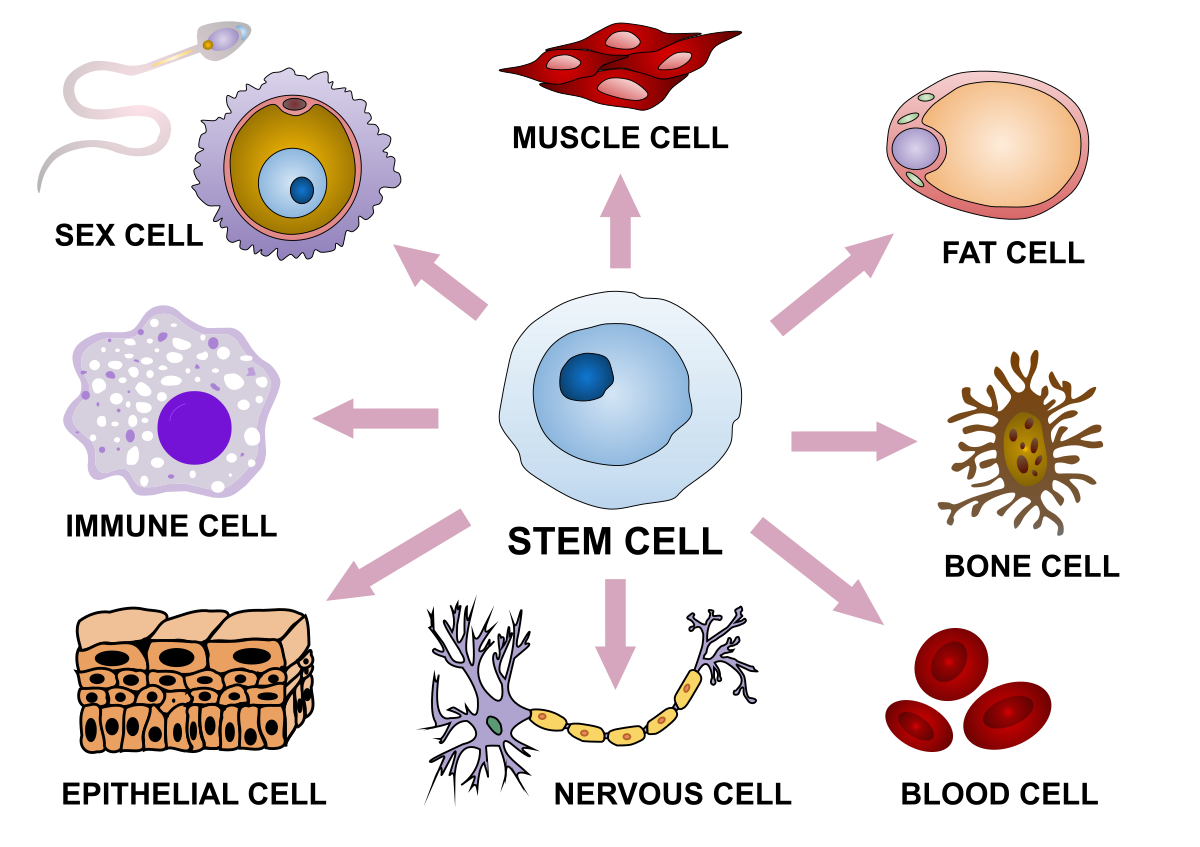
- Cell Functions
- Specialize through the process of differentiation or maturation.
- This process causes the cells to perform one function
- There are eight functions:
- Movement: Muscle cells - attached to bone, produce forces and motion. Enclose hollow tubes.
- Conductivity: Response to a stimulus - electrical impluse - nerve cell.
- Metabolic absorption: All cells take in and use nutrition.
- Secretion: Certain cells, mucous gland cells can assemble new substances, they absorb and then secrete the new substances to serve as needed elsewhere. Adrenal gland, testis, and overy can secrete hormonal steroids.
-
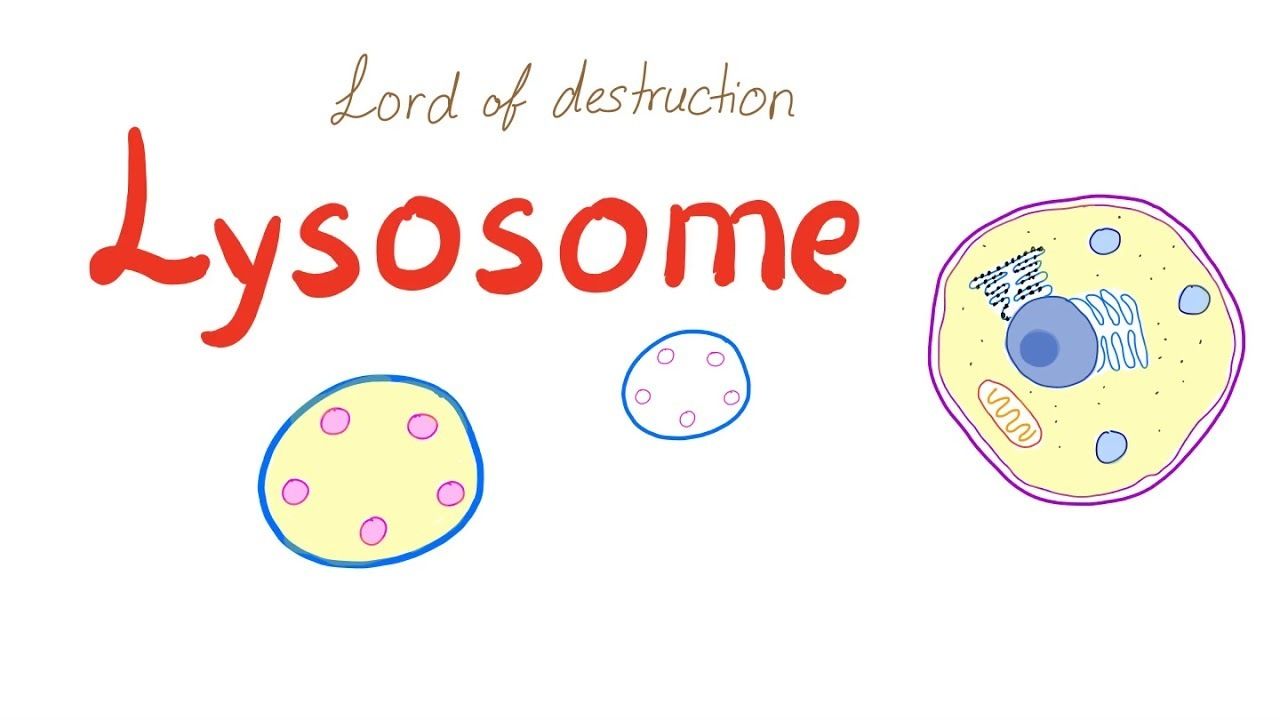
- Excretion: All cells can rid themselves of waste products resulting from the metabolic break down of nutrients. Lysosomes are membrane-bound sacs that contain enzymes that break down or digest, large molecules, turning them into waste products that are released from the cell.
-
- Respiration: Cells absorb oxygen, which transforms nutrients into energy in the form of ATP. Cellular respiration is known as oxidation. It occurs in the organelles called Mitochondria.
- Cellular Respiration and the Mighty Mitochondria (Einbetten)
-
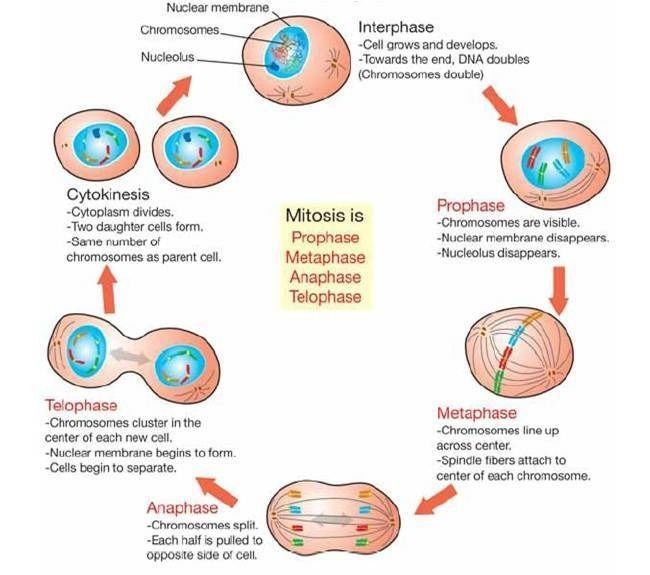
- Reproduction: Tissue growth occurs as cells enlarge and reproduce themselves. Even without growth, tissue maintenance requires that new cells be produced to replace cells that are lost normally through cellular death. NOT ALL CELLS ARE CAPABLE OF CONTINUOUS DIVISION.
-
- Communication is vital for cells to survive.
- Pancreatic cells secrete and release insulin to signal muscle cells to absorb sugar from the blood for energy. This communication maintains equilibrium.
-
- Cell structure and function
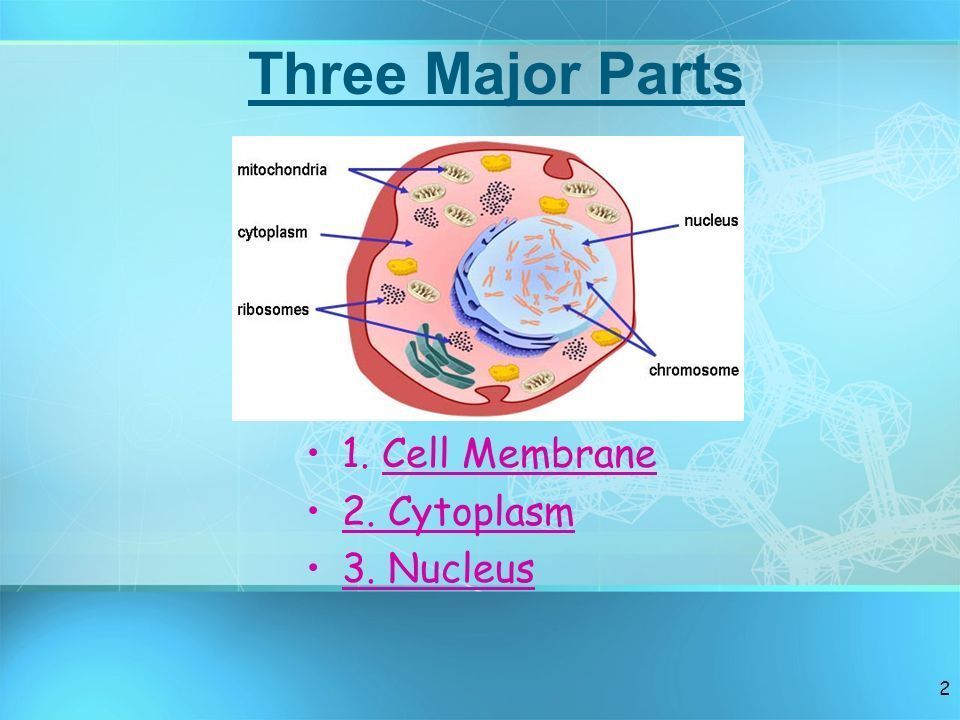
- three parts
- Outer membrane - plasma membrane
- cytoplasm - fluid-filled
- organelles - organs, which are membrane-bound and contain a nucleus
-
- The nucleus is surrounded by cytoplasm.
- located in the center of the cell
- Largest membrane organ
- The nuclear envelope is made of two pliable membranes.
- The envelope is pockmarked with pits called nuclear pores.
- Nuclear pore complexes allow molecules to move between nucleus and the cytosol.
- The outer membrane is continuous with membranes of the endoplasmic reticulum.
- The inner membrane encloses the nucleus.
- The nucleus contains the nucleolus, small dense structure composed largely of DNA and most of cellular DNA, and the DNA binding proteins (the histones).
- The risk of DNA chains breaking is high, so histones fold the DNA into chromosomes.
- Tight packing is essential for cell division in EU cells.
-
- Nucleus functions:
- cell division and genetic info
- Replication
- Repair DNA
- Transcription of the information stored in DNA
- Genetic information is transcribed into RNA which is processed into messenger, transport, and ribosomal RNA and introduced into the cytoplasm, which it directs cell activity.
- What is the Nucleus | Nucleus Structure and Function (Einbetten)
-
- Cytoplasm aka cytosol- a solution that fills the cyto matrix.
- Cytosol - half the vol. of EU cell.
- Contains thousands of enzymes for metabolism, crowded with ribosomes.
- Ribosomes make protein.
- Cytosol is the main site for protein synthesis and degradation.
- Cytosol - storage unit for carbs, fats, and secretory vesicles.
- Cytosol vs cytoplasm; What's The Difference? (Einbetten)
-
- Ribosomes -RNA protein - synthesized in the nucleolus and secreted into the cytoplasm through the pores.
- Can float free or attach themselves.
- Provide sites for protein synthesis.
- What are Ribosomes? | Ribosome Function and Structure (Einbetten)
-
- Endoplasmic Reticulum (ER) - membrane factory. Transports protein and lipids.
- The network of tubules or saclike channels.
- Rough ER is rough because ribosomes and ribonucleoprotein particles are attached.
- ER mainly responsible for protein synthesis and folding, and sensing cellular stress.
- Smooth ER: No ribosomes
- Helps remove toxins
- Synthesis of steroid hormones
-
- Golgi complex: a network of smooth flat vesicles and membranes located near the nucleus.
- Protein from the ER is processed and packaged into small sacs called secretory vesicles.
- Vesicles collect at the end of the folds of the Golgi bodies.
- Vesicles break off and migrate to intra and extracellular.
- Vesicles fuse with plasma membrane and contents are released from the cell.
- Clathrin - a protein coating around the best-known vesicle.
- Many molecules, lipids, proteins, glycoproteins, and enzymes of lysosomes pass through the golgi complex during maturation.
- Golgi is the refining plan that directs traffic.
-
- Lysosomes - membrane filled with enzymes that digest. Act like a digestive system.
- Are like trash cans and recycling center. Breaks components down to basic blocks for reuse or excretion.
- Endocytosis - Digestion.
- 60 enzymes called hydrolases - catalyze the bonds in proteins, lipids etc.
- Acidic PH is best.
- Great at maintaining cellular health - effecient with removing toxins.
- As we age we lose lysosome efficiency and regenerative properties are reduced.
- Lysosomal membrane is like a shield, keeping the digestive enzymes from leaking out. Certain treatments or injury can lead to release causing cell degradation.
- Genetic defect can cause Lysosomal storage diseases.
-
- 4 pathways for lysosome degradation:
- endocytosis
- phagocytosis
- macropinocytosis
- autophagy
-
- Altered Cellular Biology (Einbetten)
- Watch lecture
-
- Rough ER has ribosomes. ribosomes manufacture protein. nucleus copies DNA into RNA and sends it to the Rough ER so the ribosomes synthesis protein.
- Smooth ER has no ribosomes. It packages proteins with lipids and if the cell needs to grow it makes more lipids.
-
- Golgi Apparatus is a processing center that modifies a protein for its final stage and then sends it off to the cell membrane. it can reshape or fold it different or attach something to it.
-
- Lysosomes: digestive organelles of the cell. when something wants to be recycled the lyso will fuse with it. enzymes will break it down. if the lyso bursts open releasing its enzymes it would destroy the cell. the PH helps break covenant bonds but it is a protective measure if the enzymes are released.
- When a cell starts to have problems it can self destruct. apoptosis. in the cases of cancer when the cells are out of control. the body can say to terminate. the cancer is unable to listen to this request.
- Lysosome disorder: leads to disease. Tay-sachs disease is a defected enzyme that doesn't breakdown lipids in the brain so lipids accumulate then the nerves die and the person dies.
-
- Vacuoles are storage containers in plants.
Informationen
- Beschreibung
- Masters pathophysiology Folienset am Cell bio, erstellt von Nicholas Reed am 05/05/2020.
- Erstellt von
- Nicholas Reed
- Aufrufe
- 0
- Bewertung