
Karteikarten
Respiratory system-responses and adaptations
Karten in diesem Stapel (6)
- 1What are the responses of the respiratory system to exercise? (2)-increased rate and depth of breathing
-increased gas exchange - 2How can we determine our aerobic fitness?-respiratory system
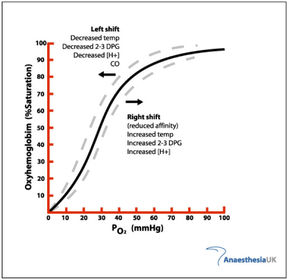
-VO2 max - 3What does the oxygen disassociation curve tell us?The ability for haemoglobin to become saturated with oxygen at relatively low oxygen partial pressures. The S shape is significant in indicating that blood can become fully saturated with oxygen at low partial pressures.
- 4What are adaptations of the respiratory system to exercise?-an aerobic training scheme can increase the surface area of the alveoli, thereby increasing the surface area for gaseous exchange.
-training will also strengthen the muscles involved in breathing (intercostal muscles/ diaphragm) - 5Give examples of secondary respiratory musclesinternal intercostals, pectorals, trapezium, latissumus dorsi and abdominals.
- 6What is anatomical dead space?The respiratory passageways in which air is ventilated through but doesn't contribute to gas exchange in the alveoli, it typically amounts to 150ml. Alveolar dead space (alveolar collapse/ obstruction by mucus) is added to this dead space.
Informationen
- Beschreibung
- GCSE PE (Chapter 3 (effects of exercise-responses and adaptations)) Karteikarten am Respiratory system-responses and adaptations, erstellt von Camilla Donaldson am 14/12/2014.
- Erstellt von
- Camilla Donaldson
- Aufrufe
- 94
- Tags
- Bewertung