
Karteikarten
lecture 3
Karten in diesem Stapel (34)
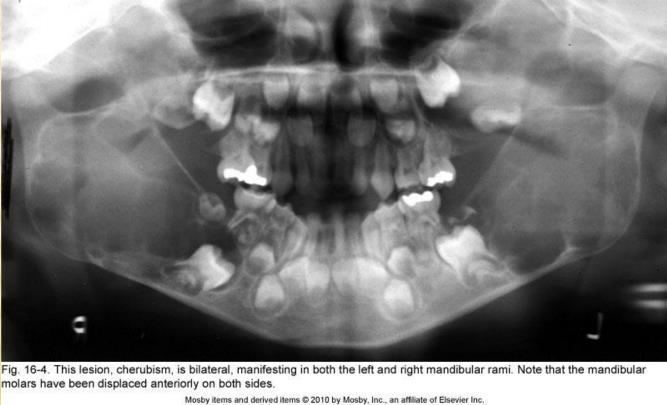
- 1—cherubism: bilateral
origin in the midramus region
the mandibular molars have been
displaced anteriorly on both sides.
it is central giant cell lesion - 2—round lesion attached to cemento-enamel
junction (CEJ)
Corticated Border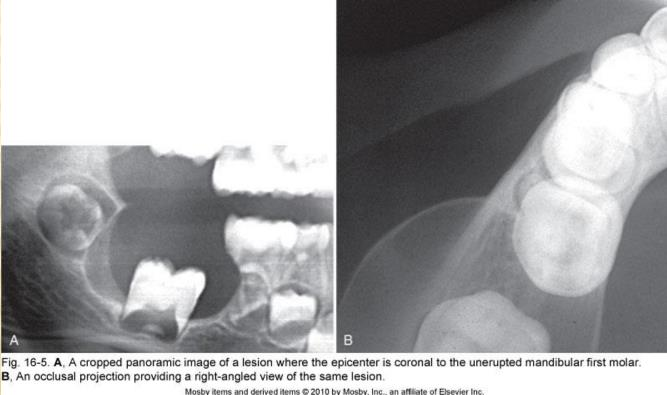
- 3—ameloblastoma a benign lesion
periphery
sup the alveolar canal
canal shifted/displaced inf
oval in shape
teeth seperated or displacing the molars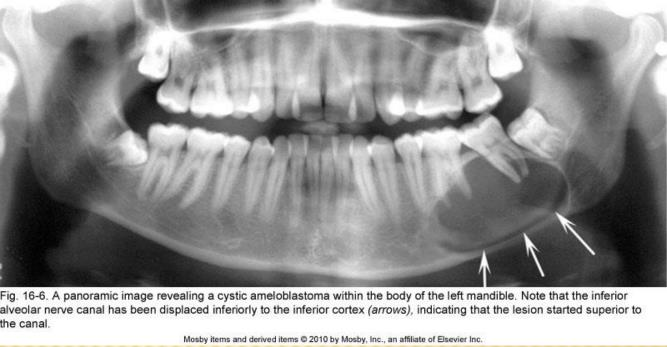
- 4—salivary gland defect or stafne bone cavity
below the canal
not odontogenic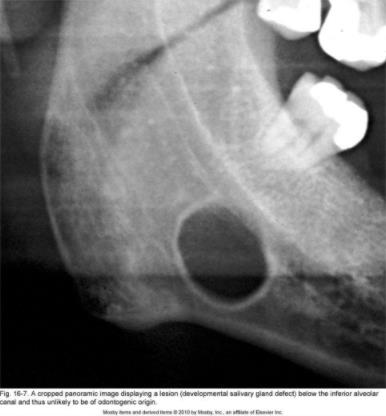
- 5—origin in inf canal it self
could be neural(if symmetrical expansion) or vascular
could be like hemangioma or neurofibroma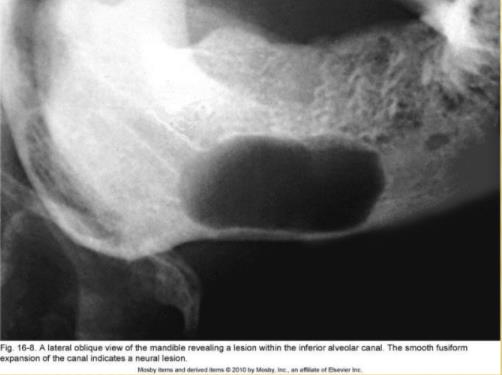
- 6—no cortical periphery
so related to sinus like mucous retention psuodocyst
Dome-shaped, smooth in appearance.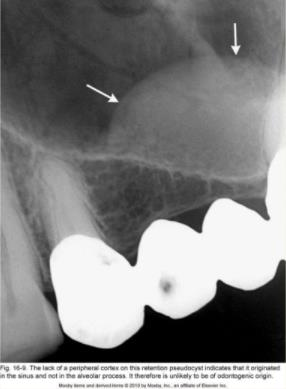
- 7—multiple malignant myeloma
multiple,small punched-out lesions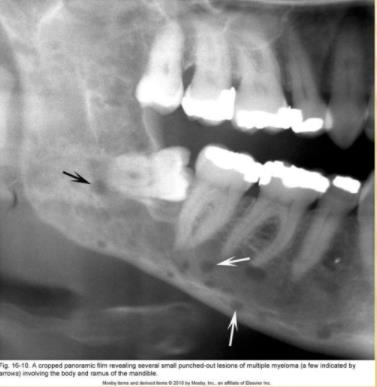
- 8The most common malignancysquamous cell carcinoma
- 9Punched-Out Borderwell defined
no bone
analogous to hole
surrounding has a normal appearance
ex: multiple myeloma - 10Corticated Borderwell defined
margin thin, uniform radiopaque line of reactive bone at the periphery of a lesion
commonly seen with cysts and benign slow-growing tumors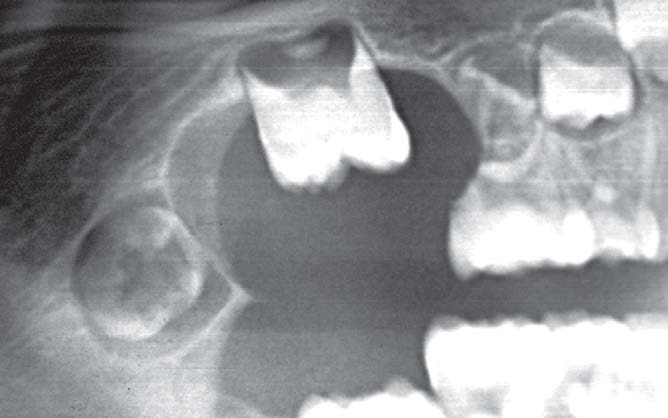
- 11Sclerotic Marginwider zone of transition made up of a thick radiopaque border of reactive bone
not uniform
seen with periapical osseous dysplasia
indicate a very slow rate of growth or the potential for the lesion to stimulate the production of surrounding bone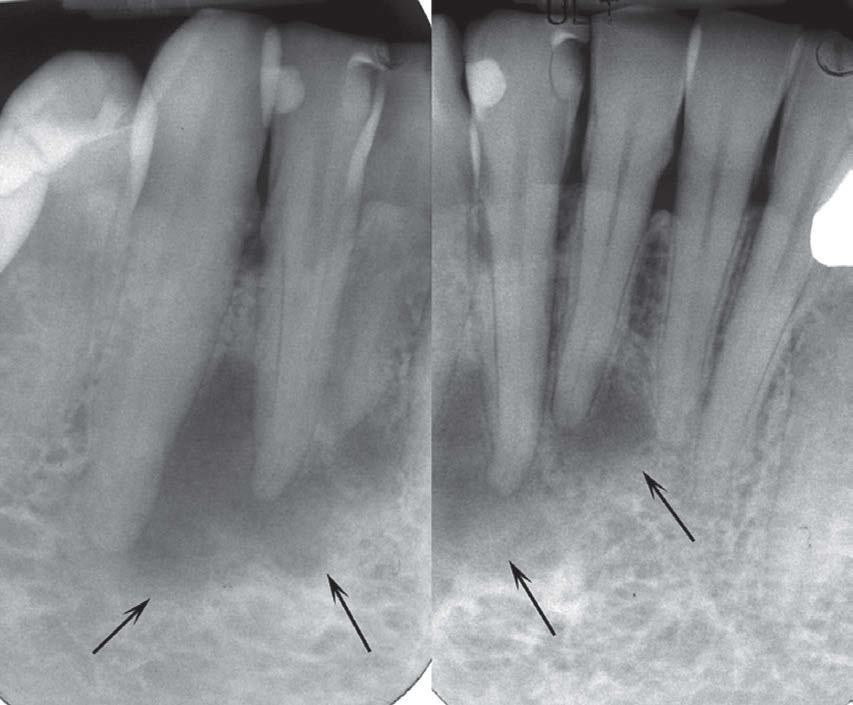
- 12—Sclerotic Margin
periapical osseous dysplasia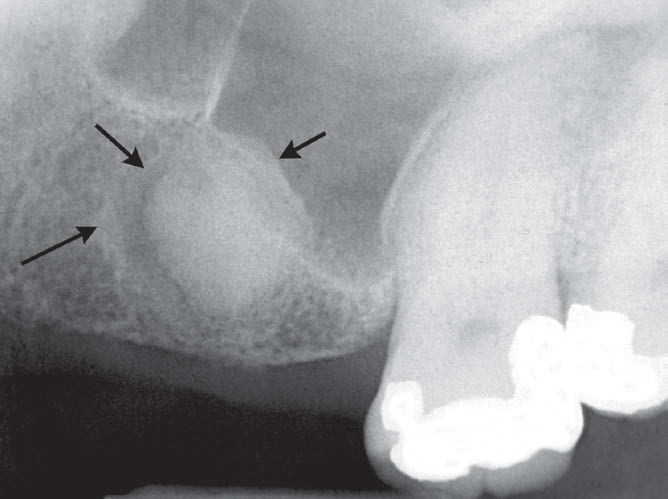
- 13Soft Tissue Capsulewell defined
A radiopaque lesion
presence of a radiolucent line
This soft tissue capsule may be seen in conjunction with a corticated periphery
observed with odontomas and cementoblastomas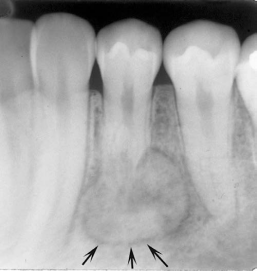
- 14—radiopaque mass associated with the root
of the first bicuspid
prominent radiolucent periphery (arrows) is characteristic of a
soft tissue capsule of this benign cementoblastoma. - 15so this isbenign cementoblastoma.
- 16—well defined
Thin, radiolucent periphery indicating a soft tissue capsule
internal radiopaque structure
odontoma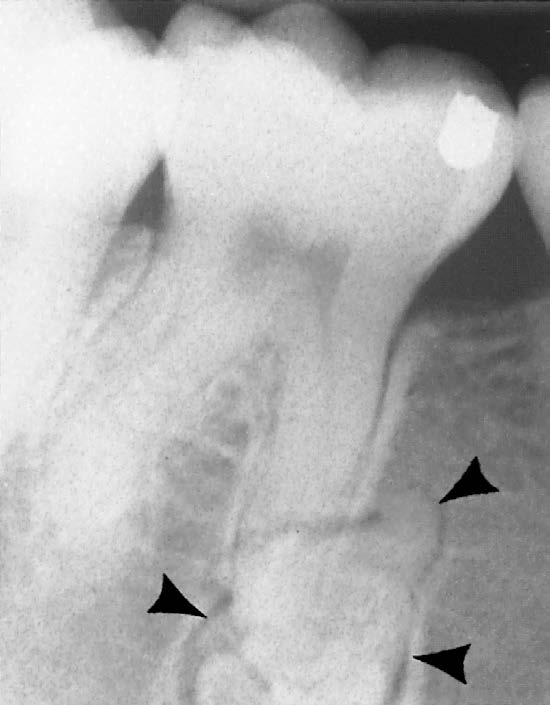
- 17so this isodontoma
- 18Blending Border:ill defined border
gradual-wide zone of transition
Examples : sclerosing osteitis and fibrous dysplasia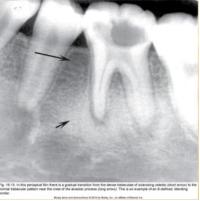
- 19—sclerosing osteitis
ill defined border - gradual - 20Invasive Border:ill defined border
of radiolucency with few or no trabeculae
wide zone of transition
associated → rapid growth and can be seen with malignant lesions.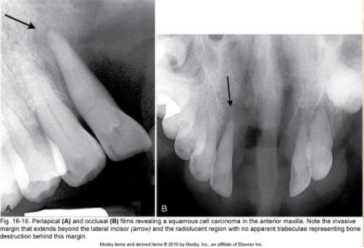
- 21—ill defined Invasive border
squamous cell carcinoma(malignant)
severe periodontitis, or due to LCH – langerhans cell histocytosis) - 22—malignant neoplasm, in this case a lymphoma
ill defined Invasive border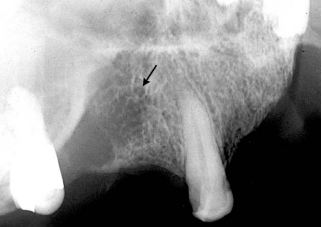
- 23—Scalloped shape
keratocyst (benign)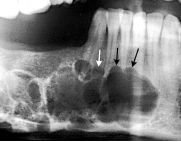
- 24—oval shaped
residual cyst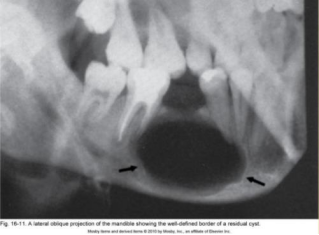
- 25—orange peel
appearance ONLY associated with
fibrous dysplasia.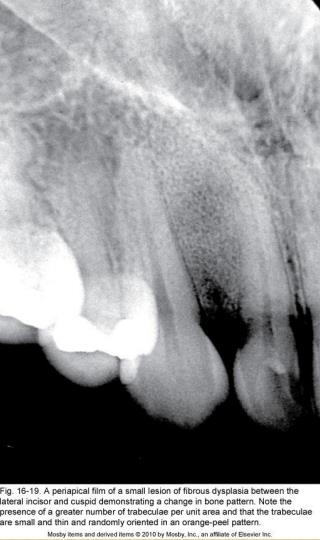
- 26—giant cell granulomas
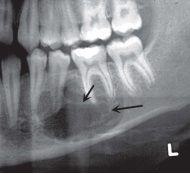
- 27—ameloblastoma - Periapical image
small, soap bubble—like compartment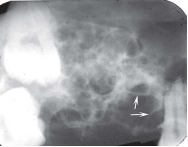
- 28—ameloblastoma - Axial CT
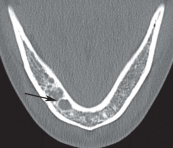
- 29—myxoma
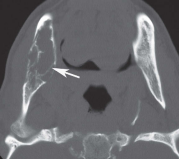
- 30—malignancy lesion
widening of the PDL.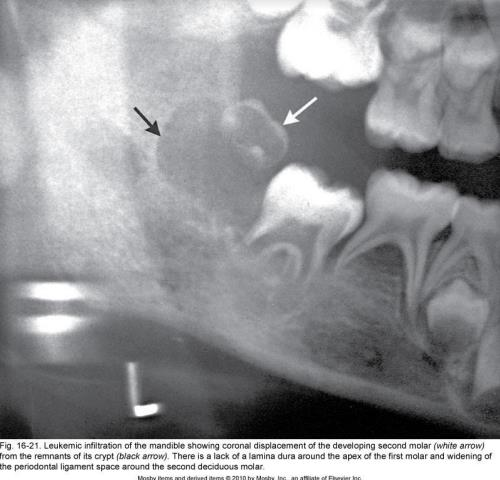
- 31—malignancy
resulting in symmetrical expansions (in this case it is asymmetrical expansions). This is an example
of a lymphoma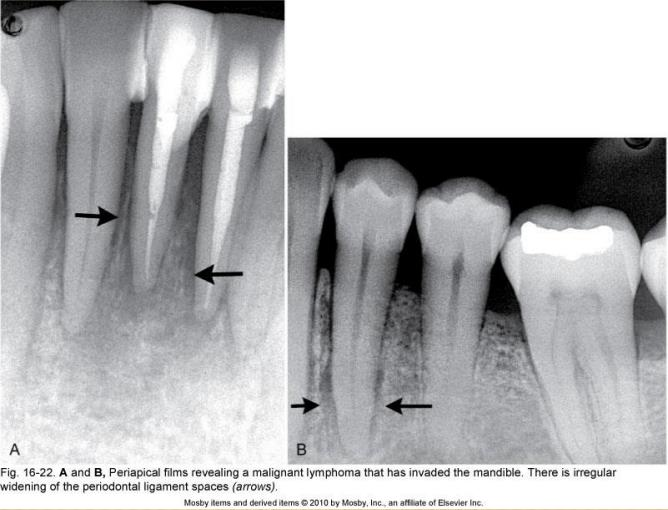
- 32—osteomyelitis.
new periosteal bone
indication of inflammation of bone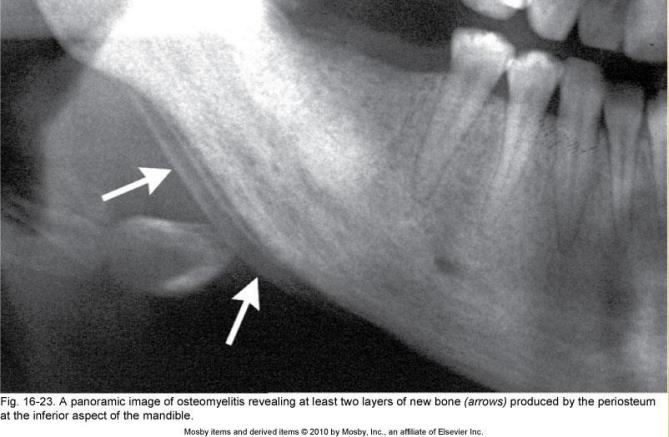
- 33sunray appearance or codman triangles indication ofosteomyelitis
sunray appearance:
1. Malignancy (usually osteosarcoma,
condrosarcoma).
2. Benign tumor like hemangioma - 34—sunray appearance:
1. Malignancy (usually osteosarcoma,
condrosarcoma).
2. Benign tumor like hemangioma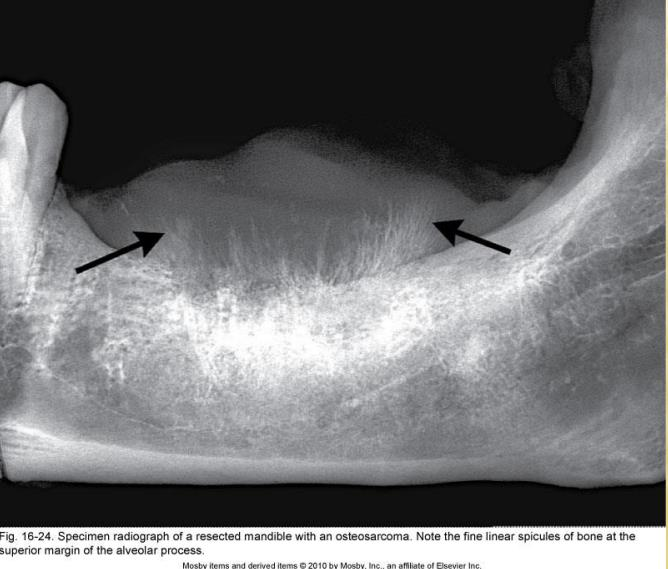
Informationen
- Beschreibung
- dentistry oral Radiology Karteikarten am lecture 3, erstellt von Haneen Kokash am 02/11/2021.
- Erstellt von
- Haneen Kokash
- Aufrufe
- 136
- Tags
- Bewertung