
Quiz
Edexcel (9-1) Topic 7
This quiz has question types that open in the usual player.
Questions in this quiz (12)
1Which shows the correct reaction profile for an endothermic reaction?
- A
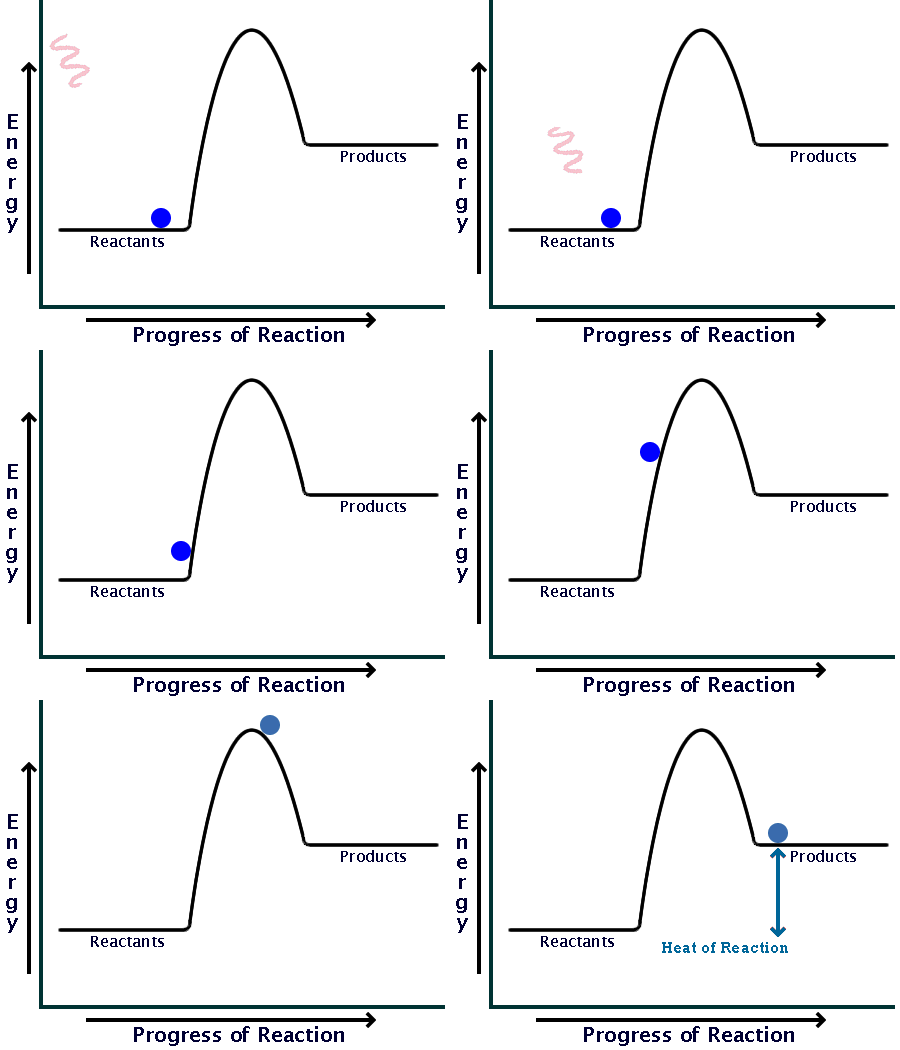
- B
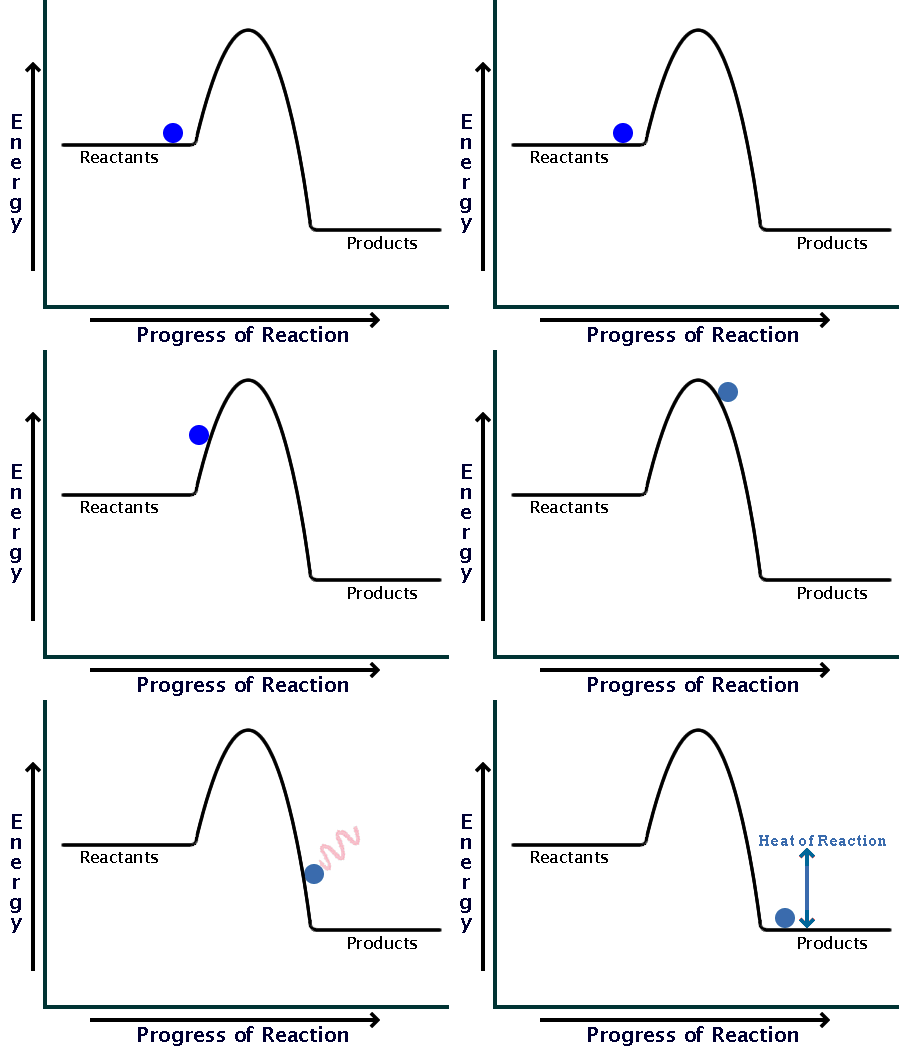
- A
2Bonding breaking is an [blank_start]endothermic[blank_end] process, whilst bond making is an [blank_start]exothermic[blank_end] process. In an exothermic reaction, the energy release from forming bonds is [blank_start]higher[blank_end] than the energy used to break them.
- Aendothermic
- Bexothermic
- Chigher
- Dlower
3Two solutions are added together. The temperature of the reaction goes down. What type of reaction is this?
- Aexothermic
- Bendothermic
4The temperature of 50 ml acid, in a 100 ml beaker was 18 Celsius. 2 g of calcium carbonate was added, and when it finished reacting the temperature was now 42 Celsius. The temperature change was [blank_start]24[blank_end] Celsius.
- A24
5Which line represents the fastest overall reaction?
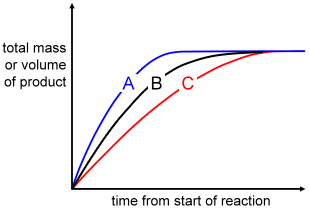
- AA
- BB
- CC
6Select the correct statement about how the rate changes during the reaction.
- Ait increases from zero
- Bit increases, then decreases to zero
- Cit decreases to zero
- Dit stays the same
7Select all the factors that can change the rate of reaction. (hint: there's more than one)
- Apressure
- Bvolume
- Cconcentration
- Dcatalysts
- Etemperature
- Fsurface area
- Gheight
- Hsize of container
8Using data from the table, what was the mean rate of reaction?
[blank_start]0.5[blank_end] cm3/s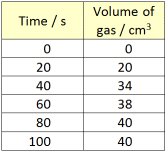
- A0.5
9The activation energy for a reaction was measured with and without a catalyst. Select the value that was the value for the catalysed reaction.
- A55 kJ/mol
- B72 kJ/mol
10Increasing the [blank_start]surface area[blank_end] of reactants frees up more particles that are available to [blank_start]collide[blank_end] right away. This doesn't add more particles in to the reaction, it only allows particles that would have once had to wait for other particles to [blank_start]react[blank_end] first to be available. This leads to more [blank_start]frequent[blank_end], successful collisions and so the rate of reaction increases.
- Acollide
- Breact
- Cfrequent
- Dsurface area
- Econcentration
- Ftemperature
11Which of the following is not an example of an endothermic reaction?
- Aelectrolysis
- Bphotosynthesis
- Cthermal decomposition
- Dcombustion
12Using the given bond energies, calculate the overall energy change of this reaction. (remember that bond breaking is a positive energy process [requires energy], and bond making is a negative energy process [releases energy]).
Overall energy change is [blank_start]-183[blank_end] kJ/mol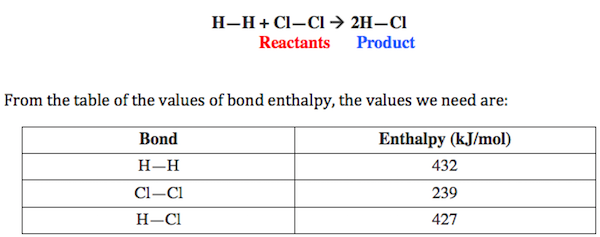
- A-183
Information
- Description
- GCSE Chemistry (Edexcel) Quiz on Edexcel (9-1) Topic 7, created by https:// revisechemistry.uk on 23/03/2018.
- Language
- English
- Views
- 389
- Tags
- Rating
- 4.0 out of 5 · 1 rating Rate this quiz