
Case studies for flooding
Slides in this set (13)
-
- Flooding case studies for GCSE geography.
-
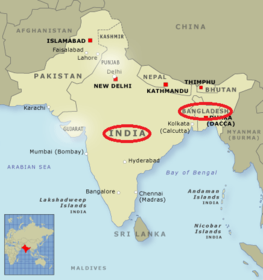
- This flooding was caused by the Brahmaputra and Ganges rivers. It happened in July/August of 2007.
- It mainly affected India and Bangladesh.
- Caption: South Asia, with India + Bangladesh circled.
-
- Heavy rainfall - in one area, 900mm of rain fell in July. This saturated the soil, which ended up increasing the runoff.
- Melting snow - glaciers from the Himalayan mountains melted, increasing discharge in the Brahmaputra river.
- The peak discharge of both rivers happened at the same time, which increased discharge downstream.
-
- Over 2000 deaths
- Around 25 million people made homeless
- 44 schools were completely destroyed
- Many factories closed and many livestock were killed
- 120,000 houses destroyed in India
- 10,000km of roads were destroyed
- Rivers were polluted with rubbish and sewage
-
- Children lost out on education - over 4000 schools were affected by the floods.
- Around 100k people caught waterborne diseases such as dysentry and diarrhoea.
- Flooded fields reduced basmati rice yeilds - prices rose by 10%
- Many farmers and factory workers became unemployed.
-
- Many people didn't evacuate from flooded areas, which blocked transport, which slowed down any attempted evacuations.
- Other governments and international charities distributed food, water and medical aid. Technical equipment like rescue boats were also sent to those who had been stranded.
-
- International charities funded the rebuilding of homes, agriculture and fishing industries.
- Some homes/buildings have been rebuilt on stilts, so they're less likely to be flooded in the future.
-
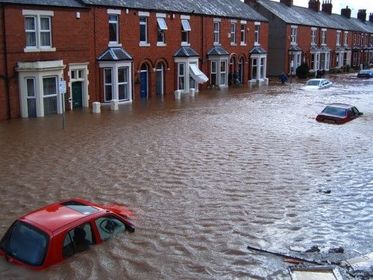
- This case study happened in Carlisle, England, on the 8th of January, 2005. The river that caused the flooding was the Eden river.
-
- Heavy rainfall - 200mm of rain fell in 36 hours. This saturated the soil, increasing the runoff.
- Land use - Carlisle is a large urban area, which means that it is covered in impermeable materials such as concrete and asphalt. This also increased the runoff.
- The river discharge reached 1520 cumecs (to put it into comparison, the average discharge for the Eden river is 52 cumecs.)
-
- 3 deaths
- 3000 people made homeless
- 4 schools were severely flooded
- 350 businesses closed down as a result of the flood
- 70,000 people lost electricity
- Roads and bridges were damaged
- The nearby rivers were polluted with rubbish and sewage
-
- Children lost out on education (one school was closed for months)
- Stress-related illnesses increased
- 3000 jobs at risk
-
- Flooded areas were evacuated
- Many reception areas were opened and provided food and drink for those affected.
- Temporary accomodation was set up.
-
- Community support offering emotional and practical help
- Flood defense schemes were set up - for example, banks were put up on the river Eden.
Information
- Description
- Case studies for flooding in the 'Water on the land' module for AQA Geography GCSE, 2016 specification. Includes: -South Asia (India and Bangladesh, 2007) -England (Carlisle, 2005)
- Created by
- chlopandactyl
- Views
- 67
- Tags
- Rating