
Flashcards
Atomic Structure
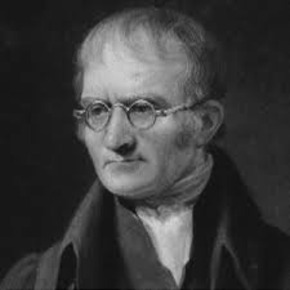
Cards in this deck (22)
- 1—John Dalton
- 2—William Crookes
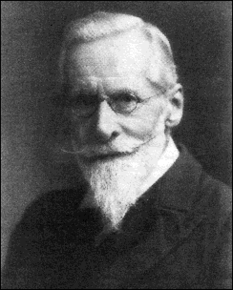
- 3—JJ Thomson
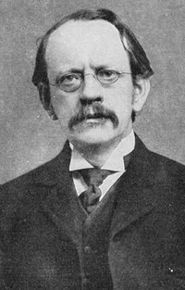
- 4—Johnstone Stoney
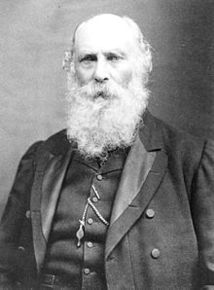
- 5—Robert Millikan
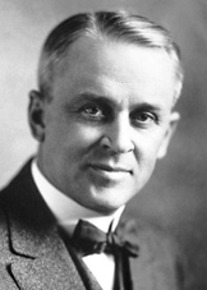
- 6—Ernest Rutherford
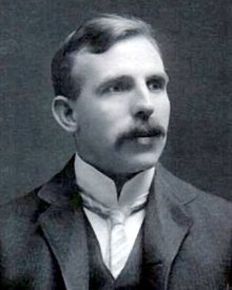
- 7—Niels Bohr
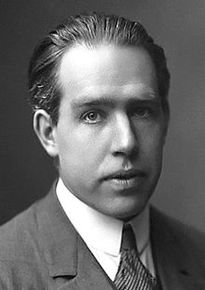
- 8—James Chadwick
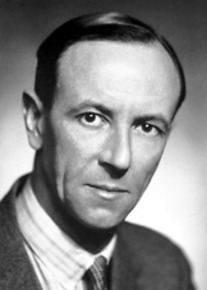
- 9John DaltonA) Atoms are small, solid, indivisible spheres
B) Atoms cannot be created or destroyed
C) The atoms of an element are identical to eachother and have the same mass and chemical properties
D)Acomound contains atons of two or more elements combined together in fixed proportions.
E) Atoms of different elements vary in mass - 10The law of conservation of massMatter is neither created nor destroyed in the course of a chemical reaction
- 11William CrookesMaltese cross experiment
-presence of acthode rays
-travel in straight lines - 12JJ Thomsoncathod rays have a negative charge
ratio of charge to mass for electrons
PLUM PUDDING MODEL - 13Johnstone StoneyElectron
- 14Robert MillikanSize of charge of the electron
OIL DROP EXPERIMENT - 15Ernest RutherfordGOLD FOIL
some went stright through, some were deflected slightly, some bounced back
atom is mainly empty space, particles that were deflected were coming close to the nuceus, particles bouncing back were hitting the nucleus
Atom is mainly empty space with a tiny, dense positive nucleus
Also disconvered protons by firing alpha particles at atoms which caused the protons to be knocked out - 16Niels BohrBohr model of the atom
- 17James ChadwickPresence of neutrons, used alpha particles to knock out neutral particles from atoms of beryllium.
- 18Atomic number (Z)The number of protons in the nucleus of an atom of an element.
- 19Mass number (A)The total number of protons and neutrons in the nucleus of an atom of an element
- 20IsotopesAtoms with the same number of protons but different numbers of neutrons
- 21Relative atomic mass (Ar)The average mass of an atom of an element relative to one-twelfth the mass of an atom of carbon-12
- 22Mass spectrometerUsed to find the abundancies of isotopes
The lower the mass the ore they will be deflected by a magnetic field.
Principle:
Positively charged ions are seperated on the basis of their relative masses when moving in a magnetic field.
Process:
Vaporisation
Ionisation
Acceleration
Seperation
Detection
Information
- Description
- Leaving Certificate Chemistry (Atomic Structure) Flashcards on Atomic Structure, created by eimearkelly3 on 23/06/2013.
- Created by
- eimearkelly3
- Views
- 500
- Tags
- Rating