
Flashcards
1. Anatomy & Physiology of the Ear
Cards in this deck (44)
- 1The Auditory ProcessConverts sound waves (air vibrations) into vibrations within the inner ear (fluid vibrations).
-> These fluid vibrations then excite receptor cells in the inner ear and cause impulses in the auditory nerve.
-> The nerve impulses travel to the auditory cortex and are perceived by the brain as sound. - 2Function of the external earCollection & transmission of sound.
- 3Function of the middle earAmplification of sound.
Transfers sound from air into fluid-membrane waves in the inner ear. - 4Function of the inner ear.Conversion of sound to nerve impulses (cochlea).
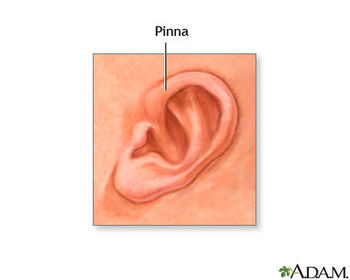
Balance function (Vestibular labyrinth) - 5Components of the Outer Ear (2)1. Pinna
2. External Auditory Canal
(External Auditory Meatus) - 6PinnaVisible part of ear.
Acts as a funnel to collect sound -> directs it to the auditory canal.
Skin closely adherent to cartilage. - 7External Auditory Meatus (External Auditory Canal)Resonating tube -> transmits sound to eardrum.
Extends from the pinna to the eardrum.
Approximately 24mm long.
Outer 1/3 = cartilage
Inner 2/3 = bone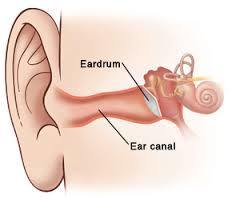
- 8Function of wax in the Ear CanalProtects ear -> traps dust & particles.
Self-cleaning -> moves laterally (outwards) - migrates skin from surface of eardrum and deep external meatus. - 9Physiology of the external ear1. Collection + Localisation of sound
-> detects sound source e.g. left/right - differential volume & sound shadowing effect of head - ear trumpet effect.
2. Resonance
-> ear canal & pinna act like wind instrument.
-> speech frequencies resonate in ear canal & amplify. - 10Components of the Middle Ear (4)1. Tympanic Membrane
2. Tympanic Cavity
3. Ossicles
4. Eustachian Tube
Middle ear cavity = inside temporal bone of the skull. - 11Tympanic Membrane (Eardrum)Separates ear canal from middle ear cavity -> functionally part of middle ear.
Approximately 1cm diameter.
Function = transmits sound from air to ossicles in middle ear.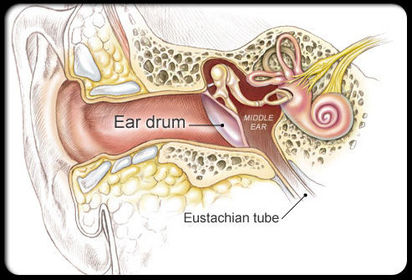
- 123 layers of the Tympanic Membrane1. Outer layer = squamous epithelium (normal skin - continuous with ear canal).
2. Middle layer = fibrous, with radial & circular fibers to stiffen ear drum.
3. Inner layer = mucous membrane. - 13Tympanic CavitySmall cavity surrounding the bones of the middle ear.
Bound by the:
- Oval window
- Round window
- Promontory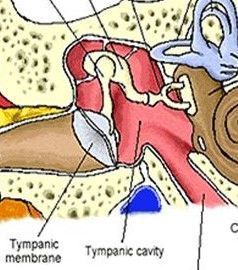
- 14Ossicular ChainWhole system acts as a vibrating membrane with attached bony levers working a small piston to pump sound into fluid of inner ear.
1. Malleus
2. Incus
3. Stapes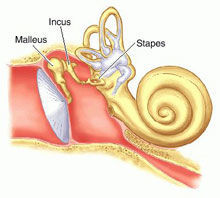
- 15MalleusAlso called the hammer.
Largest of the ossicles.
Vibration of tympanic membrane moves whole malleus. - 16IncusAlso called Anvil.
Acts as a lever transferring vibration from malleus to the stapes. - 17StapesStirrup shaped bone.
Attaches to long process of incus.
Smallest bone in the human body.
Footplate lies in oval window of cochlea - transmits vibrations into inner ear. - 18Stilleto-Heel EffectSize ratio of tympanic membrane to oval window = approximately 20:1.
= Middle ear amplifier. - 19Eustachian TubeVentilates & drains middle ear cavity.
Opens into back of nasal cavity (nasopharynx).
- 1/3 bone, 2/3 cartilage.
- Closed at rest, opens with yawning & swallowing.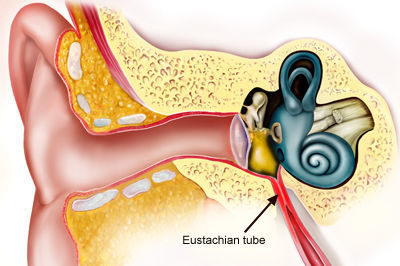
- 20Muscles of the Middle Ear1. Tensor Tympani Muscle
2. Stapedius - 21Tensor Tympani MuscleAttaches to upper end of handle of malleus.
Protects ear against sudden loud sound -> dampens sounds. - 22Stapedius muscleThe smallest skeletal muscle in the human body.
Stiffens stapes as reflex against loud noise. - 23Nerves of the Middle Ear1. Chorda Tympani Nerve = crosses middle ear - transfers taste fibers from tongue & sends fibers to salivary glands in mouth.
2. Facial Nerve (C.N. VII) - 24Glue EarBuild up of mucus in middle ear cavity & eustachian tube -> prevents ear drum from vibrating properly -> causes conductive hearing loss.
- 25Treatment of Glue Ear1. Grommets = small tube inserted into ear - helps drain fluid and maintain ear pressure.
2. T-Tubes = long stay ventilation tube - bigger version of grommet. - 26TympanometryObjective test of middle-ear function.
Tests mobility of ear drum & conduction bones by creating variations of ear pressure in ear canal. - 27Acute Otitis MediaInflammatory disease of the middle ear -> dysfunction of the eustachian tube.
Difference to Glue Ear = also includes other symptoms. - 28Perforated Ear DrumHole in ear drum -> pressure leaks through hole -> eardrum doesn't vibrate properly.
- 29Attic PerforationPerforation in the superior part of the eardrum.
- 30CholesteatomaAn uncommon abnormal collection of skin cells inside the ear.
Associated with chronic infection.
Can lead to erosion of ossicles, inner ear damage, facial nerve damage & in extreme cases, meningitis or brain abscess. - 31Causes of conductive hearing loss (6)1. Wax
2. Perforations
3. Glue Ear
4. Chronic Infection
5. Scarring
6. Damaged Ossicles - 32Inner Ear - 2 main functional parts1. Cochlear system = dedicated to hearing
2. Vestibular system = dedicated to balance - 33Bony LabyrinthOne of the hardest bones in the body - protects nervous system.
- Oval window = way in
- Round window = way out
Composed of 3 parts:
1.Cochlea
2. Vestibule
3. Semicircular Canals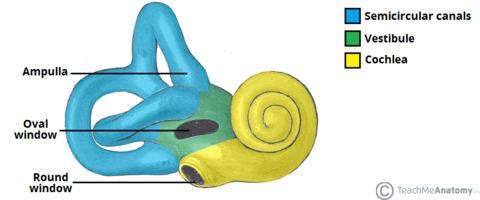
- 34Membranous Labyrinth.Collection of fluid-filled tubes inside the bony labyrinth.
Separated from bony labyrinth by fluid called Perilymph. - 35CochleaSpinal-shaped cavity.
Receives vibrations from Stapes.
Ascending passage = scala vestibuli
Descending passage = scala tympani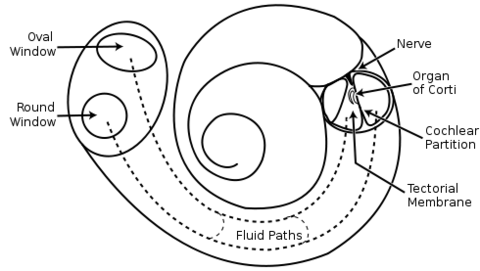
- 36Cochlear Duct (Scala Media)Lies between the Scala Vestibuli & Scala Tympani.
Filled with Endolymph. - 37Basiliar Membrane & Reissner's MembraneFlexible - respond to vibrations travelling up the Scala Vestibuli.
Movement of membranes send vibrations back down to the Scala Tempani. - 38Organ of CortiSituated on the basiliar membrane.
Stimulated as the basiliar membrane vibrates -> sends nerve impulses to the brain via the cochlear nerve.
Nerve impulses are generated by hair cells within the Organ of Corti. - 39Tonotopic OrganizationLow frequency sound are detected at the apex (top of cochlea)
High frequency sound detected at basal turn (base of cochlea) - 40Pure Tone AudiometryKey hearing test used to identify hearing threshold levels of individual -> can determine degree, type & configuration of hearing loss.
Normal hearing threshold = less than 20dB HL in young healthy adults with no ear disease & no family history of deafness or noise trauma. - 41Sensorineural Hearing LossType of hearing loss in which the root cause lies in the inner ear.
Most common cause = age-related (presbycusis).
Second most common cause = noise-induced hearing loss. - 42Vestibular LabyrinthThe sensory system that provides the leading contribution about the sense of balance and spatial orientation -> for the purpose of coordinating movement with balance.
Components:
1. Otolithic Organs (Utricule & Saccule).
2. Semicircular Canals. - 43Utricle & SacculeSense linear accelerations and gravity.
Maintain head & body position.
Initiate reflexes to keep head upright.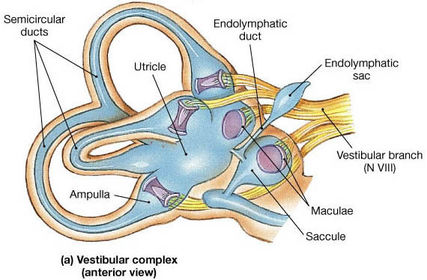
- 44Semicircular Canals3 in each ear.
Detects rotational movements.
Information
- Description
- Masters Medicine (ENT) Flashcards on 1. Anatomy & Physiology of the Ear, created by t.whittingham on 16/01/2016.
- Created by
- t.whittingham
- Views
- 756
- Rating