
Flashcards
Untitled
Cards in this deck (13)
- 1Probabilistic ExperimentA situation where more than one thing can happen and the outcome is potentially uncertain
- 2OutcomeThe result of an experiment or other situation involving uncertainty
- 3Sample SpaceThe set of all possible outcomes of a probability experiment. An exhaustive list of all the possible outcomes of an experiment, presented by only one point in the sample space
- 4EventAny collection of outcomes of an experiment. Formally any subset of the sample space is an event to which a probability is assigned
- 5Elementary / Simple EventAny event which consists of a single outcome in the sample space. The finest possible partition of sample space. In a die toss experiment the elementary events are 1,2,3,4,5 and 6
- 6Compound EventsEvents which consist of more than one outcome. The union of elementary events.
In a die toss experiment the compound events are even = {2,4,6} and odd = {1,3,5} - 7ProbabilityProvides a quantitative description of a likely occurrence of a particular event. Probability is conventionally expressed on a scale from 0 to 1. A rare event closer to 0 and a common event is closer to 1
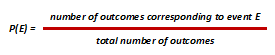
- 8Equally-likely OutcomesIn some experiments all outcomes are equally likely. The equally-likely outcomes model is defined as:
- 9Prior Probability (a-priori)The probability of an event is defined a-priori (before actual experimentation) using the following model:

- 10Probability TheoryThe probability that something will occur can be constructed as the ratio of desired outcomes to the total number of outcomes in a series of experiments:
note: The probability of all outcomes sums to 1
- 11Simultaneous EventsIf two or more events happen at the same time, multiply the probability of each event to work out the probability of simultaneous events.
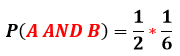
- 12Consecutive EventsIf two or more events happen sequentially,
add the probability of each event to work out the probability of consecutive events.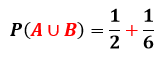
- 13Addition Rule - Mutually Exclusive EventsEvents that cannot occur at the same time. For example, roll a die, what is the probability of rolling a 2 OR a 5?
To calculate the probability that A or B will occur, add the probability of each event together.
Information
- Description
- Flashcards on Untitled, created by Z Barnes on 12/05/2016.
- Created by
- Z Barnes
- Views
- 2
- Rating