
Flowchart
Untitled
Flowchart content
The Postwar and The “Cold War”
THE RISE OF ARABS
THE PEOPLE´S REPUBLIC OF CHINA
THE COLD WAR
ECONOMIC GROWTH
THE IDEOLOGICAL CONFLICT
VIETNAM
The United States carried out the Marshall Plan to revive European economies and rebuild the industrial centers of its war allies, Germany and Italy. Its objective was to prop up capitalism and prevent the influence of communism from growing. Europe was growing and there was a boom in the international society.
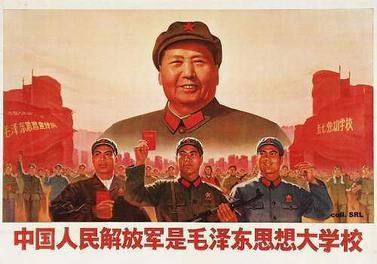
China suffered the economic penetration of the Western powers, the Japanese invasion and the civil war. Since 1920 it was ruled by Komitang, led by Chiang Kaishek. However, he faced opposition from the Communist Party that, led by Mao Zedong, resisted the Japanese invaders. After the world war and the "long march," Mao succeeded and controlled the entire country. In 1949 the "People's Republic of China" was proclaimed as a communist state with nuances characteristic of Chinese cultural peculiarities
After the war an Arab movement of identity and reinvindication was awakened, which achieved the independence and regrouping of several countries of Islamic majority. New states such as Iraq and Iran emerged on the Arabian Peninsula. In those states, oil was exploited and marketed by European and North American companies. The Arab League was formed for cooperation and defense purposes. The Arab rise was expressed in the proclamation of a nationalist republic in Egypt, led by Gamal Abdel Nasser.
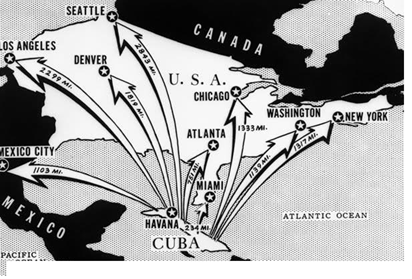
The Cold War was the historical moment between the Soviet Union and its allies with the United States and theirs. The latter constituted a defense agency, the North Atlantic Treaty Organization (NATO). In response, the eastern bloc countries signed the Warsaw Pact for military coordination. The Iron Curtain, which divided the two blocks, rose in Europe.
The struggle between the USSR and the United States was not only for territories or control of resources. It also had ideological content. The Americans and their allies defended capitalism with an open economy. The Soviets advocated a centralized economy and collective ownership, which tended to a fair distribution of resources.
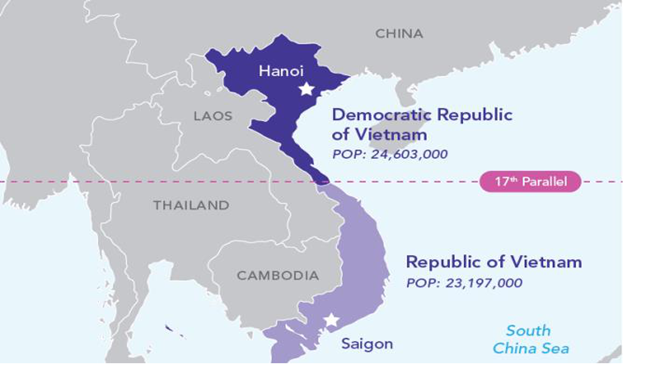
The country was divided between the communist north and the capitalist south. The nationalist and leftist guerrillas of the Viet Cong rose against the government of the latter, supported by the north. The United States supported the south and sent a soldiers and forces, which ended in a civil war. The forces of North Vietnam and the Viet Cong led by Ho Chi Min, with support from Soviet teams, faced a huge US army that carried out massive attacks and saturation bombings. The United States could not win and withdrew its troops in 1975. In a few weeks the country was unified with non-communist government.
Information
- Description
- Flowchart on Untitled, created by Kevin Torres on 05/11/2020.
- Created by
- Kevin Torres
- Views
- 0
- Rating