
Mind map
Defining Biodiversity
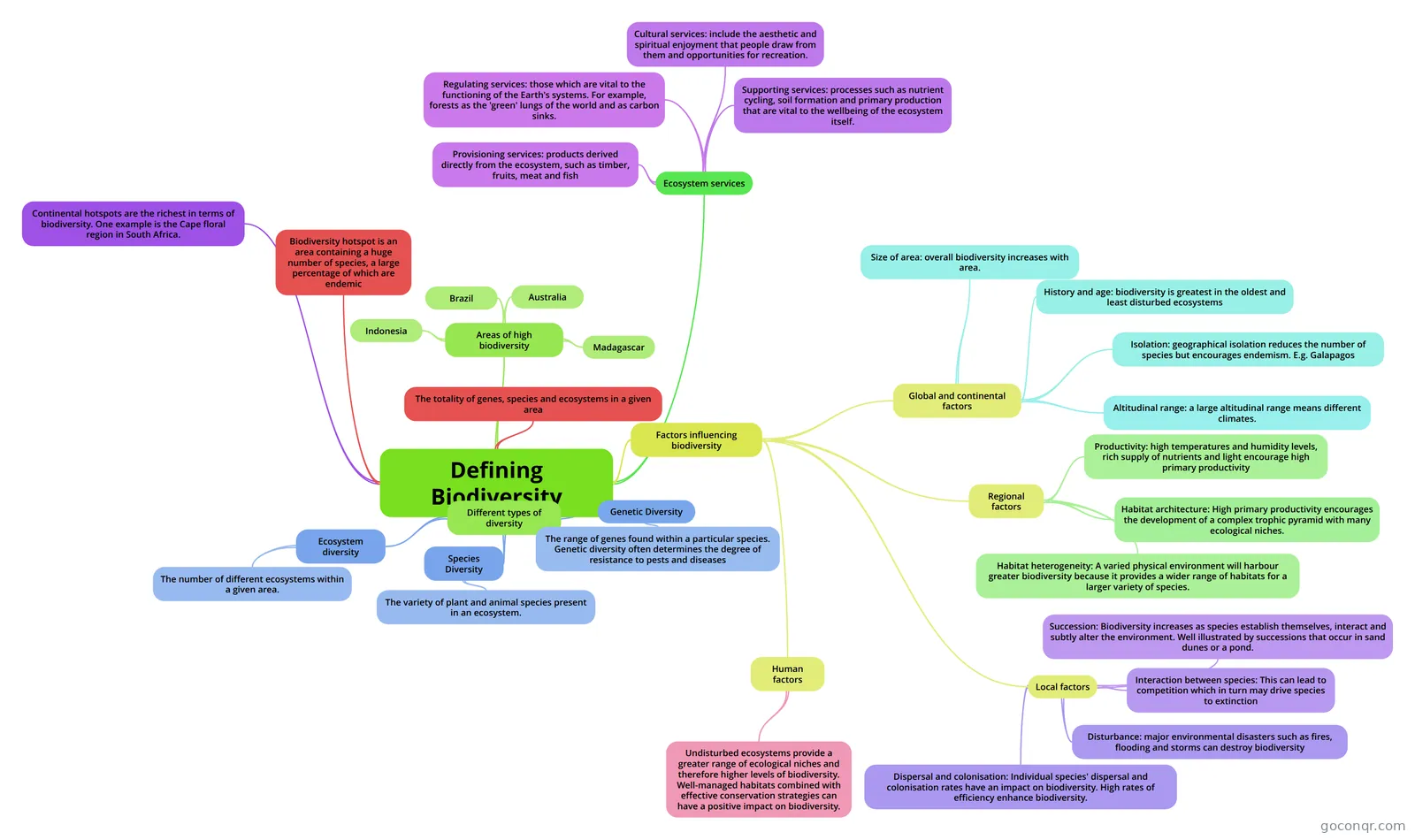
Mind map: Defining biodiversity
Map content
Defining Biodiversity
The totality of genes, species and ecosystems in a given area
Different types of diversity
- Genetic Diversity
- The range of genes found within a particular species. Genetic diversity often determines the degree of resistance to pests and diseases
- Species Diversity
- The variety of plant and animal species present in an ecosystem.
- Ecosystem diversity
- The number of different ecosystems within a given area.
- Genetic Diversity
Factors influencing biodiversity
- Global and continental factors
- Size of area: overall biodiversity increases with area.
- History and age: biodiversity is greatest in the oldest and least disturbed ecosystems
- Isolation: geographical isolation reduces the number of species but encourages endemism. E.g. Galapagos
- Altitudinal range: a large altitudinal range means different climates.
- Regional factors
- Productivity: high temperatures and humidity levels, rich supply of nutrients and light encourage high primary productivity
- Habitat architecture: High primary productivity encourages the development of a complex trophic pyramid with many ecological niches.
- Habitat heterogeneity: A varied physical environment will harbour greater biodiversity because it provides a wider range of habitats for a larger variety of species.
- Local factors
- Succession: Biodiversity increases as species establish themselves, interact and subtly alter the environment. Well illustrated by successions that occur in sand dunes or a pond.
- Interaction between species: This can lead to competition which in turn may drive species to extinction
- Disturbance: major environmental disasters such as fires, flooding and storms can destroy biodiversity
- Dispersal and colonisation: Individual species' dispersal and colonisation rates have an impact on biodiversity. High rates of efficiency enhance biodiversity.
- Human factors
- Undisturbed ecosystems provide a greater range of ecological niches and therefore higher levels of biodiversity. Well-managed habitats combined with effective conservation strategies can have a positive impact on biodiversity.
- Global and continental factors
Areas of high biodiversity
- Australia
- Brazil
- Madagascar
- Indonesia
Biodiversity hotspot is an area containing a huge number of species, a large percentage of which are endemic
Continental hotspots are the richest in terms of biodiversity. One example is the Cape floral region in South Africa.
Ecosystem services
- Provisioning services: products derived directly from the ecosystem, such as timber, fruits, meat and fish
- Regulating services: those which are vital to the functioning of the Earth's systems. For example, forests as the 'green' lungs of the world and as carbon sinks.
- Cultural services: include the aesthetic and spiritual enjoyment that people draw from them and opportunities for recreation.
- Supporting services: processes such as nutrient cycling, soil formation and primary production that are vital to the wellbeing of the ecosystem itself.
Information
- Description
- A-Levels Geography (Biodiversity) Mind Map on Defining Biodiversity, created by simonbreeze1995 on 23/05/2013.
- Created by
- simonbreeze1995
- Views
- 125
- Tags
- Rating