
Mind map
Liver
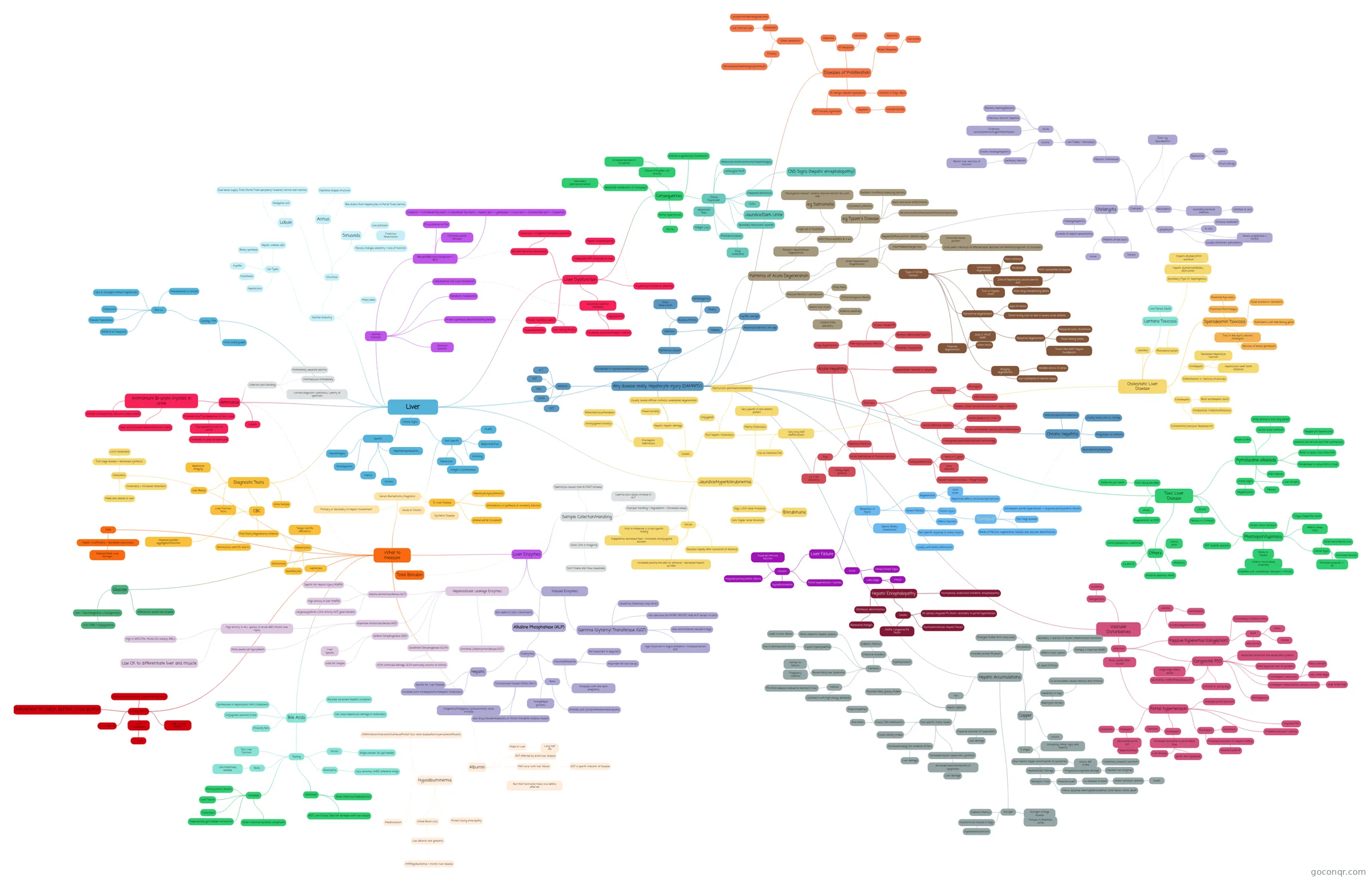
Mind map: Liver
Map content
Liver
Clinical Signs
- Specific
- Hepatomegaly
- Microhepatica
- Icterus
- Ascites
- Hepatoencephalopathy
- Non-Specific
- Depression
- Weight Loss/Anorexia
- Vomiting
- Abdominal Pain
- PU/PD
- Serum Biochemistry Diagnostic
- ID Liver Disease
- Hepatocyte Injury/necrosis
- Alternations in synthesis or excretory function
- Altered portal circulation
- Acute or Chronic
- Systemic Disease
- Primary or Secondary to Hepatic Involvement
- What to measure
- Liver Enzymes
- Hepatocellular Leakage Enzymes
- Soluble: High Activity Released with Damage to membranes ALT/AST increase indicate LIVER DAMAGE, more with Acute, mild with Chronic
- Alanine Aminotransferase (ALT)
- Cytoplasmic Enzyme Highest activity in Hepatocytes and Striated (skeletal + cardiac) muscle 1/2 life Dogs: 60 hours 1/2 life Cats: <24 hours
- Specific for Hepatic Injury (K9/F9)
- High activity in liver (K9/F9)
- Largies/pigs/birds, LOW activity, NOT good indicator
- Aspartate Aminotransferase (AST)
- Cytosolic and Mitochondrial High in Skeletal muscle/Kidney/Pancreas/RBCs High in both acute and chronic liver injury 1/2 life Dogs: 12 hours
- High activity in ALL species, in Acute AND Chronic liver injury
- High in SKELETAL MUSCLES, kidneys, RBCs
- Use CK to differentiate liver and muscle
- More severe cell injury/death
- Sorbitol Dehydrogenase (SDH)
- Liver of all domestic animals. LIVER SPECIFIC. Hepatocellular damage for largies 1/2 life <12 hours Activity declines rapidly after collection, so hurry the testing
- Liver Specific
- Good for Largies
- Glutamate Dehydrogenase (GLDH)
- Cytosolic enzyme Good for assessing liver damage: ruminants, or acute damage: horses
- With continued damage, GLDH eventually returns to normal
- Ornithine Carbamyltransferase (OCT)
- Liver specific in most domestic species Liver damage in cattle/Pigs Like ALT in dogs Uncommonly used (more pigs)
- Induced Enzymes
- Typically Membrane bound Not released into serum with increased membrane permeability Increased serum enzyme activity is the result of induction, because of cholestasis, drug or hormonal effects.
- Alkaline Phosphatase (ALP)
- Operate in alkaline environment Membrane bound enzymes, not released into circulation with increased permeability Useful prognostic indicator for canine osteosarcoma, and of toxic tubular injury in urine levels NO CORRELATION between severity and degree of increase Ruminants have wide reference ranges, so NOT USEFUL for biliary disease Cats: LOW activity and half life, so NOT USEFUL
- Isoenzymes
- Hepatic
- Higher activity in dogs than cats Cats ALP 1/2 life is 6 hours Dogs ALP 1/2 life is 72 hours Elevates in both acute/chronic disease Marked = CHOLESTASIS, w/ cholangitis/biliary cirrhosis/obstruction?
- Specific for Liver Disease
- Increases with intrahepatic/Extrahepatic Cholestasis
- Corticosteroid induced (DOGS ONLY)
- Screening test for hyperadrenocorticism in dogs
- Exogenous/Endogenous glucocorticoids cause increase
- Also drug induced/neoplasms or chronic metabolic disease induced
- Bone
- 1/2 life is 72 hours
- Young/Rapid growers
- Animals with lytic/proliferative bone lesions
- Intestinal/Placental
- Half life <6 hours
- Not important in dogs/cats
- Important for colic horses
- Increases with late term pregnancy
- Hepatic
- Not useful in Cats + Ruminants
- Gamma Glytamyl Transferase (GGT)
- Associated with microvilli of hepatocytes, biliary epithelial cells, renal tubular, mammary cells. Dogs 1/2 life = 3 days
- Caused by Cholestasis (esp. birds)
- Less sensitive, but MORE SPECIFIC than ALP (except in cats)
- Also corticosteroid induced in dogs
- High colostrum in dogs/ruminants > increased serum GGT
- Sample Collection/Handling
- Haemolysis causes mild ALT/AST increase
- Lipemia also causes increase in ALT
- Improper handling > Degradation > Decreased values
- Store <24h in fridge/rtp
- Don't freeze and thaw repeatedly
- Hepatocellular Leakage Enzymes
- Total Bilirubin
- Bile Acids
- Synthesised in hepatocytes from Cholesterol
- Conjugated, secreted in bile
- Emulsify fats
- Recycled via entero-hepatic circulation
- Can cause hepatocyte damage in cholestasis
- Testing
- Horses
- Single sample: NO gall bladder
- Ruminants
- Less sensitive, WIDE reference range
- Birds
- Like mammals, variable
- Test Liver Function
- Increased
- Portosystemic Shunts
- Liver Failure
- Cholestasis
- Inappropriate gall bladder contraction
- Small intestinal bacterial overgrowth
- Decreased
- Small Intestine malabsorption
- NOT Liver Failure. Does not decrease with liver failure
- Horses
- Albumin
- Made in Liver
- Long half life
- NOT affected by acute liver disease
- MAY occur with liver failure
- But HIGH functional mass loss before affected
- NOT a specific indicator of disease
- Hypoalbuminemia
- Malabsorption
- Whole Blood Loss
- Low albumin and globulins
- HYPERglobulinemia = chronic liver disease
- Low albumin and globulins
- Protein losing enteropathy
- Inflammation/Starvation/Cachexia/Protein loss renal disease/burns/parasites/effusions
- Made in Liver
- Glucose
- Affected by severe liver disease
- Liver = Gluconeogenesis + Glycogenolysis
- Loss (75%) = Hypoglycemia
- Cholesterol
- Made and cleared in liver
- Cholestasis = Increased cholesterol
- End stage disease = decreased synthesis,
- LOW cholesterol
- Urea
- Hepatic insufficiency = decreased urea output
- Reduced blood urea Nitrogen
- Hepatic insufficiency = decreased urea output
- Clotting Factors
- Vit. K Dependent
- II, VII, IX
- Decreased hepatic mass = decreased synthesis
- Short half life
- <30% = Long PT/APTT
- IMPORTANT TO CHECK BEFORE LIVER BIOPSY
- Vit. K Dependent
- Liver Enzymes
- ID Liver Disease
- Specific
Diagnostic Tests
- CBC
- Mild, Poorly Regenerative Anemia
- Microcytosis with PS shunts
- Poikilocytosis
- Schistocytes
- Acanthocytes
- Leptocytes
- Target Cell (Fe deficiency)
- Impaired platelet aggregation/function
- Mild, Poorly Regenerative Anemia
- Liver Function Tests
- Urine Sample
- Liver Biopsy
- Abdominal Imaging
- CBC
Jaundice/Hyperbilirubinemia
- Measure Bilirubin with other clinical data
- Causes
- Pre-hepatic: haemolysis
- Unconjugated (initially)
- IMHA/infectious/Metabolic
- Hepatic: Hepatic damage
- Mixed (initially)
- Usually severe, diffuse: cirrhosis, widespread degeneration
- Any disease really: Hepatocyte injury (DAMNITV)
- Numerous Causes
- Infection!
- Routes of Entry
- Hematogenous
- Biliary
- Direct Penetration
- Defence
- Kupffer cells/IgA
- Anatomical barriers: rib cage
- Routes of Entry
- Infection!
- Susceptible to hypoxia/metabolite disturbance
- Releases:
- ALT
- AST
- SDH
- GLDH
- OCT
- Patterns of Acute Degeneration
- Random Hepatocellular Degeneration
- single cell or multifocal
- INFECTIOUS AGENTS: B, V etc.
- e.g Salmonella
- "Paratyphoid nodules" random discrete necrotic foci with mØ
- e.g Tyzzer's Disease
- Clostridium piliforme
- Random, multifocal-coalescing necrosis
- bacilli and acute inflammation
- lab animals/foals/neonates/immunocompromised
- e.g Salmonella
- Zonal Hepatocellular Degeneration
- Regular/Diffuse pattern: defined regions
- Pale/friable/enlarged liver
- Enhanced lobular pattern
- Initial pallor (necrosis) of affected zone, becomes red (dilation/congestion of sinusoids)
- Types of Zonal Pattern
- Centrilobular degeneration
- Most common
- Periacinar
- Zone of hepatocytes around central vein
- Most susceptible to hypoxia
- Most drug metabolising ability
- Toxic or Hypoxic insult
- Paracentral degeneration
- Apex of acinus
- Direct-acting toxin or due to severe, acute anemia
- Midzonal degeneration
- Zone 2: MOST RARE
- Some toxins
- Periportal degeneration
- Periportal zone: Uncommon
- Direct acting toxins
- Toxins that don't require metabolism
- Bridging degeneration
- Variable across >2 zones
- Just confluence of necrotic areas
- Centrilobular degeneration
- Massive Necrosis (submassive)
- Often fatal
- Entire/contiguous lobules
- Severe toxic insult
- Amanita deathcap
- Vitamin E/Se deficiency
- Random Hepatocellular Degeneration
- Acute Hepatitis
- Infectious/systemic infection
- Viruses: Herpes/FIP
- Bacteria: Salmonella/Tyzzer's
- Parasites: Toxoplasma
- Fungi: Zygomycetes
- Hepatocellular necrosis +/- apoptosis
- Examples
- Herpesvirus
- Abortigenic
- affects foetus livers
- random, small necrotic foci and multi organ inflamm.
- Canine Infectious Hepatitis
- Canine Adenovirus 1 (CAV-1)
- Acute, centrilobular necrosis and inflammation
- Widespread petechial/ecchymotic hemorrhage
- Campylobacteriosis
- C. fetus or C. jejuni
- ovine abortion
- Random hepatic necrosis - "Target" lesions
- Hepatosis Dietetica
- Pigs
- Vit. E./Se deficiency
- Young, rapid growers
- Acute submassive to massive necrosis
- Pigs
- Herpesvirus
- Responses to Injury
- Regeneration
- ECM intact
- Repetetive affects structure and function
- Severe: Fibrosis
- Chronic injury
- Affects function
- "Cirrhosis"
- Bands of fibrosis: regenerative nodules and vascular abnormalities
- Intrahepatic portal hypertension -> acquired portosystemic shunts
- End stage disease
- Severe: Biliary Hyperplasia
- Non-specific response to many insults
- usually with biliary obstruction
- Liver Failure
- Acute
- Varied Clinical Signs
- Late stage
- Icterus
- Hepatic Encephalopathy
- CNS/Neuro abnormalities
- Behavioral changes
- Causes
- K9/F9: Congenital PS Shunt
- Ruminants/Horses: Hepatic Failure
- All species: Acquired PS Shunt, secondary to portal hypertension
- Incompletely understood metabolic encephalopathy
- CNS/Neuro abnormalities
- Chronic
- Hypoalbuminemia
- Portal hypertension = ascites
- Acquired portosystemic shunts
- Impaired immune function
- Acute
- Regeneration
- Infectious/systemic infection
- Chronic Hepatitis
- Granulomatous/Mycobacteria
- Progresses to Cirrhosis
- Usually toxins and Cu storage
- Neutrophils/Lymphocytes
- Toxic Liver DIsease
- Acute
- Regeneration w/ ECM
- Chronic
- Fibrosis +/- Cirrhosis
- Most are predictable
- Some are just weird
- Pyrrolizidine alkaloids
- Plant Species
- Metabolised to active form in liver
- Binds to lipids, cross links DNA
- prevents cell division, but DNA synthesises
- Megalocytic hepatocytes
- prevents cell division, but DNA synthesises
- Acute is rare
- Chronic most common
- Small amounts over long period
- Clinical Signs
- Megalocytosis
- Fibrosis
- Liver atrophy
- Phomopsin/lupinosis
- Fungus Diaporthe toxica
- Affects sheep most
- Binds to tubulin
- Inhibits microtubule assembly
- interfere with intracellular transport + mitosis
- Inhibits microtubule assembly
- Chronic most common
- Clinical Signs
- Small, hard, fibrotic liver
- Scattered necrosis
- Photosensitisation +/- HE
- NOT skeletal lupinosis
- Others
- Aflatoxins
- Amanita deathcap (fatal)
- Zamia palm
- Cu and Fe
- White phosphorus, rodenticide
- Acute
- Vascular Disturbances
- Anemia
- Atrophy/degeneration/necrosis
- Centrilobular
- Telangiectasis
- Incidental
- infarction
- Rare, usually lobar torsion
- Passive hyperemia (congestion)
- Disturbance of blood outflow
- RCHF
- Acute
- Chronic
- Also Ascites
- Congenital PSS
- Abnormal connection b/w portal and systemic
- blood bypasses liver to systemic
- intrahepatic (failed ductus venosus closure)
- large breed dogs
- Extrahepatic (vena cava)
- More common
- cats, small dogs
- single large calibre vessel
- NO PORTAL HYPERTENSION/ASCITES
- common in young dogs
- Microhepatica
- Portal hypertension
- Acquired PSS
- Increased portal pressure
- Prehepatic
- Uncommon
- Obstructed portal vein
- neoplasm/mass
- Intrahepatic
- Common
- Increased resistance to portal blood flow
- Liver disease
- portal vein hypoplasia
- Posthepatic
- Uncommon
- Increased resistance to hepatic outflow
- thrombosis/RCHF
- increased pressure = ascites
- Anemia
- Hepatic Accumulations
- Fat
- Hepatic lipidosis
- Rounded lobes, greasy, friable
- Non-specific, many causes
- Excess TAG mobilisation
- Starvation
- Endocrinopathies
- Excess dietary intake
- Decreased energy for oxidation of fats
- Liver damage
- Decreased hepatic apoprotein synthesis
- decreased export/production of lipoprotein
- Liver damage
- decreased export/production of lipoprotein
- Impaired secretion of lipoproteins
- Liver damage
- Excess TAG mobilisation
- Examples
- Ketosis
- ruminants with high energy demands
- FFA from adipose oxidised to ketones in liver
- Bovine fatty liver syndrome
- Pregnancy toxemia
- Similar to ketosis
- Equine Hyperlipidemia
- Due to anorexia and stress
- Feline idiopathic hepatic lipidosis
- Leads to liver failure
- Endocrine disorders
- Diabetes mellitus
- Hypothyroidism
- Ketosis
- Hepatic lipidosis
- Glycogen
- Diabetes Mellitus
- Glucocorticoid induced in dogs
- Hyperadrenocorticism
- Glycogen storage disease
- Pompes in Brahman cattle
- Copper
- 3 stages
- Slow hepatic copper accumulation in lysosomes
- Hepatocellular Damage
- Hemolytic Crisis
- Stressful event
- Cu released to blood
- severe hemolytic anemia
- Death
- severe hemolytic anemia
- Cu released to blood
- Icterus, dyspnea, haemoglobinuria/emia, renal failure, shock, death
- Stressful event
- Progressive organelle damage
- Elevated liver enzymes
- Hemolytic Crisis
- excess diet intake
- Cholestasis prevents excretion
- Hepatocellular Damage
- Increasing clinical signs and severity
- Slow hepatic copper accumulation in lysosomes
- Chronic
- hereditary in dogs
- Bedlington terriers
- Cu accumulates, causes necrosis and cirrhosis
- 3 stages
- Amyloidosis
- Insoluble protein (B pleats)
- in space of Disse
- Affects most species
- Primary = inherited (RARE)
- Secondary = reactive to chronic inflammation (common)
- Enlarged, friable, firm waxy livers
- Fat
- Diseases of Proliferation
- HC benign nodular hyperplasia
- Common in Dogs >6y/o
- Idiopathic
- multiple lesions
- NOT clinically significant
- HC Neoplasia
- Adenoma
- Carcinoma
- Biliary Neoplasia
- Adenoma
- Carcinoma
- Other neoplasms
- Primary
- Fibrosarcoma/Haemangiosarcoma etc.
- Metastatic
- Liver common site
- Lymphoma/Haemangiosarcoma
- Primary
- HC benign nodular hyperplasia
- Numerous Causes
- Post hepatic: Cholestasis
- Conjugated
- Obstruction: pancreatitis/choleliths
- Cholestatic Liver Disease
- Jaundice
- Photosensitisation
- Secondary (Type III), hepatogenous
- Hepatic dysfunction/biliary obstruction
- Impairs phylloerythrin excretion
- Hepatic dysfunction/biliary obstruction
- Secondary (Type III), hepatogenous
- Intrahepatic
- Most Common
- Decreased hepatocyte function
- hepatocytes swell, block canaliculi
- Inflammation +/- necrosis of ductules
- Extrahepatic
- Block extrahepatic ducts
- Intraluminal: Choleliths/Parasites
- Extraluminal pressure: Neoplasia etc.
- Lantana Toxicosis
- Liver Failure, Death
- Sporodesmin Toxicosis
- Mycotoxin from fungus
- Perennial Rye Grass
- Facial eczema in ruminants
- Toxic to bile ducts, necrotic cholangitis
- Necrosis of biliary epithelium
- Ruminants: Left lobe boxing glove
- Mycotoxin from fungus
- Pre-hepatic: haemolysis
- Use as indicative Tool
- Mainly Cholestasis
- Very specific in non-anemic patient
- Very long half life/Persistent
- Mainly Cholestasis
- Horses
- Mild to Moderate is a non-specific finding
- Inappetence, decreased feed = increased unconjugated bilirubin
- Increased plasma bilirubin w/ anorexia = decreased hepatic up-take
- Resolves rapidly after resolution of anorexia
- Bilirubinuria
- Dogs: LOW renal threshold
- Cats: Higher renal threshold
Ammonia
- Produced in GIT by breakdown of AA + Urea
- Transported to Liver via portal
- Converted to Urea via urea cycle
- Transported to Liver via portal
- Volatile
- Collection and Handling
- Immediately separate plasma
- Chill/measure immediately
- Limited diagnostic usefulness: Lability of specimen
- Ammonium Bi-urate crystals in urine
- Normal in Dalmatians, CAN be in other breeds
- Seen with increased blood ammonium levels
- Produced in GIT by breakdown of AA + Urea
Cytology: FNA
- Ultra-sound guided
- Tells us:
- Inflamm or Neoplasia
- Nodular hyperplasia
- Cholestasis
- Lipid or Glycogen without hepatocytes
- Interpretation is limited
Normal Anatomy
- Many lobes
- Cell Types
- Hepatocytes
- Endothelial
- Kupffer
- Biliary epithelial
- Hepatic stellate cells
- Structure
- Lobule
- Hexagonal unit
- Dual blood supply: From Portal Triad (periphery) towards Central vein (centre)
- Acinus
- Diamond shaped structure
- Bile drains from hepatocytes to Portal Triad (centre)
- Sinusoids
- Low pressure
- Extensive fenestration
- Fibrosis changes anatomy = loss of function
- Lobule
Normal Function
- Bilirubin/Bile Acid metabolism > BILE
- Emulsification of Fat
- Eliminate waste: Bilirubin
- Canaliculi -> intralobular bile ducts -> interlobular bile ducts -> hepatic duct -> gallbladder -> cystic duct -> Common bile duct -> Duodenum
- Carbohydrate and Lipid metabolism
- Xenobiotic metabolism
- Protein synthesis: albumin/clotting factors
- Immune function
- Bilirubin/Bile Acid metabolism > BILE
Liver Dysfunction
- Bilirubin Secretion disturbance
- Cholestasis -> Hyperbilirubinemia (Jaundice)
- Inadequate NH3 converted to Urea
- Hepatic Encephalopathy
- Protein synthesis defect
- Hypoalbuminemia
- Low clotting factors
- Abnormal Carb/Fat metabolis
- Hypoglycemia
- Decreased cholesterol/hepatic lipidosis
- Acquired portosystemic shunting
- Consequences
- Portal Hypertension
- Ascites
- Abnormal metabolism of chlorophyll
- Secondary photosensitisation
- Failure of Kupffer cell activity
- Increased bacteria in circulation
- Altered drug/chemical metabolism
- Clinical Expression
- Large functional reserve, 70-75% loss required. Acute or Chronic damage +/- failure Very variable Clinical signs
- Lethargy/ill thrift
- Abdominal distension/Ascites/hepatomegaly
- CNS Signs (hepatic encephalopathy)
- Inappetance/anorexia
- V+/D+
- Jaundice/Dark Urine
- Abdominal Pain
- Weight Loss
- Secondary hemostatic disorder
- Photosensitisation
- Drug intolerance
- Portal Hypertension
- Bilirubin Secretion disturbance
Cholangitis
- Inflamm of bile ducts
- Acute
- Chronic
- Cholangiohepatitis
- Extends to hepatic parenchyma
- Examples
- Toxin: e.g. Sporodesmin
- Neutrophilic
- Ascending bacterial infection
- Common in cats
- Ascending bacterial infection
- Lymphocytic
- In cats
- Slowly progressive, v. chronic
- Immune mediated?
- usually concurrent pancreatitis
- Destructive
- occurs ind ogs
- idiopathic
- Parasitic (trematode)
- Liver Flukes = fascioliasis
- Acute
- Extensive necrosis/hemorrhage/inflammation
- Infectious necrotic hepatitis
- Bacillary haemoglobinuria
- Chronic
- Chronic cholangiohepatitis
- peribiliary fibrosis
- fibrotic liver and loss of function
- Acute
- Liver Flukes = fascioliasis
- Inflamm of bile ducts
Information
- Description
- VET377 Pathology Mind Map on Liver, created by Bertrand Ng on 09/10/2017.
- Created by
- Bertrand Ng
- Views
- 6
- Rating