
Mind map
C6: Making Useful Chemicals

Map content
C6: Making Useful Chemicals
Strong and Weak Acids
- Acids can be Strong or Weak
- Strong acids ionise completely in water and all of the acid molecules dissociate to relate H+ ions
- Weak acids do not fully ionise in solution and only a small proportion of acid molecules dissociate to release H+ ions.
- Acids can be Strong or Weak
Reactions of Acids
- Acid + Metal Hydroxide -> Salt + Water
- HCl + NaOH -> NaCl + H2O (sodium chloride)
- Acid + Metal -> Salt + Hydrogen
- 2HCl + Mg -> MgCl2 + H2 (Magnesium Chloride)
- Acid + Metal Carbonate -> Salt + Water + Carbon Dioxide
- 2HCl + Na2CO3 -> 2NaCl + H2O + CO2 (Sodium Chloride)
- Acid + Metal Hydroxide -> Salt + Water
Dynamic Equilibrium
- Reversible Reactions
- Reaction can go both ways
- Reversible Reactions
Rate of Reaction
- Increasing Temperature
- Increasing this makes the particles move faster, so they collide more frequently. Also, it increases the energy of the collisions.
- Increasing Concentration
- Means there are more particles of reactant in the same volume which makes collisions more likely.
- Smaller Solid Particles
- if one reactant is a solid, breaking it into smaller pieces will increase its surface area to volume ratio. The particles around it will have more area to work on, so the frequency of collisions will increase.
- Catalysts
- Speeds up the reaction by providing a different reaction pathway with a lower activation energy
- Increasing Temperature
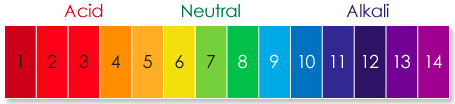
Acids, Alkalis and pH
Images and files in the map
Information
- Description
- GCSE Core Science Mind Map on C6: Making Useful Chemicals, created by Blerta Morina on 20/04/2019.
- Created by
- Blerta Morina
- Views
- 6
- Tags
- Rating