
Mind map
Basic Resuscitation.
Map content
Basic Resuscitation.
The formation
- in cardiopulmonary resuscitation (CPR)
- It is essential for healthcare professionals
- that they have to face in his work
- a cardiorespiratory arrest
- having a lot of weight the self-efficacy
- of each professional
- to organize or execute a certain task
- in basic resuscitation
- there are several instruments
- that allow to measure
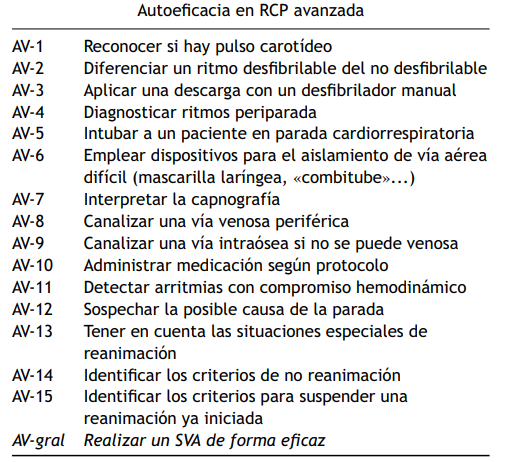
- self-efficacy in advanced CPR in the adult
- low self-efficacy
- can inhibit behavior
- even when you have all the necessary resources
- can inhibit behavior
- about the main
- CPR technical skills
- on how to improve a future CPR
- CPR technical skills
- low self-efficacy
- self-efficacy in advanced CPR in the adult
- these scales
- dispose
- of 3 measures of self-efficacy
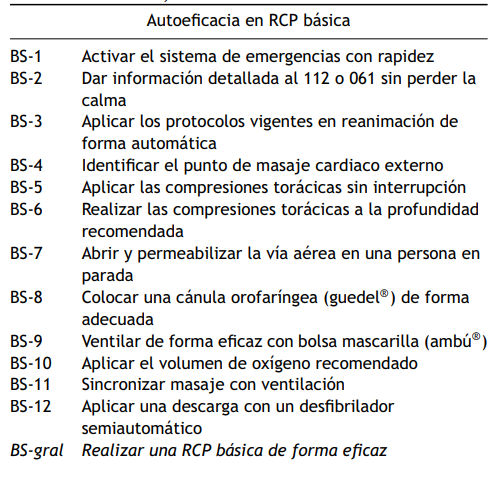
- in RCP
- basic
- with 12 items
- global
- with 12 items
- advanced
- with 15 items
- global
- gathers
- the two previous scales
- with 27 ítems
- the two previous scales
- gathers
- global
- with 15 items
- basic
- with sufficient guarantees
- of reliability and evidence
- of factorial validity
- liable to be used together
- or separately
- to develop and evaluate
- specific learning programs
- about professional skills
- to perform an effective CPR.
- about professional skills
- specific learning programs
- to develop and evaluate
- or separately
- liable to be used together
- of factorial validity
- of reliability and evidence
- in RCP
- of 3 measures of self-efficacy
- dispose
- that allow to measure
- there are several instruments
- in basic resuscitation
- to organize or execute a certain task
- can be considered in training initial
- allowing to evaluate the security
- to perform CPR before and after training
- allowing to evaluate the security
- of each professional
- having a lot of weight the self-efficacy
- a cardiorespiratory arrest
- that they have to face in his work
- It is essential for healthcare professionals
- in cardiopulmonary resuscitation (CPR)
Cardiopulmocerebral resuscitation
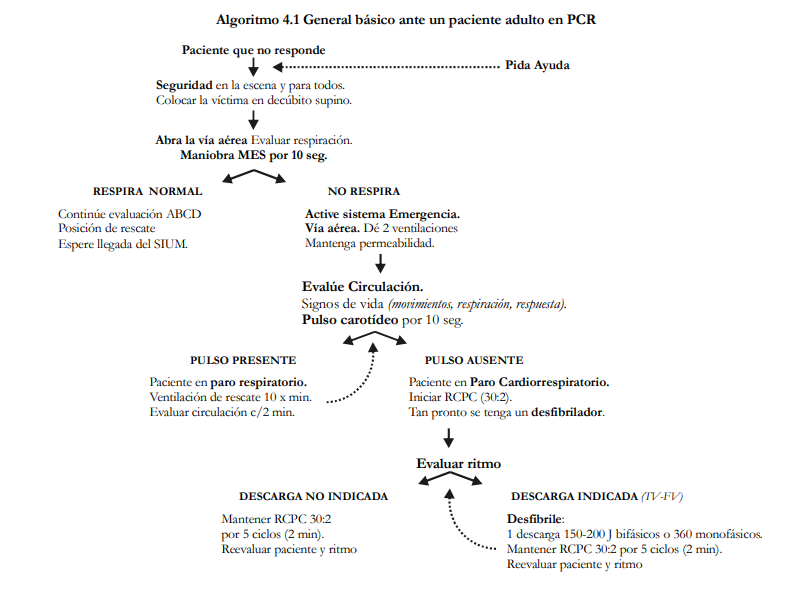
- They are all maneuvers performed
- to restore oxygenation and efficient circulation
- in an individual in PCR
- with the objective of achieving an adequate recovery of superior nerve function
- in an individual in PCR
- to restore oxygenation and efficient circulation
- It includes a series of steps
- cascading
- that expedite the rapid recognition of main vital signs
- it is also applicable
- for any type of medical event or traumatic
- The steps to follow
- for basic cardiopulmonary resuscitation are
- First
- on stage you must be sure
- for both the patient and the health staff
- on stage you must be sure
- Determine neurological response
- It can
- call out, shake and pinch (if there is trauma, do not shake)
- If the patient responds
- leave it in the position found
- unless it hurts
- find out what happened
- try to help
- evaluate from time to time.
- leave it in the position found
- if you don't answer
- activate the emergency system for CPR
- Place it on
- supine position (face up)
- support the head and neck
- on a firm surface
- without raising above the feet
- on a firm surface
- support the head and neck
- supine position (face up)
- It can
- Airway management
- OPEN THE AIRWAY
- head extension and elevation chin
- if there is trauma
- oblige
- to use jaw traction
- and to the control of the cervical spine
- oblige
- if there is trauma
- head extension and elevation chin
- CHECK THE BREATH
- for 10 sec. By means of the MES maneuver
- with the head of rescuer
- 5 cm from the mouth of the victim
- Listen to the breathing sounds.
- Feel the breath on your cheek
- looking towards the chest
- observe chest movements
- 5 cm from the mouth of the victim
- with the head of rescuer
- for 10 sec. By means of the MES maneuver
- if the patient breathes normally
- put yourself in rescue position
- check it out frequently
- put yourself in rescue position
- If the individual does not breathe
- can be
- There is a respiratory arrest alone or associated with PCR
- activate the emergency system
- check track patency
- Give 2 to 5 rescue breaths
- 1 second duration
- watch the chest rise in each breath
- If there is no air passage
- head replacement
- retry again
- the failure in a second attempt
- the failure in a second attempt
- retry again
- head replacement
- If there is no air passage
- Close the nose to prevent air leakage
- watch the chest rise in each breath
- 1 second duration
- Give 2 to 5 rescue breaths
- there is an airway obstruction
- in this case it is necessary
- unblock before performing another maneuver
- supondría una obstrucción de vías
- unblock before performing another maneuver
- in this case it is necessary
- There is a respiratory arrest alone or associated with PCR
- can be
- OPEN THE AIRWAY
- Check circulation
- Determine presence
- pulse
- to pinpoint
- if the heart is beating (10 seconds)
- in parotid region
- if the heart is beating (10 seconds)
- to pinpoint
- pulse
- if there is a pulse but there is no breathing
- presence of respiratory arrest
- start
- one breath every 5 seconds (12 per min.)
- evaluate every two minutes
- one breath every 5 seconds (12 per min.)
- start
- presence of respiratory arrest
- if there is no breath or pulse
- patient is on PCR
- and you should start CPR immediately
- Apoyo circulatorio
- compressions cardiac
- First
- accommodate the patient
- on a surface firm
- supine position
- accommodate the patient
- The area of compressions
- midpoint of the sternum
- between the two bases of the teats in the center of the thorax
- Palm is placed
- hand in hand dominant
- over the center of the chest
- los dedos se entrelazan
- the arms should be
- in position straight
- and perpendicular about the area of understanding
- in position straight
- the arms should be
- los dedos se entrelazan
- the palm of the other About this
- fingers intertwine
- over the center of the chest
- the heel of a hand 2 fingers
- above the tip of xiphoid appendix
- hand in hand dominant
- it is tried not press
- over the ribs nor over the abdomen
- Palm is placed
- between the two bases of the teats in the center of the thorax
- midpoint of the sternum
- the pressures
- with both hands
- must be
- 1/3 of the anteroposterior diameter of the thorax
- (4-5 cm.)
- with a frequency
- 100 per minute
- counting high voice
- 100 per minute
- 1/3 of the anteroposterior diameter of the thorax
- must be
- they drink
- have the same time
- that decompression
- afford
- the complete recoil of the thorax.
- without losing
- hand contact
- without losing
- the complete recoil of the thorax.
- have the same time
- with both hands
- First
- must be
- match
- with rescue ventilation
- to a relationship
- 30 compressions for 2 breaths
- for two minutes (5 cycles)
- with interruptions
- less than 10 seconds
- the maneuver changes a little
- with the use of defibrillator
- the maneuver changes a little
- less than 10 seconds
- with interruptions
- for two minutes (5 cycles)
- 30 compressions for 2 breaths
- check in
- periodically
- the quality of compressions
- with pulse palpation carotid
- the quality of compressions
- periodically
- to a relationship
- with rescue ventilation
- match
- compressions cardiac
- Apoyo circulatorio
- and you should start CPR immediately
- patient is on PCR
- Circulatory support
- Determine presence
- with the presence of 2 or more professionals
- facilitates and makes the work less tiring
- the steps are executed similarly
- one takes care of the ventilatory support
- It will be located next to the victim's head
- open the airways and check permeability
- check breathing, circulation and define the start of the CPR
- will give rescue vents
- and check the effectiveness
- of compressions
- by palpation of the carotid pulse
- of compressions
- and check the effectiveness
- will give rescue vents
- check breathing, circulation and define the start of the CPR
- open the airways and check permeability
- It will be located next to the victim's head
- the other of circulatory support
- Place your hands correctly
- over the sternum
- perform cardiac compressions
- and will count
- of ventilation-compressions and cycles.
- 5 cycles of 30 compressions for 2 breaths (2 minutes)
- when is tired
- when is tired
- 5 cycles of 30 compressions for 2 breaths (2 minutes)
- of ventilation-compressions and cycles.
- and will count
- perform cardiac compressions
- over the sternum
- Place your hands correctly
- if there is a third party this will take care
- emergency system activation
- then it will happen
- to be the relay
- of the professional you are giving
- the compressions
- when he is tired
- give early notice
- the change will be made
- at the end of the minute
- during checking pulse
- at the end of the minute
- the change will be made
- give early notice
- when he is tired
- the compressions
- of the professional you are giving
- to be the relay
- then it will happen
- emergency system activation
- one takes care of the ventilatory support
- the steps are executed similarly
- facilitates and makes the work less tiring
- the maneuvers stop
- only if the patient
- show signs of recovery
- only if the patient
- External automatic defibrillation
- it is used in cardiac stops
- the heart may have some kind of electrical activity
- but with some defibrilable rhythm
- such as ventricular fibrillation and pulseless ventricular tachycardia
- a download is applied electric
- little
- with current direct
- through the defibrillator
- which can reverse these rhythms
- with current direct
- little
- a download is applied electric
- such as ventricular fibrillation and pulseless ventricular tachycardia
- but with some defibrilable rhythm
- the heart may have some kind of electrical activity
- There are many types:
- single phase and two phase
- automatic and semi-automatic
- the electrode position
- of utmost importance
- must be placed
- one under the right clavicle
- the other to the left of nipple
- in the axillary line half
- must be placed
- come connected
- through a cable
- can analyze
- the rhythm
- recognize ventricular fibrillation or tachycardia
- and in the absence of a pulse you are
- are the ones that will indicate
- if you can execute or not the shock
- are the ones that will indicate
- and in the absence of a pulse you are
- recognize ventricular fibrillation or tachycardia
- the rhythm
- of utmost importance
- The energy to download
- recommended when you can select
- some are automatic and calibrate alone
- it will be of
- a discharge of 150 to 200 joule
- single phase
- luego evaluar las condiciones del paciente
- if necessary
- increase progressively
- energy level
- increase progressively
- if necessary
- luego evaluar las condiciones del paciente
- single phase
- 360 joules
- in the biphasics
- then evaluate the patient's conditions
- in the biphasics
- a discharge of 150 to 200 joule
- Always be
- out of reach or contact
- with the patient or objects near him
- at the time
- of giving the electric shock
- at the time
- with the patient or objects near him
- out of reach or contact
- recommended when you can select
- it is used in cardiac stops
- First
- for basic cardiopulmonary resuscitation are
- it is also applicable
- that expedite the rapid recognition of main vital signs
- cascading
- it is not done
- when indicated no CPR
- By prior consent
- Of the patient or relatives.
- By prior consent
- when indicated no CPR
- They are all maneuvers performed
Cardiorespiratory arrest
- It is one of the cardiovascular diseases
- more frequent
- is characterized
- for the abrupt loss
- of cardiac and pulmonary function
- it triggers
- for cardiac arrhythmia
- Arrhythmias are related
- to someone change
- in driving natura
- of electrical stimuli in the myocardium
- causing
- that the frequency cardiac
- increase, decrease, or cease
- making there
- an ineffective blood flow
- to the lungs, brain among other important organs
- an ineffective blood flow
- so it could be used
- early defibrillation
- within 3 to 5 minutes of collapse
- and increase the survival rate
- within 3 to 5 minutes of collapse
- early defibrillation
- making there
- increase, decrease, or cease
- that the frequency cardiac
- causing
- of electrical stimuli in the myocardium
- in driving natura
- to someone change
- Arrhythmias are related
- for cardiac arrhythmia
- in individuals
- with or without
- heart diseases
- with or without
- it triggers
- of cardiac and pulmonary function
- for the abrupt loss
- is characterized
- more frequent
- Health team
- must be alert
- the signs that indicate
- cardiorespiratory arrest
- and be ready to act by way of
- agile and effective in your intervention
- so that must
- be trained periodically
- and execute with excellence
- RCP
- manejando
- the basic maneuvers
- and improve the care provided
- the basic maneuvers
- this can lead
- at a higher survival rate
- in patients undergoing CPR
- driving
- and this is largely due
- to the performance of nursing professionals
- Because they are the first
- in identifying a PCR event
- An in loco training
- It is a method of education
- which enables
- to work
- with the opportunity
- CPR training
- showing a higher average
- of participation
- than other methods
- it allows professionals
- can continue working while take a CPR course
- that many times I have not been able to take them
- for different difficulties
- that many times I have not been able to take them
- can continue working while take a CPR course
- it allows professionals
- than other methods
- of participation
- which enables
- It is a method of education
- An in loco training
- in identifying a PCR event
- Because they are the first
- to the performance of nursing professionals
- in patients undergoing CPR
- at a higher survival rate
- and execute with excellence
- be trained periodically
- so that must
- agile and effective in your intervention
- and be ready to act by way of
- cardiorespiratory arrest
- the signs that indicate
- must be alert
- It is one of the cardiovascular diseases
Images and files in the map
Information
- Description
- Mind Map on Basic Resuscitation., created by Carlos gutierrez on 29/09/2019.
- Created by
- Carlos gutierrez
- Views
- 7
- History
-
- Created by Carlos gutierrez · Sep 27, 2019
- Copied by Carlos gutierrez · Sep 29, 2019
- Rating