
Mind map
NSAIDs
Map content
NSAIDs
- Non-steroidal anti Inflammatory drugs.
Effects
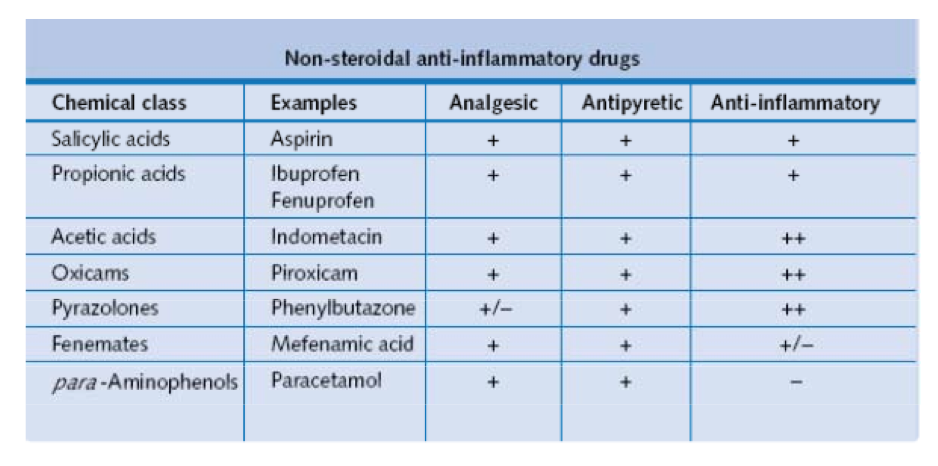
- 3 primary effects: Anti-inflammatory effect: Modification of the inflammatory reaction. Analgesic effect: Reduction of pain, Antipyretic effect: Lowering of raised temperatures.
- Anti Inflammatory
- Release of prostaglandins produce increased vasodilation and vascular permeability Inhibition reduces inflammatory reaction.
- Anti-pyretic
- Inhibition of E type prostaglandins in response to IL-1 Prostaglandins E responsible for elevating hypothalamic set point.
- Analgesic
- Decreased prostaglandins, Hence no sensitization of nociceptive nerve endings to other inflammatory mediators such as bradykinin and histamine
Classes of NSAIDs
- Note that the paracetamol has no anti-inflammatory effect.
- Aspirin
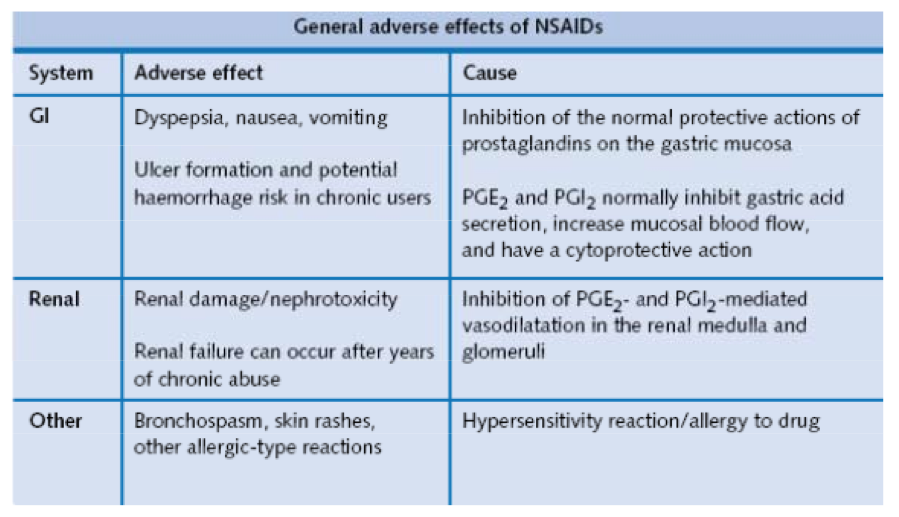
- Acetylsalicyclic acid. Non-selective inhibitor. Irreversibly inhibited COX and inhibit the platelet aggregation. However there are adverse effects such bleeding into the gut (COX1 housekeeping effects lowered). Not given to people under age of 16 due to possible brain inflammation and liver damage.
- Iboprofens and non selective NSAIDS
- Reversible COX inhibitors Treatment for mild to moderate pain and inflammation Side effects include GIT potential renal problems due to retained sodium and potassium.
- COX-2 Inhibitor
- Selectivive, inhibitors have the antipyretic, analgesic and anti-inflammatory. ---Coxibs.
- Paracetamol (acetaminophen)
- Topical Opthalmic NSAIDS
- Applied in the eye, but may be absorbed in the systemic circulation. Used for treatment of corneal abration, decrease postoperative ocular inflammation or allergic inflammations, photophobia (abnormal sensitivity to light)
- Exercise
- Affect platelet aggregation May induce GIT bleeding Delayed onset of muscle soreness and may enhance performance
Effect
- Cyclooxygenases
- COX1
- It is for constituitive function. It produces housekeeping functions for stomach, intestines lungs... Such as endothelial integrity, vascular patency, gastric mucosal integrity, bronchodilation Kidney is to maintain renal function Platelets, platelet function. If it was inhibited. it may provide unwanted side effects.
- COX2
- Inducible inflammatory responses Blocking it provides therapeutic anti-inflammatory effects.
- Synthesis
- Phospholipid turns to Arachidonic acid via Phospholipase A2 Then arachidonic acid can branch into 2 paths, One was catalysed by cyclooxygenase to PGG2 and subsequently all the way to Prostaglandins and thromboxanes and prostacyclin The other was catalysed by 5-lipoxygenase into cysteinyl and LTs.
- COX1
- Inhibition
- Irreversible inhibiton: Aspirin Competitive Inhibition : most NSAIDS Reversible Non-competitive inhibition: Paracetamol.
- Cyclooxygenases
Side effects
Glucocorticoids
- Anti-inflammatory and immunosuppressant Used in certain treatments such as Rhematoid arthritis. inflammatory bowel condition, bronchial asthma, inflammatory skin conditions.
- Anti-inflammatory
- Reduced production of eicosanoids, reduced and inhibit formation of arachidonic acid. It also inhibits phospholiopase A2 and formation of prostaglandins and leukotrienes
- Immunosuppresant
- Inhibit accumulation of neutrophils and monocytes Decreased antigen processing by macrophage Decreased T-helper cell function, phagocytosis, antibody production, and decreased production of IL-2
- Side Effects
- Suppression of the immune system Altered bone metabolism (may lead to osteoporosis) Impaired wound healing Development of diabetes and peptic ulcers. Growth suppression in children like asthma, (minimised side effects by inhalation) Cushing's Syndrome.
DMARDS
- Combination of drugs.
Anti-cytokine
- Biological preparations that target action of cytokines such as TNF-alpha. Monoclonal antibodies against the a chain of the IL-2 receptors
Anti-histamines
- H1 receptor antagonists Uses for allergic reactions Antiemetics for motion sickness Sedation
Images and files in the map
Information
- Description
- Introductory Pharmacology Mind Map on NSAIDs, created by Daniel Elandix G on 08/10/2013.
- Created by
- Daniel Elandix G
- Views
- 482
- Tags
- Rating