
Mind map
B5b - Circulatory systems and the cardiac cycle
Map content
B5b - Circulatory systems and the cardiac cycle
Circulatory Systems
- Open and Closed Circulatory Systems
- OPEN = Special tubes carry oxygen to their cells meaning their blood doesn't carry oxygen nor have lungs. Their blood doesnt carry/travel in blood vessels but flows around the blood cavity.
- CLOSED = blood carries oxygen that flows into the blood vessels.
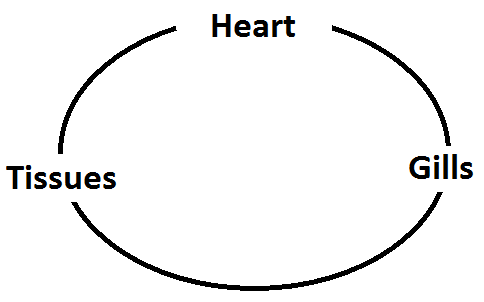
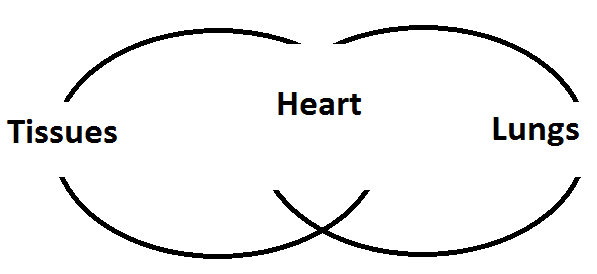
- Can be single or double. Fish have single, mammals have double.
- Doubles have a four chambered heart: two atria to recieve blood and two ventricles to distribute blood to/from lungs and body). This ensures high high blood pressure for efficient and fast circulation.
- single has two chambers in the heart, one to recieve and one to distribute
- Can be single or double. Fish have single, mammals have double.
- Many animals need a blood circulatory system to ensure all their cells recieve enough food and oxygen and to remove waste products such as carbon dioxide
- As blood flows through the arteries, veins and capilleries, the blood pressure decreases. Veins have valves to ensures there is no backward blood flow. High blood pressure would damage the fragile walls of the capillaries
- Galen knew the heart acted as a pump and the importance of the pulse. Harvey knew that blood circulated around the body, that the heart had four chambers and about capillaries
- Open and Closed Circulatory Systems
Cardiac Cycle
- The sequence of events as blood enters and leaves the heart
- The top chamber (ATRIA) rleax and fill up with blood from the veins
- The atria contact and the blood is forced into the relaxing lower chambers
- The ventricles contract and the blood is forced out of the heart into arteries.
- The atria contact and the blood is forced into the relaxing lower chambers
Heart Rate
- The pulse is caused by blood spurting through srteries when the heart beats the heart muscle contracts putting the blood under pressure and causing it to move around the body.
- Our heart rates are controlled automatically by a group of cells called pacemakers. They produce small electrical currents and stimulate the heart muscle to contract.
- Artificial pacemakers can be placed near the heart for people who cannot regualte their heartbeat.
- Two pacemakers, the sino-atrial node and the atrio-ventricular node generate electrical impulses to coordinate heart muscle contraction. SAN sends electrical impulses across the atria causing contractions. Impulses from the AVN cause the ventricles to contract.
- More muscular activity causes a greater demand for oxygen and food so heart rate increases.
- Hormone is increased by the presence of the hormone Adrenaline.
- Echocariograms and electrocardiograms video the heart in action to investigate irregualr heart actions.
Images and files in the map
Information
- Description
- GCSE triple science Mind Map on B5b - Circulatory systems and the cardiac cycle, created by annie garratt on 01/11/2015.
- Created by
- annie garratt
- Views
- 24
- Rating