
Mind map
The Protists Mind Map
Map content
The Protists Mind Map
Algae
- Unicellular, colonial, filamentous or larger forms such as seaweeds
- Photosynthetic; freshwater and marine water habitats; main component of plankton
- Basis of the food web in most aquatic habitats-some produce neurotoxin
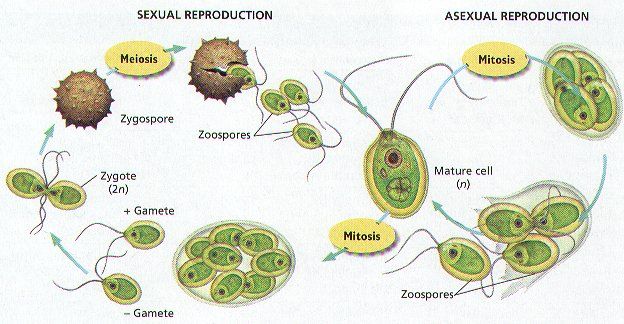
- asexual and sexual reproduction
- example; chlorophyta, rhodophyta,phaeophyta,chrysophyta,phrrophyta
Protozoa
- unicellular,lack cell wall,no chlorophyll,some are pathogen
- aerobic,anaerobic chemoheterotrophic organism
- asexual by binary fission and mitosis, sexual by conjugation/produce gametes
- major groups
- Archaezoa -flagellated,trypanosoma gambiense,African sleeping sickness
- Rhizopoda -Amoeba,phagocytosis,cause amoebic dysentery
- Ciliophora -Paramecium,possess cilia,Balantidium coli
- Apicomplexa -not motile in mature forms,obligate parasites,cause Malaria and toxoplasmosis
- important in food webs and decomposing organic matter
Slime molds
- moist terrestrial habitats
- engulf bacterial
- as decomposer and consumer
- three divisions
- 1. Myxomycota (plasmodial slime molds)
- 2. Acrasiomycota (cellular slime molds and individual amoeboid cells)
- 3. Peronosporomycetes (water molds
Images and files in the map
Information
- Description
- Protists are grow in a wide variety of moist habitats. They are lack the level of tissue organization present in higher eukaryotes. They also parasitic forms cause disease in humans and domesticated animals.Examples of protists are algae, protozoa and slime molds.
- Created by
- Nur Fadzliyana
- Views
- 102
- Tags
- Rating