
Mind map
Programming tech
Map content
Programming tech
Flow Chart
- A flowchart is a visual representation of a flow of data.
- It can be used to outline a process or a solution to a problem, whether it is simple or complex.
- Symbols that are used in flow charts include:
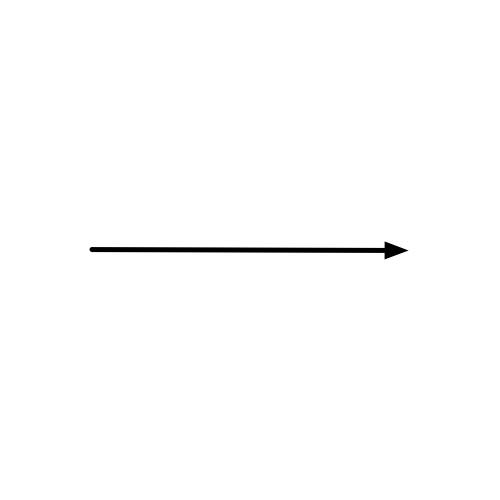
- Flow line
- used to indicate the flow of logic by connecting symbols
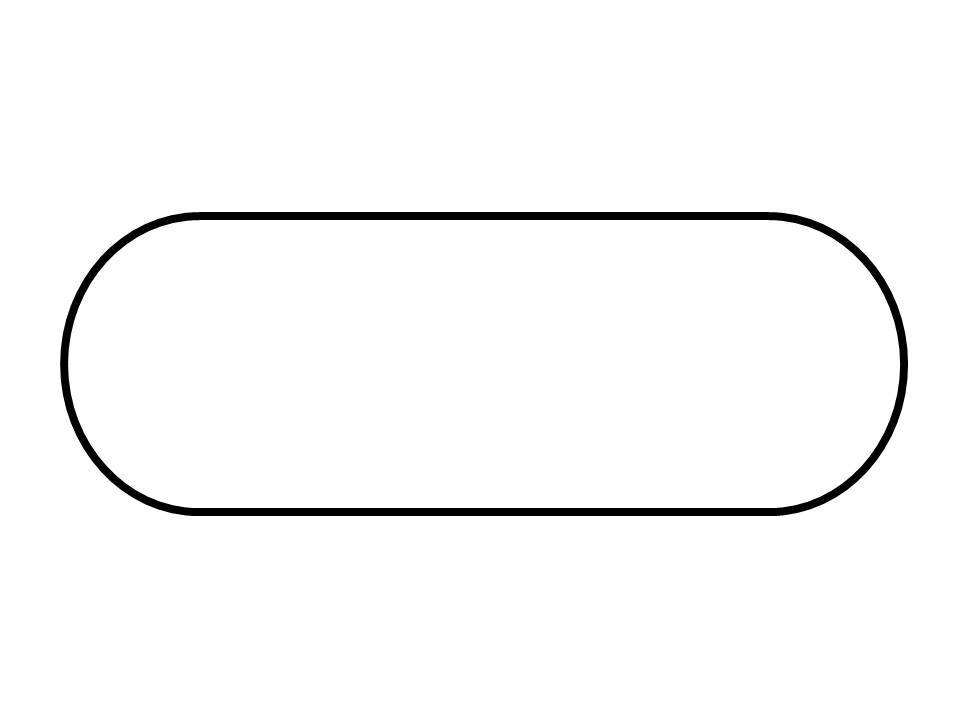
- Terminal (Stop/Start)
- Used to represent start and end of flowchart
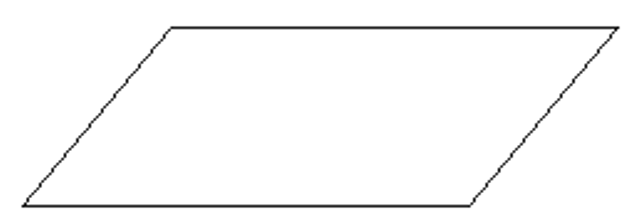
- Input/Output
- used for input and output operation
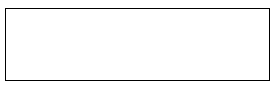
- Processing
- used for airthmetic operations and data-manipulations
- Decision
- used to represent the operation in which there are two alternatives, true and false
- ON-page Connector
- used to join different flowline
- Off-page Connector
- used to connect flowchart portion on different page
- Predefined Process/Function
- used to represent a group of statements performing one processing task
- Flow line
Pseudocode
- Pseudocode is an informal high-level description of the operating principle of a computer program or other algorithm.
- It uses the structural conventions of a programming language, but is intended for human reading rather than machine reading.
- There is no strict set of standard notations for pseudocode, but some of the most widely recognised are:
- INPUT
- indicates a user will be inputting something
- OUTPUT
- indicates that an output will appear on the screen
- WHILE
- a loop (iteration that has a condition at the beginning)
- FOR
- FOR – a counting loop (iteration)
- REPEAT – UNTIL
- a loop (iteration) that has a condition at the end
- IF – THEN – ELSE
- a decision (selection) in which a choice is made any instructions that occur inside a selection or iteration are usually indented
- INPUT
Sequencing & Selection
- Sequencing is the specific order in which instructions are performed in an algorithm.
- For example, a very simple algorithm for brushing teeth might consist of these steps:
- 1. put toothpaste on toothbrush
- 2. use toothbrush to clean teeth
- 3. rinse toothbrush
- Each step is an instruction to be performed. Sequencing is the order in which the steps are carried out
- Each step is an instruction to be performed. Sequencing is the order in which the steps are carried out
- 3. rinse toothbrush
- Each step is an instruction to be performed. Sequencing is the order in which the steps are carried out
- 2. use toothbrush to clean teeth
- 1. put toothpaste on toothbrush
- Why is sequencing important?
- It is crucial that the steps in an algorithm are performed in the right order - otherwise the algorithm will not work correctly.
- In a selection structure, a question is asked, and depending on the answer, the program takes one of two courses of action, after which the program moves on to the next event
Data types
- a data type or simply type is a classification identifying one of various types of data. The data types can roughly be described as
- Numbers,
- e.g., 7, 3.14
- Booleans,
- true or false
- Characters,
- 'a', 'b', ... 'z', '1', '2', ... '9', '!', '^', etc
- Structures,
- a collection of named data referring to a single entity
- Arrays
- a list of data (all of the Same Data Type!)
- Numbers,
- a data type or simply type is a classification identifying one of various types of data. The data types can roughly be described as
Arrays
- array programming languages (also known as vector or multidimensional languages) generalize operations on scalars to apply...
- transparently to vectors,
- matrices,
- higher-dimensional arrays,
- Array programming primitives concisely express broad ideas about data manipulation
- array programming languages (also known as vector or multidimensional languages) generalize operations on scalars to apply...
Strings
- A string is a data type used in programming
- such as an integer
- such as an floating point unit
- is used to represent text rather than numbers
- It is comprised of a set of characters that can also contain spaces and numbers
- For example, the word "hamburger" and the phrase "I ate 3 hamburgers" are both strings.
- Even "12345" could be considered a string, if specified correctly.
- Typically, programmers must enclose strings in quotation marks for the data to recognized as a string and not a number or variable name.
- Typically, programmers must enclose strings in quotation marks for the data to recognized as a string and not a number or variable name.
- Even "12345" could be considered a string, if specified correctly.
- For example, the word "hamburger" and the phrase "I ate 3 hamburgers" are both strings.
- A string is a data type used in programming
Machine & Low Level code
- Machine code is a set of instructions executed directly by a computer's CPU
- Each instruction performs a very specific task, such as:
- a load,
- a jump,
- an ALU operation on a unit of data in a CPU register (or memory)
- a low-level programming language is a programming language that provides little or no abstraction from a computer's instruction set architecture
- The word "low" refers to the small or nonexistent amount of abstraction between the language and machine language; because of this, low-level languages are sometimes described as being "close to the hardware."
- Because of the close relationship between the language and the hardware architecture programs written in low-level languages tend to be relatively non-portable
High level languages
- A high level language has the following features:
- 1. Easier to write
- 2. Easier to read
- 3. Easier to maintain
- 4. Portable : can work across different CPU families
- 5. Supports a wide range of data types
- 4. Portable : can work across different CPU families
- 3. Easier to maintain
- 2. Easier to read
- 1. Easier to write
- High level languages have been around for more than 60 years and by now there are dozens of them. Some popular ones include:
- BASIC,
- C++,
- C,
- FORTRAN,
- Pascal
- High level code is written as text and is called 'source code'
- Such languages are considered high-level because they are closer to human languages and further from machine languages.
- A high level language has the following features:
Testing
- unit testing is a software testing method by which...
- by which individual units of source code,
- sets of one or more computer program modules together with associated control data,
- are tested to determine whether they are fit for use.
- usage procedures,
- operating procedures,
- are tested to determine whether they are fit for use.
- usage procedures,
- operating procedures,
- unit testing is a software testing method by which...
Iteration
- Iteration in programming means repeating steps, or instructions, over and over again.
- This is often called a ‘loop’
- Iteration is the process of repeating steps
- Why is iteration important?
- Iteration allows algorithms to be simplified by stating that certain steps will repeat until told otherwise (this makes designing algorithms quicker and simpler because they don’t need to include lots of unnecessary steps)
Images and files in the map


Information
- Description
- Mind Map on Programming tech, created by 11akumbaraji on 04/02/2016.
- Created by
- 11akumbaraji
- Views
- 0
- Rating