
Mind map
Software Development Life Cycle
Map content
Software Development Life Cycle
WATERFALL LIFE CYCLE MODEL
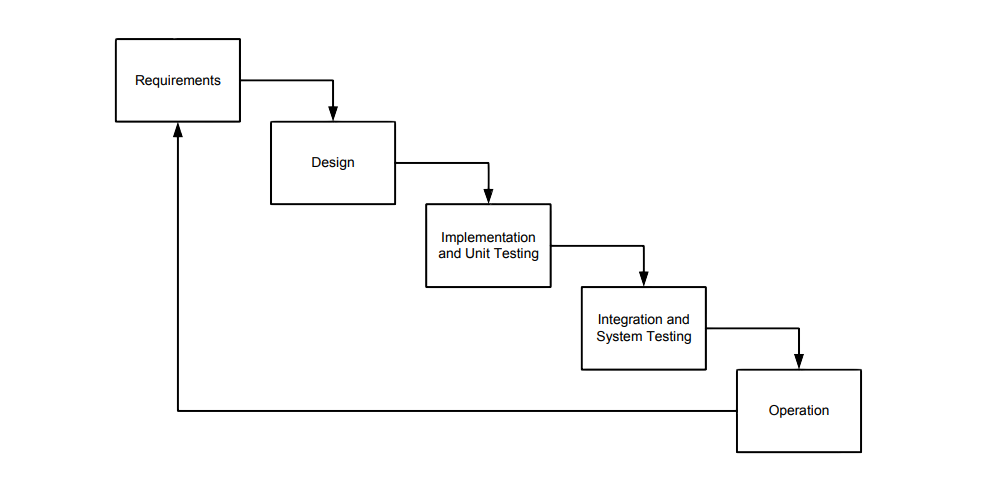
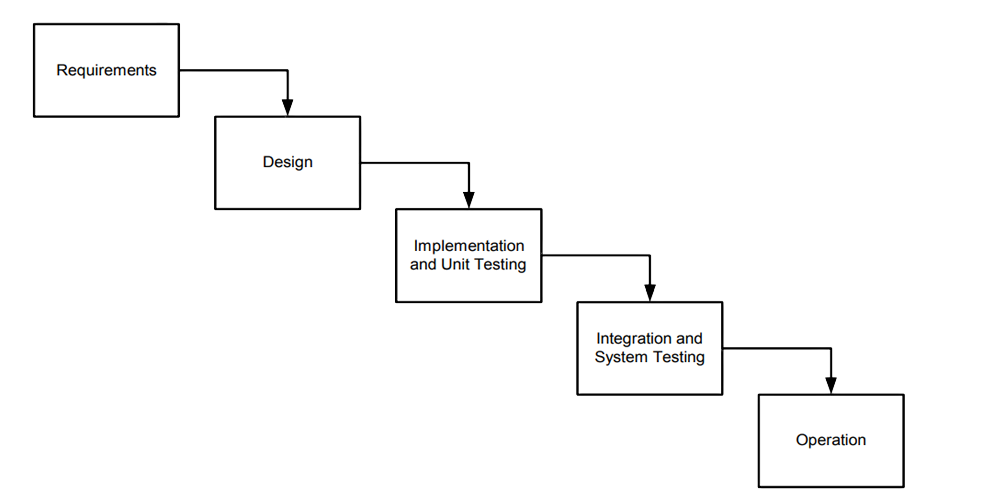
- The Waterfall life cycle model, also known as the classic or linear-sequential life cycle model, is one of the simplest to understand and use. The Waterfall model is characterized by a series of steps that must be completed in a linear, sequential order. Each phase is completed and verified before development progresses to the next phase
- Advantages of the Waterfall model
- The Waterfall model is appropriate for small development projects in which the requirements are well understood.
- Disadvantages of the Waterfall model
- the Waterfall model is inappropriate for complex projects
- Advantages of the Waterfall model
- The Waterfall life cycle model, also known as the classic or linear-sequential life cycle model, is one of the simplest to understand and use. The Waterfall model is characterized by a series of steps that must be completed in a linear, sequential order. Each phase is completed and verified before development progresses to the next phase
V-SHAPED LIFE CYCLE MODEL
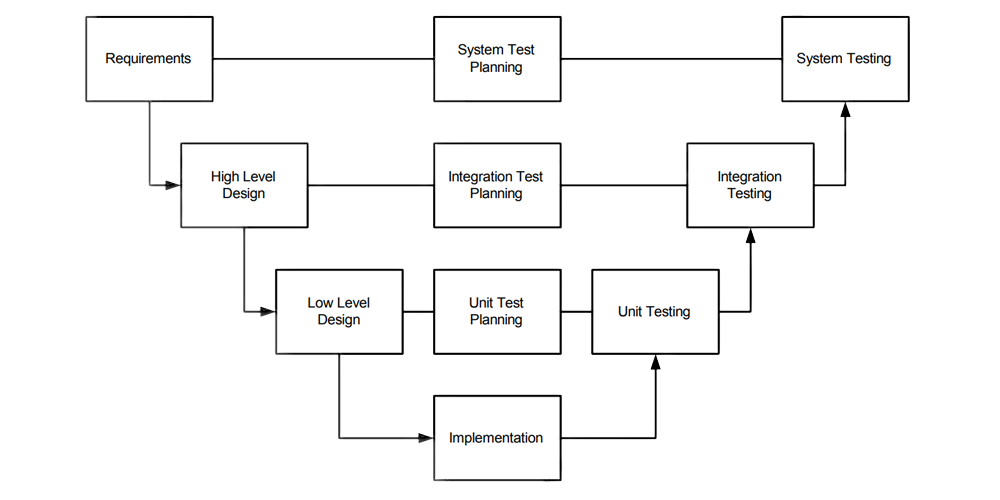
- the V-Shaped life cycle model provides a sequential path of discrete phases that must each be completed before development proceeds to the next phase. The phase test plans are developed during each level of development, and once coding is completed, the tests are conducted
- Advantages of the V-Shaped model
- the V-Shaped model is appropriate for small development projects in which requirements are well understood.
- Disadvantages of the V-Shaped model
- the V-Shaped model is inappropriate for complex projects.
- Advantages of the V-Shaped model
- the V-Shaped life cycle model provides a sequential path of discrete phases that must each be completed before development proceeds to the next phase. The phase test plans are developed during each level of development, and once coding is completed, the tests are conducted
INCREMENTAL LIFE CYCLE MODEL
- The Incremental life cycle model builds an iterative approach into the Waterfall model. Development projects are divided into several smaller, more manageable iterations. Each iteration passes through a mini-Waterfall process. Requirement, design, implementation and testing phases are completed for each iteration
- Advantages of the Incremental model
- The Incremental model is an effective tool for managing risk. Chancy portions of development can be identified and carefully managed in their own iteration
- Disadvantages of the Incremental model
- The Incremental model is less risky than the Waterfall or V-Shaped models, but it may be inappropriate for large, longterm projects.
- Advantages of the Incremental model
- The Incremental life cycle model builds an iterative approach into the Waterfall model. Development projects are divided into several smaller, more manageable iterations. Each iteration passes through a mini-Waterfall process. Requirement, design, implementation and testing phases are completed for each iteration
SPIRAL LIFE CYCLE MODEL
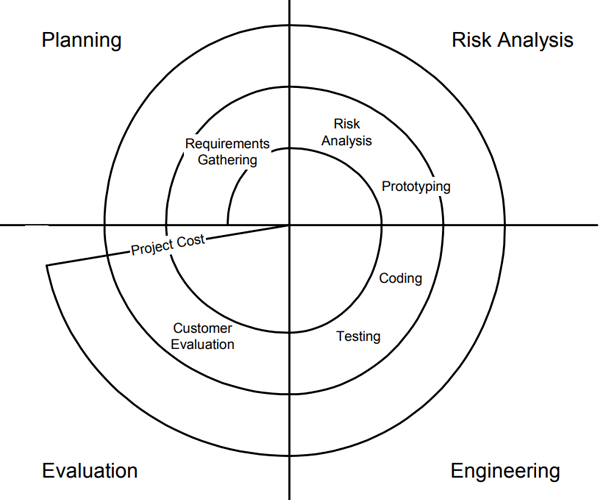
- The Spiral life cycle model is similar to the Incremental model but incorporates risk analysis. It is divided into four phases: planning, risk analysis, engineering, and evaluation. A project passes through each of these phases in sequence, repeatedly, in a series of iterations called spirals
- Advantages of the Spiral model
- The focus on risk avoidance makes the Spiral model ideal for large-scale and missioncritical products.
- Disadvantages of the Spiral model
- The Spiral model can cost considerably more to implement than other life cycle models. The risk analysis phase requires highly specific expertise, and the project's success depends on the output of this phase
- Advantages of the Spiral model
- The Spiral life cycle model is similar to the Incremental model but incorporates risk analysis. It is divided into four phases: planning, risk analysis, engineering, and evaluation. A project passes through each of these phases in sequence, repeatedly, in a series of iterations called spirals
Images and files in the map
Information
- Description
- Certificado PMP (Dirección de Proyectos) Inglés Mind Map on Software Development Life Cycle, created by LUIS BRAYAN OSORIO CORTES on 21/09/2017.
- Created by
- LUIS BRAYAN OSORIO CORTES
- Views
- 0
- Rating