
Mind map
Asking users and experts
Map content
Asking users and experts
Asking users: interviews
- Interviews can be thought of as a "conversation with a purpose"
- How like an ordinary conversation the interview is depends on the questions to be answered and the type of interview method used.
- ARANZA ESTRADA A01176250
- Preece, Jennifer. (2002). Interaction Design. United States of America: John Wiley & Sons Inc.
- ARANZA ESTRADA A01176250
- There are four main types of interviews: open-ended or unstructured, structured, semi-structured, and group interviews
- The first three types are named ac- cording to how much control the interviewer imposes on the conversation by fol- lowing a predetermined set of questions. The fourth involves a small group guided by an interviewer who facilitates discussion of a specified set of topics.
- How like an ordinary conversation the interview is depends on the questions to be answered and the type of interview method used.
- Developing questions and planning an interview
- When developing interview questions, plan to keep them short, straightforward and avoid asking too many.
- Avoid long questions because they are difficult to remember.
- Avoid compound sentences by splitting them into two separate questions.
- Avoid using jargon and language that the interviewee may not understand
- Avoid leading questions such as, "Why do you like this style of interaction?"
- Be alert to unconscious biases.
- Avoid leading questions such as, "Why do you like this style of interaction?"
- Avoid using jargon and language that the interviewee may not understand
- Avoid compound sentences by splitting them into two separate questions.
- Be Nice to Interviewees
- An Introduction in which the interviewer introduces himself and explains why he is doing the interview
- A warmup session where easy, non-threatening questions come first.
- A main session in which the questions are presented in a logical sequence, with the more difficultones at the end.
- A cool-offperiod consisting of a few easy questions
- A closing session in which the interviewer thanks the interviewee
- A cool-offperiod consisting of a few easy questions
- A main session in which the questions are presented in a logical sequence, with the more difficultones at the end.
- A warmup session where easy, non-threatening questions come first.
- The golden rule is to be professional.
- Dress in a similar way to the interviewees if possible.
- Prepare an informed consent form and ask the interviewee to sign it.
- If you are recording the interview, which is advisable, make sure your equip- ment works
- Record answers exactly
- If you are recording the interview, which is advisable, make sure your equip- ment works
- Prepare an informed consent form and ask the interviewee to sign it.
- Dress in a similar way to the interviewees if possible.
- Heuristics Evaluation
- Visibility of system status
- Match between system and the real world
- User control and freedom
- Consistency and standards
- Help users recognize, diagnose, and recover from errors
- Error prevention
- Recognition rather than recall
- Flexibility and eficiency of use
- Aesthetic and minimalist design
- Help and documentation
- Aesthetic and minimalist design
- Flexibility and eficiency of use
- Recognition rather than recall
- Error prevention
- Help users recognize, diagnose, and recover from errors
- Consistency and standards
- User control and freedom
- Match between system and the real world
- H 0 M E R U N
- High-quality content Often updated Minimal download time Ease of use Relevant to users' needs Unique t o the online medium Netcentric corporate culture
- Doing heuristic evaluation
- The briefing session, The evaluation period, The debriefing session in which the experts come together to discuss their findings
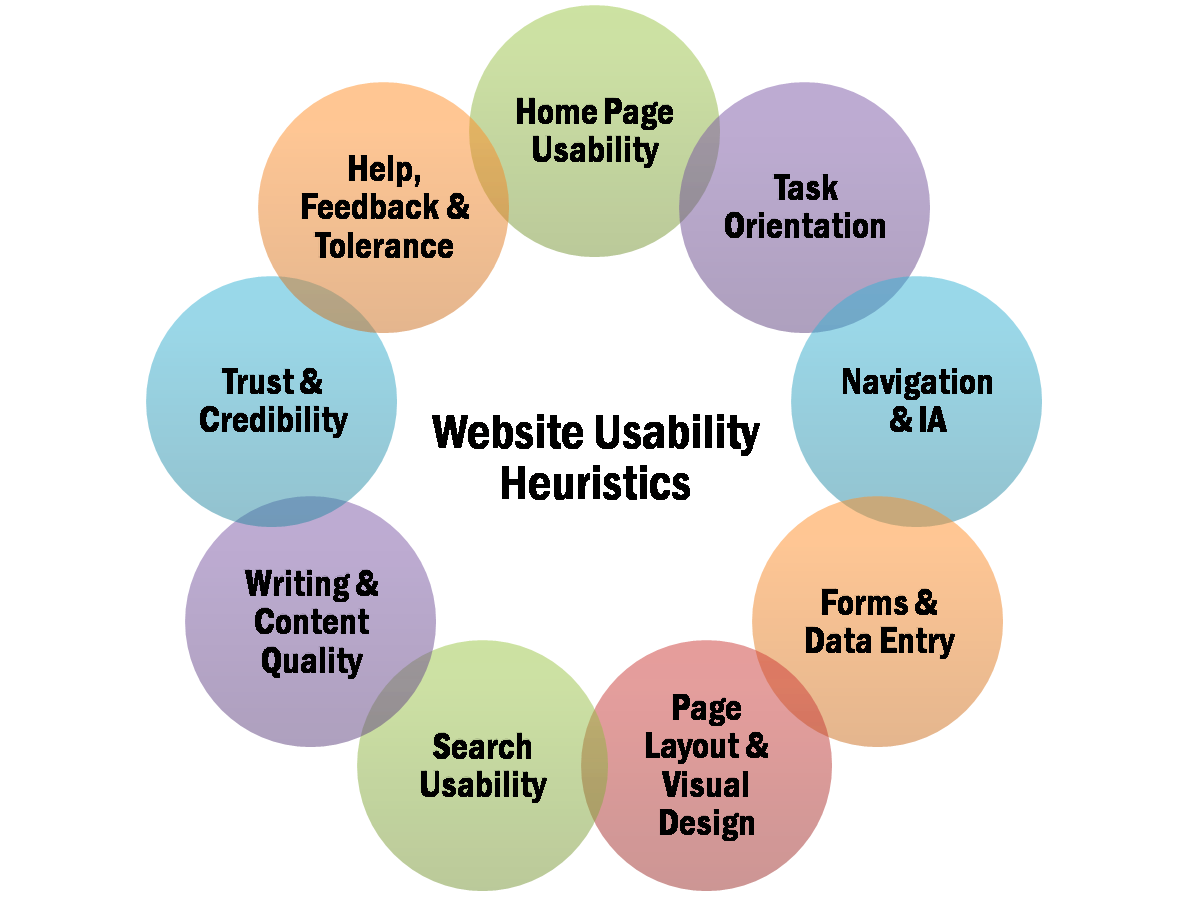
- Heuristic evaluation of websites
- Internal consistency. Simple dialog. Shortcuts. Minimizing the user's memory load. Preventing errors. Feedback. Internal locus of control. Layout.
- Navigation One of the biggest problems for users of large websites is navigating around the site. The phrase "lost in cyberspace"
- Access Accessing many websites can be a problem for people with slow Internet connections and limited processing power.
- Navigation One of the biggest problems for users of large websites is navigating around the site. The phrase "lost in cyberspace"
- Internal consistency. Simple dialog. Shortcuts. Minimizing the user's memory load. Preventing errors. Feedback. Internal locus of control. Layout.
- Visibility of system status
- An Introduction in which the interviewer introduces himself and explains why he is doing the interview
- Interviews can be thought of as a "conversation with a purpose"
Unstructured interviews
- They are more like conversations that focus on a particular topic and may often go into considerable depth.
- Going in without an agenda to accomplish a goal is not advisable, and should not to be confused with being open to new infor- mation and ideas.
- A benefit of unstructured interviews is that they generate rich data.
- Make sure you have an interview agenda that supports the study goals and questions
- Be prepared to follow new lines of enquiry that contribute to your agenda
- Pay attention to ethical issues
- Respond with sympathy if appropriate
- Pay attention to ethical issues
- Be prepared to follow new lines of enquiry that contribute to your agenda
- Make sure you have an interview agenda that supports the study goals and questions
- A benefit of unstructured interviews is that they generate rich data.
- Going in without an agenda to accomplish a goal is not advisable, and should not to be confused with being open to new infor- mation and ideas.
- Structured interviews
- Pose predetermined questions similar to those in a question- naire
- Are useful when the study's goals are clearly understood and specific questions can be identified. To work best, the ques- tions need to be short and clearly worded.
- Typically the questions are closed, which means that they require a precise answer. The same questions are used with each participant so the study is standardized.
- Are useful when the study's goals are clearly understood and specific questions can be identified. To work best, the ques- tions need to be short and clearly worded.
- Semi-structured interviews
- Use both closed and open questions. For consistency the interviewer has a basic script for guidance, so that the same topics are covered with each intervie- wee.
- It is important not to preempt an answer by phrasing a question to suggest that a particularanswerisexpected.
- Also the interviewer needs to accommodate silences and not to move on too quickly.
- Probes are a device for getting more infor- mation, especially neutral probes such as, "Do you want to tell me anything else?"
- You may also prompt the person to help her along. For example, if the interviewee is talking about a computer interface but has forgotten the name of a key menu item, you might want to remind her
- Probes are a device for getting more infor- mation, especially neutral probes such as, "Do you want to tell me anything else?"
- Also the interviewer needs to accommodate silences and not to move on too quickly.
- It is important not to preempt an answer by phrasing a question to suggest that a particularanswerisexpected.
- Group interviews
- One form of group interview is the focus group that is frequently used in marketing, political campaigning, and social sciences research. Normally three to 10 people are involved.
- The benefit of a focus group is that it allows diverse or sensitive issues to be raised that would otherwise be missed.
- The method assumes that individuals de- velop opinions within a social context by talking with others.
- Focus groups are also attractive because they are low-cost, provide quick results, and can easily be scaled to gather more data.
- The method assumes that individuals de- velop opinions within a social context by talking with others.
- The benefit of a focus group is that it allows diverse or sensitive issues to be raised that would otherwise be missed.
- Other sources of interview-like feedback
- Telephone interviews are a good way of interviewing people with whom you can- not meet. You cannot see body language, but apart from this telephone interviews have much in common with face-to-face interviews.
- Online interviews, using either asynchronous communication as in email or synchronous communication as in chats, can also be used. For interviews that in- volve sensitive issues, answering questions anonymously may be preferable to meeting face to face.
- At various stages of design, it is useful to get quick feedback from a few users. These short interviews are often more like conversations in which users are asked their opinions.
- Online interviews, using either asynchronous communication as in email or synchronous communication as in chats, can also be used. For interviews that in- volve sensitive issues, answering questions anonymously may be preferable to meeting face to face.
- Telephone interviews are a good way of interviewing people with whom you can- not meet. You cannot see body language, but apart from this telephone interviews have much in common with face-to-face interviews.
- One form of group interview is the focus group that is frequently used in marketing, political campaigning, and social sciences research. Normally three to 10 people are involved.
- Use both closed and open questions. For consistency the interviewer has a basic script for guidance, so that the same topics are covered with each intervie- wee.
- Pose predetermined questions similar to those in a question- naire
- They are more like conversations that focus on a particular topic and may often go into considerable depth.
Data analysis and interpretation
- Analysis of unstructured interviews can be time-consuming, though their contents can be rich.
- Which type of analysis is done depends on the goals of the study, as does whether the whole interview is transcribed, only part of it, or none of it.
- Analysis of unstructured interviews can be time-consuming, though their contents can be rich.
Questionnaries
- Questionnaires are a well-established technique for collecting demographic data and users' opinions. They are similar to interviews and can have closed or open questions.
- The questions asked in a questionnaire, and those used in a structured inter- view are similar, so how do you know when to use which technique? One advan- tage of questionnaires is that they can be distributed to a large number of people
- Designing questionnaires
- Many questionnaires start by asking for basic demographic information (e.g., gen- der, age) and details of user experience
- From knowing the sample range, a designer might develop two different versions or veer towards the needs of one of the groups more because it represents the target audience.
- Following the general questions, specific questions that contribute to the evalu- ation goal are asked. If the questionnaire is long, the questions may be subdivided into related topics to make it easier and more logical to complete.
- Make questions clear and specific. When possible, ask closed questions and offer a range of answers. Consider including a "no-opinion" option for questions that seek opinions. Think about the ordering of questions.
- Following the general questions, specific questions that contribute to the evalu- ation goal are asked. If the questionnaire is long, the questions may be subdivided into related topics to make it easier and more logical to complete.
- From knowing the sample range, a designer might develop two different versions or veer towards the needs of one of the groups more because it represents the target audience.
- Question and response format
- Check boxes and ranges
- The range of answers to demographic questionnaires is predictable. Gender, for example, has two options, male or female
- Scales
- There are a number of different types of rating scales that can be used, each with its own purpose Here we describe two commonly used scales, Likert and semantic differential scales.
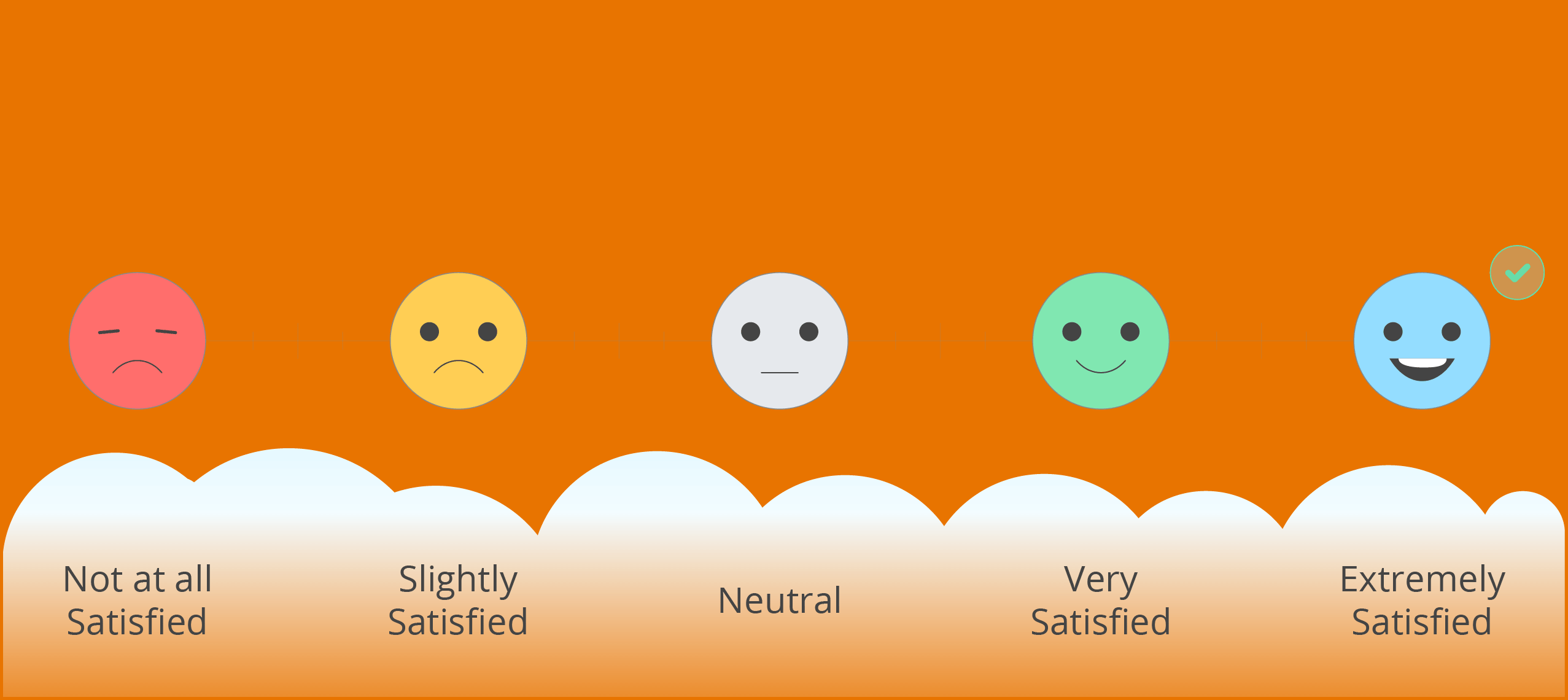
- Likert Scales Likert scales are used for measuring opinions, attitudes, and beliefs, and conse- quently they are widely used for evaluating user satisfaction
- Divide the items into groups with about the same number of positive and nega- tive statements in each group.
- Decide on the scale. QUIS uses a 9-point scale, and because it is a general questionnaire that will be used with a wide variety of products it also includes NIA (not applicable,) as a category. Many questionnaires use 7- or 5-point scales and there are also 3-point scales.
- Divide the items into groups with about the same number of positive and nega- tive statements in each group.
- Likert Scales Likert scales are used for measuring opinions, attitudes, and beliefs, and conse- quently they are widely used for evaluating user satisfaction
- Semantic differential scales They explore a range of bipolar attitudes about a particular item. Each pair of attitudes is represented as a pair of adjectives.
- There are a number of different types of rating scales that can be used, each with its own purpose Here we describe two commonly used scales, Likert and semantic differential scales.
- Check boxes and ranges
- Administering questionnaires
- Two important issues when using questionnaires are reaching a representa- tive sample of participants and ensuring a reasonable response rate.
- Some ways of encouraging a good response include: Ensuring the questionnaire is well designed so that participants do not get annoyed and give up.
- Two important issues when using questionnaires are reaching a representa- tive sample of participants and ensuring a reasonable response rate.
- Many questionnaires start by asking for basic demographic information (e.g., gen- der, age) and details of user experience
- Online questionnaires are becoming increasingly common because they are effec- tive for reaching large numbers of people quickly and easily. There are two types: email and web-based.
- Other advantages of online questionnaires include. Responses are usually received quickly. Copying and postage costs are lower than for paper surveys or often non- existent. Data can be transferred immediately into a database for analysis.
- Developing a web-based questionnaire
- Developing a successful web-based questionnaire involves designing it on paper, developing strategies for reaching the target population, and then turning the paper version into a web-based version
- Turning the paper questionnaire into a web-based version requires four steps.
- Produce an error-free interactive electronic version from the original paper- based one.
- Make the questionnaire accessible from all common browsers and readable from different-size monitors and different network locations.
- Make sure information identifying each respondent will be captured and stored confidentially
- User test the survey with pilot studies before distributing.
- Make sure information identifying each respondent will be captured and stored confidentially
- Make the questionnaire accessible from all common browsers and readable from different-size monitors and different network locations.
- Produce an error-free interactive electronic version from the original paper- based one.
- Developing a web-based questionnaire
- Other advantages of online questionnaires include. Responses are usually received quickly. Copying and postage costs are lower than for paper surveys or often non- existent. Data can be transferred immediately into a database for analysis.
- Questionnaires are a well-established technique for collecting demographic data and users' opinions. They are similar to interviews and can have closed or open questions.
Images and files in the map









Information
- Description
- Mind Map on Asking users and experts, created by Ara Estrada on 12/11/2017.
- Created by
- Ara Estrada
- Views
- 0
- Rating